
The roar of an electric motor, once a symbol of unbridled progress, now whispers through the intricate corridors of European regulation. At the heart of this evolving narrative stands Tesla, with its ambitious Full Self-Driving (FSD) technology, a system that promises to redefine personal mobility. Yet, as Elon Musk's vision pushes the boundaries of what is technically possible, it encounters the steadfast, often cautious, approach of European policymakers, particularly here in Norway. It is a clash of philosophies, much like a supertanker meeting a fjord, where the immense force of innovation must yield to the immovable geology of established norms and safety protocols.
For years, Tesla has been at the forefront of autonomous driving development, collecting vast amounts of real-world data from its global fleet. The company's iterative approach, deploying FSD beta software to a growing number of customers, has generated both fervent enthusiasm and significant scrutiny. In the United States, this strategy has allowed for rapid development cycles, but Europe, with its diverse legal frameworks and a deep-seated commitment to data privacy and safety, presents a different challenge entirely. The question is not merely about the technology's capability, but about its trustworthiness and accountability within a societal framework that places immense value on human life and ethical governance.
Norway, a nation deeply invested in electric vehicle adoption, serves as a compelling microcosm for this broader European debate. With one of the highest per capita EV ownership rates globally, our roads are populated by Teslas, yet the full deployment of FSD remains a distant prospect. Norway's approach to AI is rooted in trust, a principle that extends far beyond the digital realm and into the physical world of autonomous vehicles. This trust is not easily granted; it must be earned through rigorous testing, transparent data practices, and a clear demonstration of safety that aligns with our national values.
Let me explain the engineering behind this regulatory friction. FSD, at its core, is a sophisticated neural network system trained on billions of miles of driving data. It processes sensor inputs from cameras, radar, and ultrasonic sensors to perceive its environment, predict the behavior of other road users, and plan a safe trajectory. However, the complexity of this system, its 'black box' nature, and the continuous over-the-air updates pose significant challenges for traditional regulatory approval processes. Regulators demand not just performance, but explainability and verifiable safety metrics under a myriad of conditions, including our often challenging Nordic weather.
“The current regulatory frameworks in Europe, such as the Unece regulations on Automated Lane Keeping Systems Alks, are designed for specific, limited functionalities, not for a comprehensive Level 2+ or Level 3 system like Tesla’s FSD,” explains Dr. Lena Karlsson, a leading expert in autonomous vehicle law at the University of Oslo. “The step from assisted driving to truly autonomous operation requires a fundamental shift in legal liability and certification, which is still very much under development across the continent.” Her statement, made during a recent automotive conference, underscores the legislative lag.
Indeed, the European Union's General Safety Regulation, which came into full effect in July 2024, mandates advanced driver assistance systems, but it does not yet fully address the complexities of higher levels of automation. The Unece (United Nations Economic Commission for Europe) regulations, which many European countries including Norway adhere to, are gradually expanding to cover more advanced systems. However, these are often prescriptive, detailing specific technical requirements and testing procedures. Tesla's FSD, with its constantly evolving software and reliance on a broad, real-world data collection paradigm, often operates outside these narrowly defined parameters.
Data privacy is another significant hurdle. The General Data Protection Regulation (GDPR) in Europe imposes strict rules on how personal data, including video footage from vehicle cameras, is collected, processed, and stored. While Tesla asserts that its data collection is anonymized and used solely for improving the FSD system, European authorities are meticulous in their scrutiny. The Norwegian Data Protection Authority, for instance, has previously engaged with automotive manufacturers regarding data practices, emphasizing the need for explicit consent and robust data protection measures. This is not merely a technicality; it is a fundamental pillar of the Nordic model that extends to technology, ensuring individual rights are paramount.
Recent incidents involving FSD in the United States have only intensified European caution. While Tesla maintains a strong safety record overall, reports of collisions involving FSD beta have fueled public and regulatory skepticism. The National Highway Traffic Safety Administration (nhtsa) in the U.S. has initiated investigations and recalls related to FSD, highlighting the ongoing challenges of deploying such advanced systems safely. These events resonate deeply in Europe, where a culture of preventative safety is deeply ingrained.
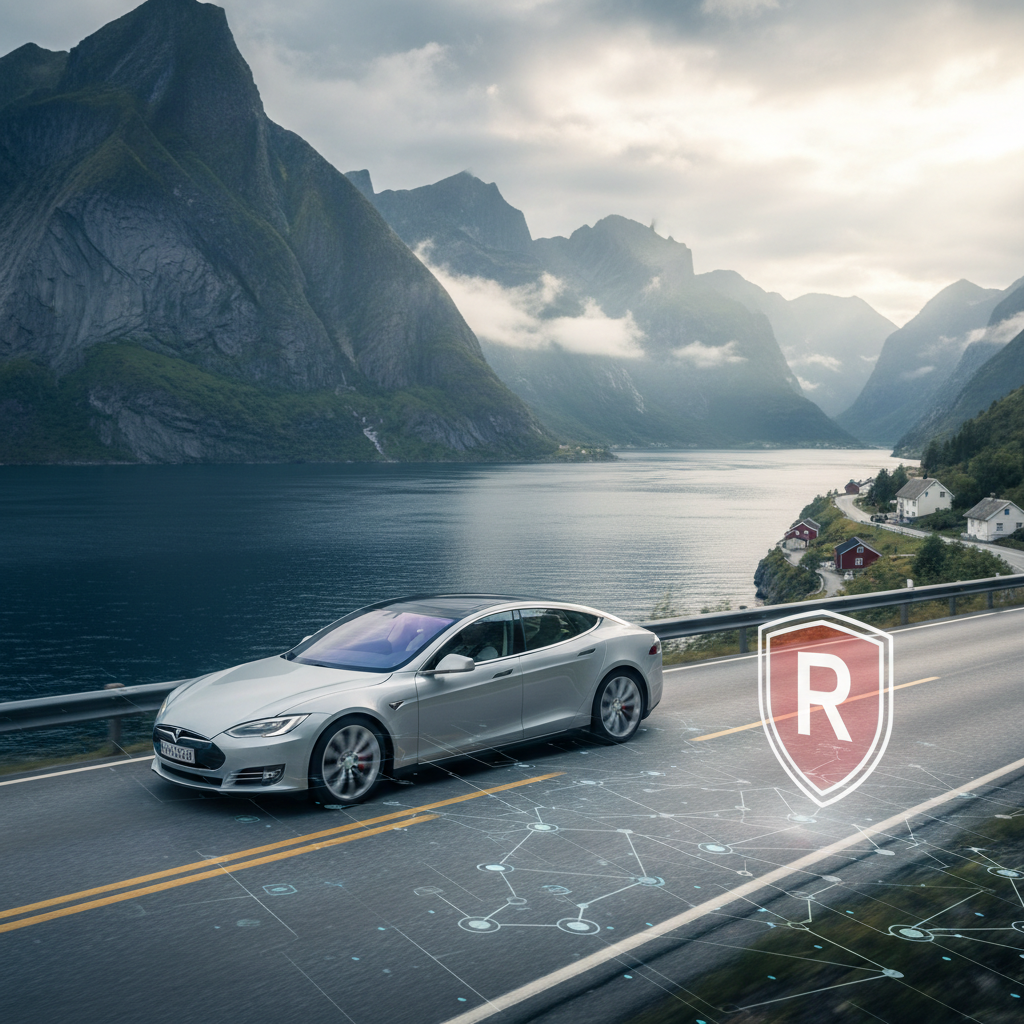
Consider the practical implications for Norway. Our roads, often narrow and winding, traversing through mountains and along fjords, present a unique set of challenges for any autonomous system. Snow, ice, heavy rain, and the dramatic shifts in light during our long winters and short summers require an unparalleled level of perception and decision-making. While Tesla's FSD is continuously improving, the leap from a controlled environment to the unpredictable realities of Norwegian driving conditions demands an exceptionally high bar for regulatory approval.
“We are not against innovation, quite the opposite,” stated Lars-Erik Johansen, a senior advisor at the Norwegian Public Roads Administration, in a recent interview with a local newspaper. “However, the safety of our citizens is non-negotiable. Any system that takes over control of a vehicle must demonstrate an equivalent, if not superior, safety performance to a human driver, and this must be proven through independent, verifiable testing under our specific conditions.” This sentiment reflects a broader European stance, prioritizing meticulous validation over rapid market entry.
Looking ahead, the path for Tesla's FSD in Europe, and particularly in Norway, will likely involve a more collaborative and transparent approach. Regulators are not seeking to stifle progress, but to guide it responsibly. This could mean more localized testing, clearer definitions of operational design domains, and a more robust framework for data sharing and incident reporting. The European Commission is actively working on harmonizing regulations for autonomous vehicles, but this is a complex, multi-year endeavor.
For Tesla, adapting to these nuances will be crucial. It may require a shift from its current 'move fast and break things' ethos to a more measured, compliance-focused strategy for the European market. The prize, a fully autonomous fleet operating safely across the continent, is immense. However, the journey there will be paved not just with lines of code, but with intricate legal texts, rigorous safety audits, and a profound respect for the cultural and ethical expectations of nations like Norway.
The future of autonomous driving in Europe will not be a singular, monolithic deployment. Instead, it will be a carefully orchestrated integration, reflecting a balance between technological ambition and societal responsibility. As the electric vehicles hum silently through our landscapes, the regulatory dialogue will continue, shaping not just how we drive, but how we trust technology to move us forward. For more on the global regulatory landscape, insights can be found at Reuters Technology and further technical analysis at MIT Technology Review. The broader implications of AI in transportation are also frequently discussed on Wired.
While the path is challenging, the potential rewards for safer, more efficient transportation are undeniable. The question is not if autonomous vehicles will arrive, but how, and under what conditions, they will be welcomed into the intricate tapestry of European life. The fjords, after all, have always demanded respect, and the same holds true for the regulatory currents that flow through them.