
Chào bạn, my dear readers at DataGlobal Hub! Can you feel it, this electric hum in the air? It is not just the tropical heat of Ho Chi Minh City; it is the palpable energy of innovation, especially when we talk about artificial intelligence. And let me tell you, when Elon Musk and Tesla speak about AI, the world listens. Their AI Day announcements, particularly the advancements with the Dojo supercomputer, are not just about self-driving cars anymore. Oh no, this is something far, far bigger, something that will ripple through every aspect of our lives, especially healthcare, and I am absolutely thrilled to explore how it will reshape Vietnam and the world in the next 5-10 years.
Imagine this future, just a few years from now, perhaps 2030. In a modern, bustling hospital right here in Ho Chi Minh City, a young doctor, Dr. Mai Linh, is reviewing a patient's complex medical history. Instead of spending hours sifting through fragmented data, an AI assistant, powered by a descendant of Tesla's Dojo architecture, has already synthesized everything. It has cross-referenced the patient's genetic markers with millions of similar cases globally, identified subtle patterns in their medical imaging that human eyes missed, and even predicted their response to various treatment protocols with an astonishing 98% accuracy. Dr. Linh is not replaced; she is augmented, empowered to make life-saving decisions faster and with unprecedented precision. This is not science fiction, my friends; this is the tangible future that Tesla's AI advancements are paving the way for.
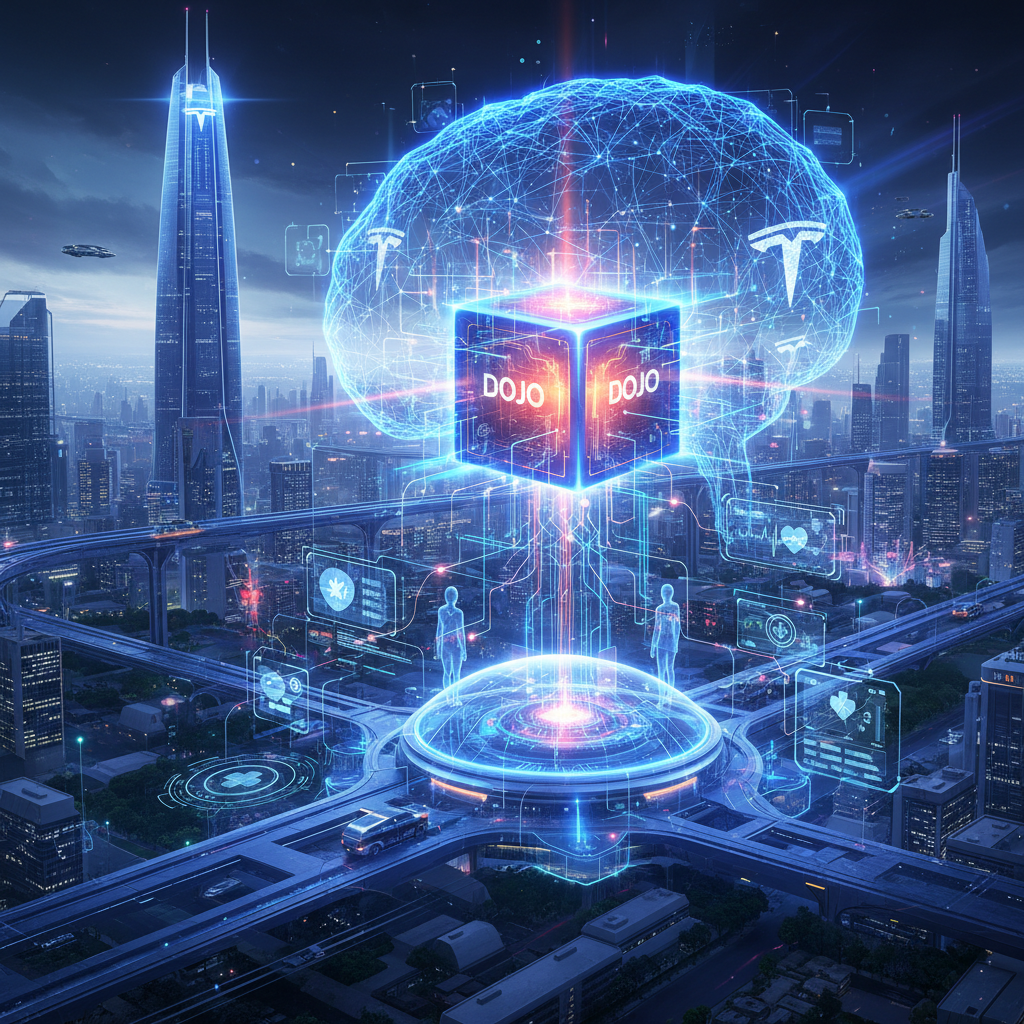
How do we get there from today, you ask? It is a journey, certainly, but the milestones are already being laid. Tesla's Dojo supercomputer, designed specifically for training massive neural networks at scale, is a game-changer. While its initial focus is on autonomous driving, the underlying principles of its architecture, its sheer processing power, and its efficiency in handling vast datasets are universally applicable. Think about it: the complexity of navigating a city street in real time, identifying every pedestrian, cyclist, and obstacle, is not so different from analyzing a human body for anomalies, predicting disease progression, or even designing new drugs. Both require immense computational power to process real-world, often messy, data and derive actionable insights.
Key milestones on this path will include the continued scaling of AI infrastructure like Dojo, making such immense computational power accessible to medical researchers and pharmaceutical companies. We will see specialized AI models, initially trained on general medical knowledge, then fine-tuned on hyper-specific datasets for oncology, cardiology, neurology, and more. Data sharing protocols, while respecting patient privacy, will become more robust, allowing these powerful AIs to learn from a global pool of anonymized medical records. This global learning will be critical. As Dr. Trần Văn Hùng, Director of AI Research at VinBrain, a leading Vietnamese AI healthcare company, recently told me, “The true power of AI in healthcare emerges when it can learn from diverse populations. Dojo's ability to process vast, complex data will accelerate this global learning, making personalized medicine a reality for millions.”
Who wins in this brave new world? Patients, first and foremost. Earlier diagnoses, more effective treatments, and reduced healthcare costs will become the norm. Doctors will win too, freed from tedious administrative tasks and empowered with superhuman analytical capabilities. Pharmaceutical companies will see drug discovery timelines drastically cut, bringing life-saving medications to market faster. And countries like Vietnam, with our vibrant tech scene and a strong focus on digital transformation, stand to gain immensely. We are already seeing incredible innovation here; TechCrunch often highlights the ingenuity coming out of Southeast Asia. Vietnam is the dark horse of AI, ready to leap forward.
“The integration of AI, especially powerful platforms like what Tesla is building, into our healthcare system is not just an upgrade; it is a fundamental shift,” explains Professor Nguyễn Thị Lan, Head of Medical Informatics at the Vietnam National University, Ho Chi Minh City. “We are preparing our next generation of medical professionals and data scientists to be fluent in this new language of AI-driven diagnostics and personalized treatment. The potential for our rural communities, where access to specialized care is limited, is truly transformative.”
Of course, there will be challenges. Data privacy and security will remain paramount. Ethical considerations around AI decision-making in life-or-death situations will require careful thought and robust regulatory frameworks. Job displacement in certain administrative roles might occur, necessitating retraining and upskilling initiatives. But these are challenges we can, and must, address proactively. The benefits far outweigh the risks, in my optimistic view.
What should readers do now? For individuals, it is about understanding this shift, embracing technology, and advocating for ethical AI development. For businesses and governments, it is about investing in AI infrastructure, fostering talent, and creating an environment where innovation can flourish. Ho Chi Minh City never sleeps, especially its coders, and they are already building the foundations for this future. Our startups are hungry, our talent is abundant, and our vision is clear. We are not just adopting technology; we are shaping it.
Consider the Vietnamese startup, MedAI Solutions, which just last month unveiled an AI model capable of detecting early signs of dengue fever from blood samples with over 95% accuracy, significantly faster than traditional methods. This startup just changed the game for public health in our region. Imagine what they could achieve with access to Dojo-level computational power and global datasets. The possibilities are truly boundless. The future of healthcare, powered by the incredible advancements we are seeing from companies like Tesla, is not just coming; it is already being built, right here, right now. And I, for one, cannot wait to see it unfold. Let us embrace it together! For more insights into how AI is transforming various sectors, you might find this article on AI in construction [blocked] fascinating, showing how pervasive this technology truly is. And for a broader perspective on the global impact of AI, I always recommend keeping an eye on MIT Technology Review. The journey is just beginning, and it is going to be an exhilarating ride.