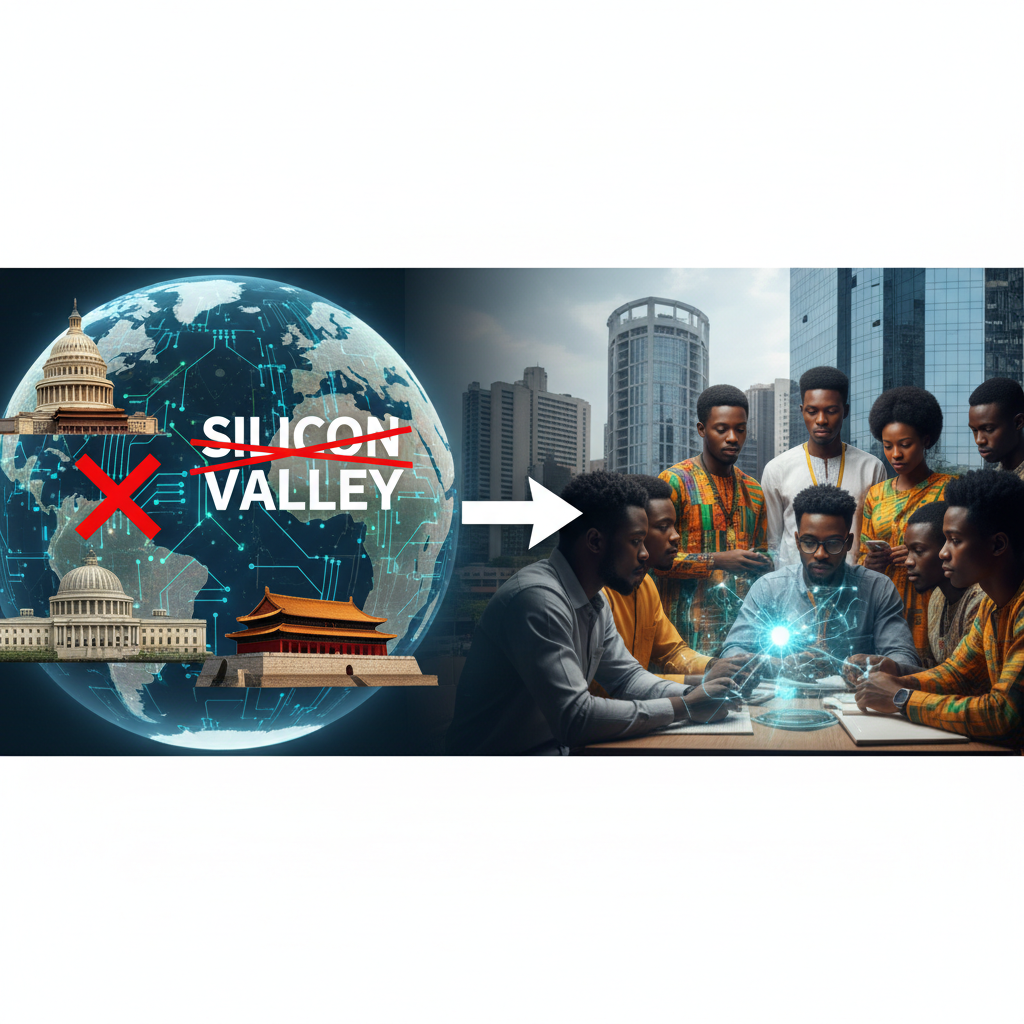
My friends, have you felt it? That electric hum in the air, the palpable energy buzzing through Accra’s tech hubs, from the bustling streets of Osu to the innovative spaces in East Legon? It is the sound of progress, the undeniable rhythm of a continent awakening to its digital destiny. But beyond our borders, a much larger, more intense symphony is playing out, a global AI scramble that will define the next century. We are talking about the AI arms race, a fierce competition between powerhouses like the US, China, and the EU, and it is a phenomenon that demands our full attention, right here in Ghana and across Africa.
The Headline Development: A Geopolitical Chess Match Played in Silicon
What is happening, you ask? Well, it is simple, yet profoundly complex. Nations are realizing that artificial intelligence is not just another technology; it is the fundamental infrastructure of tomorrow. It is the new oil, the new electricity, the very bedrock of economic power, national security, and societal advancement. The US, with its tech behemoths like OpenAI, Google, and NVIDIA, is pushing the boundaries of foundational models and hardware. China, through giants like Baidu and ByteDance, is investing massively in data, research, and application, aiming for global leadership. The European Union, while perhaps a step behind in raw computational power, is championing ethical AI and robust regulatory frameworks, seeking to set the global standards for responsible development.
But this race is not just for the established players. Emerging nations, including those right here in Africa, are not merely spectators. We are becoming active participants, recognizing that our future hinges on our ability to harness AI, not just consume it. The numbers don't lie: Africa’s tech ecosystem has seen venture capital funding grow exponentially, reaching an estimated $5.2 billion in 2022, a significant portion of which is flowing into AI-related startups. This is not just about building apps; it is about building intelligence, and that is a game changer.
Why Most People Are Ignoring It: The Distant Echo of Innovation
For many, the AI arms race feels like a distant rumble, a geopolitical struggle happening in boardrooms and research labs far away. They might see the headlines about a new GPT model or a breakthrough in quantum AI, but they struggle to connect it to their daily lives. It is easy to dismiss it as a concern for governments and corporations, something that will sort itself out without direct input from the average citizen. The technical jargon, the abstract concepts of neural networks and large language models, can create a barrier, making it seem like an exclusive club for the highly specialized. Plus, with so many immediate challenges, from economic pressures to climate change, the long-term implications of AI often get pushed to the back burner. It is a classic attention gap, where the most significant long-term shifts are often the least understood in the short term.
How It Affects YOU: More Than Just a New App on Your Phone
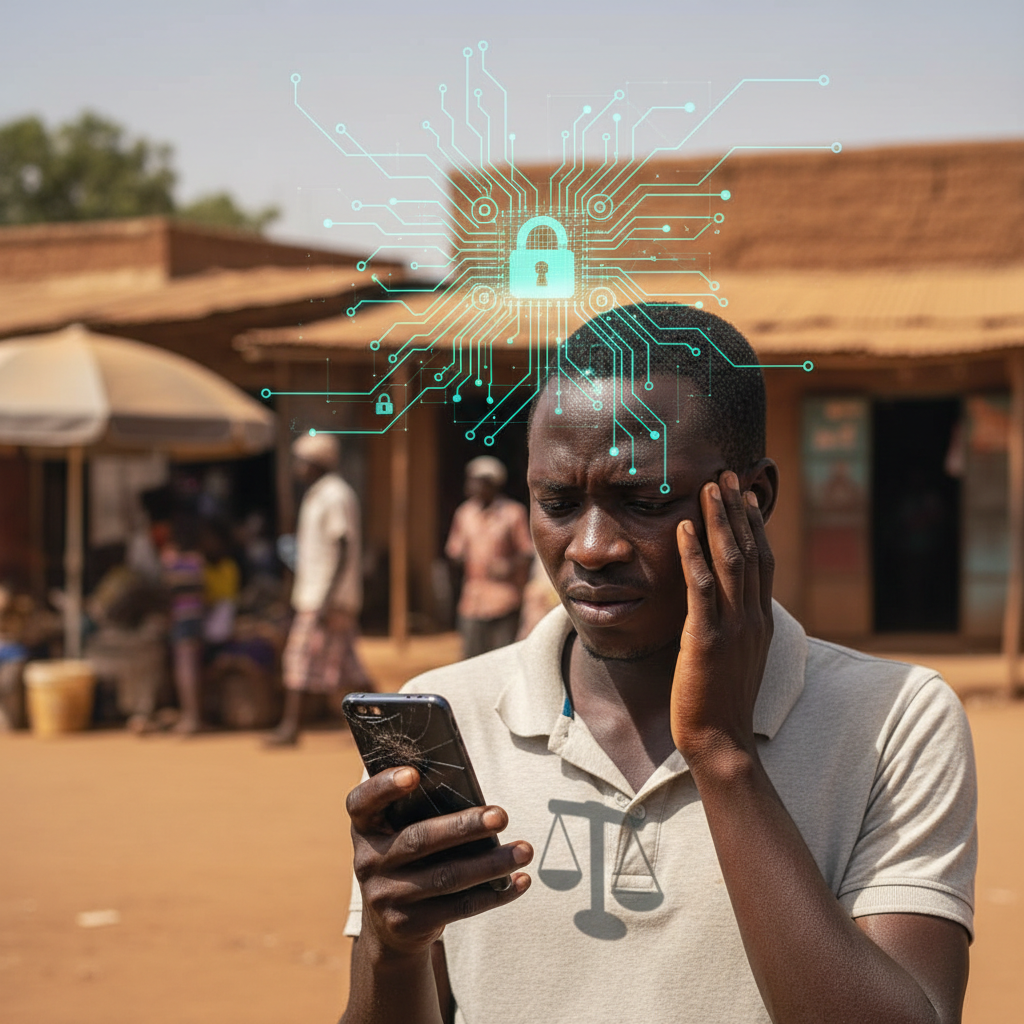
Ah, but this is where it gets personal, my friend. The AI arms race is not some abstract concept; it is already shaping your world and will profoundly impact your future. Think about your job: AI is automating tasks, creating new roles, and demanding new skills. If Ghana is to thrive, our workforce must be ready to adapt, to collaborate with AI, and to innovate. Consider your privacy: The data collected and processed by these AI systems, often developed in distant lands, influences everything from the ads you see to the loans you qualify for, and even your access to public services. The rules of engagement, the ethical guidelines, and the very design principles of these powerful technologies are being forged right now, and if we are not at the table, our values and perspectives might be left out.
Even something as fundamental as food security, a critical issue across our continent, is touched by this. AI in agriculture can optimize crop yields, predict weather patterns, and manage resources more efficiently. But if the underlying AI is controlled by a few dominant players, what does that mean for our food sovereignty? This is bigger than anyone realizes, impacting everything from education to healthcare, from how we communicate to how we govern ourselves.
The Bigger Picture: Sovereignty, Innovation, and the Digital Divide
On a grander scale, the AI arms race is fundamentally about national sovereignty and economic independence. Nations that control AI will control their destiny. Those that merely consume it risk becoming digital colonies. For Ghana and other African nations, this means a dual challenge and opportunity: we must foster our own AI capabilities, building local talent and infrastructure, while also advocating for inclusive global governance frameworks. The digital divide, once primarily about internet access, is now evolving into an AI divide, separating those who create and control intelligent systems from those who merely use them. Our ability to bridge this divide will determine our standing in the 21st century.
Innovation is also at stake. A truly diverse AI landscape, with contributions from every corner of the globe, will lead to more robust, fair, and universally beneficial AI. Imagine AI models trained on diverse African languages and cultural contexts, not just Western datasets. This is not just about representation; it is about building better AI for everyone. TechCrunch often highlights how diverse teams lead to more innovative solutions, and the same applies on a global scale.
What Experts Are Saying: Voices from the Front Lines
Leaders across the globe are keenly aware of these stakes. Sam Altman, CEO of OpenAI, has repeatedly emphasized the need for global collaboration on AI safety and governance, stating, "The development of superintelligence is a global endeavor, and its benefits must be shared globally, along with its risks." His vision, while ambitious, underscores the interconnectedness of this technological frontier.
Closer to home, Dr. Bitange Ndemo, Kenya’s former Permanent Secretary of Information and Communication, a visionary in African tech, has articulated the continent's imperative. He recently remarked, "Africa cannot afford to be a consumer of technology only. We must be producers, innovators, and shapers of AI, ensuring it addresses our unique challenges and reflects our values." This sentiment resonates deeply, particularly as Ghana is proving the skeptics wrong with its burgeoning tech ecosystem.
From the regulatory side, Margrethe Vestager, the EU’s Executive Vice President for a Europe Fit for the Digital Age, has been a vocal proponent of ethical AI. She stated, "We need to ensure that AI systems are human-centric, trustworthy, and respect our fundamental rights. This is not just about competition; it is about our democratic values." Her perspective highlights the EU's focus on setting global norms.
And from the academic world, Professor Moustapha Cissé, head of Google AI Center in Accra, a true pioneer, often speaks about the importance of localized AI research. He once noted, "The problems we face in Africa, from healthcare to agriculture, require AI solutions built with local context and data. This is where our unique contribution lies." His work here in Accra is a testament to that vision.
What You Can Do About It: Engage, Learn, and Demand Your Seat at the Table
So, what can you, my dear reader, do amidst this global AI whirlwind? First, educate yourself. Follow the developments, understand the implications. Resources like MIT Technology Review provide excellent in-depth analysis. Second, engage with policymakers. Demand that your government prioritizes AI literacy, invests in local AI infrastructure, and advocates for Africa's voice in global AI governance forums. Support local startups and researchers who are building AI solutions tailored to our context. Third, upskill yourself. The future workforce will be AI-literate, so embrace continuous learning, whether it is through online courses or local training programs. Organizations like the AI Ghana community are doing incredible work in this space.
Finally, let us foster a culture of responsible innovation. As we build our own AI capabilities, we must embed ethical considerations from the ground up, ensuring that our AI systems are fair, transparent, and beneficial for all. This is not just a technological race; it is a moral one.
The Bottom Line: Why This Will Matter in 5 Years
In five years, the landscape will be unrecognizable. AI will be deeply embedded in every facet of our lives, from personalized education systems to smart cities, from precision agriculture to advanced healthcare diagnostics. The nations that invested wisely, fostered talent, and shaped governance will be the leaders of the new global order. Those that lagged will find themselves playing catch-up, relying on technologies and frameworks designed by others. For Ghana and for Africa, this is our moment to leapfrog, to innovate, and to claim our rightful place as architects of the AI future. The choices we make today, the investments in our youth, in our infrastructure, and in our policies, will determine whether we are merely users of AI, or powerful creators and shapers of its destiny. The future is not just coming; it is being built right now, and we must be part of its construction.