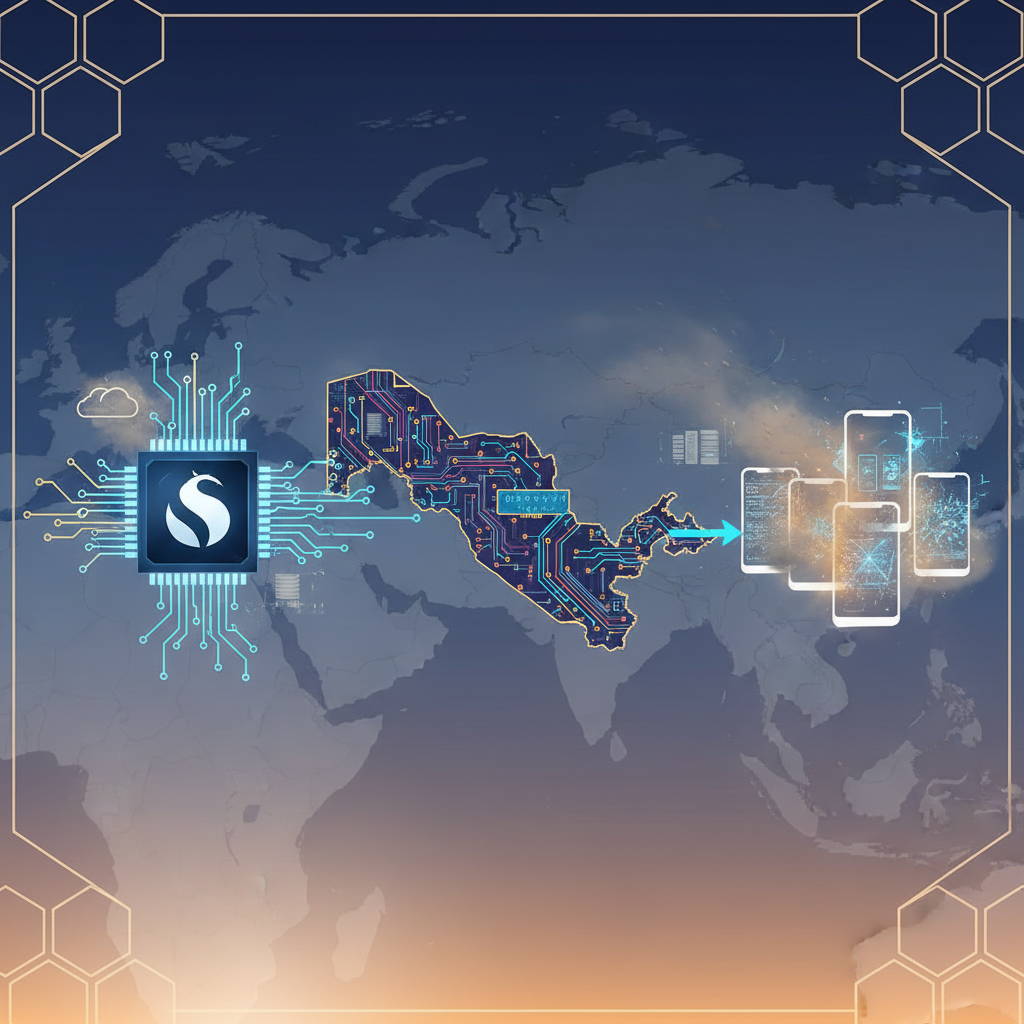

Is the future of artificial intelligence truly in our pockets, or will it forever remain a distant whisper from the cloud? This is the question that echoes through the bustling bazaars of Chorsu, even if the vendors are more concerned with the price of spices than silicon. For years, we have heard about the transformative power of AI, yet for many, its magic remains largely unseen, residing in far-off data centers. Now, Qualcomm, a name synonymous with mobile technology, is pushing a vision where AI lives and breathes on our very own smartphones and edge devices. Is this a genuine paradigm shift, or just another technological mirage in the desert of innovation?
The idea of intelligent devices that do not constantly rely on an internet connection is not new. I remember conversations from my university days in Tashkent, sketching out concepts for devices that could understand our local dialects or process images without sending data halfway across the world. The dream was always there, but the hardware was not. Early attempts at on-device AI were often clunky, limited, and frankly, a bit disappointing. They consumed too much power, generated too much heat, and could only handle the simplest tasks. The real heavy lifting, the kind that powers large language models or complex image recognition, always happened in the cloud, on powerful servers in places like California or Ireland.
Yet, the landscape has changed dramatically. Qualcomm, with its Snapdragon platforms, has been steadily integrating dedicated AI accelerators, or Neural Processing Units (NPUs), into its mobile System-on-Chips (SoCs). These aren't just faster general-purpose processors; they are purpose-built engines designed to handle the specific mathematical operations required for AI workloads, like neural network inference, with remarkable efficiency. This shift began subtly, with features like enhanced camera processing or voice assistants that responded a fraction of a second faster. But in the last year, particularly with the introduction of their latest Snapdragon 8 Gen 3 and X Elite platforms, the capabilities have soared.
Consider the numbers: Qualcomm boasts that its latest mobile platforms can run generative AI models with billions of parameters directly on the device, performing tens of trillions of operations per second (tops). For instance, the Snapdragon 8 Gen 3, found in many flagship Android phones released in late 2024 and early 2025, reportedly delivers a significant leap in NPU performance compared to its predecessors. This means a phone can now generate images from text prompts, summarize lengthy documents, or even translate conversations in real-time, all without sending a single byte of personal data to a remote server. This is a profound shift, especially for regions where internet connectivity can be intermittent or expensive.
For us in Central Asia, this is not just a technical detail; it is a matter of practical utility and digital sovereignty. Imagine a farmer in the Fergana Valley, using an AI-powered app on his phone to diagnose crop diseases from a photo, even when his mobile data signal is weak. Or a student in Samarkand, practicing English with an AI tutor that understands her Uzbek accent perfectly, without needing to upload her voice recordings to a foreign cloud. This localized, private, and always-on intelligence has the potential to democratize access to advanced AI capabilities in ways that cloud-based solutions simply cannot.
I spoke with Dr. Alisher Rakhimov, a leading expert in edge computing at the Tashkent University of Information Technologies. He shared his perspective, saying, "The move towards on-device AI is crucial for developing nations. It addresses critical issues of latency, data privacy, and accessibility. When AI models run locally, they are faster, more secure, and available even offline. This empowers local innovation and reduces reliance on external infrastructure, which is vital for our digital independence." His words resonate deeply, reflecting a sentiment I have heard from many local innovators.
Globally, major players are taking notice. Cristiano Amon, Qualcomm's CEO, has been a vocal proponent of this