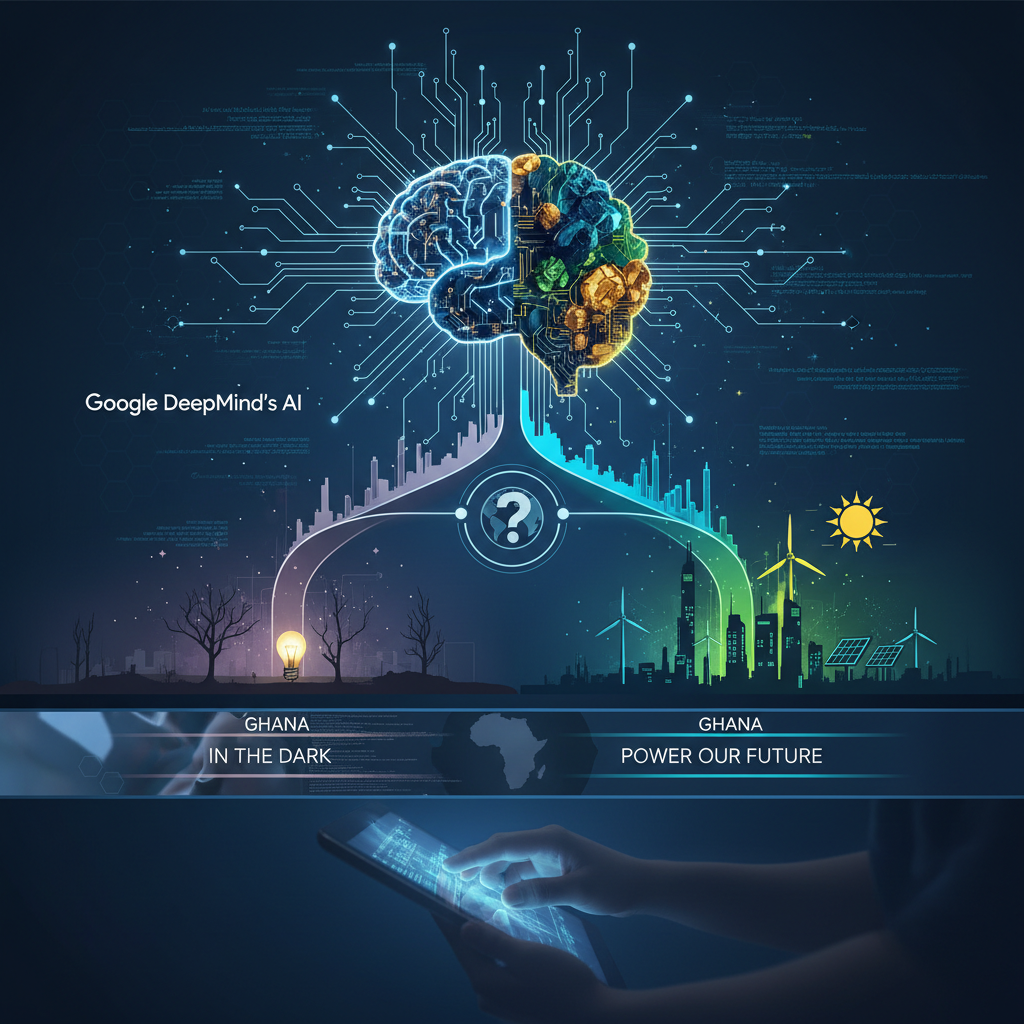

Is the relentless pursuit of AI-powered materials discovery a genuine leap towards a more sustainable future, or is it merely another gold rush, destined to leave many behind, particularly those of us in the Global South? This is not just a rhetorical question; it is a critical inquiry we must confront as the world marvels at breakthroughs in superconductors and battery materials, all thanks to algorithms.
For generations, the search for new materials has been a painstaking, trial-and-error process, often spanning decades. Scientists in laboratories across the world, from Aachen to Yokohama, have dedicated their lives to mixing, heating, and testing compounds, hoping to stumble upon the next great discovery. This methodical, human-centric approach, while slow, often allowed for a deeper understanding of the underlying physics and chemistry. It was a process steeped in intuition, experience, and sometimes, serendipity. Think of the discovery of graphene, for instance, isolated with simple Scotch tape. It was a testament to human ingenuity and observation.
Fast forward to today, April 2026, and the landscape has dramatically shifted. Artificial intelligence, particularly advanced machine learning models, is now at the forefront of materials science. Companies like Google DeepMind, IBM, and even specialized startups are deploying AI to sift through vast databases of known materials, predict properties of hypothetical compounds, and even design entirely new molecular structures from scratch. The promise is tantalizing: faster development of high-temperature superconductors for lossless energy transmission, more efficient and cheaper battery materials for electric vehicles and grid storage, and novel catalysts for industrial processes. The potential to address climate change and energy scarcity is immense, and that is something we cannot ignore.
Consider the numbers. A recent report by MIT Technology Review highlighted that AI-driven materials discovery projects are reducing research and development timelines by an average of 70 percent. This is not just an incremental improvement; it is a paradigm shift. "We are seeing materials designed and synthesized in months, not years," explains Dr. Kwame Nkrumah, a computational materials scientist at the University of Ghana. "The computational power of AI allows us to explore chemical spaces that would be impossible for human scientists to navigate. It's like having a million brilliant chemists working simultaneously." He points to recent successes where AI has identified promising new solid-state electrolytes for lithium-ion batteries, potentially extending their lifespan and safety, a critical need for our burgeoning electric mobility sector here in Ghana.
But here is where my conviction, and perhaps my skepticism, truly takes hold. While the efficiency gains are undeniable, we need to talk about this. Who truly benefits from these accelerated discoveries? Are these breakthroughs democratized, or do they remain locked behind proprietary algorithms and patents held by a few powerful corporations in the Global North? The world is moving towards a future powered by these advanced materials, and Ghana, rich in bauxite, manganese, and potential lithium deposits, finds itself in a precarious position. We are often the source of the raw materials, yet rarely the beneficiaries of the value-added innovation. This affects every single one of us, from the miner in the Ashanti Region to the urban dweller hoping for stable electricity.
"The current trajectory of AI in materials science risks creating a new form of resource colonialism," warns Professor Ama Serwaa, an expert in development economics at the Kwame Nkrumah University of Science and Technology. "The AI models are trained on global data, but the intellectual property and the manufacturing capabilities remain concentrated. We provide the physical resources, but the cognitive labor, the 'brain' of the discovery, is externalized. This is not equitable development." Her words echo the Akan philosophy of Sankofa, urging us to look back at our history to inform our future, to ensure we do not repeat past mistakes of exploitation.
Indeed, the proprietary nature of many AI models is a significant concern. Companies like Google DeepMind, with their vast computational resources and talent, are leading the charge. Their AlphaFold model revolutionized protein folding, and now similar approaches are being applied to inorganic materials. While their work is groundbreaking, the lack of transparency around the data used for training and the algorithms themselves raises questions about bias and accessibility. What if the models are inadvertently biased against certain material compositions or synthesis pathways that are more prevalent in developing regions? What if the 'optimal' materials identified are those that are easier to patent or manufacture in existing Western facilities, rather than those that are truly sustainable or accessible for global production?
"We are seeing a trend where the 'black box' nature of AI makes it difficult for local scientists to understand, adapt, or even challenge the outputs," says Dr. Esi Mensah, a Ghanaian physicist working on renewable energy solutions. "Imagine an AI discovers a perfect battery material, but the synthesis requires extremely rare earth elements or processes that are only available in specific, highly industrialized nations. What good is that discovery for Ghana, or for any nation striving for energy independence and local manufacturing? We need open science, open data, and open-source AI models that allow for true global collaboration and benefit." Her call for openness is not just academic; it is a plea for practical empowerment.
My verdict is clear: AI-powered materials discovery is undeniably the new normal, not a passing fad. The speed and scale of innovation are too significant to ignore. However, its implementation carries profound ethical implications that demand our immediate attention. If we allow this trend to unfold without a concerted effort towards equity and inclusion, we risk exacerbating global disparities. We cannot afford to be passive observers. Silence is complicity when the future of our energy, our technology, and our very autonomy is at stake.
What can be done? We must advocate for international frameworks that promote data sharing, open-source AI tools for materials science, and collaborative research initiatives that actively involve scientists and institutions from the Global South. Ghana, and indeed Africa, must invest in building its own computational materials science capabilities, training a new generation of experts who can leverage these tools for our own development goals. We need to establish regional AI research hubs, perhaps in partnership with institutions like the African Institute for Mathematical Sciences, focusing on materials relevant to our specific needs, like affordable solar energy storage or sustainable building materials. We cannot just be consumers of these technologies; we must be co-creators and innovators.
The promise of AI to unlock a future of abundant, clean energy is real. But that future must be one that is accessible and beneficial to all, not just a privileged few. As we navigate this complex technological landscape, we must ensure that the pursuit of scientific advancement is always tempered by a deep commitment to justice and equity. Only then can we truly harness the power of AI to build a world where progress uplifts everyone, from Accra to Amsterdam, from the mining towns to the research labs. For more on how AI is impacting global science, you can check out articles on Nature Machine Intelligence. And for a broader perspective on AI's societal implications, Wired's AI section often provides insightful analysis.