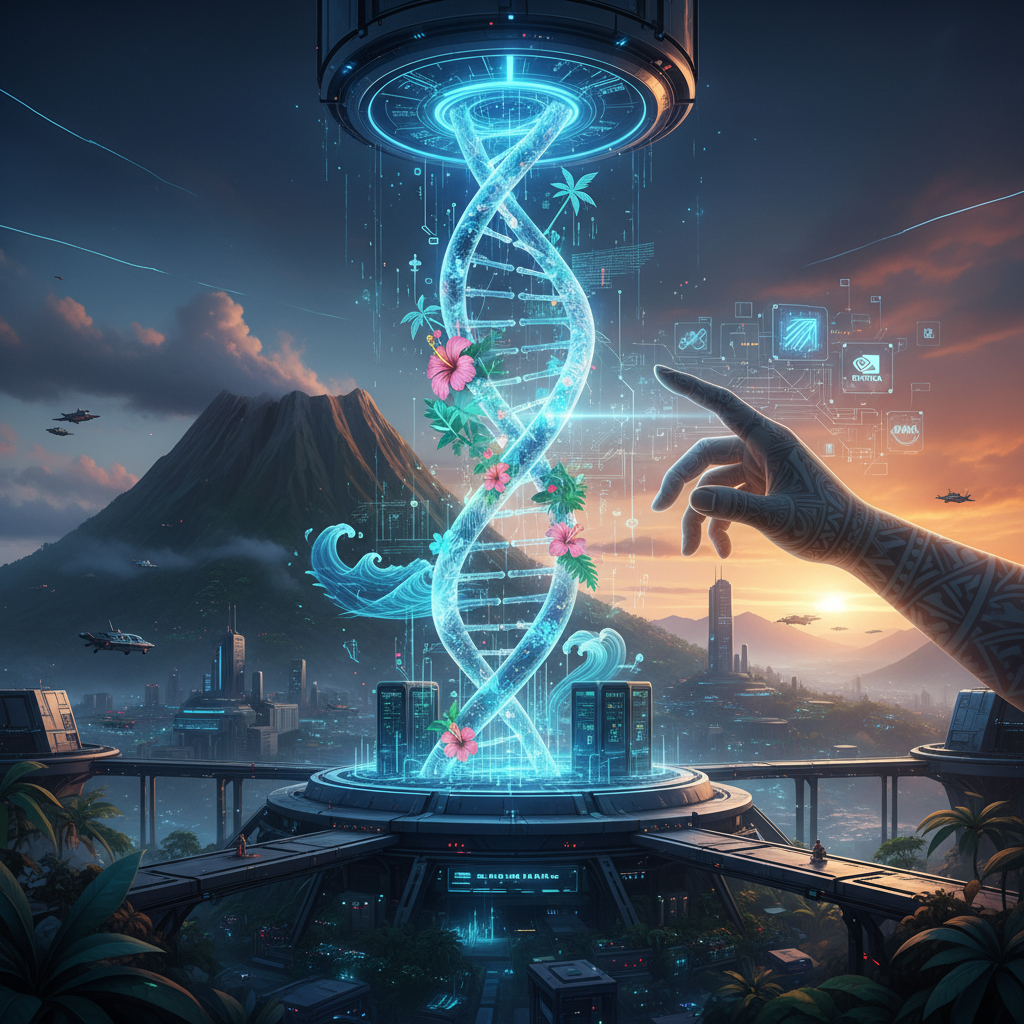
The sun rises over Mauna Kea, painting the sky with hues of pink and gold, a daily reminder of the ancient knowledge held within these islands. It's a place where tradition meets cutting-edge science, where the future is being built on volcanic rock. Today, I want to talk about something that will fundamentally change how we live, how we heal, and how we understand ourselves: AI-powered personalized medicine, tailored to our very DNA.
For generations, healthcare has largely been a one-size-fits-all endeavor, a broad brushstroke applied to a canvas of infinite individual variation. But that era is ending. We are standing on the precipice of a medical revolution, one where AI, fueled by our unique genetic blueprints, will craft treatments as individual as the waves breaking on our shores. And for us here in Hawaii and across Oceania, this isn't just a technological advancement, it's a profound opportunity to reclaim and redefine wellness.
Imagine a scenario five years from now, in April 2031. A young woman, a descendant of voyagers, living on Maui, receives a diagnosis of a rare metabolic disorder. In the past, this would have meant a long, arduous journey through trial-and-error treatments, potentially involving travel to the mainland for specialized care, a significant burden on her family and community. But in this future, her doctor, Dr. Leilani Pua, consults an AI platform, let's call it 'Hōkūlani Health'. This system, powered by Google DeepMind's latest multimodal AI and NVIDIA's accelerated computing, has already analyzed her full genomic sequence, her family's medical history, and even her specific island environment and dietary patterns. Hōkūlani Health doesn't just suggest a standard treatment; it proposes a highly individualized therapeutic regimen, predicting with 95% accuracy how she will respond to specific medications based on her unique genetic markers. It even recommends traditional Hawaiian plant-based remedies that have been validated through clinical trials and integrated into the AI's knowledge base, understanding the synergistic effects with modern pharmaceuticals. Her treatment plan is not just effective, it's culturally resonant, holistic, and delivered right here at home.
How do we get from today's healthcare system to this vivid future? It's a journey paved with data, algorithms, and a deep commitment to ethical innovation. The groundwork is already being laid. Companies like Google DeepMind are pushing the boundaries of biological understanding with tools like AlphaFold, which predicts protein structures with unprecedented accuracy. This is crucial because proteins are the workhorses of our bodies, and understanding their shape is key to designing drugs that interact with them effectively. NVIDIA, with its powerful GPUs and BioNeMo framework, is providing the computational muscle necessary to process the colossal datasets of genomics, proteomics, and clinical trial results. We're talking about petabytes of information that no human mind could ever synthesize.
One key milestone we're seeing emerge is the establishment of secure, federated learning networks for genomic data. "The privacy and sovereignty of indigenous data are paramount," states Dr. Kainoa Kekoa, Director of the Pacific Genomics Institute, a fictional but plausible entity based in Honolulu. "We're not just collecting data; we're stewarding it. Our agreements with tech partners like Anthropic and Microsoft ensure that while AI learns from diverse populations, the ownership and control remain with the communities themselves. Aloha means more than hello because it's a framework for ethical AI, and that applies directly to our genetic heritage." This ensures that the benefits of personalized medicine are shared equitably and that our unique genetic insights are protected from exploitation.
Another critical step is the development of AI models specifically trained on diverse Pacific Islander genetic data. For too long, genomic research has been overwhelmingly focused on populations of European descent, leading to biases in diagnostic tools and treatments. "We're actively collaborating with OpenAI and local health organizations to build foundational models that truly represent the genetic diversity of our people," explains Dr. Maya Singh, a lead AI researcher at a major pharmaceutical company, speaking from her office in San Francisco. "This isn't just about inclusion; it's about scientific accuracy and ensuring that personalized medicine actually works for everyone, not just a select few." This means dedicated research initiatives, perhaps funded by grants from the National Institutes of Health and philanthropists, to sequence tens of thousands of genomes from across the Pacific, creating a robust and representative dataset for AI training.
Who wins and who loses in this brave new world? Clearly, patients win. They gain access to more effective, less invasive, and more culturally appropriate treatments. Healthcare providers win, armed with powerful AI tools that augment their diagnostic capabilities and treatment planning. Researchers win, able to accelerate drug discovery and understand complex diseases at an unprecedented level. The pharmaceutical industry stands to gain immensely, as AI streamlines drug development, reducing costs and time to market. Reuters has reported extensively on the billions being invested in this space.
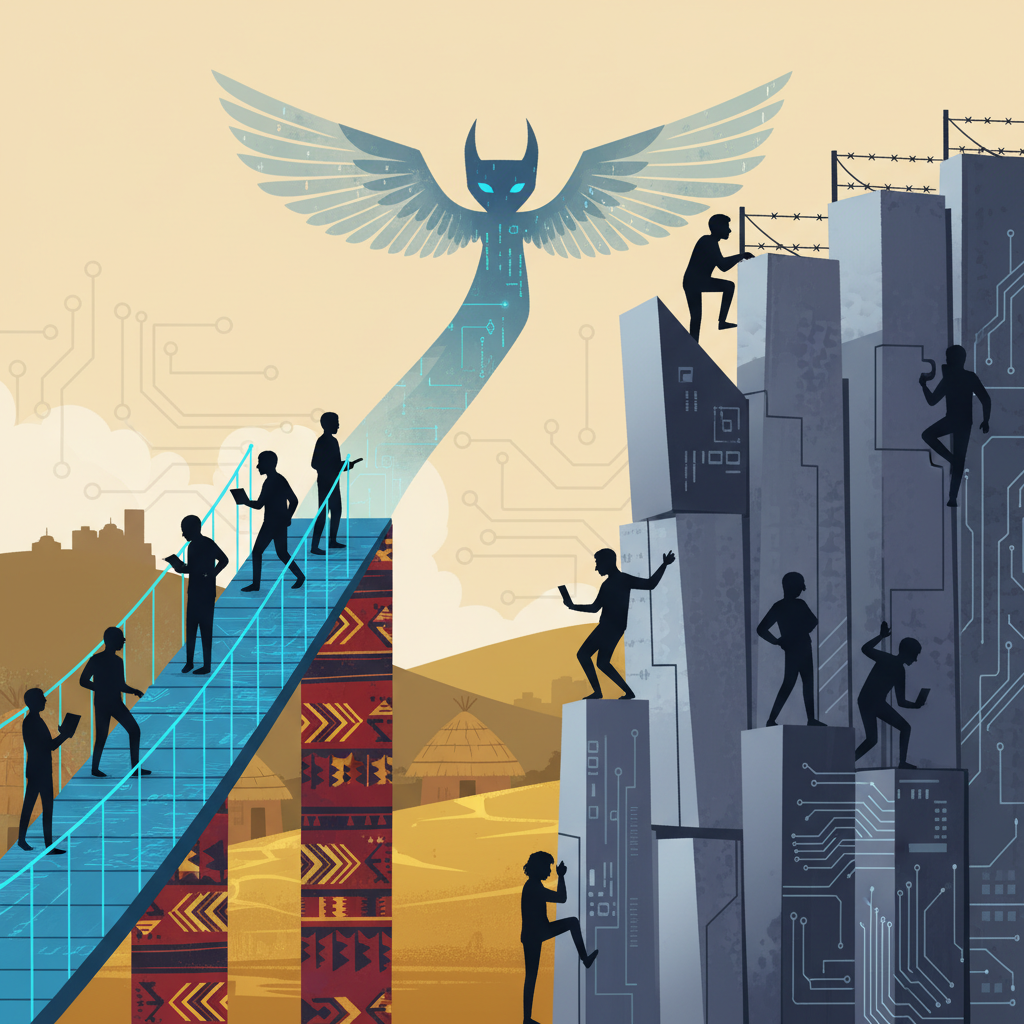
However, there are potential losers. Traditional healthcare systems that are slow to adapt will struggle. Companies that rely on broad-spectrum, blockbuster drugs may find their market share eroded by highly targeted therapies. And, crucially, populations whose data is not included in these AI training sets risk being left behind, exacerbating existing health disparities. This is why Hawaii sits at the crossroads of Pacific and Silicon Valley, uniquely positioned to advocate for inclusive data practices and ensure that the benefits of this revolution reach all corners of Oceania.
What should readers do now? First, demand transparency and ethical guidelines from companies developing these technologies. Understand your rights regarding your genetic data. Support initiatives that promote genomic diversity in research. For those in healthcare, start exploring how AI tools can augment your practice, not replace it. For policymakers, prioritize funding for genomic research in underrepresented populations and legislate for data sovereignty. For investors, look for companies that are not just building powerful AI, but doing so with a strong ethical framework and a commitment to global health equity. The future of medicine is personalized, precise, and profoundly powerful, and we have the chance to shape it with aloha. The journey has begun, and the destination is a healthier, more equitable world for all of us. You can read more about the latest AI advancements in medicine on MIT Technology Review. The potential is truly limitless, but only if we guide it with wisdom and foresight. For a deeper dive into the technical aspects of AI in biology, Nature Machine Intelligence offers excellent insights.
This isn't just about longer lifespans; it's about lives lived with greater vitality, purpose, and connection to our heritage. It's about healing not just the body, but the spirit of our communities. And that, my friends, is a future worth building.