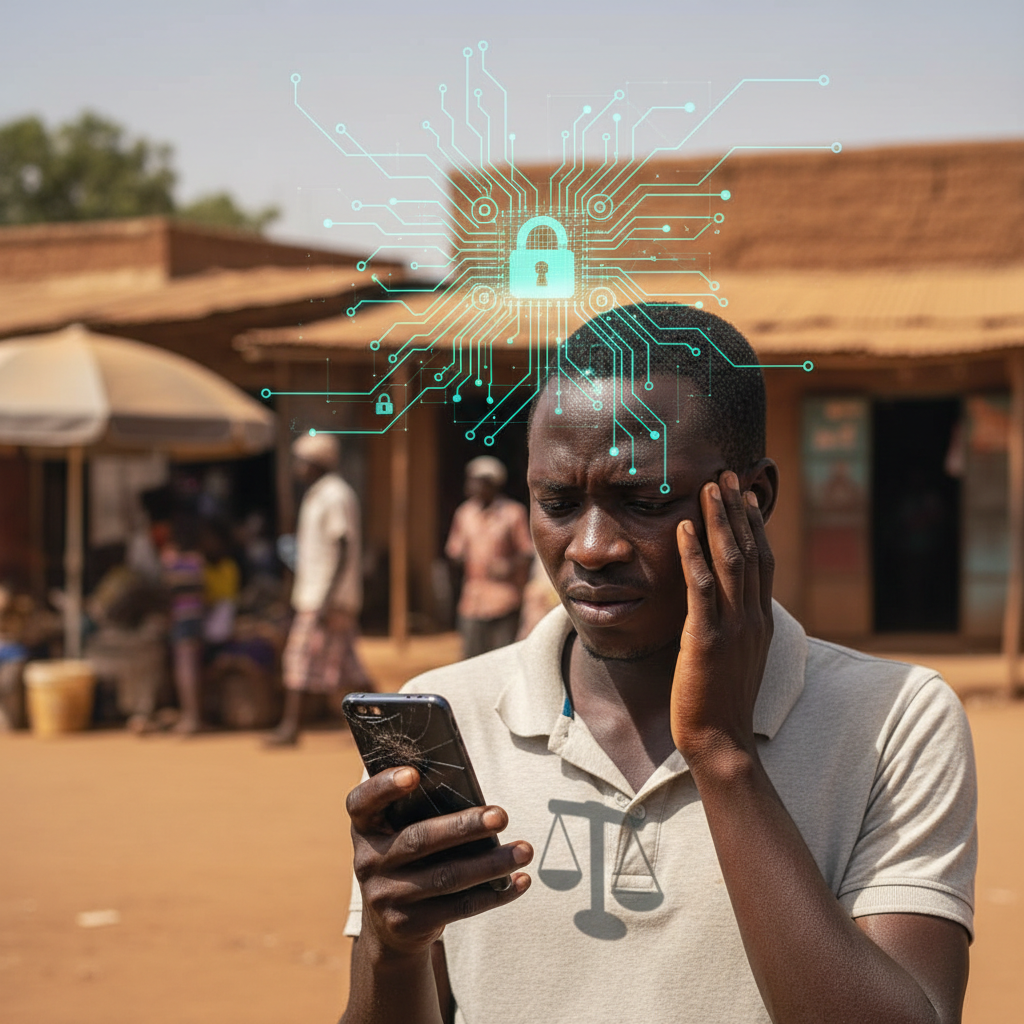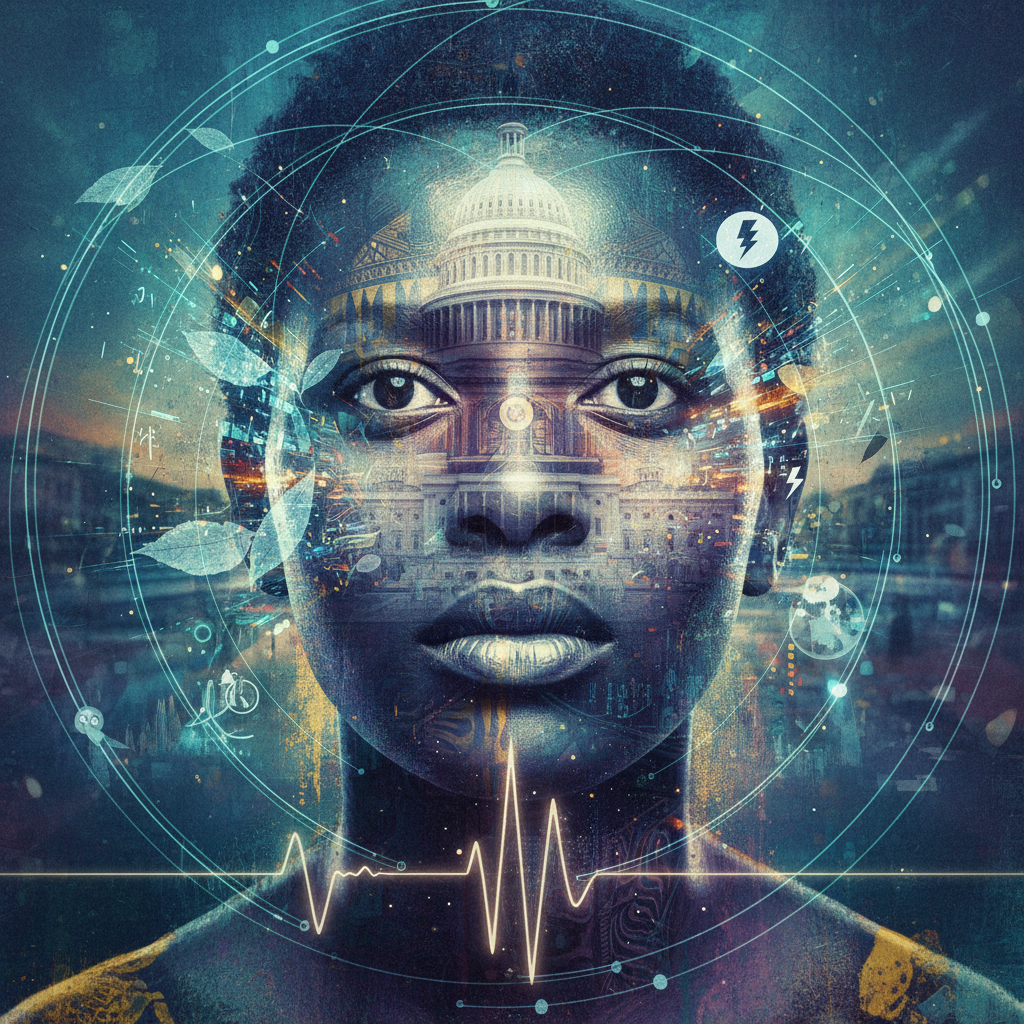

The morning sun, golden and warm, was just beginning to paint the peaks of the Mdzimba mountains as Gogo Dlamini sat on her stoep, her fingers deftly weaving a traditional emakhala mat. Her grandson, Sipho, usually glued to his smartphone, was unusually quiet beside her, his brow furrowed not by a TikTok challenge, but by a news alert he had just read. "Gogo," he began, his voice a little strained, "they are talking about AI laws in America. What does that mean for us, for our ubuntu?"
I smiled, thinking how Sipho, like many young people here, often sees the world through the lens of his phone, yet still grounds his concerns in our shared cultural values. It is a question I have heard in different forms across our beautiful kingdom, from the bustling markets of Manzini to the tranquil villages near Hlane Royal National Park. The debates in the United States Congress, with their complex jargon and powerful industry lobbyists, might feel a world away, but their potential impact on the algorithms that shape our digital experiences, and by extension, our very thought processes, is very real, even here.
In Eswatini, we say 'a person is a person through other people', and this concept of ubuntu is central to how we navigate life. It is about community, empathy, and interconnectedness. But what happens when the digital tools we use every day are governed by rules crafted thousands of miles away, often without our unique human psychology in mind? How do these distant legislative battles, influenced by tech giants like OpenAI and Google, subtly reshape our cognitive landscapes and our relationships?
Recent research from the University of Johannesburg, for example, suggests a growing cognitive load among African internet users due to the sheer volume of information and the persuasive design of global platforms. While not directly tied to US legislation, it highlights a vulnerability. "The constant stream of notifications, the algorithmic curation of content, it all demands a piece of our attention," explained Dr. Naledi Mokoena, a cognitive psychologist specializing in digital behavior, during a recent online conference. "When regulatory frameworks are designed in distant capitals, they often overlook the specific cultural and psychological nuances of diverse populations, leading to unintended consequences for cognitive well-being." Her words resonate deeply with me, as I see how easily young minds, like Sipho's, can be swayed by narratives crafted far from our umphakatsi (chiefdom).
The US Congress, in its efforts to create comprehensive AI legislation, is grappling with everything from data privacy and algorithmic bias to intellectual property and national security. Companies like Microsoft and Meta are pouring resources into lobbying efforts, each vying to shape the regulatory landscape in their favor. While these debates are framed within an American context, their outcomes will inevitably influence the global standards that govern AI development and deployment. This means the AI tools we use in Eswatini, from educational apps to social media platforms, will carry the imprint of these distant policy decisions.
Consider the subtle shifts in human behavior. When an algorithm, influenced by a particular regulatory framework, prioritizes certain types of content or interactions, it can inadvertently alter our attention spans, our critical thinking skills, and even our capacity for empathy. If a platform's design, shaped by a US law on 'harmful content', inadvertently stifles local, nuanced discussions or promotes sensationalism, it affects how we relate to each other online. We might find ourselves interacting less deeply, or becoming more polarized, simply because the digital environment has been subtly re-engineered.
Dr. David S. Touretzky, a research professor at Carnegie Mellon University and a vocal advocate for AI ethics, has often spoken about the global implications of national AI policies. "The internet is borderless, and so is the influence of AI," he once remarked in an interview. "When the US sets a precedent, whether it's on data governance or algorithmic transparency, it creates a de facto standard that smaller nations, often lacking the resources for their own robust regulatory bodies, will inevitably follow or be impacted by." This is a crucial point for Eswatini. We are a small nation, yes, but our people are just as susceptible to the cognitive effects of AI as anyone else.
The psychological impact is not always negative, of course. Well-designed AI, guided by ethical legislation, could potentially enhance learning, improve access to information, and foster connections. Imagine AI tools that are culturally sensitive, that understand siSwati nuances, and that promote local knowledge. But without our voice at the table, or without our specific human context being considered in these global legislative efforts, the risk of cognitive dissonance and behavioral shifts that erode our ubuntu is significant.
Sometimes the smallest countries have the biggest vision, and I believe Eswatini can contribute to this global conversation. We may not have the lobbying power of Silicon Valley giants, but our deep understanding of community, our emphasis on human connection, and our unique cultural values offer a perspective that is often missing in these high-stakes legislative battles. Our experience reminds us that technology, no matter how advanced, must always serve humanity, not the other way around.
What can we do here, in our small corner of the world? Firstly, we must foster digital literacy, teaching our children and elders alike to critically engage with AI, to understand its biases, and to recognize its influence on their thoughts and feelings. Secondly, our local innovators and policymakers need to actively engage with global discussions, advocating for frameworks that are inclusive and respectful of diverse human psychologies. We cannot afford to be passive recipients of technology shaped solely by distant powers. We must demand that AI learn the lesson of ubuntu.
For Sipho, and for all emaSwati, the future of AI is not just about the latest gadget or the fastest algorithm. It is about how these tools shape our minds, our relationships, and our very sense of self. The debates in Washington may seem far away, but their echoes resonate in the quiet hum of our daily lives, urging us to remain vigilant, to stay connected to our values, and to ensure that technology truly serves the people. As I watched Gogo Dlamini's hands move with practiced grace, weaving patterns that have been passed down through generations, I felt a renewed sense of purpose. Our traditions, our humanity, are the threads that must guide us through this intricate digital tapestry. For more on the global impact of AI regulations, you can explore articles on Reuters Technology or MIT Technology Review. The evolving landscape of AI ethics is also frequently covered by Wired.
It is a complex dance, this interplay between global policy and local human psychology. But like the sibhaca dancers who move in perfect synchronicity, we too must find our rhythm, ensuring that the march of technology does not leave our humanity behind.