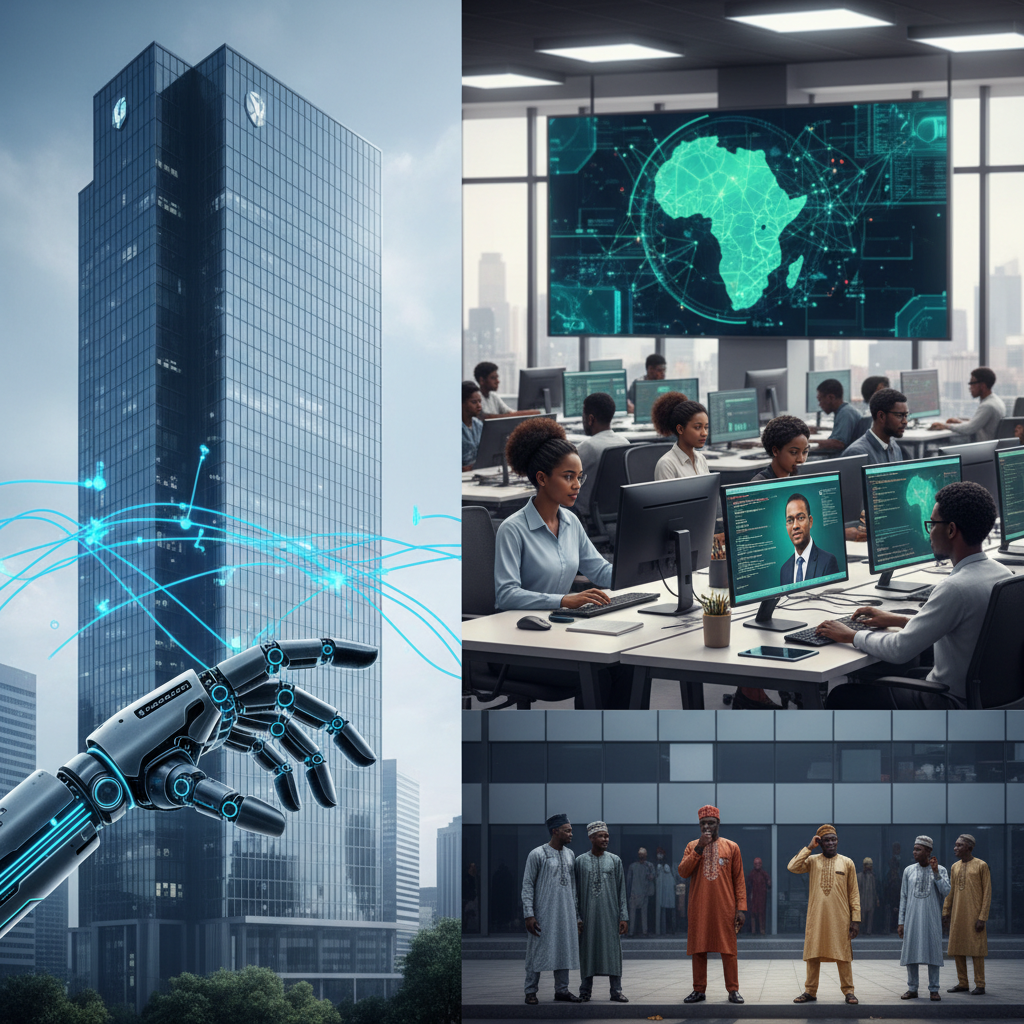
The fluorescent lights of the Nigerian Exchange Group trading floor hummed with an unusual quiet. Gone were the frantic shouts, the paper flying, the palpable human energy that once defined the heart of Lagos’s financial district. Instead, a low, rhythmic whirring emanated from server racks, and screens flickered with complex algorithms making decisions faster than any human could comprehend. This is the new reality, a scene playing out not just in New York or London, but right here in Nigeria, as Wall Street’s AI revolution makes its way to our shores.
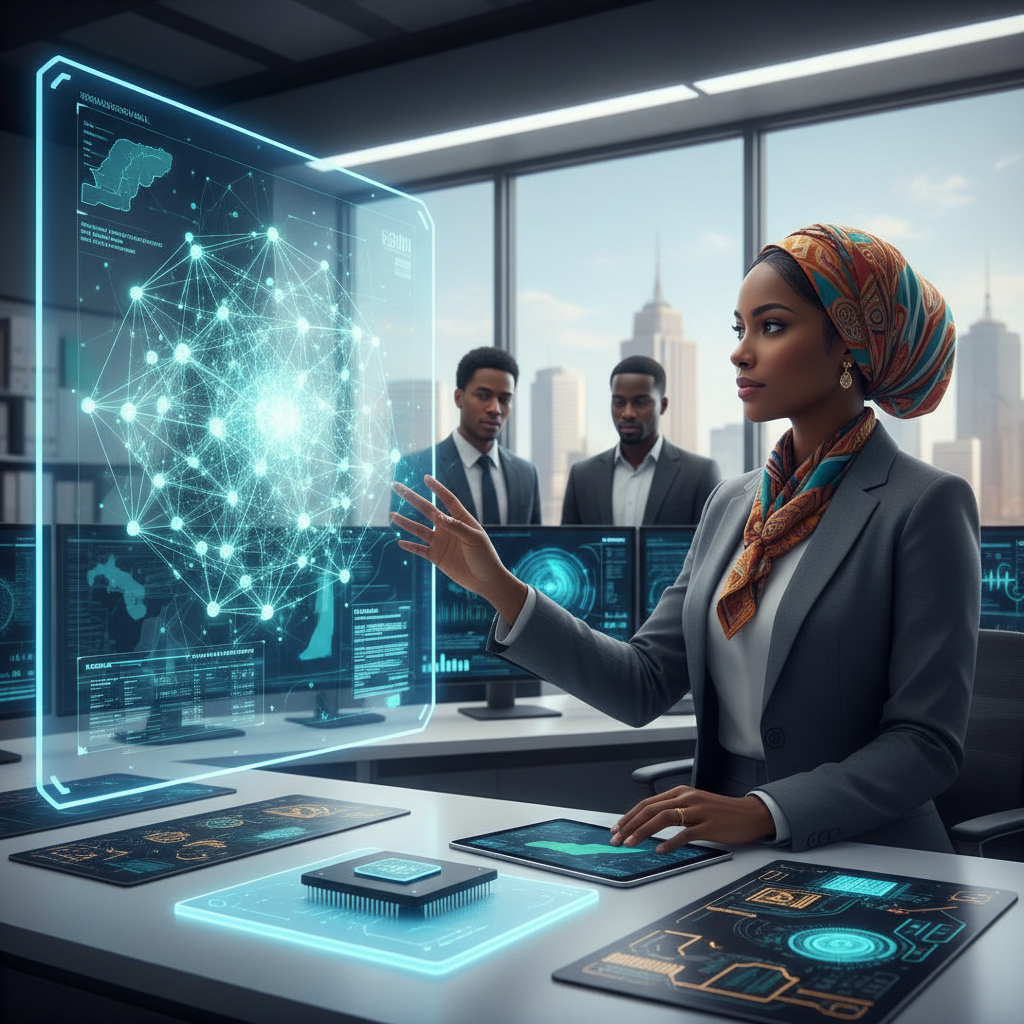
I saw it firsthand at Zenith Bank’s new AI-powered risk assessment unit. Young analysts, brilliant minds, sat glued to monitors, not crunching numbers manually, but overseeing systems powered by Google’s Gemini and Microsoft’s Copilot. These tools are supposedly making lending more efficient, identifying fraud with unprecedented accuracy, and personalizing financial advice through robo-advisors. Everyone’s celebrating, but I have questions. What happens when the algorithms decide who gets a loan and who doesn’t, based on data models that might not understand the nuances of our informal economy, or worse, perpetuate existing biases?
Unpopular opinion: this isn't just about efficiency; it's about control. It’s about who holds the keys to the digital kingdom, and whether our local financial institutions are truly benefiting or simply becoming conduits for foreign tech giants. The narrative from Silicon Valley is always one of progress and democratization, but from my vantage point in Lagos, it often looks like another form of digital colonialism, where our data becomes the new gold, mined and processed abroad.
Let's talk about what nobody wants to discuss: the cold, hard data. A recent report by the National Bureau of Statistics, in collaboration with a local fintech think tank, revealed that over the past 18 months, AI adoption in Nigeria's financial sector has surged by 65%. Major players like Access Bank and GTBank have invested heavily in algorithmic trading platforms and AI-driven fraud detection systems, often partnering with global firms like Palantir and NVIDIA for their computational power. The projected return on investment (ROI) for these early adopters is estimated at a staggering 30-40% within three years, primarily from reduced operational costs and increased transaction volumes. This is a boon for shareholders, no doubt.
However, this efficiency comes at a human cost. The same report indicated a 15% reduction in entry-level and mid-tier roles in traditional banking operations, particularly in areas like credit analysis, customer service, and compliance. These are jobs that many Nigerian graduates once aspired to, a pathway to the middle class. Now, they are being automated away, replaced by lines of code and machine learning models. We are seeing a new class of financial professionals emerge, those who can manage and interpret AI systems, but their numbers are far fewer than those being displaced.
Consider the tale of two companies. On one hand, we have Fidelity Bank, which aggressively embraced AI. They partnered with a major US-based AI firm to deploy a sophisticated robo-advisory service, 'Fidelity SmartInvest,' targeting Nigeria’s burgeoning youth demographic. “Our AI-powered platform has democratized investment for thousands of young Nigerians,” stated Dr. Ngozi Okoro, Head of Digital Transformation at Fidelity Bank. “It offers personalized financial planning at a fraction of the cost, making wealth creation accessible to everyone.” Fidelity reported a 25% increase in new customer acquisition and a 10% rise in assets under management in the last year alone. They are clearly winning the efficiency game.
On the other hand, there’s Heritage Bank, a smaller institution that moved more cautiously. They focused on augmenting their human workforce with AI tools, rather than replacing them. Their approach involved training existing staff in AI literacy and deploying AI for back-office automation, freeing up human advisors to focus on complex client relationships and bespoke solutions. While their growth numbers aren't as flashy, they boast higher employee retention and a reputation for personalized service. “We believe in human-centered AI,” explained Mr. Emeka Obi, CEO of Heritage Bank. “Our customers value the human touch, and our staff are our greatest asset. AI should empower them, not erase them.”
Worker perspectives are, predictably, mixed. “I used to spend hours manually reviewing loan applications,” shared Tunde Adebayo, a former credit officer at a tier-2 bank, now retrained as an AI operations specialist. “Now, the AI flags anomalies, and I investigate the complex cases. It’s more interesting, but also, there are far fewer of us.” Yet, for every Tunde, there are others like Funke Alabi, a former customer service representative whose role was entirely automated by a chatbot powered by OpenAI’s GPT-4. “I’m still looking for work,” she told me, her voice tinged with frustration. “They said AI would create new jobs, but for people like me, it just created unemployment.” This is the stark reality on the ground, a narrative often missing from the glossy press releases.
Expert analysis paints a complex picture. Professor Akinwumi Adesina, a leading economist at the University of Ibadan, warns of the widening skills gap. “Nigeria needs to invest massively in AI education and reskilling programs,” he urged. “If we don’t, we risk creating a two-tiered workforce: a small elite who manage the algorithms, and a vast majority who are left behind by them. This will exacerbate inequality, not reduce it.” He points to the urgent need for local data infrastructure and regulatory frameworks that protect Nigerian interests, not just facilitate foreign tech expansion. “We must ensure data sovereignty and ethical AI development, tailored to our unique socio-economic context.” You can read more about these challenges in the broader tech landscape at MIT Technology Review.
The Central Bank of Nigeria (CBN) has taken notice, too. Governor Folashodun Shonubi recently announced plans for a national AI strategy for the financial sector, emphasizing data localization and the development of indigenous AI talent. “We cannot afford to be passive consumers of foreign technology,” Shonubi declared at a recent press conference. “We must be active participants, innovators, and architects of our own digital future.” This is a welcome sentiment, but the devil, as always, will be in the implementation.
What’s coming next? More algorithms, more automation, and undoubtedly, more disruption. The global trend, as reported by Reuters, shows no signs of slowing. We will see AI move beyond just trading and risk assessment, permeating every aspect of finance, from hyper-personalized investment portfolios to AI-driven compliance monitoring. The promise is a more efficient, inclusive financial system. The danger is a system that is opaque, biased, and ultimately, dehumanizing. My concern is that without deliberate policy and a strong focus on local capacity building, Nigeria risks becoming a mere data farm and consumer market for global AI, rather than a true beneficiary. We need to ask tough questions about the ownership of these algorithms, the transparency of their decision-making, and most importantly, their impact on the lives of ordinary Nigerians. The future of our financial sector, and indeed our economy, depends on it. For more on the ethical implications of AI, consider exploring articles on Wired.
The conversation around AI in finance cannot just be about profit margins and technological marvels. It must be about people, about fairness, and about our collective future. This is not just Wall Street’s game anymore; it’s our game, and we must play it wisely.