
Here in Aotearoa, the rhythm of life has always been dictated by the elements. From the ancient mariners who navigated by stars and swells to our farmers watching the skies for rain, understanding the weather isn't just practical, it's deeply ingrained in our collective memory and survival. So, when I hear about AI models outperforming traditional weather forecasting by orders of magnitude, my ears prick up. This isn't just about a slightly better prediction for your weekend barbecue, this is about something far more profound, especially for a nation like ours, perched at the edge of the world and facing the brunt of a changing climate.
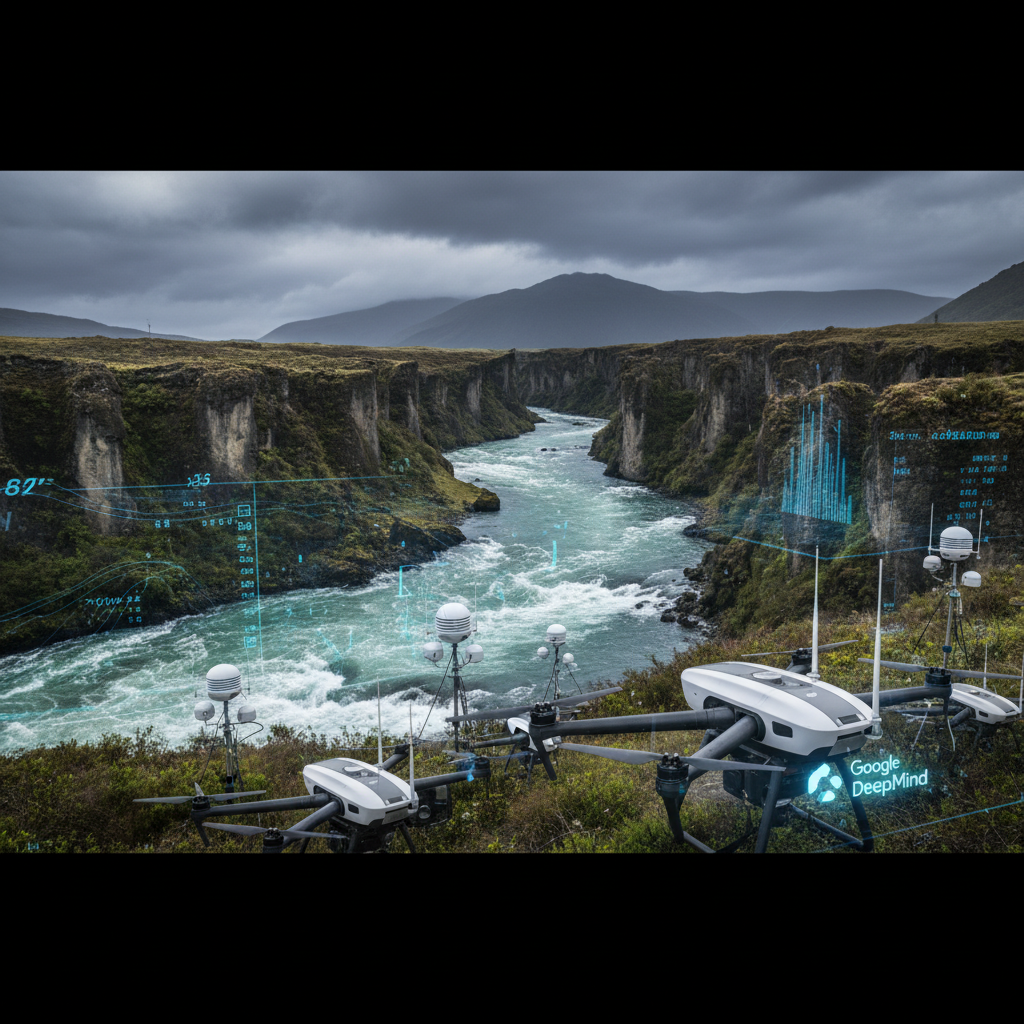
The headline development, if you haven't been paying close attention, is that artificial intelligence, particularly models developed by powerhouses like Google DeepMind, are now consistently delivering more accurate, faster, and more localized weather forecasts than the sophisticated numerical prediction systems we've relied on for decades. Google DeepMind's GraphCast, for instance, has demonstrated remarkable accuracy, often predicting weather patterns for days ahead with a precision that traditional models only achieve for much shorter periods. This isn't a marginal improvement, it's a paradigm shift, a leap forward that feels like moving from a waka to a jet plane.
Why are most people ignoring this, you might ask? Well, weather forecasts have always been a bit of a background hum in our lives. We check the app, we grumble when it's wrong, and we move on. The sheer complexity of atmospheric physics, the supercomputers churning for hours to produce a forecast, all that happens behind a curtain. The general public rarely sees the intricate dance of data and algorithms. The news cycle is often dominated by the flashier aspects of AI, like generative art or chatbots, while the quiet, foundational work that could genuinely save lives and livelihoods often goes unnoticed. It's a classic attention gap, where the most impactful innovations are often the least sensationalized.
So, how does this affect you, whether you're here in New Zealand or anywhere else on our interconnected planet? Imagine a world where farmers receive highly accurate, hyper-local forecasts days in advance, allowing them to optimize planting, harvesting, and irrigation, potentially saving entire crops from unexpected deluges or droughts. Think about emergency services, like our own Civil Defence, having precise warnings for severe weather events, giving them more time to evacuate communities, deploy resources, and protect vulnerable populations. For our fishing fleets, knowing sea conditions with unprecedented accuracy means safer voyages and more efficient operations. For the average person, it means better planning for everything from a family holiday to managing your home's energy consumption. This isn't just about convenience, it's about resilience, about reducing economic losses, and most importantly, about safeguarding human lives. In Te Reo Māori, we have a word for this, manaakitanga, which speaks to the care and protection of people and place. This technology, if wielded wisely, can be a powerful tool for manaakitanga.
The bigger picture is truly transformative. For a country like New Zealand, which is particularly vulnerable to the impacts of climate change, from rising sea levels to more frequent and intense storms, superior forecasting is not a luxury, it's a necessity. Our primary industries, like agriculture and tourism, are deeply intertwined with the weather. More accurate predictions can lead to billions of dollars in economic benefits globally by mitigating disaster impacts and optimizing resource use. It also empowers better infrastructure planning, guiding decisions on where to build, how to protect coastal communities, and how to manage our precious fresh water resources. This technology provides a clearer lens through which to view our future, allowing us to adapt and prepare with greater foresight.
Experts across the globe are sounding the alarm, but also offering hope. Dr. Samantha Smith, a lead researcher at the UK Met Office, recently stated, "The speed and accuracy with which AI models are processing vast datasets is truly revolutionary. We are seeing improvements in forecast skill that would have taken decades to achieve with traditional methods alone." Similarly, Dr. James Renwick, a prominent climate scientist at Victoria University of Wellington, has emphasized the local impact. "For a country with our unique geography and susceptibility to extreme weather, these AI advancements are critical. They offer the potential for much more granular and reliable information, which is invaluable for our communities and our economy," he told a recent climate summit. Even Jensen Huang, CEO of NVIDIA, whose GPUs power much of this AI development, has highlighted the potential. He remarked, "AI for climate and weather is one of the most important applications of accelerated computing. It's about protecting our planet and our people." These voices underscore that this isn't just a tech fad, it's a fundamental shift in how we understand and prepare for our environment.
What can you do about it? First, stay informed. Understand that the apps on your phone are getting smarter, and this has real implications. Advocate for investment in these technologies, not just globally, but here in New Zealand. Support research and development that focuses on integrating indigenous knowledge with AI, ensuring that mātauranga Māori informs how these powerful tools are deployed. Ask your local councils and government agencies how they are leveraging these new capabilities to protect your community. Technology must serve the people, not the other way around, and our collective engagement ensures it does. You can explore more about these developments on platforms like MIT Technology Review and TechCrunch.
The bottom line is this: in five years, the idea of relying solely on traditional numerical weather prediction models will likely feel as antiquated as navigating by sextant in the age of GPS. AI weather forecasting will be the standard, not the exception. It will underpin critical decisions in agriculture, disaster management, energy production, and everyday life. For New Zealand, with its deep connection to Papatūānuku, our Earth mother, and Tangaroa, the god of the sea, this evolution offers an unprecedented opportunity to live in greater harmony with our environment, to predict its moods with greater clarity, and to build a more resilient future for all. The quiet revolution is here, and it's time we all paid attention. For further reading on the technical aspects, you can often find papers discussed on arXiv.