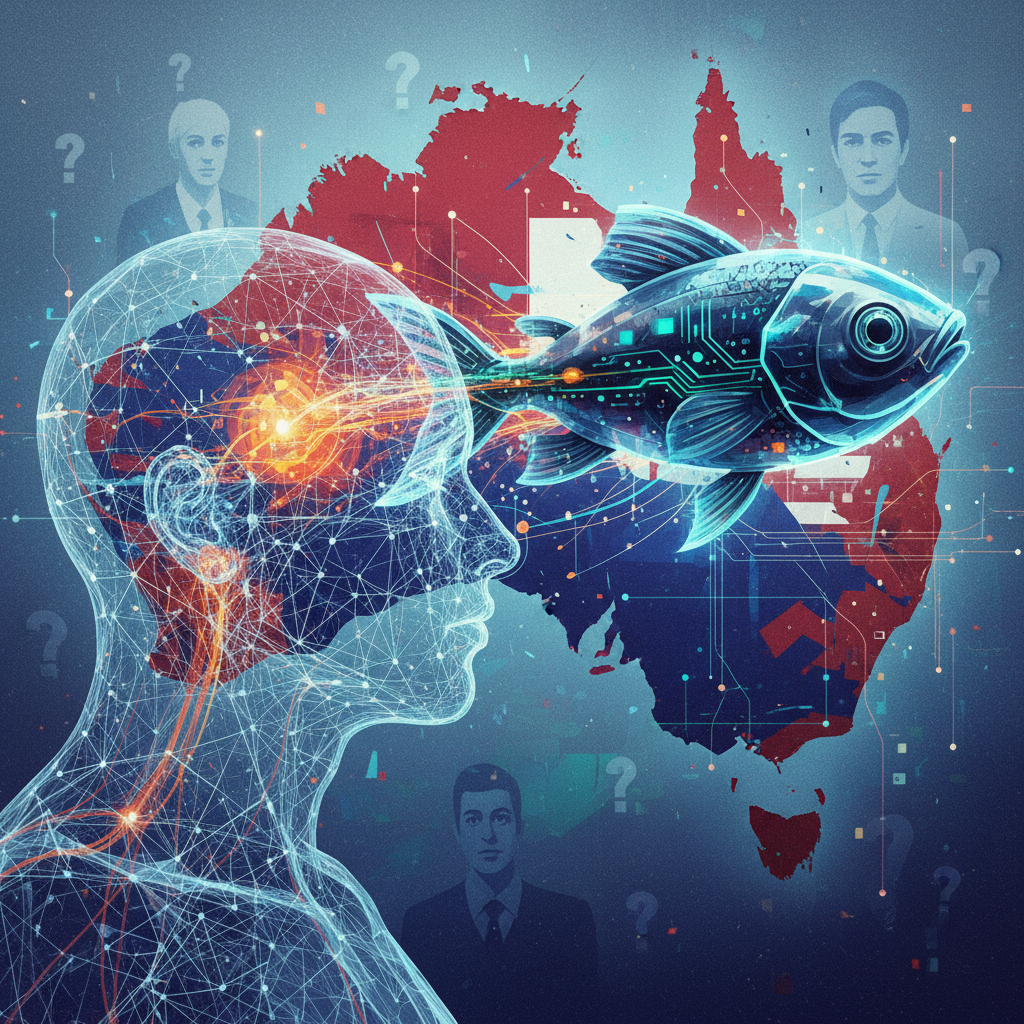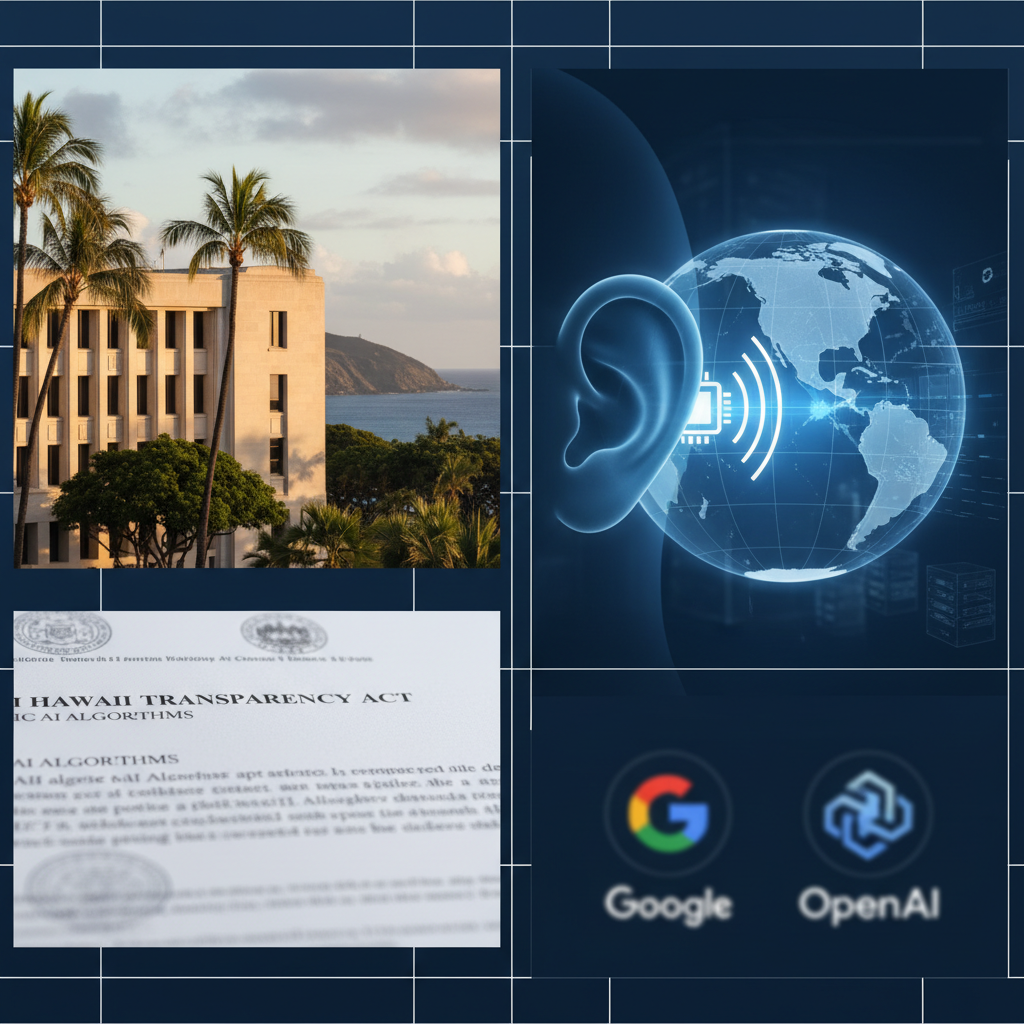

The ocean, for us in Hawaii, is a living entity, a source of life and knowledge, its depths holding mysteries and its surface reflecting the vastness of the sky. So too, is the digital realm becoming, a vast expanse where new intelligences are emerging. But unlike the ocean, whose currents and tides are governed by the ancient, immutable laws of nature, the new digital currents of artificial intelligence are still largely unmapped, unregulated, and often, opaque. This is why the burgeoning global movement for AI transparency, particularly the 'right to know if you're talking to an AI,' resonates so deeply here, and why Hawaii is poised to play a pivotal role in shaping its future, challenging even the titans like Google and OpenAI.
It is April 2026, and the conversation around AI governance has shifted from theoretical debates to urgent legislative action. From Brussels to Beijing, and increasingly, across the Pacific, policymakers are grappling with how to ensure that as AI becomes more integrated into our daily lives, its presence is not a hidden one. The core of this movement is simple: when you interact with a system, a chatbot, a customer service agent, or even a creative tool, you have a fundamental right to know if that intelligence is human or artificial. This isn't just about avoiding deception; it's about preserving trust, autonomy, and the very fabric of human connection.
The Policy Move: Unmasking the Algorithms
The latest wave of proposed legislation, mirroring efforts in the European Union's AI Act and California's nascent digital ethics frameworks, seeks to mandate clear, unambiguous disclosure. Imagine calling your bank, and before a single word is exchanged, a polite, synthesized voice states, 'You are now speaking with an AI assistant.' Or perhaps, when generating an image, the platform clearly tags it as 'AI-generated.' This is the vision. The intent is to create a digital environment where the distinction between human and machine is always evident, preventing the subtle, often unconscious manipulation that can occur when that line is blurred.
Who is behind this? It is a diverse coalition of consumer advocates, privacy activists, and forward-thinking legislators. In our own backyard, Senator Kai Malu, a vocal proponent for digital rights in the Hawaii State Legislature, has been instrumental in drafting a bill that would require such disclosures for any AI system interacting with Hawaii residents. 'Our people have always valued truth and direct communication,' Senator Malu stated in a recent public forum. 'When we speak to someone, we expect them to be who they say they are. The digital world should be no different. Aloha means more than hello because it's a framework for ethical AI, and that framework demands transparency.' His proposed legislation, currently under review by a legislative committee, is a direct response to the growing ubiquity of AI in everything from online shopping to healthcare inquiries.
What It Means in Practice
For companies operating in Hawaii and, by extension, across the Pacific, this means a significant shift in how they deploy AI. Customer service bots, marketing assistants, content generation tools, and even AI-powered diagnostic systems would all need to incorporate explicit disclosure mechanisms. This could range from simple text disclaimers to audible notifications or visual cues. For example, a chatbot might begin every interaction with 'Hello, I am an AI assistant here to help you.' A social media platform might automatically label AI-generated images or videos, much like some now flag manipulated media. The goal is not to stifle innovation, but to ensure it proceeds with a foundational layer of honesty.
Consider the implications for local businesses, from the small lei maker using an AI tool to generate marketing copy to larger hospitality groups employing AI for booking and guest services. They would need to audit their existing AI deployments and integrate these disclosure features. The University of Hawaii's computer science department, already a hub for ethical AI research, is reportedly developing open-source tools to help businesses comply, reflecting a community-driven approach to technological adoption. For more on the broader implications of AI in society, Wired's AI coverage offers valuable insights.
Industry Reaction: A Mixed Bag
The tech giants, as expected, have a mixed reaction. Companies like Google and OpenAI, whose large language models are at the heart of many AI interactions, acknowledge the need for trust but often express concerns about the practicalities and potential for over-regulation. Sundar Pichai, CEO of Google, has often spoken about the importance of responsible AI development, emphasizing safety and fairness. However, the operational burden of implementing granular disclosure across countless applications and user interfaces is considerable. 'We are committed to building AI responsibly,' a spokesperson for Google recently told DataGlobal Hub, 'and that includes exploring effective ways to communicate when users are interacting with AI. Our challenge is to do so in a way that is clear and helpful, without creating unnecessary friction for users or developers.'
OpenAI, creators of ChatGPT, has already experimented with watermarking and disclosure for some of its generative AI outputs. Yet, the rapid evolution of these models makes comprehensive, foolproof disclosure a moving target. Dario Amodei, CEO of Anthropic, a company known for its focus on AI safety, has publicly supported the idea of transparency, stating, 'Users should always have a clear understanding of whether they are interacting with a human or an AI. This is a fundamental aspect of building trustworthy AI systems.' However, the details of implementation remain contentious, particularly regarding what constitutes an 'interaction' and the technical feasibility of immutable labels for all AI-generated content.
Civil Society Perspective: A Call for Digital Decency
From the perspective of civil society organizations and consumer protection groups, these laws are long overdue. Dr. Leilani Kawaa, director of the Pacific Digital Rights Initiative, based in Honolulu, argues that transparency is not just a regulatory hurdle, but a moral imperative. 'Our communities, particularly those in remote island nations, are often the first to experience the unfiltered impact of new technologies,' Dr. Kawaa explained. 'Without knowing if we're talking to a machine, how can we truly consent to the interaction? How can we hold systems accountable? This isn't just about privacy; it's about digital decency, about respecting the human in the loop.'
She points to instances where AI chatbots have given misleading medical advice or where deepfake technology has been used to spread misinformation, highlighting the real-world harms that can arise from a lack of transparency. The concern is particularly acute in regions like Oceania, where digital literacy varies widely and the potential for exploitation by sophisticated, undisclosed AI systems is high. The future is being built on volcanic rock, and we must ensure its foundations are solid, not riddled with hidden algorithms.
Will It Work?
This is the million-dollar question. The success of these transparency laws hinges on several factors: the clarity of the legislation, the technical feasibility of implementation, and the willingness of major tech players to comply. While the spirit of the law is clear, the practicalities are complex. How do you define an 'AI interaction' in a world where AI is embedded in countless subtle ways, from predictive text to personalized recommendations? Who enforces these rules, especially across international borders?
Despite these challenges, the momentum is undeniable. The EU's AI Act has set a global precedent, and other jurisdictions are quickly following suit. Hawaii, with its unique position at the crossroads of Pacific and Silicon Valley, has the opportunity to lead by example, demonstrating how indigenous values can inform cutting-edge technological governance. The proposed laws will undoubtedly face legal challenges and lobbying efforts from industry, but the tide of public opinion, increasingly wary of opaque algorithms, is turning. The demand for digital honesty is not a passing fad; it is a fundamental societal shift. If these laws are carefully crafted, rigorously enforced, and adaptable to the rapid pace of AI development, they have the potential to usher in an era of greater trust and accountability in our increasingly AI-infused world. For a deeper dive into AI policy, MIT Technology Review often provides excellent analysis. The journey to truly ethical AI is long, but transparency is a crucial first step on that path. It's about ensuring that as we navigate the digital currents, we do so with open eyes and an honest heart, guided by the wisdom that has sustained our islands for generations. We must ensure that the digital future we build is one where humanity remains at the center, respected and informed, not merely a data point for an unseen intelligence.