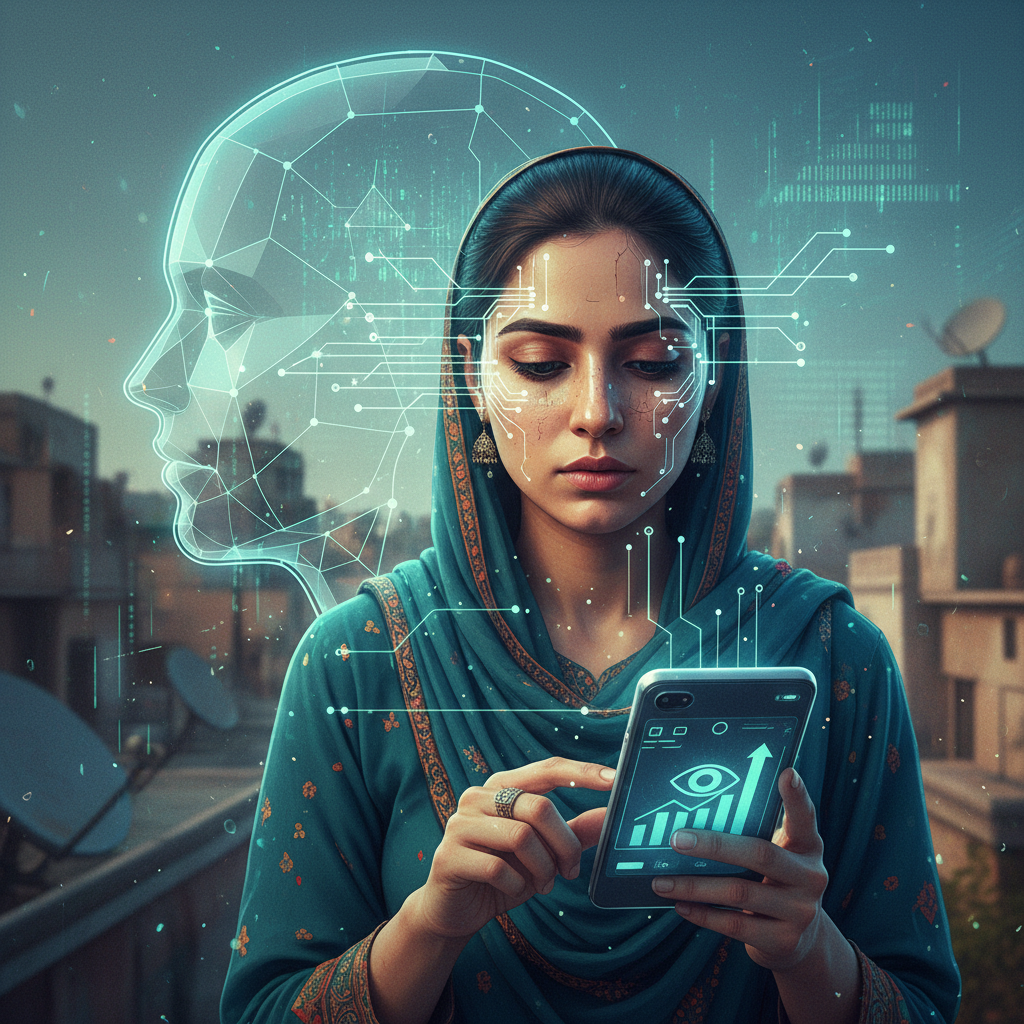

The Reserve Bank of India, our venerable RBI, has always been the steady hand guiding the ship of our economy through stormy seas and calm waters. It is a complex dance, balancing inflation, growth, and stability for a nation of 1.4 billion people. Now, imagine that hand is not human, but a sophisticated algorithm, learning, predicting, and making decisions with a speed and scale no human committee ever could. This is not science fiction, my friends, this is the very real, very imminent future central banks are exploring, and it brings with it a Pandora's Box of both promise and peril, especially for a vibrant, intricate economy like India's.
The whispers started a few years ago, growing louder recently. Central banks globally, from the Federal Reserve to the European Central Bank, have been dabbling with AI for everything from forecasting economic indicators to detecting financial fraud. The lure is obvious: AI promises unparalleled efficiency, accuracy, and the ability to process vast datasets that would overwhelm human analysts. For fraud detection, it is a no-brainer, a powerful tool to protect our financial systems. But when we talk about AI dictating monetary policy, about algorithms deciding interest rates or liquidity operations, we are stepping onto far more treacherous ground.
Let us break down the risk scenario. Imagine the RBI deploys a highly advanced AI model, trained on decades of economic data, market sentiment, and global events, to recommend or even execute monetary policy adjustments. This model, let us call it 'Chanakya' in a nod to our ancient strategist, identifies a subtle inflationary pressure that human economists might miss. Chanakya recommends a preemptive rate hike. What if Chanakya is wrong? What if its training data, however vast, contains biases that disproportionately affect certain sectors or demographics in India? What if a black swan event, something entirely outside its training paradigm, occurs, and Chanakya's response exacerbates the crisis rather than mitigating it?
The technical explanation here is crucial. These AI models, particularly the deep learning variety, are often 'black boxes'. They can deliver incredibly accurate predictions, but understanding why they made a particular decision can be incredibly difficult. This lack of interpretability is a massive red flag when we are talking about something as fundamental as monetary policy. "The models are becoming so complex, so layered, that even their creators struggle to fully unpack their decision-making process," explains Dr. Priya Sharma, head of AI Ethics at IIT Bombay. "When an algorithm tells you to inject 50,000 crore rupees into the market, you need to know the 'why' behind it, not just the 'what'. Otherwise, we are simply outsourcing our economic sovereignty to an opaque system." This is not just about trust, it is about accountability. Who is responsible when an AI-driven policy leads to unforeseen economic hardship?
Then there is the issue of data. India's economic data, while improving, is still fragmented in places. Our informal economy, the backbone for millions, is notoriously difficult to capture comprehensively. If an AI model is trained primarily on formal sector data, it might develop a skewed understanding of the real economic pulse of the nation. It could recommend policies that are perfectly rational for a Western, formalized economy but disastrous for India's unique blend of formal and informal sectors. Moreover, the very act of using AI at this scale could create new vulnerabilities. A sophisticated cyberattack targeting Chanakya could not just steal data, but potentially manipulate the very levers of our economy.
The expert debate on this is raging, though perhaps not loudly enough in our public discourse. On one side, you have the proponents, often from the fintech and data science communities, who see AI as the ultimate tool for optimizing economic outcomes. "The sheer processing power of AI means we can react to market shifts in real time, something human committees simply cannot do," argues Rajiv Malhotra, CEO of a Bangalore-based AI solutions firm specializing in financial analytics. "Imagine preventing a liquidity crunch before it even fully forms, or catching a global financial contagion in its infancy. The benefits for stability are immense." He points to the success of AI in fraud detection, where models can identify patterns indicative of scams with an accuracy rate exceeding 95%, saving billions annually for banks and consumers alike. This is a clear win, a tangible benefit that is hard to argue against.
However, the skeptics, and I count myself among them when it comes to monetary policy, raise fundamental questions about human oversight and the very nature of economic governance. "Monetary policy is not just a technical exercise, it is a socio-political one," states Dr. Anjali Singh, a former deputy governor at the RBI, now a visiting fellow at the National Institute of Public Finance and Policy. "It involves judgment, intuition, and an understanding of human behavior that algorithms, for all their sophistication, still lack. What happens to public confidence if a machine is perceived to be controlling our economic destiny?" She emphasizes the need for a 'human in the loop' at every critical stage, ensuring that AI remains a powerful assistant, not an autonomous decision-maker. The real-world implications are profound. If an AI system, for example, identifies a surge in loan defaults in a particular state and recommends tightening credit, it could inadvertently stifle growth and push more people into poverty, especially if its analysis missed the nuances of local agricultural cycles or regional employment patterns. This is where the cultural context of India becomes paramount. Our economy is not a monolithic entity; it is a tapestry woven with countless local economies, each with its own rhythm and challenges.
So, what should be done? This is not about slamming the brakes on innovation. India will own the next decade of AI, there is no doubt in my mind. Our talent, our drive, our sheer scale, it is all there. But with great power comes great responsibility. First, we need robust regulatory frameworks that mandate transparency and interpretability for any AI system used in critical public policy domains. It is not enough for an AI to be accurate; it must also be auditable and explainable. Second, we need to invest heavily in diverse and comprehensive data collection, especially from our informal sectors, to ensure AI models are trained on a true representation of India's economy. Third, and perhaps most importantly, we need to foster a culture of critical thinking and ethical design within our AI development ecosystem. This means bringing economists, sociologists, ethicists, and policymakers to the table with the data scientists and engineers from day one.
Forget Silicon Valley, look at Hyderabad, look at Bangalore, look at Pune. Our engineers, our entrepreneurs, they are building the future. But we must ensure that this future is one where technology serves humanity, not the other way around. The promise of AI for fraud detection is clear, a boon for financial security. But for monetary policy, the stakes are too high for blind trust. This is the inflection point. We have the opportunity to define how AI integrates into the very fabric of our governance. Let us not rush headlong into a future where economic decisions are made by algorithms we do not fully understand, for reasons we cannot fully explain. The rupee, and the livelihoods it represents, deserves more than that. The conversation starts now, before the machines begin to truly dictate our economic dance. For more on the broader implications of AI in finance, you can follow discussions on Reuters Technology or Bloomberg Technology.