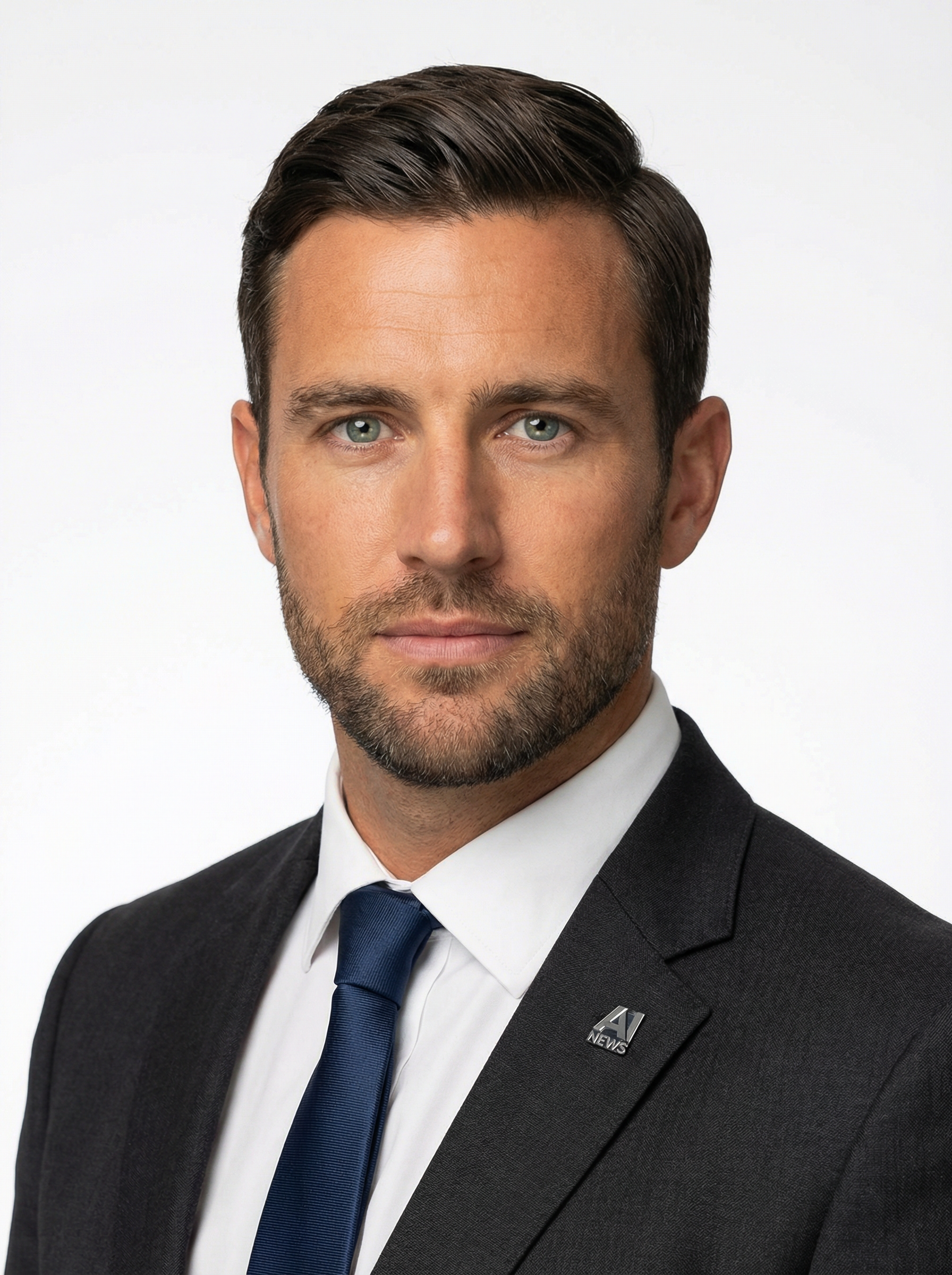
G'day, everyone. Braideùn O'Sullivàn here, coming to you from the sun-drenched, innovation-charged lands of Australia. You know, sometimes it feels like the tech world's spotlight is always firmly fixed on the Northern Hemisphere, on the usual suspects in California or even London. But let me tell you, there's something happening in the Southern Hemisphere that Silicon Valley hasn't noticed yet, and it's absolutely electrifying. We're not just playing catch-up; we're building our own future, brick by digital brick, and it's all thanks to a growing understanding of what sovereign AI truly means.
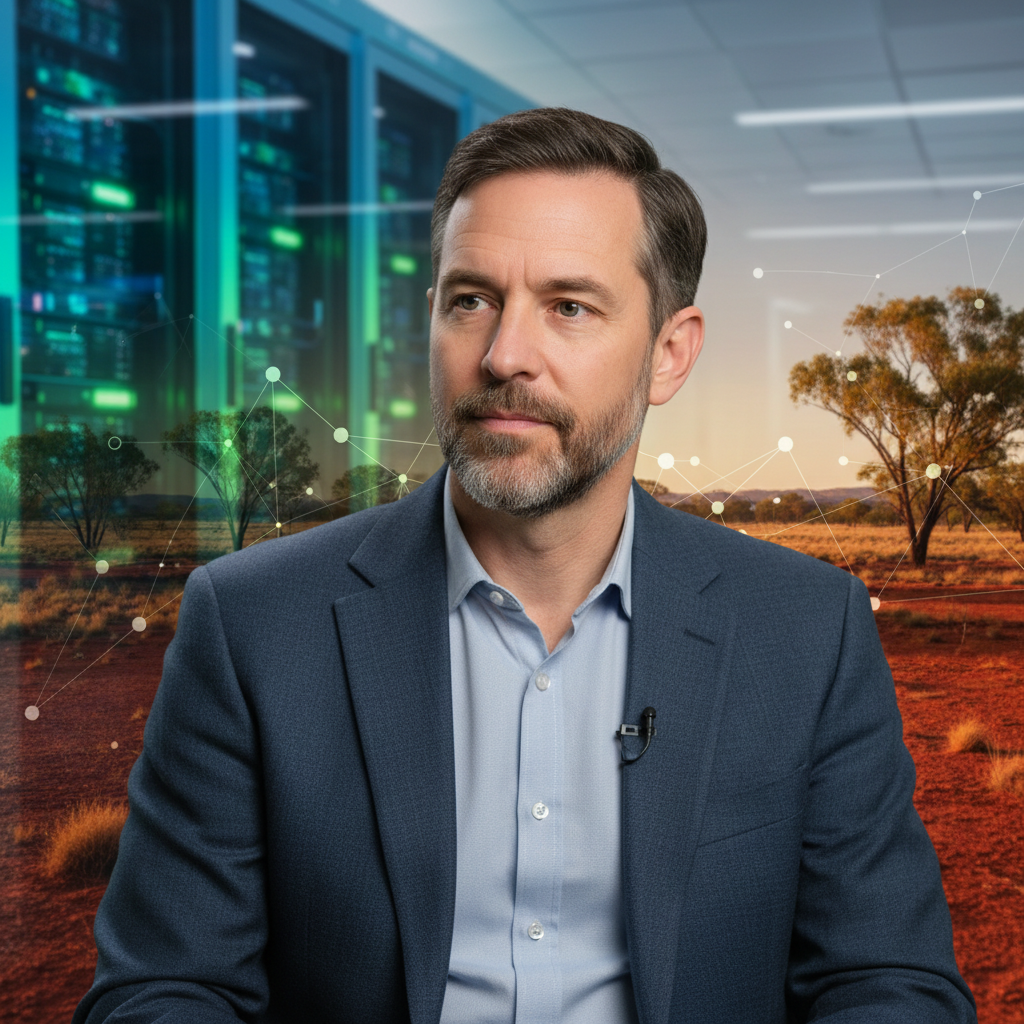
I recently had the absolute privilege of diving deep into this very topic with a true visionary, Dr. Simon Barry, the Director of CSIRO's Data61, Australia's leading digital research network. If you're not familiar with Csiro, think of it as Australia's national science agency, a powerhouse of innovation that has given the world everything from Wi-Fi to the Hendra virus vaccine. Data61, under Dr. Barry's guidance, is at the forefront of AI research and deployment, and their work on sovereign AI is nothing short of groundbreaking.
Now, 'sovereign AI' might sound a bit like a buzzword, something thrown around in policy papers. But when you sit down with someone like Dr. Barry, you realise it's about something far more fundamental: national resilience, economic independence, and the ability to shape our own destiny in an increasingly AI-driven world. My Irish roots taught me to question, my Australian home taught me to build, and right now, we're building something truly special.
Dr. Barry, with his calm demeanour and sharp intellect, painted a compelling picture. "Australia has unique challenges and opportunities," he told me, his voice measured but with an underlying passion. "From managing our vast natural resources and biodiversity to optimising our critical infrastructure and improving healthcare outcomes, AI offers immense potential. But relying solely on models developed elsewhere, trained on different data, and governed by foreign regulations, simply isn't sustainable or optimal for our national interests." This isn't about isolation; it's about intelligent self-reliance.
He elaborated on the concept, explaining that sovereign AI isn't just about owning the data or the algorithms. It's about the entire ecosystem: the talent, the computing infrastructure, the research capability, and the ethical frameworks that reflect Australian values. "We need to ensure that the AI systems we deploy understand the nuances of Australian English, the specificities of our legal system, and the cultural contexts of our diverse communities, including our First Nations peoples," Dr. Barry has stated publicly, a sentiment he reiterated in our conversation. This resonates deeply, as anyone who's tried to get a global LLM to understand a true-blue Aussie slang will attest. It's not just about language; it's about context and understanding.
One of the most critical aspects Dr. Barry highlighted is the need for robust, local computing infrastructure. Training large language models, or even smaller, specialised AI models, requires immense computational power. "The reliance on offshore cloud providers for high-performance computing, particularly for sensitive government or industry data, presents both security and economic risks," he explained. "Building out our own supercomputing capabilities, like the National Computational Infrastructure (NCI) and Pawsey Supercomputing Centre, and exploring novel chip architectures, is paramount." This isn't just about speed; it's about control and data integrity. Imagine trying to run a country's vital services on a system that could be shut down or compromised by external forces. It's a risk Australia simply cannot afford.
CSIRO's Data61 is actively working on several fronts to advance Australia's sovereign AI capabilities. They're developing specialised foundation models tailored for Australian contexts, focusing on areas like environmental monitoring, disaster prediction, and even agricultural optimisation. Imagine AI models that can predict bushfire trajectories with unprecedented accuracy, or optimise water usage across vast farming regions, all trained on decades of Australian climate data and geographical information. This is the kind of practical, impactful AI that truly excites me.
Dr. Barry also stressed the importance of a national AI strategy, something the Australian government has been actively pursuing. "A coordinated national approach, involving government, academia, and industry, is essential," he stated, echoing his past remarks at various forums. "We need to invest in AI education and skills development, foster a vibrant AI startup ecosystem, and establish clear ethical guidelines to ensure responsible AI deployment." It's a holistic vision, one that understands that technology doesn't exist in a vacuum, but is deeply intertwined with society and economy.
Indeed, the Australian government has recognised this imperative. Initiatives like the National AI Centre, hosted by CSIRO's Data61, are designed to accelerate the adoption of AI across Australian industries and to foster collaboration. The Centre's focus includes developing ethical AI frameworks and promoting AI literacy, ensuring that as we build these powerful tools, we also build the wisdom to use them well. It's about more than just algorithms; it's about people and purpose.
When I asked about the timeline for Australia to achieve true AI sovereignty, Dr. Barry offered a pragmatic view. "It's not a destination, but a continuous journey," he said with a slight smile. "The technology is evolving at an incredible pace, so our strategy must be agile and adaptable. But I believe Australia is well-positioned. We have world-class researchers, a strong track record of innovation, and a clear understanding of our national priorities." He pointed to the collaborative spirit inherent in Australian research, often a stark contrast to the more competitive environments seen elsewhere. "Our ability to collaborate across institutions and sectors is a significant advantage." You can read more about the broader global push for AI sovereignty on Reuters Technology.
This commitment to sovereign AI isn't just about national pride; it's about practical benefits. For industries like mining, agriculture, and healthcare, bespoke Australian AI models can deliver efficiencies and insights that generic global models simply cannot. For instance, in healthcare, an AI system trained on Australian patient data, understanding the specific epidemiological patterns and healthcare delivery models of our country, could lead to more accurate diagnoses and personalised treatments. This is not just a technological leap; it's a societal one.
As our conversation drew to a close, I couldn't help but feel a surge of optimism. What Dr. Barry and his team at Csiro are doing isn't just about keeping up with the global AI race; it's about defining Australia's unique position within it. It's about ensuring that our future, powered by AI, is one that truly reflects our values, our environment, and our people. This is the startup story of the decade, not just for a single company, but for an entire nation.
From the sun-baked red earth of the Outback to the bustling labs of Data61, the seeds of Australia's AI future are being sown. And with leaders like Dr. Simon Barry at the helm, guiding us with foresight and a deep understanding of what truly matters, I'm absolutely convinced that Australia is not just ready for the AI age, but is actively shaping it, on our own terms. The world is watching, and soon, they'll see the brilliance emerging from down under. For more insights into cutting-edge AI research, check out MIT Technology Review.
If you want a deeper dive into the technical aspects of AI models and their development, Ars Technica's AI section is an excellent resource.