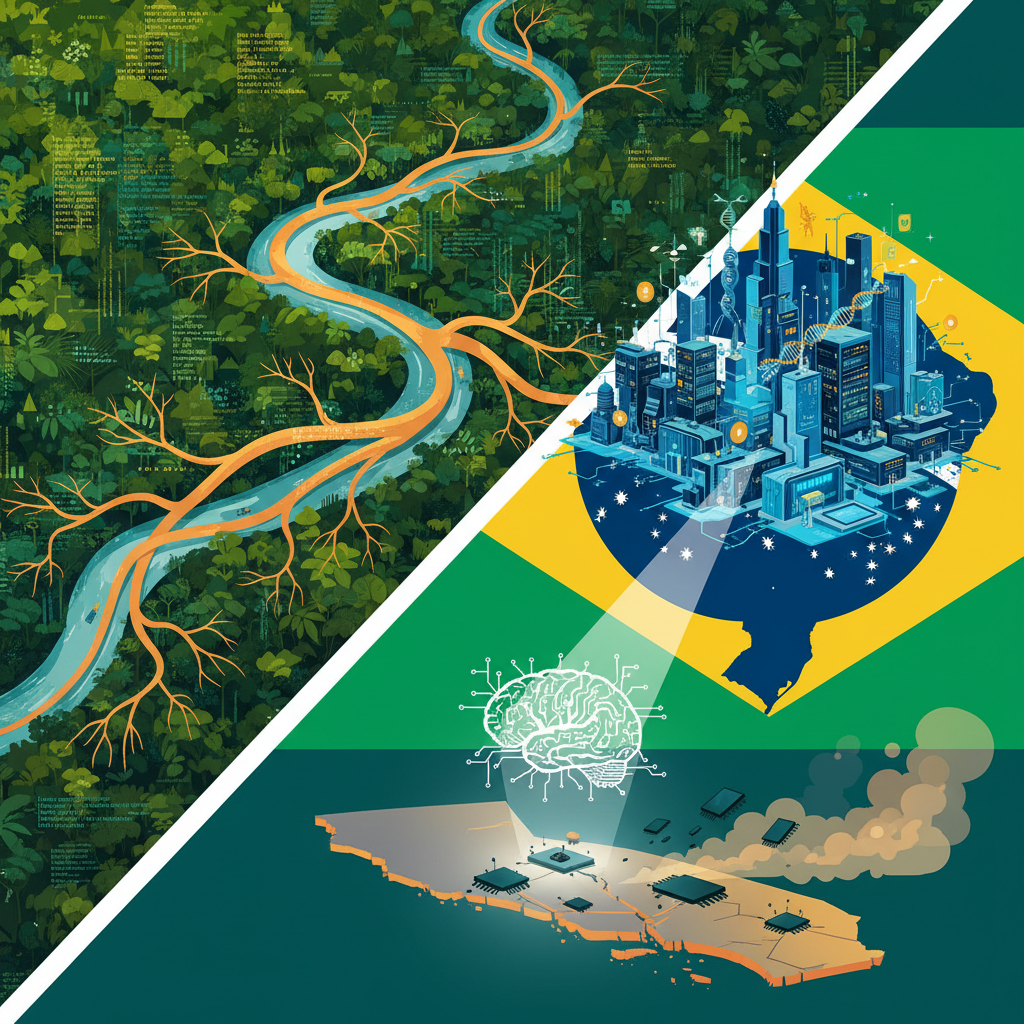

Let me tell you something, my friends. While the big tech giants in Silicon Valley are busy chasing the next social media algorithm or the latest consumer gadget, something far more profound, something truly life-changing, is quietly taking root right here in Brazil. We are talking about AI-powered personalized medicine, treatments tailored not to a demographic, not to a statistical average, but to your unique DNA, your specific environment, your very Brazilian self. And frankly, we are not just participating in this future; we are building it.
For too long, the world has looked to the usual suspects for medical innovation. The Harvards, the Stanfords, the big pharma in Europe and the US. But here is the secret: Brazil is the sleeping giant of AI and it is waking up, particularly in healthcare. Our genetic diversity, a direct result of our rich history of migration and indigenous populations, is a goldmine for genomic research. When you combine this unparalleled biological dataset with the raw processing power of artificial intelligence, you get a recipe for medical breakthroughs that the world has never seen. We are not just talking about treating symptoms anymore; we are talking about predicting, preventing, and curing with a precision that feels almost like magic.
Think about it. Imagine a future, not decades away but within this very decade, where your doctor, perhaps at a cutting-edge clinic in São Paulo or a research institute in Manaus, can sequence your entire genome. This is not science fiction, it is happening now. Then, an AI, trained on millions of anonymized Brazilian genetic profiles and health records, analyzes your unique biological blueprint. It flags predispositions to certain diseases, identifies the exact molecular pathways that are out of balance, and even suggests drug compounds that would be most effective for your body, minimizing side effects and maximizing efficacy. No more trial and error, no more generic prescriptions that work for some but not for others. This is medicine at its most personal, its most powerful.
Our researchers, often working with fewer resources but with boundless ingenuity, are making incredible strides. Take, for instance, the work being done at institutions like the Hospital Israelita Albert Einstein in São Paulo, which has been investing heavily in genomic sequencing and AI analytics. They are not just following trends; they are setting them. Dr. Sidney Klajner, President of the Hospital Israelita Albert Einstein, has often spoken about the transformative power of data in healthcare, stating, “The future of medicine is personalized, and data is the fuel that will drive this revolution. We are committed to leveraging AI to deliver better outcomes for our patients.” This sentiment echoes across our leading medical centers and tech hubs.
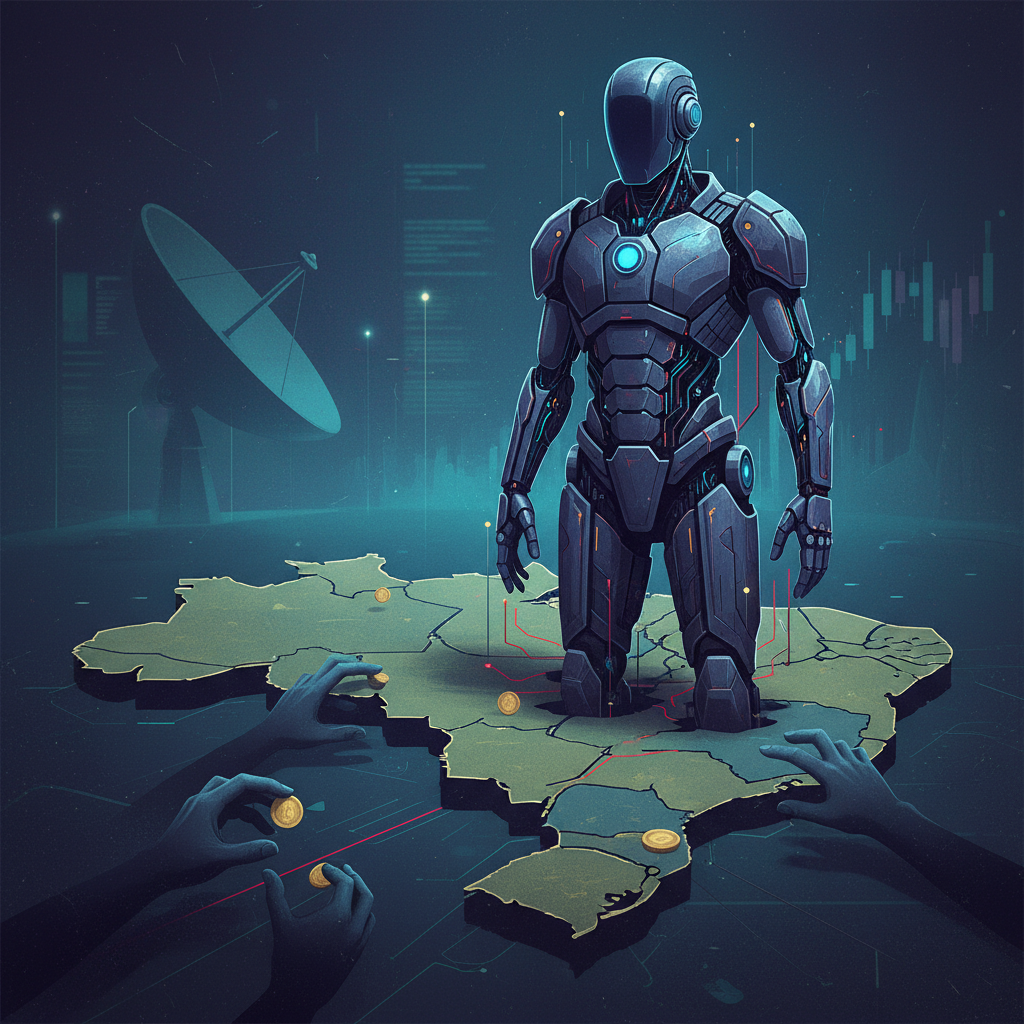
Of course, some will say, “Rodrigoò, this sounds wonderful, but what about the cost? What about the infrastructure? Brazil has its challenges.” And yes, they are right. We have our hurdles. Access to advanced medical technology is not uniform across our vast nation. The digital divide is real. But this is precisely where our unique approach comes into play. We are not just importing solutions; we are building them from the ground up, often with open source principles and a focus on scalability and affordability. Our fintech revolution, which has brought banking to millions previously excluded, is a testament to our ability to innovate for inclusion. The same spirit is now animating our healthtech sector.
Moreover, the very nature of AI allows for distributed innovation. You do not need a multi-billion dollar supercomputer in every hospital. Cloud-based AI platforms, often powered by the likes of Google Cloud or Microsoft Azure, can bring sophisticated genomic analysis to clinics that might otherwise be left behind. Startups across Brazil are developing AI tools specifically designed for our public health system, the SUS, aiming to democratize access to these advanced diagnostics and treatments. This is Brazil's decade, not just for economic growth, but for pioneering solutions that address real-world problems on a massive scale.
Consider the potential for drug discovery. Our Amazon rainforest alone holds untold biological secrets, a natural pharmacy waiting to be understood. Imagine AI sifting through thousands of plant compounds, analyzing their molecular structures against human genetic data, and identifying novel treatments for diseases that currently baffle conventional medicine. This is not just about finding new drugs, it is about finding better drugs, drugs that are more effective and have fewer side effects because they are designed with a deep understanding of human biology and its interaction with natural compounds. We are talking about a paradigm shift, a move from broad-spectrum approaches to ultra-targeted interventions.
The challenges are significant, yes. Data privacy and ethical considerations are paramount. We need robust regulatory frameworks to ensure that genetic data is protected and used responsibly. We need to train a new generation of doctors, bioinformaticians, and AI engineers who understand both medicine and machine learning. But these are not insurmountable obstacles; they are opportunities to build a better, more equitable system from the start. We can learn from the mistakes made in other parts of the world and forge our own path, one that prioritizes patient well-being and ethical innovation.
Companies like NVIDIA, with their focus on AI for healthcare and life sciences, are already seeing the potential in regions like ours. Their GPU technology is crucial for processing the massive datasets involved in genomics. As TechCrunch reports, the investment in AI infrastructure for medical research is only accelerating globally. We are not just consumers of this technology; we are active contributors to its advancement. Our vibrant startup ecosystem, particularly in cities like São Paulo and Florianópolis, is attracting global attention and investment, proving that São Paulo's tech scene rivals any in the world.
This is not a distant dream. It is happening now. The first wave of personalized cancer therapies, guided by genomic insights, is already transforming lives. In the coming years, this will expand to cardiovascular disease, neurological disorders, and even preventative health. Brazil, with its unique genetic tapestry, its innovative spirit, and its commitment to public health, is uniquely positioned to lead this charge. We are not just talking about incremental improvements; we are talking about a fundamental redefinition of what medicine means, a future where your health is truly, deeply, and uniquely yours. The world needs to pay attention, because the future of personalized medicine is being written, in Portuguese, right here in Brazil.

The implications extend beyond individual patient care. Imagine the insights AI can glean from analyzing population-level genomic data in Brazil. We could identify regional health trends, predict disease outbreaks with unprecedented accuracy, and develop public health strategies that are truly effective and culturally relevant. This is a powerful tool for addressing health disparities and building a more resilient society. As MIT Technology Review often highlights, the ethical and societal impacts of AI in healthcare are profound, and Brazil is engaging with these questions head-on, seeking to build a system that benefits all its citizens.
The journey will be complex, filled with scientific challenges and ethical debates. But the destination, a future where disease is no longer a lottery but a solvable puzzle, is too important to ignore. Brazil is ready to lead the way. We are not just dreaming of a healthier future; we are engineering it, one personalized treatment at a time, proving that the heart of innovation often beats strongest where the need is greatest. The world is watching, and soon, it will be learning from us.