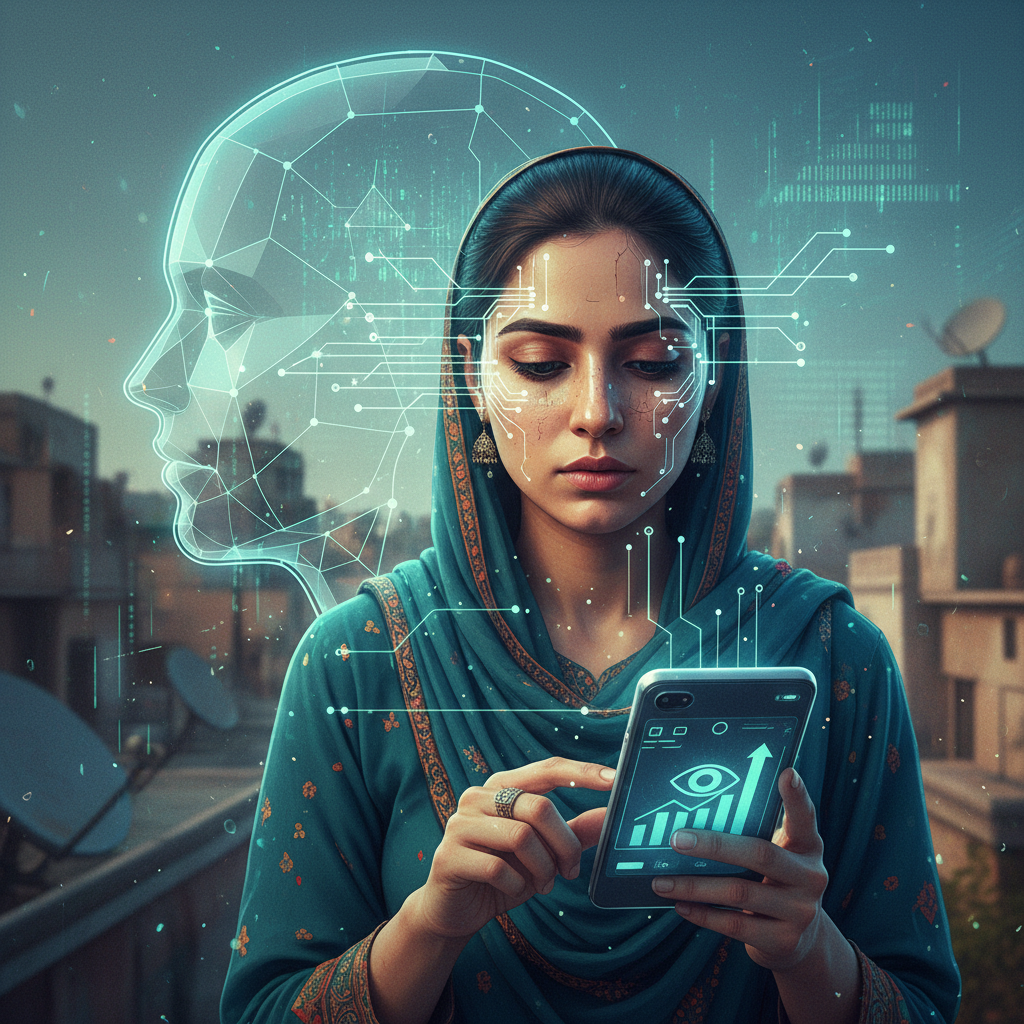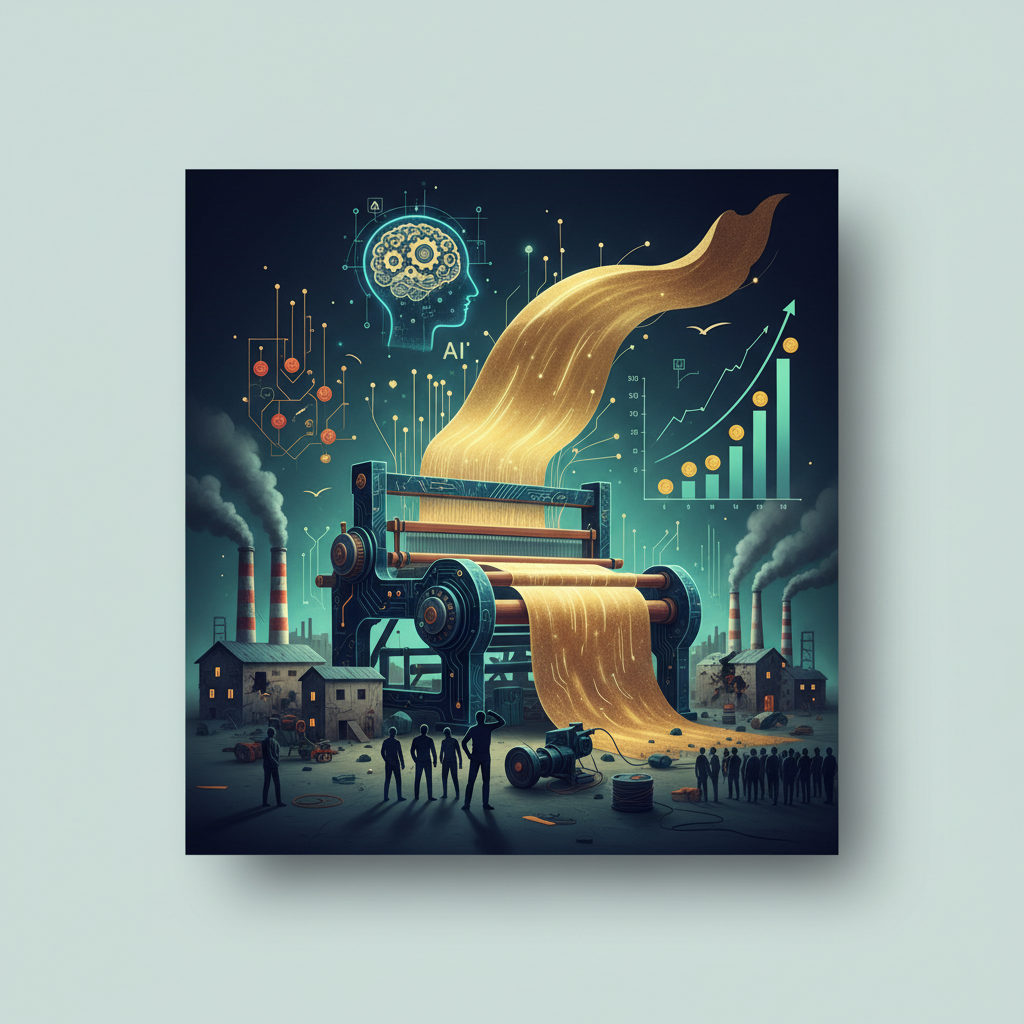
Walk through the bustling textile mills of Faisalabad or the surgical instrument workshops of Sialkot and you will hear the rhythmic hum of machines, a symphony of production that has long defined Pakistan's industrial backbone. Now, a new note is being introduced into this symphony: artificial intelligence. The global conversation around AI in manufacturing, encompassing predictive maintenance, quality control, and the vision of 'smart factories', is reaching our shores, promising efficiency and unprecedented productivity. But as a journalist from Pakistan, I cannot help but ask: whose efficiency, and whose productivity? Will this trend truly empower our nation, or will it simply widen the chasm between the technologically advanced and those left behind?
For decades, our manufacturing sector has navigated a complex landscape of global competition, fluctuating energy costs, and the tireless efforts of millions of workers. The idea of a machine predicting its own failure, ordering spare parts before a breakdown, or meticulously inspecting every product for flaws, sounds like a dream. It promises to slash downtime, reduce waste, and elevate the quality of our exports. Globally, companies like Siemens and General Electric have been at the forefront, integrating AI into their operations to optimize everything from turbine performance to medical device assembly. We see reports from MIT Technology Review detailing how AI is revolutionizing supply chains and production lines in the West, leading to billions in savings and increased output.
But let us not forget our own context. Pakistan's manufacturing sector is diverse, ranging from large-scale textile conglomerates to countless small and medium enterprises (SMEs) that form the lifeblood of our economy. The adoption of AI here is not a simple plug-and-play scenario. It requires significant investment in infrastructure, digital literacy, and a cultural shift. The question is not just 'can we', but 'should we', and critically, 'how do we ensure it benefits everyone?'
Historically, industrial revolutions have always brought disruption. The first one, driven by steam power, saw artisans replaced by factory workers. The digital revolution brought automation, again displacing certain labor segments. Now, AI promises a new wave. Proponents argue that AI will create new, higher-skilled jobs, requiring workers to manage and interpret data, program machines, and oversee complex automated systems. This is a compelling argument, but it hinges on massive investment in education and training, something Pakistan, with its vast youth population, desperately needs.
Consider predictive maintenance, a cornerstone of the smart factory concept. Sensors collect data from machinery, AI algorithms analyze patterns, and maintenance is scheduled precisely when needed, preventing costly, unexpected breakdowns. This is not just theoretical; it is happening. According to a recent report by Deloitte, companies implementing predictive maintenance have seen a 10-40% reduction in maintenance costs and a 5-20% increase in asset uptime. For a country like Pakistan, where energy outages and equipment failures can cripple production, these figures are tantalizing.
Then there is quality control. Imagine AI-powered vision systems meticulously inspecting every single textile product for defects, far surpassing the speed and consistency of human eyes. This could elevate the 'Made in Pakistan' label to new heights, opening doors to more lucrative global markets. Companies like Google and NVIDIA are developing advanced computer vision platforms that are increasingly accessible, even for smaller players. The potential for our textile, leather, and surgical goods industries to compete on a global scale, not just on price but on impeccable quality, is immense.
However, the path is fraught with challenges. The initial investment in AI infrastructure, sensors, and specialized software can be prohibitive for many Pakistani manufacturers, especially SMEs. Furthermore, the digital divide is a stark reality. While our major cities are increasingly connected, vast swathes of the country still lack reliable internet access and the basic digital literacy needed to interact with these advanced systems. We cannot simply import these technologies and expect them to flourish without a foundational ecosystem.
Dr. Arshad Ali, former Executive Director of the Higher Education Commission of Pakistan, has often emphasized the need for a localized approach to technology adoption. "We cannot blindly follow Western models," he once stated in a public forum. "Our solutions must be indigenous, addressing our unique challenges and leveraging our strengths, particularly our human capital." His words resonate deeply. We need AI solutions that are not just efficient, but also culturally relevant and economically viable for our local context.
Moreover, the ethical implications cannot be ignored. The deployment of AI in factories raises questions about data privacy, algorithmic bias, and the future of work. What happens to the thousands of workers whose jobs might be automated? While some argue for reskilling, the scale and speed of this transition are critical. "The transition must be managed with extreme care," noted Dr. Sara Khan, a leading Pakistani AI ethicist, in a recent interview with a local tech publication. "We must prioritize human dignity and ensure that technology serves our people, not the other way around." This is a human rights issue disguised as a tech story, and we must not look away.
But there is hope. Pakistan has a vibrant, young population, and our youth are increasingly digitally savvy. Initiatives like the Prime Minister's Youth Program and various provincial IT boards are working to bridge the digital divide and foster tech education. Women in Pakistan are coding the future, with a growing number of female engineers and data scientists emerging from our universities, ready to contribute to this technological shift. We have the raw talent, the entrepreneurial spirit, and the sheer will to adapt.
Consider the example of local startups that are beginning to offer affordable, localized AI solutions. Companies like Pakistani AI Solutions (a hypothetical example of a startup that would be covered by TechCrunch) are developing bespoke AI tools for textile quality control, tailored to the specific needs and budget constraints of Pakistani manufacturers. These homegrown solutions, built by our own engineers, often understand the local context better than imported, off-the-shelf software. They are designed with the realities of our infrastructure and workforce in mind.
So, is AI in manufacturing a fad or the new normal for Pakistan? My verdict is clear: it is the new normal, but it will be a uniquely Pakistani normal. It will not be a wholesale adoption of Silicon Valley models, but rather a hybrid approach, blending cutting-edge AI with our existing industrial strengths and human ingenuity. The challenge lies in ensuring that this new normal is inclusive, equitable, and sustainable. We must invest in our people, in their education and reskilling, and in developing localized AI solutions that truly serve our national interests. If we do this, the hum of our smart factories will not just be a sound of efficiency, but a melody of progress that resonates across all segments of our society. Don't look away, for the future of our manufacturing, and indeed our nation, depends on how we choose to embrace this powerful technology. The loom is learning, and we must guide its threads with wisdom and justice. For more on the broader implications of AI on labor, you might find our article on When the Machines March On: Can Senegal's Workers Hold the Line Against AI Automation, or Is This a New Tide? [blocked] insightful.