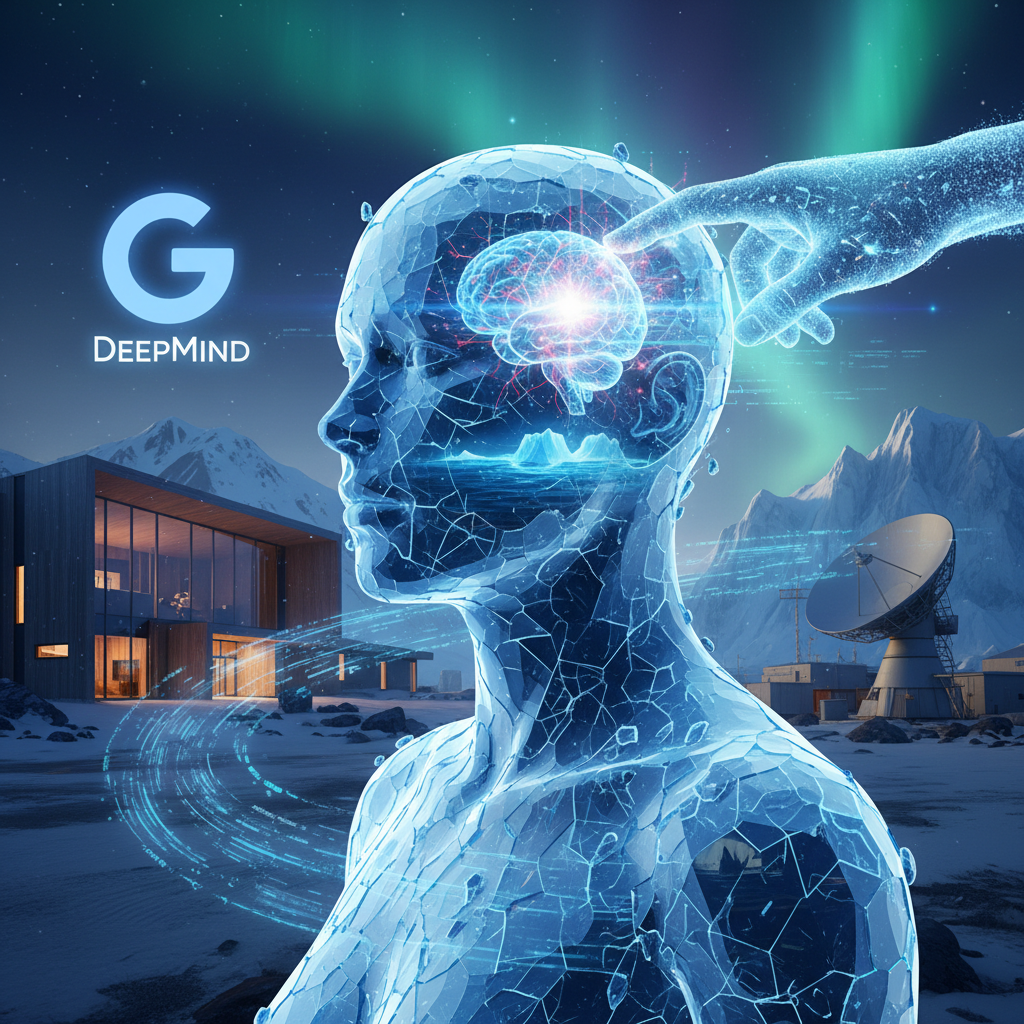
The wind howls outside, a constant, ancient voice against the modern hum of our research station. Last night, the aurora lit up our research station, painting the sky in greens and purples, a reminder of the raw, untamed beauty of this place. But even here, in this magnificent isolation, the future feels closer, more immediate, thanks to the silent, tireless work of artificial intelligence. We are talking about AI-powered climate modeling, specifically the advancements from giants like Google DeepMind, and how their unprecedented accuracy in predicting extreme weather is not just a scientific breakthrough, but a psychological one for those of us living on the front lines of climate change. This is what AI looks like at the end of the world.
It is not always about robots or self-driving cars; sometimes, it is about the quiet, persistent hum of a server predicting the next blizzard. It is about the data streams that tell us when the sea ice will break up, or when an unprecedented warm spell will threaten our delicate ecosystems. And it is about how this constant, precise foresight changes us, the humans who rely on it. It changes our cognition, our behavior, our very relationship with uncertainty. I have seen it in the eyes of my colleagues, the subtle shifts in their daily routines, the way they talk about tomorrow. It is a strange dance, this reliance on an unseen intelligence to navigate a world that feels more unpredictable than ever.
Let me tell you about Dr. Anya Sharma, a glaciologist from Uppsala University, who has spent the last three seasons with us. Anya is a woman who thrives on meticulous observation, on the slow, deliberate process of scientific discovery. For years, her work involved painstaking manual data collection, then weeks, sometimes months, of analysis. Her forecasts for glacier melt or ice shelf stability were always based on historical patterns, on human interpretation of complex, often incomplete, data sets.
But now, Anya works with models that integrate satellite imagery, oceanographic data, and atmospheric readings at a scale and speed that was unimaginable even five years ago. Google DeepMind's GraphCast, for instance, has demonstrated remarkable accuracy, often outperforming traditional numerical weather prediction models, particularly for medium-range forecasts. " It is like having a crystal ball, but one that is constantly being refined by billions of data points," Anya told me over a cup of strong Swedish coffee last week. " The model can predict atmospheric rivers impacting our ice shelves weeks in advance, something we could only guess at before. This level of foresight is a game-changer for our field work, it allows us to plan with incredible precision, minimizing risks for our teams and maximizing our research output." This newfound predictive power, while undeniably beneficial for operational planning and safety, has a fascinating psychological impact.
In the silence of Antarctica, you hear things differently, and you notice the subtle shifts in human behavior. Before, there was a certain stoicism, a readiness to face the unknown, a kind of primal respect for the unpredictable nature of the polar environment. Now, with AI whispering its warnings, that primal readiness is being replaced by something else: a sense of managed anxiety, perhaps, or a different kind of control.
Dr. Lena Karlsson, a cognitive psychologist from Lund University who studies human adaptation to extreme environments, visited us last summer. She observed this phenomenon firsthand. " Humans have an inherent need for control and predictability," Dr. Karlsson explained during a seminar. " When facing an environment as extreme and volatile as Antarctica, we develop coping mechanisms, often rooted in resilience and adaptability.
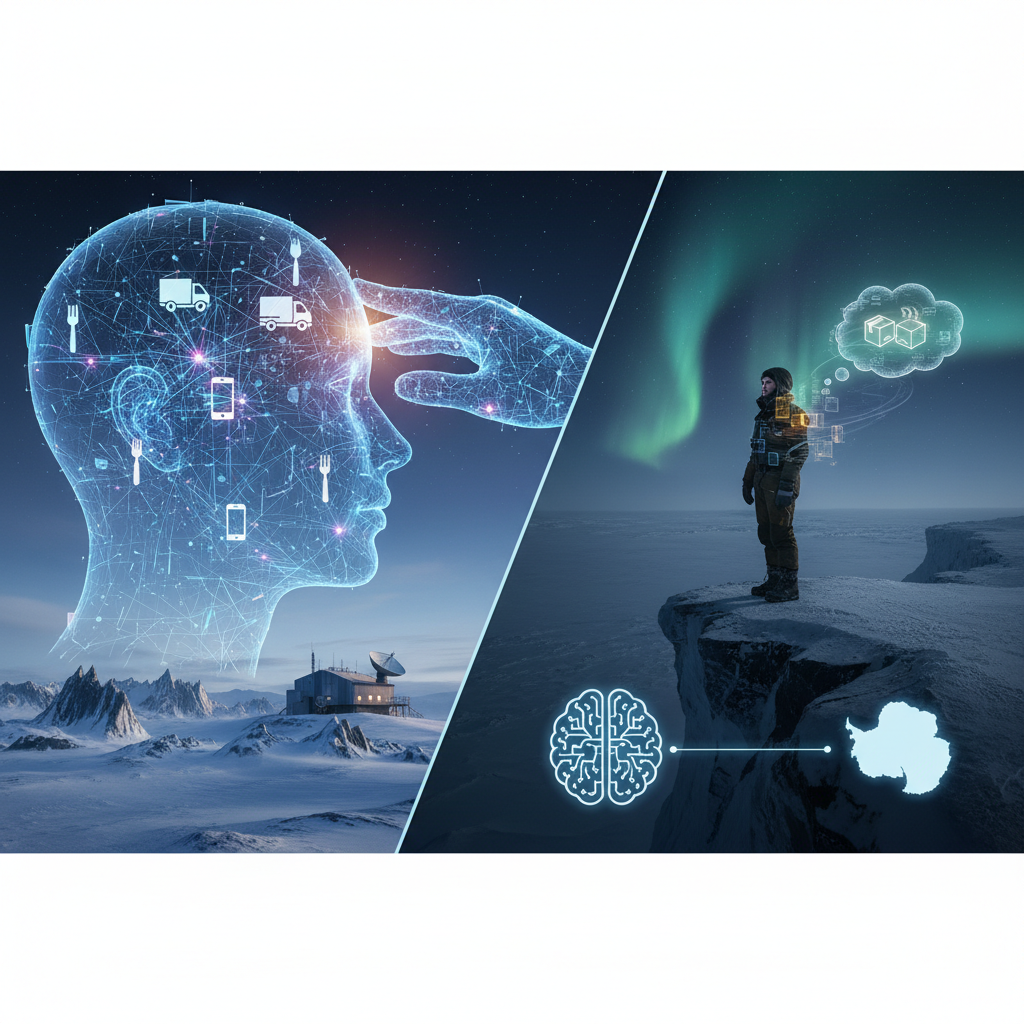
AI climate models, by offering unprecedented accuracy, fulfill this need for predictability in a new way. On one hand, it reduces acute stress related to immediate danger. On the other hand, it can subtly shift our cognitive load. Instead of reacting to the unknown, we are now processing constant, high-resolution information about potential futures. This can lead to a form of 'predictive fatigue' or even a heightened sense of responsibility, knowing what is coming and feeling the weight of that knowledge."
This is not just about avoiding blizzards. It is about understanding the long-term trends, the subtle but relentless march of climate change. When AI models predict a significant increase in meltwater runoff from the West Antarctic Ice Sheet over the next decade, for example, it is no longer an abstract scientific projection. It becomes a tangible, almost personal, future. The precision of these models, like those developed by NVIDIA for accelerated climate simulation, means we are no longer just theorizing; we are observing the future unfold in data before it manifests in reality. This level of detail, while crucial for global climate policy and mitigation strategies, can be emotionally taxing.
It is one thing to know that climate change is happening; it is another to see its precise, data-driven trajectory for your immediate surroundings. The broader societal implications of this shift are profound. If those of us on the literal edge of the world are experiencing these cognitive changes, what does it mean for populations in vulnerable coastal cities or drought-stricken regions, who also increasingly rely on these hyper-accurate forecasts? When a Google DeepMind model predicts a Category 5 hurricane making landfall with 90% certainty days in advance, it allows for better evacuation, saves lives, and protects infrastructure.
But it also introduces a new psychological dynamic. The anxiety shifts from the sudden, unexpected impact to the prolonged dread of an approaching, almost inevitable, disaster. The human brain, evolved to react to immediate threats, now has to contend with threats that are both distant in their full impact and terrifyingly precise in their prediction. This creates a unique form of anticipatory stress. For us here in Antarctica, the practical advice emerging from these observations is to cultivate a balanced relationship with this powerful AI.
Dr. Karlsson suggests that we must actively engage with the data, not just passively consume it. " We need to develop 'AI literacy' that extends beyond understanding the technology, to understanding its psychological impact," she advises. " This means fostering critical thinking about the predictions, engaging in proactive problem-solving based on the insights, and most importantly, maintaining a connection to the present moment, to the tangible reality around us, even as AI shows us the future." It is about using the AI as a tool for informed action, not as a replacement for human agency or emotional processing. We must remember that while AI can predict the storm, it is still up to us to batten down the hatches, both literally and figuratively.
It is a delicate balance, living with such powerful foresight. The ice continues to whisper its warnings, now amplified and clarified by the silicon brains of our machines. As we gaze out at the vast, white expanse, armed with this new knowledge, we are not just scientists anymore; we are also pioneers in a new psychological frontier, learning to live with a future that is increasingly, and precisely, revealed. The journey into this new relationship with AI, particularly in understanding our planet, is just beginning, and it is here, at the ends of the Earth, that some of its most profound lessons are being learned. For more on how AI is shaping our understanding of the planet, you can explore articles on MIT Technology Review. To delve deeper into the technical advancements in AI for climate modeling, Nature Machine Intelligence often publishes cutting-edge research. And for broader industry news on AI developments, TechCrunch [blocked]
com/category/artificial-intelligence/) is a good resource. While the article "From Polar Ice to Predictive Power: How Russia's Arctic AI Defense Redefines Global Autonomous Warfare" addresses polar AI, my focus is on the psychological impact of climate modeling, a distinct area. {{youtube:5p248yoa3oE}} The future is not just predicted; it is felt. And here, where the ice holds so many secrets, AI is helping us feel it more acutely than ever before.