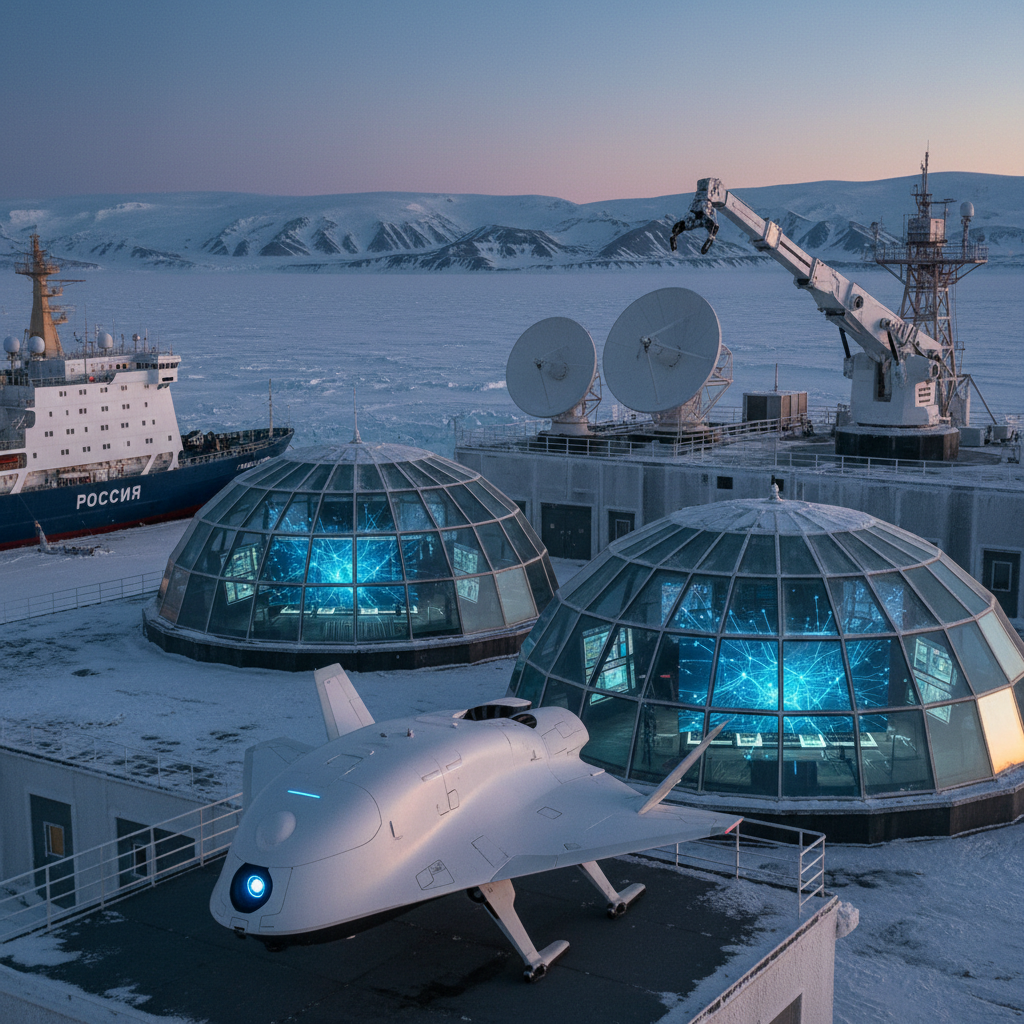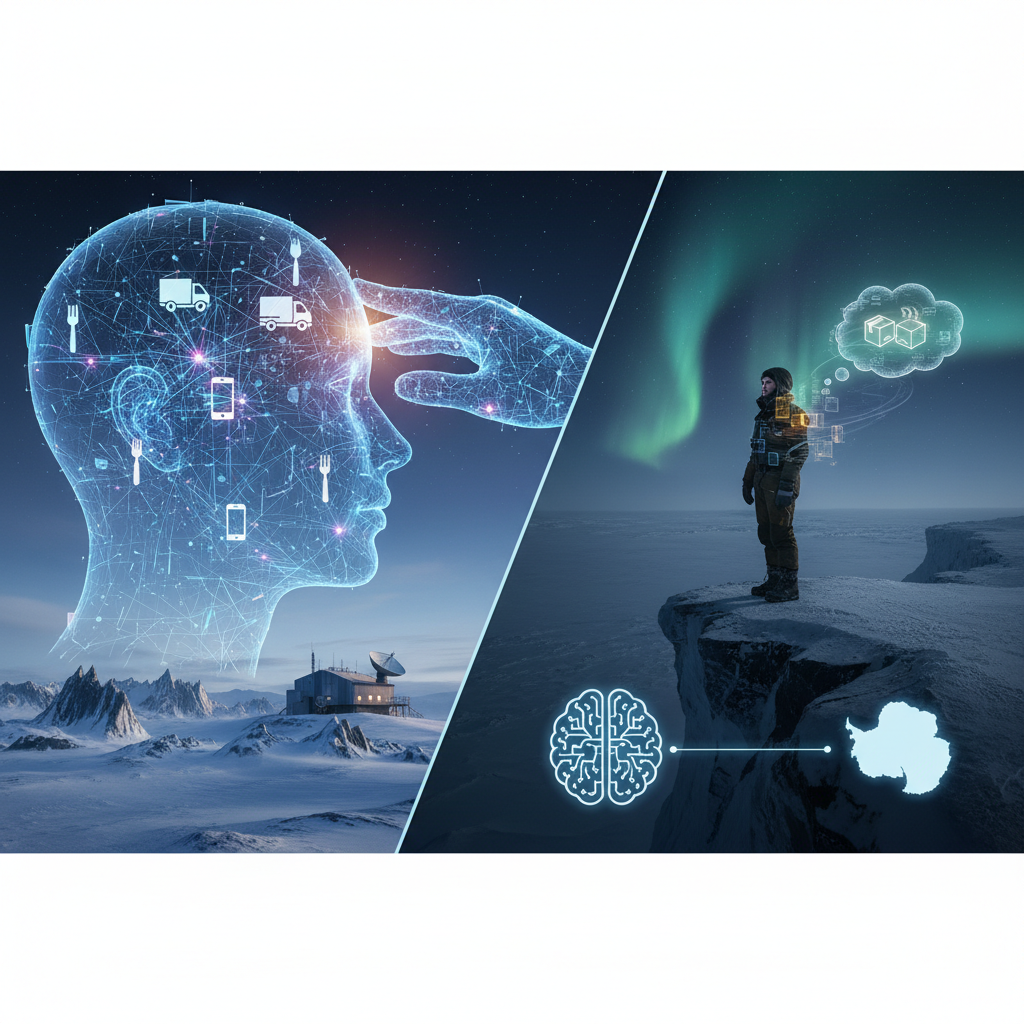

Last night, the aurora lit up our research station, painting the sky with impossible greens and purples. It is a spectacle that reminds you of the vast, untamed power of nature, a stark contrast to the invisible, yet equally potent, forces shaping our modern lives. Even here, at the very end of the world, we are not immune to the digital currents that flow through the global economy. I am talking, of course, about the gig economy and the algorithms that pull its strings, subtly, persistently, and with profound psychological effects.
Consider Sven, a former logistics manager from Gothenburg, now working part-time for Foodora in Malmö. He thought the flexibility would be a blessing, a way to reclaim some control over his schedule after years in a rigid corporate structure. But Sven found himself increasingly tethered to his phone, constantly checking for the next delivery ping, optimizing his routes not for his own convenience, but for the algorithm's elusive 'efficiency score.' He described a creeping anxiety, a feeling that he was always being watched, always being judged by an unseen digital master. "It is like a game," he told me over a crackly video call, "but the rules keep changing, and you never really know if you are winning or just being played." This is what AI looks like at the end of the world, a silent omnipresence that shapes our work, our thoughts, and our very sense of self.
Sven's experience is not unique. Researchers globally are beginning to unravel the intricate psychological tapestry woven by algorithmic management in the gig economy. Platforms like Amazon Flex, Uber, and Foodora rely on sophisticated AI to dispatch tasks, set prices, monitor performance, and even nudge workers towards certain behaviors. This is not simply about efficiency; it is about control, a subtle form of digital puppetry that can have significant cognitive and emotional consequences.
One of the primary impacts is on workers' sense of autonomy. Humans thrive on feeling in control of their actions and decisions. When an algorithm dictates when, where, and how much work is available, and even penalizes deviations, that sense of autonomy erodes. Dr. Mary L. Gray, a senior principal researcher at Microsoft Research and co-author of 'Ghost Work,' has extensively studied this phenomenon. She notes, "The algorithms are designed to maximize efficiency for the platform, often at the expense of worker well-being. This creates a constant state of precarity and a feeling that one is always on probation, which is incredibly stressful." This constant pressure can lead to what psychologists call 'algorithmic anxiety,' a chronic stress response triggered by the unpredictability and inscrutability of algorithmic decision-making.
Furthermore, the gamification elements often embedded in these platforms, with their ratings, badges, and performance metrics, can tap into our intrinsic desire for achievement and social validation. While seemingly innocuous, these features can become powerful tools for manipulation. Workers might push themselves harder, accept less desirable tasks, or work longer hours to maintain a high rating or unlock a 'bonus,' even if it is not in their best interest. This creates a feedback loop where the algorithm learns to exploit human psychological vulnerabilities, driving behavior in ways that benefit the platform.
Associate Professor Vili Lehdonvirta, from the Oxford Internet Institute, whose research focuses on the digital economy, elaborates on this. "These systems are not just matching supply and demand; they are actively shaping labor markets and worker psychology. The lack of transparency in how these algorithms operate means workers cannot effectively negotiate or even understand the basis of their remuneration or task allocation. It is a power imbalance amplified by technology." This opacity fosters distrust and can lead to feelings of injustice, as workers struggle to appeal decisions made by an unfeeling, uncommunicative system.
In the silence of Antarctica, you hear things differently. You hear the wind, the ice shifting, and sometimes, the quiet hum of the generators keeping our small world alive. Back in Sweden, the hum of the algorithms is far less audible, yet its effects are arguably more pervasive. The societal implications extend beyond individual workers. As more of the global workforce becomes subject to algorithmic management, we risk creating a generation of workers who feel disempowered, constantly surveilled, and alienated from their labor. This could have long-term consequences for mental health, labor organizing, and even democratic participation, as people become accustomed to having their choices dictated by unseen forces.
What can be done? Transparency is a crucial first step. Workers need to understand how algorithms make decisions that affect their livelihoods. Regulations, like those being discussed in the European Union, are beginning to address this by mandating greater algorithmic accountability. Companies like Foodora and Amazon Flex, while focused on profit, also have a responsibility to consider the human impact of their technological systems. Investing in human-centered AI design, where worker well-being is a core metric, not an afterthought, could be transformative. This means designing algorithms that offer genuine flexibility and autonomy, rather than merely the illusion of it.
For workers themselves, building digital literacy and understanding the psychological hooks these platforms employ is vital. Sharing experiences, forming worker cooperatives, and advocating for stronger labor protections can help reclaim some of the lost power. Organizations like the Swedish Transport Workers' Union are already working to address these issues, pushing for collective agreements that include algorithmic transparency and fair working conditions. According to TechCrunch, the conversation around worker protections in the gig economy is gaining momentum globally, with new startups even emerging to help workers navigate these complex digital landscapes.
The gig economy is not going away. Its convenience and efficiency are too compelling. But we must ensure that in our pursuit of technological advancement, we do not inadvertently sacrifice the human spirit, the very essence of what makes us thrive. The challenge is to harness the power of AI to create a more equitable and humane future of work, not one where algorithms dictate our every move, leaving us feeling like mere cogs in a digital machine. As we look out at the vast, unchanging landscape of Antarctica, it is a powerful reminder that while technology evolves at lightning speed, some human needs remain constant: dignity, autonomy, and a sense of purpose. The balance between algorithmic efficiency and human flourishing is a tightrope we must learn to walk with care, for the sake of Sven, and for all of us. More research on the psychological impacts of these systems can be found on MIT Technology Review. The discussion around human-AI interaction is critical, and you can delve deeper into the broader implications of AI on society through resources like Wired's AI section.