
You know, here in Thailand, we have a certain rhythm to things. A dance, if you will, between tradition and the relentless march of progress. Our street food vendors, masters of their craft, still cook over charcoal, but they now take QR code payments. Our ancient temples stand tall, yet just next door, teenagers are glued to their smartphones, probably ordering bubble tea. It’s a beautiful, chaotic blend. And nowhere is this blend getting a more fascinating, and frankly, a bit unsettling, remix than in our supply chains, all thanks to something called AI.
The Silent Revolution Most People Are Missing
While everyone is busy debating whether ChatGPT can write a better love poem than a human, or if AI will steal their creative jobs, a far more fundamental, if less glamorous, revolution is unfolding in the warehouses, on the trucks, and in the ports that keep our world moving. We are talking about AI in supply chain and logistics. It’s not flashy, it doesn’t generate viral memes, but it’s the invisible hand now guiding everything from the fresh mangoes arriving at your local market to the microchips powering your latest gadget.
Most people, bless their hearts, probably imagine supply chain as a bunch of guys in hard hats moving boxes. And they wouldn't be entirely wrong, historically speaking. But that image is as outdated as a dial-up modem. Today, AI algorithms are predicting demand with eerie accuracy, optimizing delivery routes to shave minutes off journeys, managing warehouse inventories down to the last grain of rice, and even inspecting goods for defects before they ever leave the factory floor. It’s a complex ballet of data and algorithms, orchestrated behind the scenes, and it’s happening right now, even as you read this.
How This Invisible Hand Touches Your Life
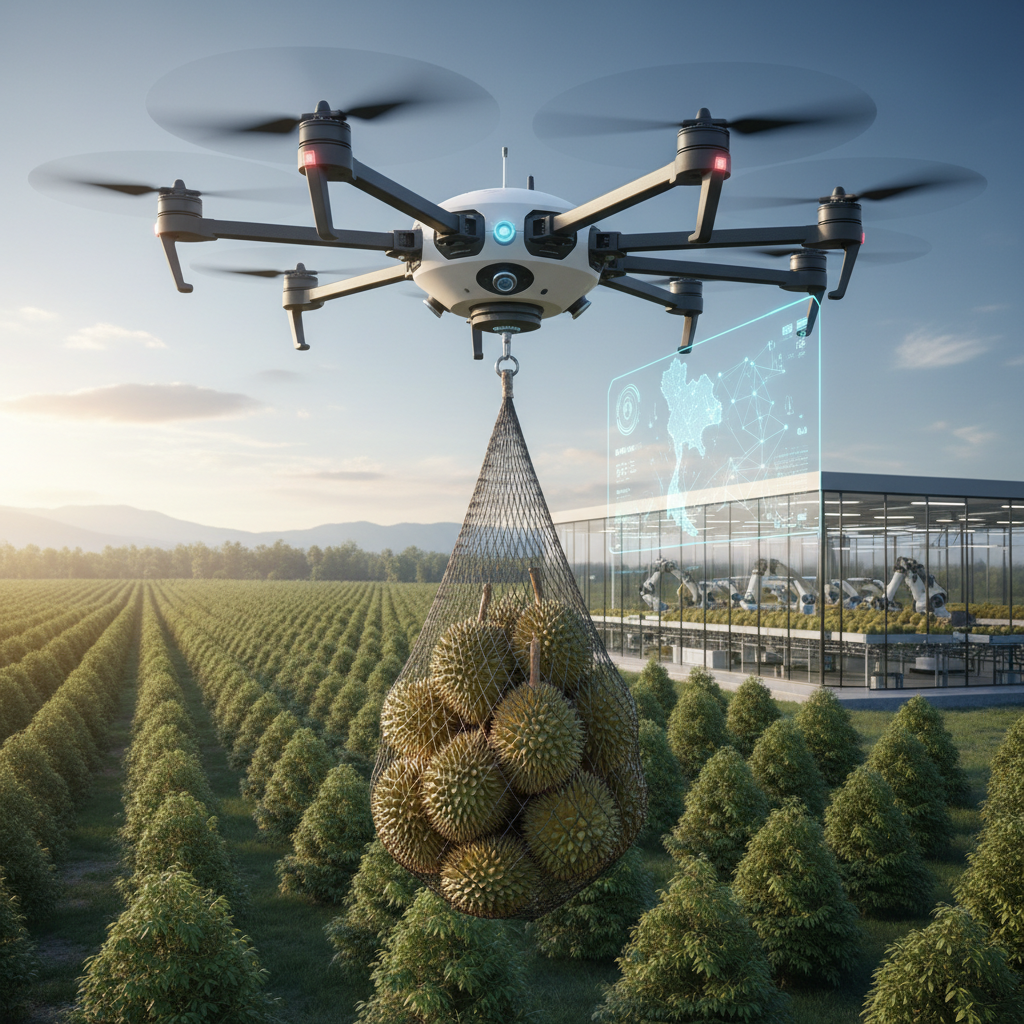
So, why should you, a perfectly normal person who just wants their online order to arrive on time, care about this? Because it affects everything, from the price of your morning coffee to the availability of that new smartphone you’ve been eyeing. Imagine a world where a sudden spike in demand for, say, durian in China, triggers an immediate, automated adjustment in harvest schedules, transportation routes, and even packaging materials here in Thailand. That’s not science fiction anymore, that’s just smart logistics powered by AI.
For us in Thailand, a country that thrives on exports and tourism, efficient logistics are the lifeblood of our economy. When AI optimizes shipping, it means our delicious fruits reach international markets fresher, our automotive parts get to assembly lines faster, and the cost of everything you buy, from imported electronics to local produce, potentially goes down. It also means less waste, fewer empty trucks on our already congested roads, and a more sustainable flow of goods. But it also means fewer jobs for the human hands that used to plan those routes, manage those inventories, and even drive those trucks. The Land of Smiles has a new expression because it's called 'disruption', and it's coming for the logistics sector.
The Bigger Picture: A Global Game Changer
Globally, the stakes are even higher. Supply chain resilience has become a buzzword since the pandemic showed us just how fragile our interconnected world can be. Geopolitical tensions, climate change, and unexpected events can all throw a wrench into the global gears. AI offers a promise, perhaps a false one to some, of a supply chain that can anticipate, adapt, and recover from these shocks with unprecedented speed. It’s about creating a self-healing network of goods and services that can reroute shipments around a typhoon, find alternative suppliers when a factory shuts down, or even predict the next global shortage before it cripples industries.
According to a recent report, the global AI in supply chain market is projected to reach over $20 billion by 2027, growing at a compound annual growth rate of 25% Reuters. This isn’t just about making things slightly better, it’s about fundamentally reshaping global trade, manufacturing, and consumption patterns. Countries that embrace this technology will gain a significant competitive edge, while those that lag behind risk being left in the dust, struggling with higher costs and less reliable deliveries.
What the Smart People Are Saying
I’ve been chatting with a few folks who know a thing or two about this digital dance:
“We’re moving from reactive logistics to predictive and even prescriptive logistics,” explains Dr. Preeya Singh, Head of AI Research at Chulalongkorn University’s Engineering Faculty. “AI algorithms can analyze petabytes of data, from weather patterns to social media trends, to forecast demand with an accuracy that human planners could only dream of. This means less overstocking, less waste, and ultimately, lower costs for everyone.”
Mr. Somchai Limpichart, CEO of Siam Logistics Group, a major player here in Southeast Asia, offers a more practical view. “For us, it’s about efficiency and speed. We’ve implemented AI-powered route optimization that cut our fuel costs by 15% in the first year alone. Our customers, especially in e-commerce, demand faster delivery, and AI is the only way to meet those expectations consistently. It’s not just about technology, it’s about staying competitive.”
Then there’s Ms. Anya Sharma, a labor rights advocate with the Asean Workers’ Alliance, who raises a crucial point. “While the benefits of AI are clear for businesses, we must not forget the human cost. Automation in warehouses and autonomous vehicles on our roads will displace thousands of workers. We need proactive policies for reskilling and social safety nets, not just celebrating profit margins. We cannot allow this 'Thai-style innovation' to leave people behind.”
And finally, Professor David Lee, an expert on global supply chains from the National University of Singapore, puts it in perspective. “The real power of AI isn’t just in optimizing individual parts of the supply chain, but in creating an end-to-end intelligent network. Imagine a world where a container ship’s arrival is automatically coordinated with port operations, customs clearance, and last-mile delivery, all without human intervention. This is the future, and it’s arriving faster than many anticipate.” You can read more about these global trends on TechCrunch.
What You Can Do About It
So, what’s a regular person to do in this brave new world of algorithmic logistics? First, understand that this isn’t just some tech fad. It’s a fundamental shift. If you work in logistics, warehousing, or transportation, start thinking about how your skills can evolve. Learning about data analytics, basic AI concepts, or even how to manage AI-powered systems will be invaluable. Don’t wait for the wave to hit you, learn to surf it.
For consumers, demand transparency. Ask questions about where your products come from and how they get to you. Support companies that are not only efficient but also ethical in their adoption of AI, ensuring fair labor practices and sustainable operations. And for those in government, it’s time to seriously invest in infrastructure, digital literacy, and robust regulatory frameworks that balance innovation with social responsibility. This is especially true for developing nations like Thailand, where the digital divide can create new inequalities.
The Bottom Line: Why This Will Matter in 5 Years
Five years from now, the idea of a supply chain operating without significant AI integration will seem as quaint as sending a telegram. We will see fully autonomous warehouses, predictive maintenance for delivery fleets, and hyper-personalized delivery options that anticipate your needs before you even click ‘buy’. The efficiency will be astounding, the speed unprecedented, and the cost savings significant. But the social fabric will also be tested.
Will we have managed to create a system that benefits everyone, or one that merely exacerbates existing inequalities? Will the convenience of instant gratification come at the cost of human dignity and employment? Only in Bangkok, and indeed, only in the world, will we truly find out. The algorithms are already running, the data is flowing, and the future of how everything gets to everyone is being written, one line of code at a time. It’s a story we all need to pay attention to, because whether you realize it or not, you’re already a character in it. For more on the societal impact, check out Wired.