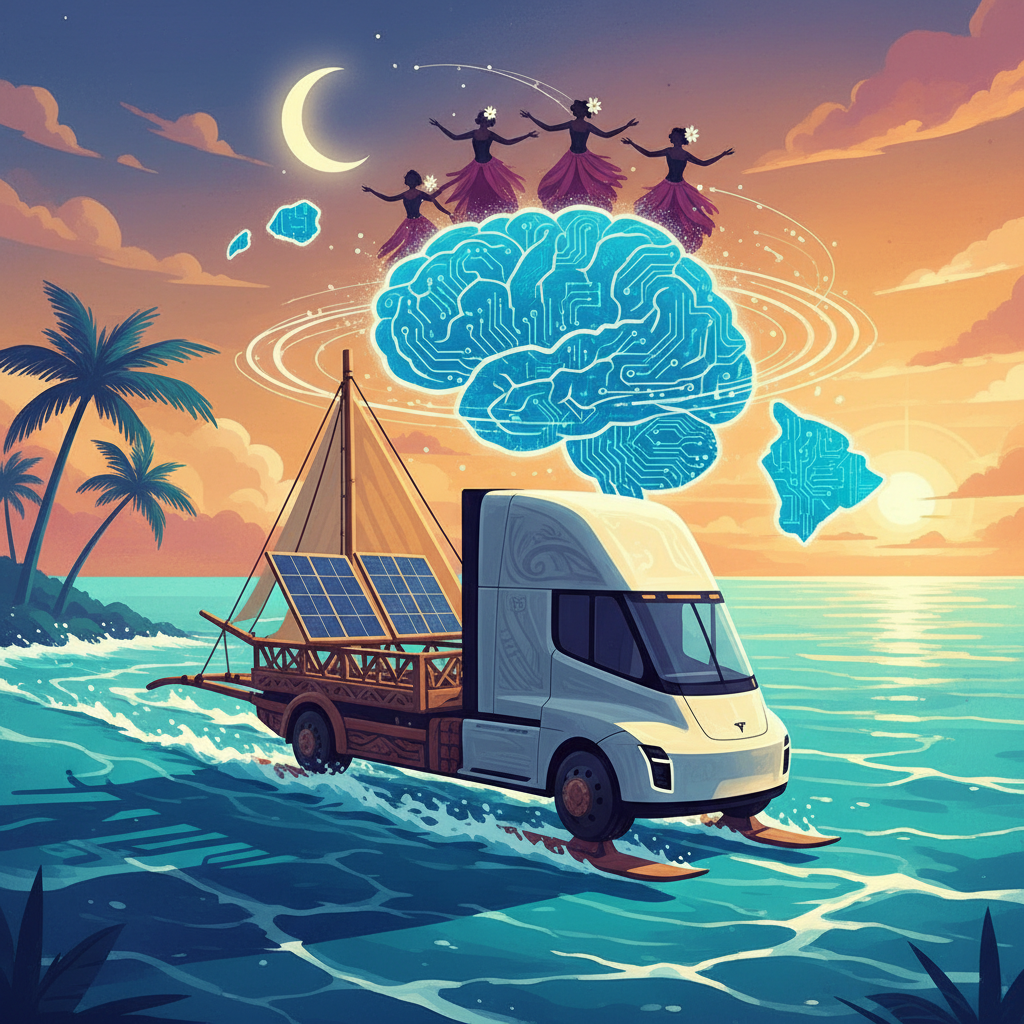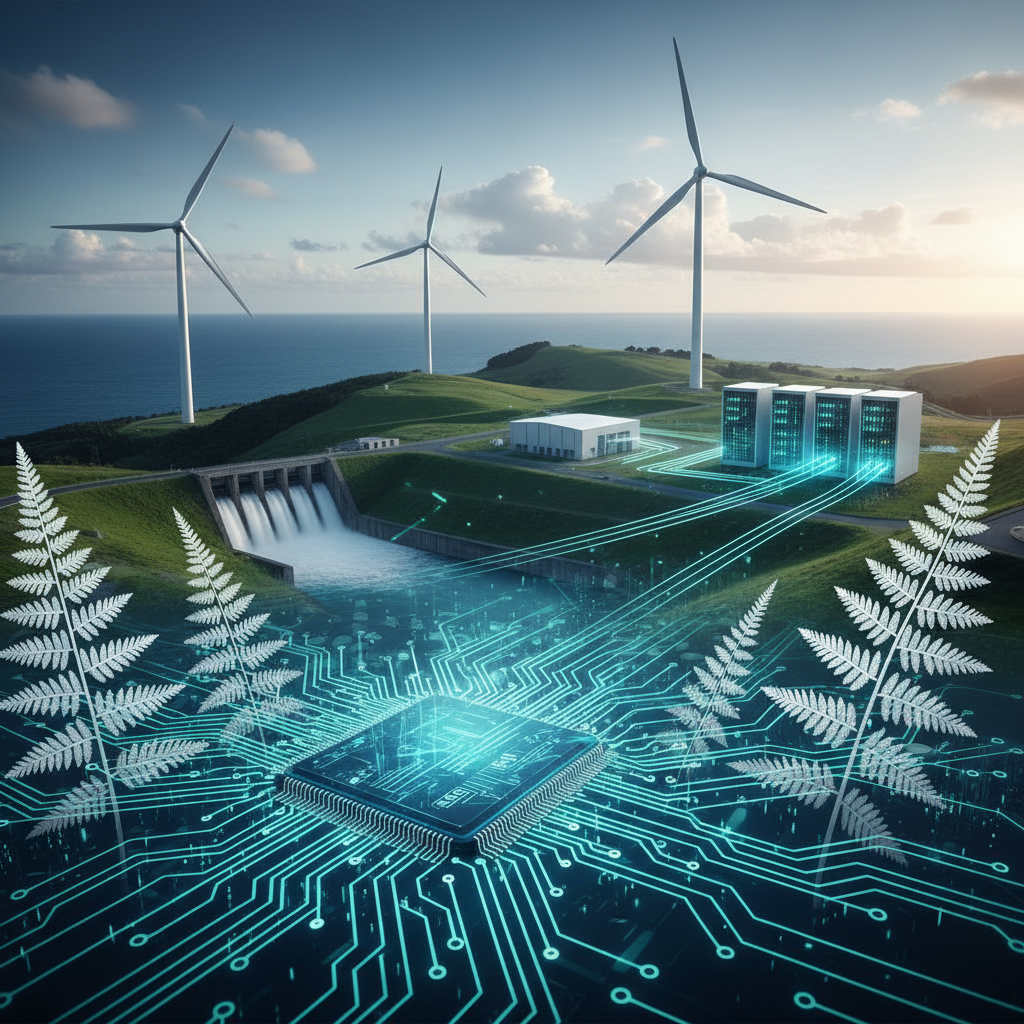

The hum of servers, once a distant background noise, is growing into a roar, a voracious appetite for electricity that threatens to outstrip our planet's capacity. We are talking about the AI energy crisis, a topic that has moved from niche tech discussions to front-page news, and it is hitting home here in Aotearoa, New Zealand.
Reports are circulating that by 2030, AI data centers could consume more electricity than entire countries. Think about that for a moment. Not just a city, not just a region, but entire sovereign nations, their lights, their industries, their homes, all powered by less electricity than the digital brains of artificial intelligence. This is not some far-off dystopian vision, it is the trajectory we are on, driven by the relentless pursuit of more powerful models and the hardware, like NVIDIA's H100 GPUs, that makes them possible.
Here in the Pacific, where the ocean is our lifeblood and the land our ancestor, this conversation takes on a particular urgency. We pride ourselves on our clean, green image, our high percentage of renewable energy. But as the world races to build out its AI infrastructure, the question looms large: can our sustainable energy grids cope with this exponential demand, or will the global AI gold rush force us to compromise our values?
I recently spoke with Dr. Hineata Te Rangi, a leading expert in sustainable energy policy at Victoria University of Wellington. She painted a stark picture. “The projections are genuinely alarming,” she told me, her voice firm. “A single large language model training run, like those used by OpenAI or Google DeepMind, can consume as much energy as hundreds of New Zealand homes over a year. Multiply that by the thousands of models being developed and refined globally, and you start to understand the scale of the challenge. We are seeing a 20-30% year-on-year increase in data center energy consumption, and that is before the full impact of generative AI has even been felt.”
This is not just about the sheer volume of electricity, it is also about the carbon footprint. While Aotearoa boasts over 80% renewable electricity generation, largely from hydro and geothermal sources, many parts of the world still rely heavily on fossil fuels to power their data centers. The global push for AI, therefore, has significant climate implications. "Technology must serve the people, not the other way around," is a principle we hold dear, and it extends to our planet.
Consider the recent announcement by a major global tech player, let us call them 'Pacific Data Solutions,' to build a new hyperscale data center near Auckland. While this promises jobs and digital infrastructure, the energy requirements are staggering. Initial estimates suggest this single facility could add 5% to Auckland's peak electricity demand. Where will that power come from? Our existing renewable capacity is already stretched, and building new generation takes time, investment, and often, significant environmental negotiation.
In Te Reo Māori, we have a word for this: Kaitiakitanga. It speaks to guardianship, to the profound responsibility we have to protect our natural environment for future generations. This concept is not just a cultural ideal, it is a guiding principle for our approach to technology and development. When we look at the energy demands of AI, Kaitiakitanga compels us to ask difficult questions.
Across the Tasman, Australia is facing similar pressures, with experts predicting a doubling of data center energy use in the next five years. The race for AI dominance, spearheaded by companies like NVIDIA with their powerful GPU architectures, is creating an unprecedented demand for computational power, and by extension, electrical power. Jensen Huang, NVIDIA's CEO, has often spoken about the transformative power of AI, but less about the transformers' power consumption.
“We are at a crossroads,” explained Mereana Whaanga, a policy advisor for the New Zealand Ministry of Business, Innovation and Employment. “We want to foster innovation, attract investment, and ensure our businesses and researchers have access to cutting-edge AI. However, we cannot sacrifice our environmental commitments. We are actively exploring solutions, from incentivizing energy-efficient data center design to investing in new geothermal and offshore wind projects. The conversation around AI energy efficiency needs to be as robust as the conversation around AI ethics.”
Indeed, the ethical considerations extend beyond just energy. The enormous computational resources required for state-of-the-art AI models also raise questions of access and equity. Who gets to train these powerful models? Who can afford the energy bills? This could create a widening gap between well-resourced global tech giants like Microsoft, Google, and Meta, and smaller, regional players or academic institutions. This is a concern that resonates deeply in Aotearoa, where we strive for inclusive growth.
Some promising developments are emerging. Researchers at the University of Canterbury are exploring novel cooling techniques for data centers that drastically reduce energy consumption, using New Zealand's abundant cold water resources. There is also a growing movement towards 'green AI,' focusing on developing more energy-efficient algorithms and hardware. According to MIT Technology Review, these efforts are gaining traction, but the pace of AI development often outstrips the pace of efficiency gains.
Our government is also engaging with international bodies to push for global standards on AI energy consumption and transparency. "It is not enough for individual nations to act alone," stated Dr. Te Rangi. "This is a global challenge that requires global solutions. We need to see commitments from major tech companies to prioritize energy efficiency in their AI development and deployment, not just performance." You can read more about global tech trends and their impact on energy on TechCrunch's AI section.
Ultimately, Aotearoa's approach to AI is rooted in indigenous wisdom, a holistic view that sees technology as part of a wider ecosystem. We cannot simply chase technological advancement without considering its impact on our whenua (land) and moana (ocean). The AI energy crisis is not just a technical problem, it is a moral one, asking us to redefine progress itself. Can we build a future where AI thrives, but does so in harmony with our planet? That is the wero, the challenge, that lies before us. The digital tide is rising, and we must ensure it does not drown our aspirations for a sustainable future. This is a conversation that will define the next decade, and it is one we must engage in with open minds and steadfast hearts.