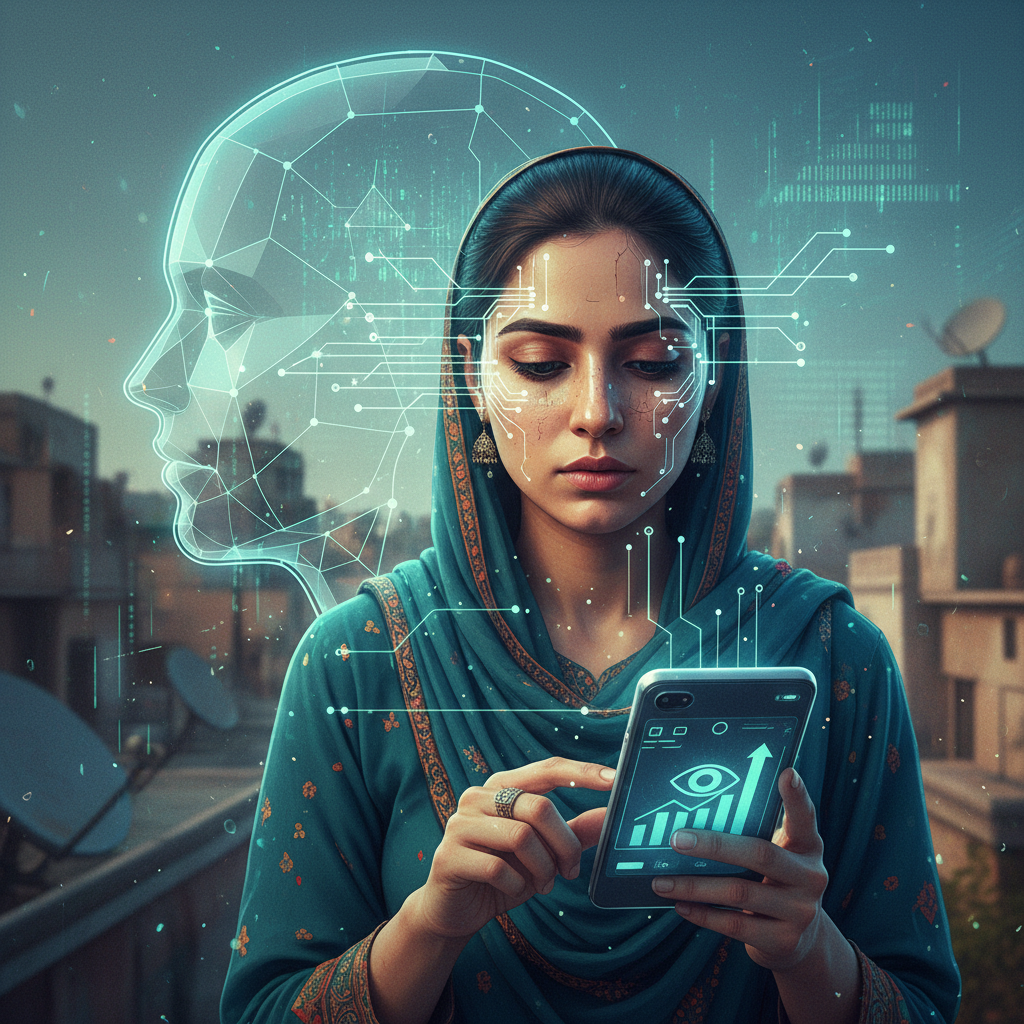
The scent of jasmine and exhaust fumes mingled in the Delhi air as I made my way to the India Habitat Centre, a place where ideas often bloom amidst the city's hustle. It was a crisp April morning, the kind that promises both new beginnings and the familiar warmth of home. My thoughts, however, were not on the impending summer, but on something far more complex and, frankly, a little daunting: how India, a nation of a billion dreams and countless languages, is trying to put a fence around the wild, untamed beast that is artificial intelligence.
Globally, the conversation around AI regulation has reached a fever pitch. From Brussels to Washington, policymakers are wrestling with questions of ethics, bias, and control. But here in India, the discussion feels different, imbued with a unique blend of pragmatism, ambition, and a deep-seated cultural understanding of community responsibility. We are not just talking about laws; we are talking about dharma, about the right way to live and interact with technology that will inevitably reshape our lives.
"It's not just about what AI can do, but what it should do, especially in a country as diverse as ours," explained Dr. Anjali Sharma, a leading AI ethicist and advisor to the Indian government's Ministry of Electronics and Information Technology. We were sipping chai, the steam warming our hands against the air-conditioned chill of the conference room. "Our approach isn't to stifle innovation, but to guide it, to ensure it aligns with our constitutional values and upliftment goals. We want to avoid the pitfalls seen in other nations, where technology sometimes outpaces societal readiness." Dr. Sharma's words echoed a sentiment I've heard repeatedly: India wants to lead, but it wants to lead responsibly.
The government's recent white paper, 'India's AI Future: A Framework for Responsible Innovation,' released in late 2025, has become the cornerstone of this discussion. It proposes a multi-tiered regulatory approach, classifying AI systems based on their potential risk to fundamental rights and public safety. High-risk applications, such as those in healthcare diagnostics, law enforcement, and critical infrastructure, would face stringent pre-market assessments, mandatory human oversight, and explainability requirements. Lower-risk systems, like recommendation engines, would have lighter touch guidelines, focusing on transparency and user control.
This nuanced approach is a reflection of India's unique position. We are both a massive consumer market and a burgeoning hub for AI development. Our startups are innovating at an incredible pace, often with limited resources, solving problems specific to our context, from agricultural yield prediction to vernacular language processing. To impose a blanket, one-size-fits-all regulation would be to clip the wings of these innovators. Yet, the potential for misuse, especially in a society with existing digital divides and data privacy concerns, is immense.
Consider the story of Rohan Patel, a young entrepreneur from Ahmedabad. In Gujarat's diamond district, AI sparkles differently. Rohan's startup, HeeraTech, uses computer vision and machine learning to grade diamonds, a process traditionally reliant on highly skilled human eyes. "Our AI system, 'Ratna,' can grade diamonds with 98% accuracy, significantly reducing human error and speeding up the process," Rohan told me via a video call, his enthusiasm palpable. "But when we started, the biggest challenge wasn't the tech, it was trust. People feared job losses, or that the AI would be biased against certain types of stones, or even certain families in the trade." HeeraTech voluntarily implemented a human-in-the-loop system, where every AI-graded diamond receives final verification from an expert, and they open-sourced their dataset for auditing. "It's about building confidence, showing that AI is a tool, not a replacement for human wisdom," Rohan emphasized.
The Indian government is keenly aware of these grassroots realities. The white paper explicitly mentions the need for a 'sandbox' approach, allowing startups to test their AI solutions in a controlled environment without immediate full regulatory burden. This flexibility is crucial for fostering innovation while gathering real-world data on potential risks. "We are learning from the EU's AI Act, and the US's executive orders, but tailoring our own kurta," remarked Mr. Rajesh Kumar, Joint Secretary at the Ministry of Commerce and Industry, during a recent press briefing. "Our goal is to create a regulatory environment that is both robust and agile, one that can adapt as AI technology evolves." He highlighted that India's digital public infrastructure, like Aadhaar and UPI, provides a unique foundation for implementing transparent and accountable AI systems.
One of the most contentious points in the global AI regulation debate is the issue of data governance. India, with its vast population, generates an immense amount of data. The proposed Digital Personal Data Protection Act, which came into effect in early 2026, works in tandem with the AI framework, ensuring that personal data used for training AI models is collected and processed with consent and strict safeguards. This is particularly vital when considering the potential for AI to exacerbate existing societal biases if trained on unrepresentative or skewed datasets. "Bias in AI is a reflection of bias in our society and in the data we feed it," stated Dr. Priya Singh, a data scientist at the Indian Institute of Technology, Madras. "The government's emphasis on data quality and diversity in datasets is a critical step towards building equitable AI. It's about ensuring that the AI we build understands and respects the nuances of all our communities, from Kanyakumari to Kashmir."
The global implications of India's regulatory stance are significant. As a major player in the global technology landscape, India's approach could influence other developing nations, particularly those in the Global South, who are also grappling with how to harness AI's potential while mitigating its risks. The government has been actively engaging with international bodies, advocating for a multilateral, harmonized approach to AI governance, rather than a fragmented patchwork of national laws. "We believe in 'Vasudhaiva Kutumbakam', the world is one family," Dr. Sharma elaborated. "AI is a global technology, and its governance requires global cooperation. India is ready to play its part in shaping that future responsibly." You can find more on global AI discussions on Reuters Technology.
Looking ahead, the road to effective AI regulation in India will not be without its bumps. The rapid pace of technological change means that any framework will need constant review and adaptation. The challenge lies in creating a system that is flexible enough to accommodate future innovations, yet firm enough to protect its citizens. Public education and digital literacy will also be paramount, ensuring that people understand both the benefits and the risks of AI, and can engage meaningfully with the regulatory process. For more insights into the broader implications of AI, MIT Technology Review offers excellent analyses.
This story will change how you think about AI regulation. It is not merely about imposing rules, but about weaving a safety net of ethics and responsibility into the very fabric of our digital future. India's journey with AI regulation is a testament to its enduring spirit of balancing progress with prudence, ensuring that as we embrace the algorithms, we do not lose sight of our humanity. The sun was setting as I left the India Habitat Centre, painting the sky in hues of orange and purple, a fitting backdrop for a nation striving to illuminate a path for AI that is both innovative and deeply human. Our own Gurukul Goes Global [blocked] article also touches on India's unique approach to technology and education. The journey has just begun, and the world is watching. And perhaps, learning. For further reading on AI policy, Wired's AI section often covers these global developments. {{youtube:bZQun8Y4L2A}}