The digital world, much like the ancient Silk Road, is a conduit for exchange, but also a battleground for resources. Today, the most contested resource is not silk or spices, but data, particularly the vast ocean of human creativity that fuels artificial intelligence. The headlines are filled with news of artists, authors, and musicians, from Sarah Silverman to the New York Times, filing lawsuits against technology behemoths like OpenAI, Google, and Meta, alleging copyright infringement. These are not isolated incidents; they represent a growing global confrontation over who owns the digital past and, by extension, who controls the creative future. For many in Tajikistan, these distant legal skirmishes might seem abstract, a concern for developed economies with established creative industries. This perspective, however, risks overlooking a profound shift that will inevitably reshape our own cultural and economic landscape.
Why most people are ignoring it: The attention gap is understandable. In a nation like Tajikistan, where the immediate concerns often revolve around infrastructure development, water management, or educational access, the intricacies of Western intellectual property law can feel far removed. Our local artists, musicians, and writers often operate within different economic realities, sometimes with less formal legal protection or global market exposure. The immediate impact of a new hydroelectric project or a digital literacy program often overshadows the perceived distant threat of AI copyright. Furthermore, the narrative around AI often focuses on its potential for efficiency and progress, making discussions about its extractive nature less prominent. There is a prevailing notion that AI is a tool, a neutral technology, rather than a system built upon existing human effort. This overlooks the fundamental truth that these powerful AI models, such as OpenAI's GPT series or Google's Gemini, are trained on colossal datasets that include copyrighted books, articles, music, and art, often without explicit permission or compensation to the creators. The sheer volume of data involved, estimated to be in the trillions of tokens for some models, makes individual attribution or negotiation seem impossible to the tech companies, yet this is precisely where the conflict arises.
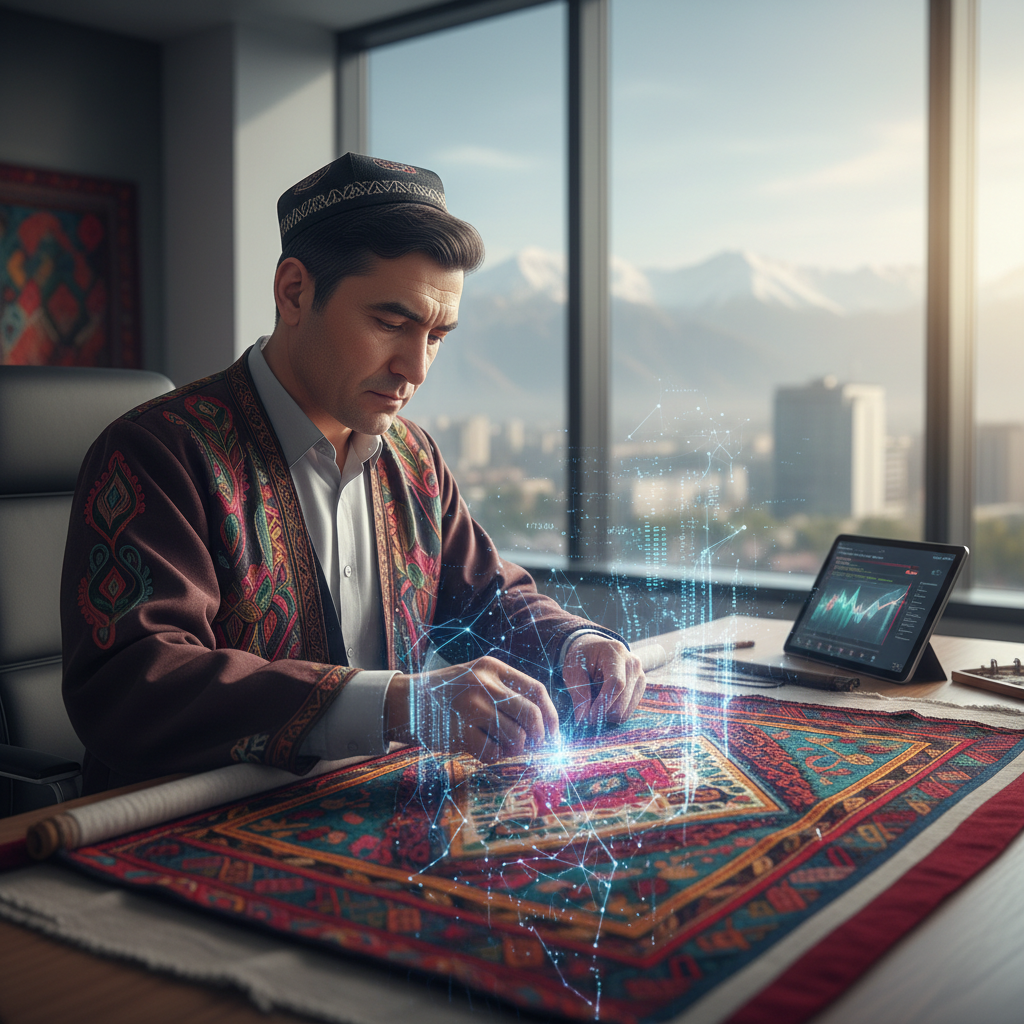
How it affects YOU: The ramifications of this copyright war extend far beyond the legal departments of Silicon Valley. Consider the local artisan in Kulob who weaves intricate patterns, or the poet in Dushanbe who crafts verses in Tajik, or the musician whose melodies echo through the Pamir mountains. If AI models can generate new works in their style, or even directly replicate elements of their creations, without recognition or payment, what becomes of their livelihood? What becomes of the incentive to create original work? For students and researchers, the integrity of information is at stake. If AI-generated content, potentially derived from copyrighted sources, becomes indistinguishable from human-authored material, how do we discern truth, originality, and intellectual effort? The value of human expertise, honed over years, could be diluted. Moreover, as AI tools become more ubiquitous, the demand for human-created foundational content might diminish, impacting global creative markets that even emerging artists in Tajikistan might one day hope to enter. The reality in Central Asia is different from the headlines, but the underlying principles of fair compensation and intellectual ownership are universal.
The bigger picture: Societal, economic, or political implications are vast. Economically, this dispute challenges the very foundation of creative industries, which globally contribute hundreds of billions of dollars annually. If AI companies are not required to license training data, they gain an enormous, arguably unfair, economic advantage, potentially devaluing human creative labor on a massive scale. This could lead to a concentration of wealth and power in the hands of a few large technology firms, further exacerbating global economic inequalities. Socially, the erosion of copyright protection could stifle cultural production and diversity. If creators cannot earn a living from their work, fewer will pursue creative careers, leading to a homogenization of culture dictated by algorithmic trends rather than human ingenuity. Politically, governments worldwide are grappling with how to regulate AI. This copyright debate is a critical component of that larger regulatory challenge. Nations, including those in Central Asia, will need to consider how their intellectual property laws apply to AI training and output, and whether new frameworks are needed to protect their cultural heritage and creative economies. The outcome of these lawsuits could set precedents that determine whether AI becomes a tool for human flourishing or a mechanism for uncompensated extraction.
What experts are saying: The legal and ethical landscape is complex, with various stakeholders offering differing perspectives.
-
Maria Pallante, President and CEO of the Association of American Publishers, has stated, as reported by Reuters, that "generative AI models are simply massive copying machines, and the law has always been clear: you need permission to copy copyrighted works." Her view emphasizes the traditional interpretation of copyright law, asserting that AI training on copyrighted material constitutes infringement.
-
Conversely, Brad Smith, Vice Chair and President of Microsoft, a key investor in OpenAI, has argued for a balanced approach, suggesting that "AI systems are trained on publicly available data, much like a human learns from reading books in a library." This perspective often frames AI training as 'fair use' or analogous to human learning, which typically does not require individual licenses for every piece of information consumed.
-
Professor James Grimmelmann, a legal scholar at Cornell Law School, offers a more nuanced view, noting that "the current legal system was not designed for machines that learn from the entirety of human culture. We are trying to fit a square peg into a round hole, and the outcome will likely be a messy compromise." His analysis highlights the inadequacy of existing laws for the novel challenges posed by generative AI.
-
Dr. Gulnora Mavlonova, a legal expert specializing in intellectual property in Central Asia, speaking at a recent regional forum, emphasized that "Tajikistan's challenges require Tajik solutions, but we must also understand global trends. Our intellectual property framework, while evolving, needs to anticipate these AI-driven challenges to protect our cultural heritage and emerging digital artists." This underscores the need for proactive policy development in our region.
What you can do about it: For individuals, understanding your rights as a creator is paramount. Document your original works, understand licensing agreements, and be aware of how your data is used online. For policymakers and institutions in Tajikistan, this means actively engaging in international discussions on AI governance and intellectual property. It requires investing in legal expertise to adapt national laws and creating educational programs for local artists and entrepreneurs on digital rights. Supporting local creative industries, through grants, platforms, and legal aid, can help them navigate this evolving landscape. Furthermore, advocating for transparency from AI developers about their training data sources is crucial. We must push for models that respect intellectual property and offer fair compensation mechanisms, rather than simply consuming without consent.
The bottom line: This AI copyright war is not a passing fad; it is a foundational conflict that will define the relationship between technology and creativity for decades. In five years, the legal precedents set today will have shaped global creative economies, influenced national AI policies, and fundamentally altered how we perceive and value human artistic endeavor. Will AI be a powerful assistant that amplifies human creativity, or will it become a dominant force that diminishes it by consuming its uncompensated past? The answer depends on how vigorously creators, policymakers, and societies worldwide, including those of us in Tajikistan, engage with these complex issues now. Ignoring it is not an option; the stakes are too high for our culture, our economy, and the very future of human expression.