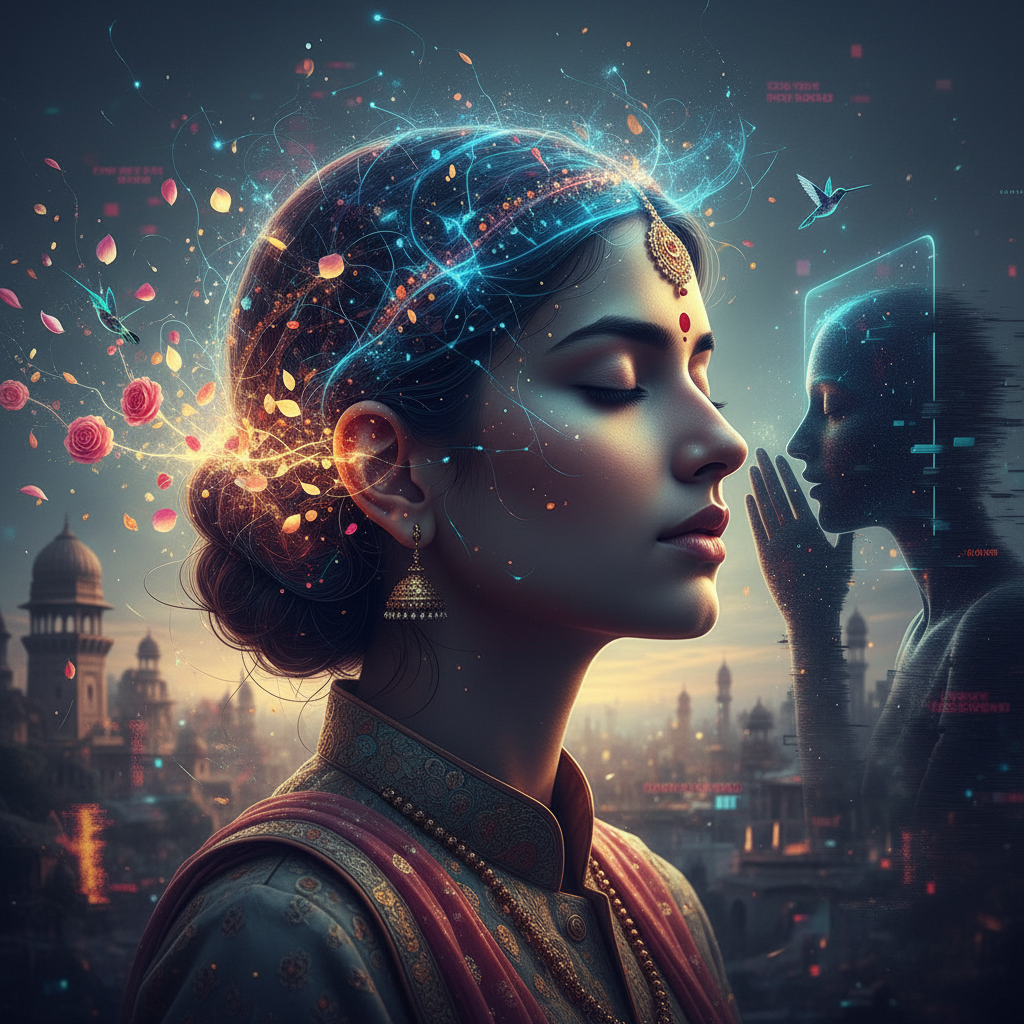
The aroma of freshly brewed chai still fills the air each morning in Ahmedabad, just as it has for generations. But as the sun rises over the Sabarmati, something else is stirring too, something less tangible but far more pervasive than the morning mist: a new kind of digital fog. This fog is woven by algorithms, designed to whisper sweet nothings, or sometimes harsh untruths, directly into our ears, or rather, our screens. It's a phenomenon that has me, Divyà Mehtà, deeply concerned, not just as a journalist, but as an Indian woman watching her community navigate this brave new world.
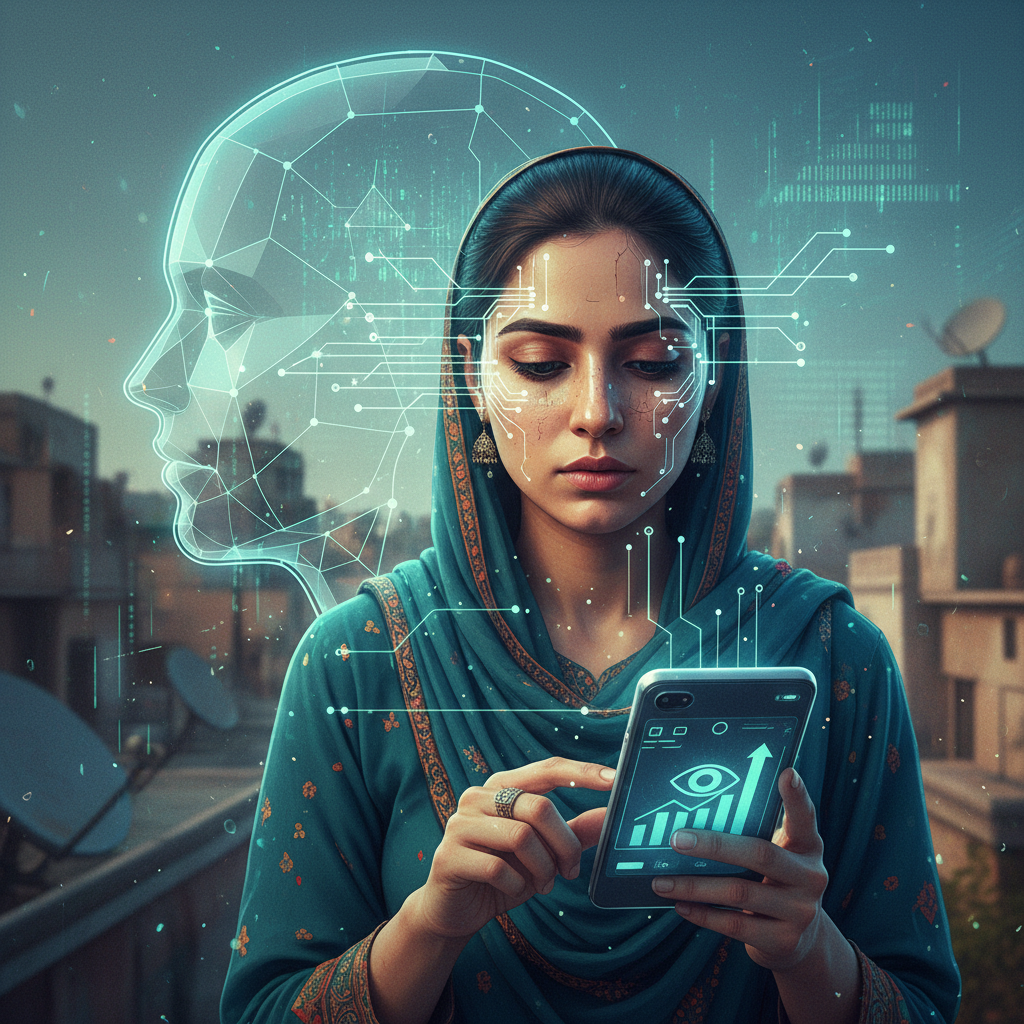
I met Rohan, a young auto-rickshaw driver in Vadodara, last month. He used to be a cheerful, easygoing fellow, always quick with a joke. Now, he seems perpetually on edge, his phone a constant companion, his eyes darting between traffic and a flurry of WhatsApp forwards. "Didi," he told me, his voice low, "the news channels, they don't tell us everything. But these videos, these messages, they show the real truth." He was talking about hyper-realistic AI-generated videos, deepfakes of politicians saying things they never said, or fabricated news reports designed to inflame sentiments. Rohan, like millions across our diverse nation, was caught in the crosscurrents of AI-powered misinformation, his cognitive landscape subtly, yet powerfully, being reshaped.
This story will change how you think about the very fabric of our democracy. It is not just about fake news, it is about how these sophisticated AI models, from OpenAI's advanced GPT variants to Meta's Llama family, are being weaponized to exploit our deepest cognitive biases, our fears, and our aspirations. They are learning our patterns, our preferences, and then feeding us a diet of tailored narratives that confirm what we already believe, or worse, make us believe things that are simply not true. It's a digital echo chamber, but one designed with surgical precision by machines.
Recent research from the Indian Institute of Technology, Delhi, indicates a startling trend. A study of 5,000 urban and rural internet users found that nearly 68% struggled to differentiate between AI-generated content and authentic human-created media when presented with political narratives. This figure jumped to over 80% for users above the age of 50. "The sophistication of these AI models has outpaced our natural human defenses," explains Dr. Anjali Sharma, a cognitive psychologist specializing in media literacy at the National Institute of Mental Health and Neurosciences (nimhans) in Bengaluru. "Our brains are wired to trust, especially information presented with conviction and emotional resonance. AI can now mimic that conviction perfectly, often exploiting our 'truth bias' and 'confirmation bias' to devastating effect." She added that the rapid pace of information consumption, particularly on platforms like Instagram and Facebook, leaves little room for critical evaluation.
Think about it: in a country as vast and varied as India, with over 900 million eligible voters, the stakes are incredibly high. Our elections are vibrant, often raucous, festivals of democracy. But what happens when the very information guiding a voter's decision is tainted by AI? We saw glimpses of this during the recent state elections, where AI-generated audio clips of candidates making controversial statements went viral, causing significant unrest before they were debunked. The damage, however, was already done. Trust was eroded, and doubts were sown.
"The psychological impact is profound," says Professor Rajesh Kumar, head of the Department of Political Science at Jawaharlal Nehru University in Delhi. "When citizens are constantly bombarded with conflicting narratives, many of which are indistinguishable from reality, it leads to cognitive overload and a deep sense of cynicism. People start questioning everything, even legitimate news, and that is a dangerous path for any democracy." He points out that this erosion of trust can lead to political apathy, or conversely, to extreme polarization, as individuals retreat into ideologically homogenous online communities.
In Gujarat's diamond district, AI sparkles differently, but its shadow looms large over the political discourse. Small business owners, once focused on their craft, now spend hours debating the latest viral video, often fueled by content that is meticulously crafted to exploit local anxieties or historical grievances. This isn't just about elections; it's about the social fabric, the everyday conversations, the very way communities interact.
What makes this challenge particularly insidious in India is our linguistic diversity and the sheer scale of internet penetration, especially in rural areas, often via low-cost smartphones. AI models can now generate convincing content in dozens of Indian languages, making it harder for fact-checkers to keep pace. "We're seeing a 'glocalization' of misinformation," notes Ms. Priya Singh, a senior analyst at the Centre for Internet and Society. "AI allows for the rapid creation of highly localized, culturally resonant fake content, making it incredibly effective at manipulating specific regional sentiments." She highlighted how deepfake technology has evolved from simple face swaps to full-body synthesis, making detection increasingly difficult for the untrained eye. For more on the technical advancements in AI, you can always check out Wired's AI section.
The broader societal implications are chilling. Beyond elections, AI misinformation can incite communal violence, spread public health scares, and undermine public trust in institutions. Imagine an AI-generated crisis alert, indistinguishable from a genuine government announcement, causing widespread panic. The potential for chaos is immense. It also impacts our relationships, as families and friends find themselves divided by conflicting "truths" they've encountered online. Rohan's family, for instance, is now fractured, with heated arguments breaking out over what is real and what is not.
So, what can we, as individuals and as a society, do? The first step, as always, is awareness. We need to understand that what we see and hear online, especially during sensitive times like elections, might not be what it seems. Critical thinking is no longer just a desirable skill; it is a survival imperative. Here's some practical advice:
- Pause and Verify: Before sharing any emotionally charged content, especially political, take a moment. Cross-reference the information with multiple reputable news sources. Look for official statements. If a claim seems too sensational or too perfectly aligned with your biases, it probably is.
- Look for the Source: Who created this content? Is it a known, credible organization or an anonymous account? AI-generated content often lacks clear attribution. Tools like Google Reverse Image Search can sometimes help trace the origin of images and videos.
- Be Skeptical of Visuals and Audio: With deepfake technology advancing rapidly, seeing is no longer believing. If a video or audio clip of a public figure seems off, or too perfect, or too extreme, exercise extreme caution. Organizations like the Election Commission of India are working on AI detection tools, but human vigilance remains key. For a deeper dive into how AI is shaping our world, MIT Technology Review offers excellent insights.
- Promote Media Literacy: Education is our strongest shield. Schools, community centers, and even families need to actively teach digital literacy and critical thinking skills. We need to equip the next generation, and indeed all generations, with the tools to navigate this complex information landscape.
- Support Ethical AI Development: As citizens, we must demand transparency and accountability from tech companies. We need robust regulations that prevent the misuse of AI for malicious purposes. The conversation around AI ethics is global, and India has a crucial role to play in shaping it, as discussed in India's Digital Dharma [blocked].
This is not about demonizing technology; it's about understanding its dual nature. AI holds immense promise for India, from healthcare to education. But like the mythical maya, it also has the power to create illusions, to distort reality. Our challenge, our collective responsibility, is to ensure that the algorithms serve humanity, not mislead it. The future of our minds, and our democracy, depends on it.