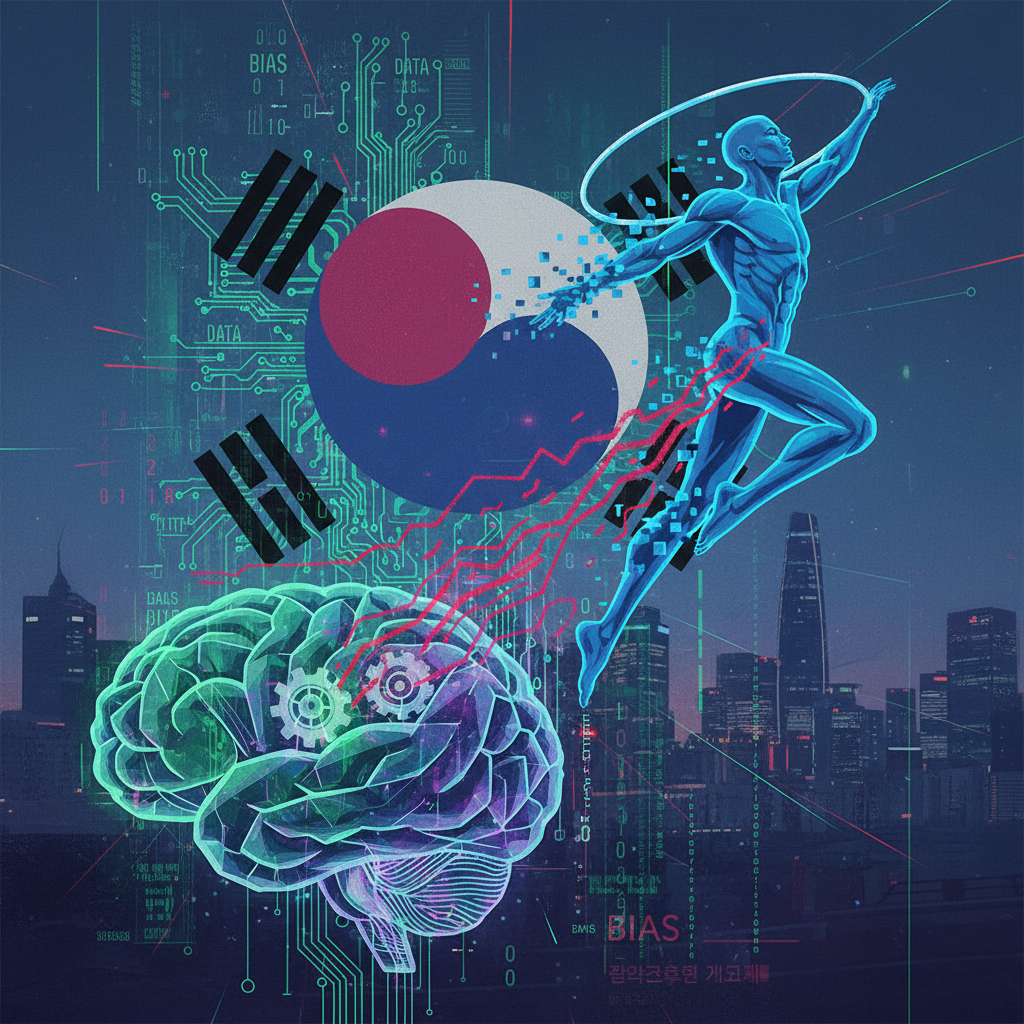

The roar of the crowd, the tension of the final seconds, the sheer physical and mental fortitude displayed by athletes: these are the elements that define sports. In South Korea, a nation where athletic prowess is celebrated with fervent passion, technology has increasingly become an invisible player on the field, court, and track. From advanced training simulations to real-time performance analytics, artificial intelligence promises to optimize every facet of athletic endeavor. Yet, beneath this veneer of objective data, a troubling question emerges: when the algorithm judges the athlete, can it truly be fair, or does it merely perpetuate our existing human biases?
My position is unequivocal: the current trajectory of AI integration in sports, particularly within talent identification, performance evaluation, and injury prediction systems, is dangerously susceptible to algorithmic bias. This bias, often subtle and insidious, threatens to undermine the very principles of meritocracy and equal opportunity that sports are supposed to embody. We are not just talking about minor discrepancies; we are discussing potential career-ending misjudgments, overlooked talents, and systemic disadvantages for certain groups of athletes. The Korean approach to AI is fundamentally different in many ways, often prioritizing efficiency and technological advancement, but even here, we must pause and scrutinize the ethical implications.
Consider the burgeoning field of AI-powered scouting. Startups like SportSense AI, a promising Korean venture, are developing systems that analyze vast datasets of athlete performance, biomechanics, and even psychological profiles to identify future stars. On the surface, this appears to be a leap forward from subjective human judgment. However, the data feeding these algorithms is often historical, reflecting past biases in who was scouted, who received optimal training, and whose performance metrics were prioritized. If, for instance, a system is trained predominantly on data from male athletes, it may inadvertently penalize female athletes whose biomechanics or playing styles differ, even if equally effective. Similarly, a focus on certain physical attributes, popular in particular sports, could systematically overlook talents from regions or backgrounds where different body types are prevalent.
Dr. Lee Min-jun, a leading expert in sports analytics at Seoul National University, articulated this concern recently. "We are building predictive models based on what we already know, or think we know, about success," he stated. "The danger is that these models become self-fulfilling prophecies, reinforcing existing patterns rather than discovering truly novel talent. If our training data disproportionately favors athletes from affluent urban centers, for example, then our AI will likely continue to identify future stars from those same centers, effectively sidelining talent from rural areas or less privileged backgrounds." This is not merely an academic exercise; it has real-world consequences for young athletes dreaming of professional careers.
Furthermore, the issue extends to performance evaluation and even refereeing. AI systems are increasingly used to assess player performance, sometimes influencing contract negotiations or team selections. If these systems are not meticulously designed and continuously audited for bias, they can penalize athletes whose playing styles do not conform to the dominant statistical patterns. Imagine an AI referee system, touted for its objectivity, but trained on game footage where human referees historically made certain calls against players of a particular ethnicity or playing style. The AI, in its pursuit of pattern recognition, could inadvertently learn and replicate these biases, cloaking them in the guise of algorithmic neutrality. This is a critical point, as the perception of fairness is paramount in sports.
Some might argue that AI, by its very nature, is more objective than human judgment. They contend that data does not lie, and algorithms merely process information without emotion or prejudice. This perspective, while appealing in its simplicity, fundamentally misunderstands the nature of algorithmic bias. Algorithms do not operate in a vacuum; they are products of human design, human data, and human assumptions. As Professor Kim Ji-yeon, an ethicist specializing in AI at Kaist, explained, "The data itself is a reflection of our world, and our world is unfortunately replete with historical and systemic biases. When we feed this biased data into an algorithm, we are not creating an objective judge; we are creating a sophisticated mirror that reflects our own imperfections back at us, often with amplified clarity." The idea that data is inherently neutral is a dangerous fallacy.
Moreover, the very metrics chosen for evaluation can introduce bias. If an AI system for basketball scouting prioritizes height and vertical leap, it might systematically undervalue the strategic prowess or exceptional ball-handling skills of a shorter player, even if those attributes contribute significantly to team success. The choice of what to measure, and how to weigh those measurements, is a human decision, and it is here that bias can subtly creep into the system. Here's the technical breakdown: the feature selection and weighting process, often optimized for a specific outcome metric, can inadvertently encode societal preferences or historical performance trends that are not universally applicable or fair across diverse athlete populations.
So, what is the path forward? We must adopt a proactive, multi-pronged approach to combat algorithmic bias in sports. Firstly, there must be a concerted effort to diversify and de-bias the training data used for these AI systems. This means actively seeking out data from underrepresented groups, different geographical regions, and varied playing styles. It also requires rigorous auditing of existing datasets for historical inequities. Secondly, transparency and explainability in AI models are crucial. Athletes, coaches, and federations should not be subjected to black-box algorithms whose decisions cannot be understood or challenged. We need systems that can articulate why a particular assessment was made, not just what the assessment is. This is particularly important for fostering trust in these technologies.
Thirdly, regulatory frameworks are necessary. While South Korea has been a leader in technological adoption, our regulatory approach to AI ethics in specific domains like sports is still evolving. We need clear guidelines and standards for fairness, accountability, and transparency in AI systems used in sports. Perhaps a body similar to the Korea Sports Council could establish an AI Ethics Review Board specifically for athletic applications. "We cannot leave this entirely to the private sector," asserted Mr. Park Doo-hyun, a senior official at the Ministry of Science and ICT. "Government and public institutions have a responsibility to ensure these powerful tools serve the public good, not just commercial interests. We are exploring new models for oversight, drawing lessons from global discussions on AI regulation, but tailored to our unique context." Brussels' AI Rulebook: Is Europe's Grand Vision a Shield or a Shackle for Innovation? [blocked] offers one perspective on such regulatory efforts.
Finally, and perhaps most importantly, we must foster a culture of continuous critical evaluation. AI systems are not static; they evolve, and so too must our understanding and scrutiny of them. Regular, independent audits of AI systems for bias, conducted by diverse teams of experts including ethicists, sociologists, and athletes themselves, are essential. This is not a one-time fix but an ongoing commitment. Samsung's latest move reveals a deeper strategy in this regard, as they recently announced a new internal ethics committee specifically tasked with reviewing AI applications across all their divisions, including their sports technology investments. This kind of proactive, internal governance is a positive step.
The integration of AI into sports holds immense potential, from enhancing athlete safety to revolutionizing fan engagement. However, if we are not vigilant, if we do not actively confront the specter of algorithmic bias, we risk creating a future where the playing field is not leveled by technology, but rather tilted further by its unchecked influence. The pursuit of excellence in sports should be a testament to human potential, not a reflection of our historical prejudices encoded in lines of code. The time to act is now, before the algorithms decide who gets to play, and who is left on the sidelines, forever unseen. For more on the broader implications of AI ethics, consider the discussions found on MIT Technology Review. The future of fair play depends on our choices today. For further insights into AI's societal impact, exploring resources like Wired's AI section can provide valuable context.