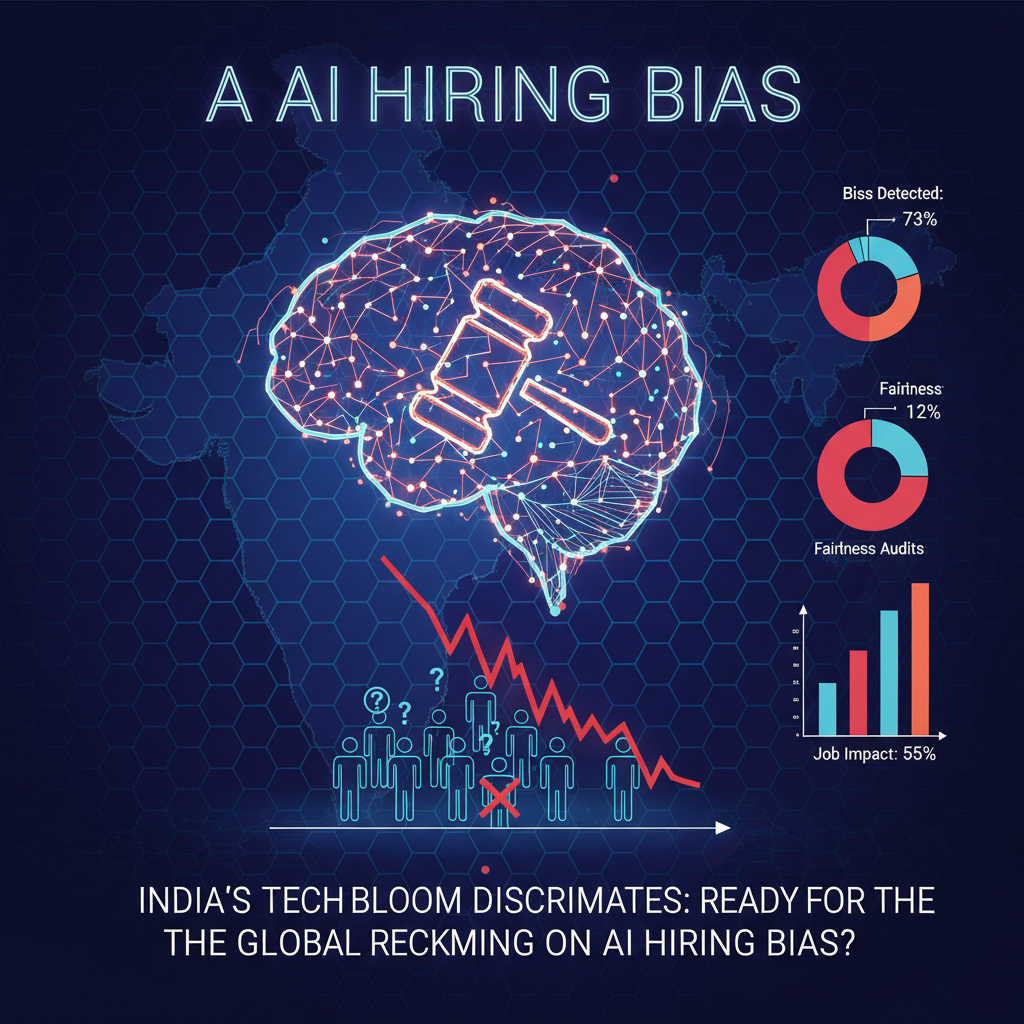
Is it just me, or does it feel like every other day there's a new headline about some artificial intelligence tool doing something profoundly, predictably, and often hilariously wrong? We were promised a future of seamless efficiency, a world where algorithms would be our benevolent overlords, making all the tough decisions with cold, hard logic. Instead, we got AI that thinks a resume with 'women's chess club' is less qualified than one with 'men's rugby team.' Oh, the irony. This isn't some niche tech-bro problem anymore; we are talking about AI bias in hiring, and it has officially hit the mainstream, dragging lawsuits and regulations in its wake. The question, my dear readers, is whether this is a fleeting Silicon Valley tantrum or the new normal, a permanent fixture in our digital landscape.
For years, we heard the whispers. Academics and ethicists, bless their often-ignored hearts, warned us that if you feed an algorithm a diet of biased historical data, it will, quite naturally, learn to be biased. It is not rocket science, it is just basic garbage in, garbage out. Yet, companies, in their eternal quest for optimization and cost cutting, rushed to deploy AI tools to screen resumes, conduct initial interviews, and even assess personality traits. The allure was simple: faster hiring, reduced human error, and a supposed objective selection process. What they often overlooked, or perhaps conveniently ignored, was that human error is not always the problem; human bias is. And when you automate human bias, you do not eliminate it, you just scale it up to an industrial level, making it harder to detect and even harder to undo.
Think about it, for centuries, the hiring process has been a messy, subjective affair, influenced by everything from a candidate's alma mater to the interviewer's mood that morning. We have had laws against discrimination for decades, trying to level the playing field. Then came AI, promising a clean slate, a fresh start. Instead, it often just digitized the old prejudices. We saw Amazon famously scrap an AI recruiting tool because it disproportionately favored male candidates, penalizing resumes that included words like 'women's' from women's colleges or clubs. File this under 'things that make you go hmm.' It was a stark, public admission that these systems were not just mirroring bias, they were amplifying it. It was like giving a village elder a megaphone to broadcast their most outdated opinions to the entire world, all in the name of progress.
Now, the chickens are coming home to roost, and they are bringing lawyers with them. Regulators, initially slow to grasp the nuances of algorithmic discrimination, are finally catching up. In the United States, the Equal Employment Opportunity Commission (eeoc) has been increasingly vocal about its intent to enforce anti-discrimination laws against employers using AI. The New York City law, Local Law 144, which came into effect in July 2023, is a prime example. It mandates independent bias audits for automated employment decision tools used in the city, making it one of the first jurisdictions globally to require such transparency. This is not just a suggestion; it is a legal requirement, with fines and penalties for non-compliance. This kind of legislative muscle is a significant departure from the 'move fast and break things' ethos that once dominated tech. According to a recent report by the MIT Technology Review, the number of lawsuits citing algorithmic bias in employment decisions has more than doubled in the last two years alone, indicating a growing legal battleground.
Across the Atlantic, the European Union's AI Act, expected to be fully implemented by 2026, classifies AI systems used in employment as 'high-risk.' This means they will be subject to stringent requirements, including risk management systems, data governance, human oversight, and conformity assessments. This is a comprehensive approach, aiming to bake fairness into the very design of these systems, rather than just slapping a band-aid on them after they have already caused harm. As Ursula von der Leyen, President of the European Commission, stated,