
The morning rush in Bangkok is a symphony of chaos and charm. Motorbikes weave through impossible gaps, street vendors call out their wares, and the air hums with a thousand conversations. Amidst this beautiful bedlam, I see it everywhere: the glowing screens, the earbuds, the heads bowed in quiet communion with their devices. We are always connected, always processing, and increasingly, our devices are doing a lot of that processing themselves, right there on the chip. And when I say 'chip,' I am looking squarely at Apple's M-series processors, which are quietly, or not so quietly, ushering in an era of on-device AI that is starting to tickle our brains in ways we haven't quite grasped yet.
Take my friend, Preeya. She runs a small, bustling noodle shop in the heart of Chatuchak. Her days are a blur of steaming broth, fresh herbs, and endless orders. Recently, she upgraded her iPad to one of the new M4 models. Now, instead of scribbling notes or relying on her memory for complex ingredient lists and customer preferences, her device is practically her second brain. It suggests ingredient reorders based on real-time sales, optimizes her delivery routes, and even helps her craft witty social media posts in Thai, English, and a smattering of Japanese for the tourists. "It's like having a really smart, quiet assistant who never asks for a raise," she told me, laughing, as she chopped spring onions with lightning speed. "Sometimes, it predicts what I need before I even think of it. It's a little spooky, but mostly, it means I can actually sit down for five minutes." This isn't just about efficiency, is it? It is about offloading cognitive load, about subtly shifting our reliance from our own grey matter to silicon.
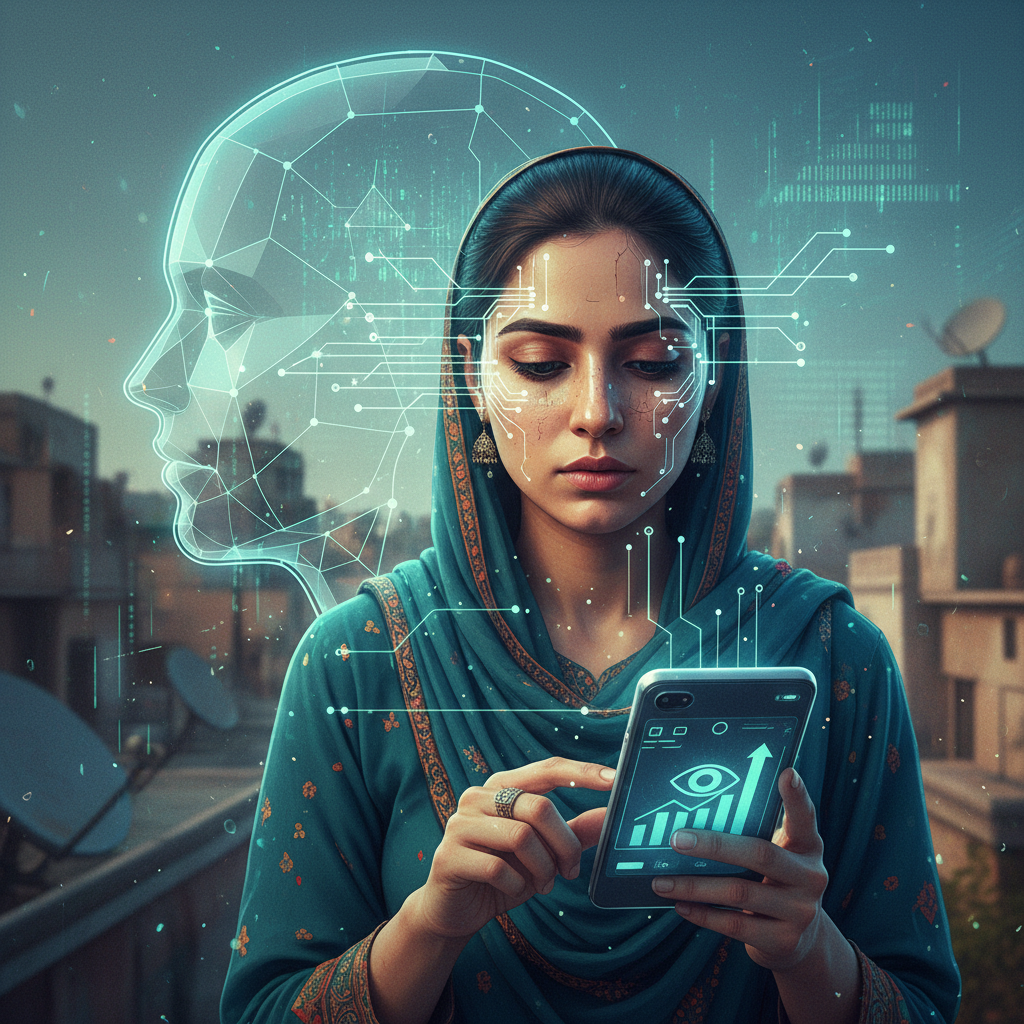
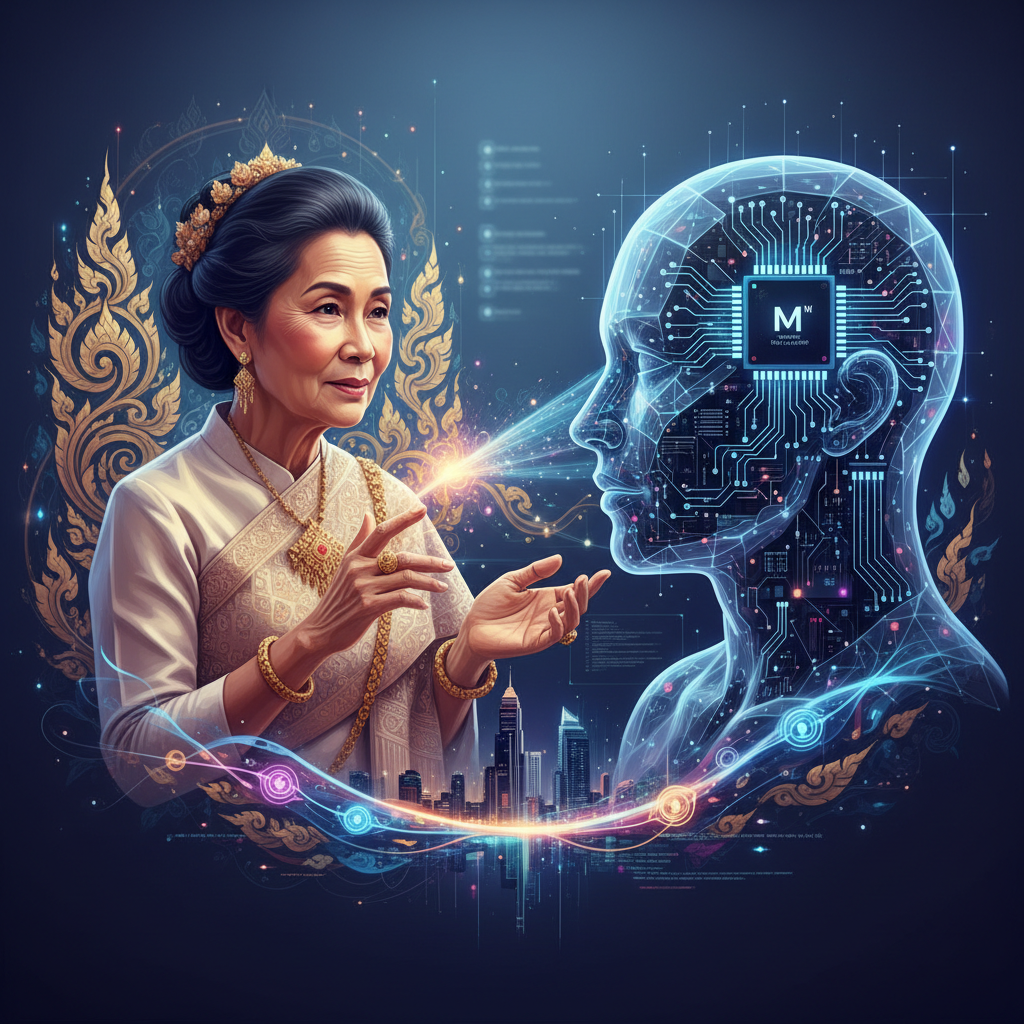
The magic, or perhaps the mischief, lies in the M-series chips themselves. These aren't just faster processors, they are neural engines designed specifically for machine learning tasks. This means that many AI operations, which used to require sending data to the cloud for processing, can now happen directly on your iPhone, iPad, or MacBook. Think about it: real-time language translation, advanced image and video editing, sophisticated predictive text, and even personalized health insights, all without your data ever leaving your device. This local processing is a game changer for privacy, yes, but it is also profoundly changing how we interact with information and, by extension, how our brains work.
Dr. Supakorn Limwongse, a cognitive psychologist at Chulalongkorn University, shared his insights with me. "The human brain is incredibly adaptive," he explained. "When a tool allows us to outsource a cognitive function, our brains often become less reliant on that specific function. For example, GPS has made us less adept at spatial navigation. Similarly, if our devices are constantly predicting our next word, our next task, or even our next craving for pad krapow, we might see a subtle degradation in our own foresight or critical thinking related to those areas." He paused, adjusting his glasses. "It's not necessarily a bad thing, but it is a shift. We gain efficiency, but we might lose some mental muscle." This is the kind of trade-off that keeps me up at night, wondering if the Land of Smiles has a new expression because it is called 'disruption.'
Indeed, the implications extend beyond individual cognitive shifts. Consider the social fabric. In Thailand, storytelling and community are paramount. We learn through shared experiences, through the wisdom of our elders, and through the subtle cues of social interaction. What happens when our devices become the primary source of 'wisdom,' even if that wisdom is locally processed and hyper-personalized? Will we still seek out the nuanced advice of a trusted friend, or will we defer to the perfectly optimized suggestion from our AI? The convenience is undeniable, but the erosion of interpersonal connection is a silent, creeping concern.
I saw a glimpse of this just last week at a local temple fair. A group of teenagers, all with the latest iPhones, were using a real-time translation app powered by their M-series chips to communicate with a group of tourists. It was seamless, impressive even. But I noticed something: they rarely made eye contact. They spoke to their phones, which then spoke to the other phones. The human connection, the fumbling for words, the shared laughter over a misunderstanding, those moments were largely absent. It was efficient, yes, but was it truly connecting? "Technology should enhance human interaction, not replace it," remarked Dr. Pimporn Chantarawong, a cultural anthropologist who studies digital trends in Southeast Asia. "When the intermediary becomes too smooth, too perfect, we risk losing the richness of genuine human effort and empathy." Her words resonated deeply, echoing a concern I have felt brewing for some time.
Apple's push for on-device AI is also creating a new kind of digital divide. While the M-series chips are powerful, they are also expensive. This means that the most advanced, privacy-preserving AI experiences are primarily accessible to those who can afford the latest Apple hardware. In a country like Thailand, where economic disparities are still significant, this could exacerbate existing inequalities. Those with older devices, or non-Apple devices, might find themselves relying more on cloud-based AI, which often comes with different privacy implications and potentially slower performance. It is a subtle form of digital class stratification, where access to 'smarter' local AI becomes a premium feature.
So, what is a humble Thai journalist to do? And what about you, dear reader, as you navigate this increasingly intelligent world? First, awareness is key. Understand that your devices are not just tools; they are becoming extensions of your cognitive processes. Recognize when you are offloading a task to your AI, and consciously decide if that is the best use of your mental energy. Sometimes, a little struggle, a little thinking, is good for the brain, like a good workout for your biceps. Don't let your M-series chip do all the heavy lifting all the time. For more on the broader implications of AI, you might find some interesting perspectives on MIT Technology Review.
Second, prioritize human connection. Put down the phone. Look people in the eye. Engage in conversations without the immediate crutch of a translation app or a fact-checking AI. The nuances of human communication, the unspoken language, the shared silences, these are things no AI, however powerful its local chip, can truly replicate. Remember, Only in Bangkok can you find a street vendor who can tell your life story just by looking at your face, no neural engine required.
Finally, be critical. Question the suggestions your AI gives you. Does it align with your values? Is it truly helpful, or just convenient? The goal of these powerful local AI capabilities should be to empower us, not to make us passive recipients of algorithmic suggestions. As Apple continues to pour resources into its M-series development, promising even more sophisticated on-device AI, we must remember that the most powerful processor remains the one between our ears. Let us use it wisely, and ensure that our Thai-style innovation continues to prioritize the human element, even as our machines get smarter. For a deeper dive into the technical side, Ars Technica often has excellent breakdowns of chip architectures and their capabilities. And if you are curious about how other regions are grappling with similar issues, Reuters Technology provides a global perspective. The future is here, it is in our pockets, and it is asking us to think about how we want to think.