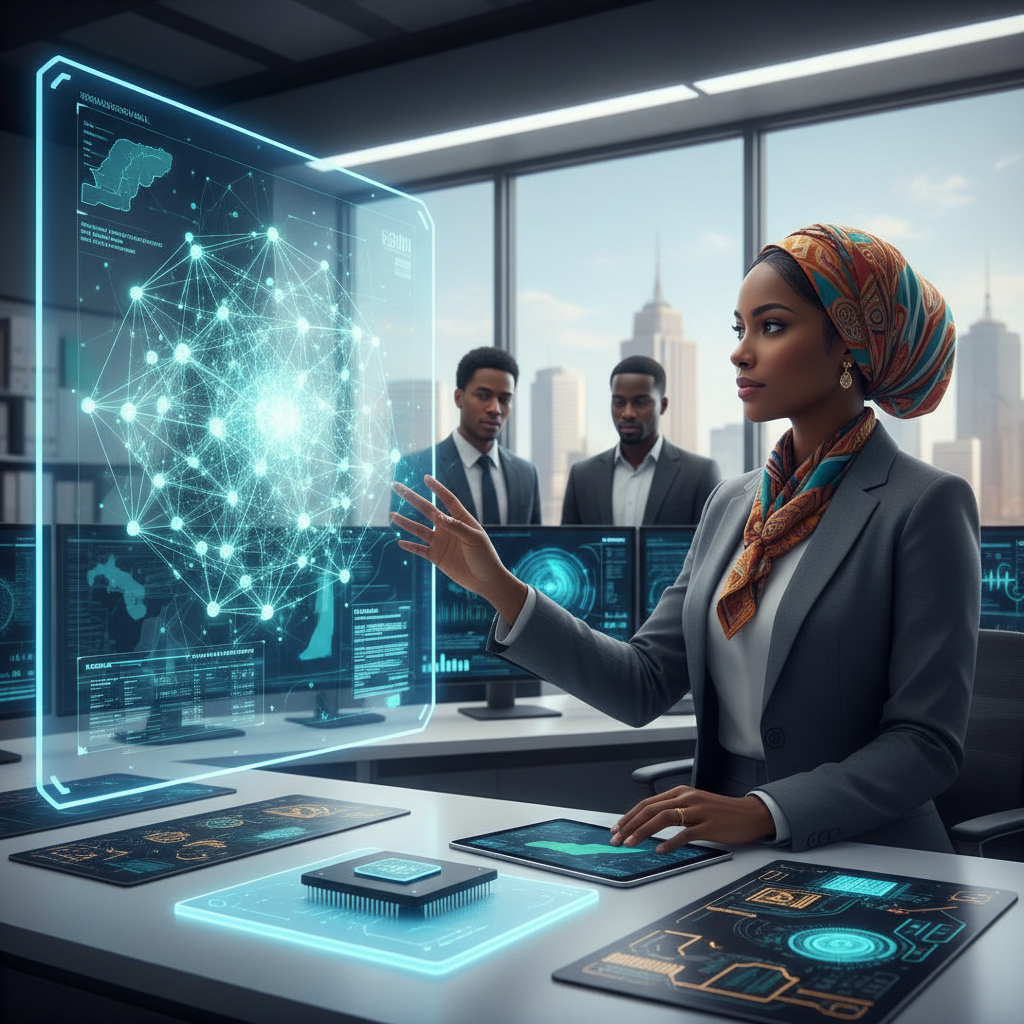
The sun rises over the Ebrié Lagoon, painting Abidjan in hues of gold and orange, a familiar comfort. But beneath this tranquil surface, a different kind of dawn is breaking, one shaped not by nature, but by the distant rumblings of an AI cold war. We hear whispers of it on the international news, the geopolitical tensions between superpowers, the race for technological supremacy. Yet, for many in Côte d'Ivoire, it feels far away, a concern for Washington or Beijing. She told me something I'll never forget, however, a young woman named Adjoa, a brilliant computer science student at Félix Houphouët-Boigny University, who said, "The future is not just happening to us, Aïssatà, it is being built around us, sometimes without our consent." Her words echo in my mind as I consider how this global struggle for AI dominance is already reshaping our lives, our economies, and our very sense of self, right here in West Africa.
Picture this: It is April 2031. The classroom Adjoa once sat in is now equipped with advanced AI learning platforms, some powered by American firms like Google DeepMind, others by Chinese giants like Baidu. These platforms are not just teaching; they are subtly influencing curricula, prioritizing certain knowledge bases, and even shaping career paths. The algorithms, trained on vast datasets reflecting their originating cultures, suggest solutions to local problems through lenses that might not always align with our unique Ivorian context. This is not a conspiracy theory, my friends; this is the quiet, pervasive reality of technological influence.
How We Get There From Today: A Digital Divide Deepens
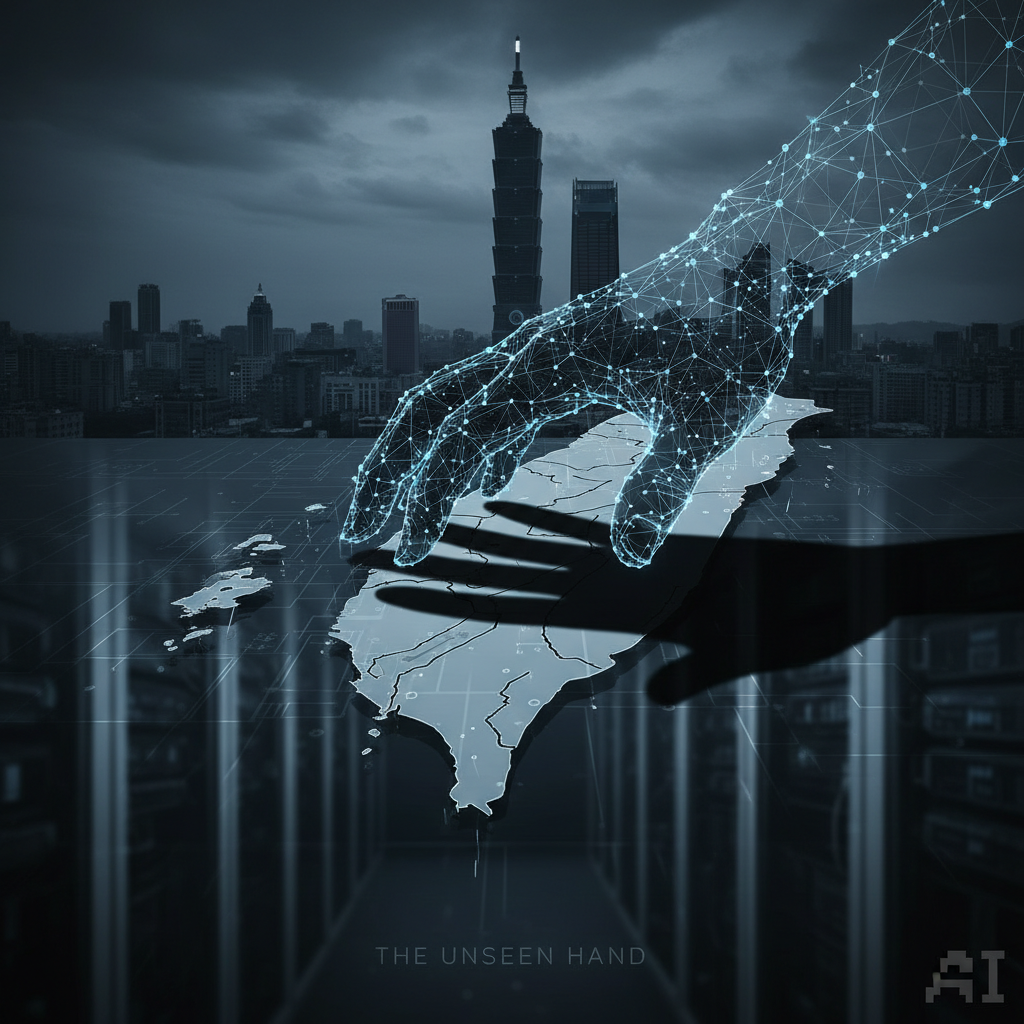
Today, in April 2026, the AI arms race is accelerating at a dizzying pace. NVIDIA, with its unparalleled GPU technology, remains the kingmaker for AI development, while companies like OpenAI and Anthropic push the boundaries of large language models in the West. Across the globe, Baidu and Alibaba are making similar strides, often with state backing, creating their own powerful AI ecosystems. The geopolitical friction, particularly between the United States and China, is not just about trade tariffs anymore; it is about who controls the foundational technologies that will define the next century.
We are already seeing the first ripples. Export controls on advanced chips, restrictions on data sharing, and a growing insistence on 'digital sovereignty' are creating two distinct, and increasingly incompatible, technological blocs. For nations like Côte d'Ivoire, this presents a complex dilemma. Do we align with the Western-led AI paradigm, with its emphasis on open-source principles but also its corporate dominance? Or do we lean towards the Eastern model, which often promises infrastructure development and state-backed solutions, but might come with different implications for data privacy and control? This is not just a choice between suppliers, it is a choice about our future identity.
"The fragmentation of the global AI supply chain is perhaps the most significant challenge for developing nations," explains Dr. Kadi Camara, a leading economist at the African Development Bank in Abidjan. "When you cannot access the best chips from NVIDIA due to sanctions, or when your data cannot be processed by certain cloud providers because of geopolitical firewalls, it severely limits your ability to innovate and compete. We risk becoming mere consumers of technology, rather than co-creators." Her words resonate deeply, reminding us that true independence in this new era requires technological autonomy.
Key Milestones on the Road to 2031
- 2027: The Great Digital Wall: We will see the formalization of two distinct AI technology stacks. Imagine an 'American-aligned' stack, built on NVIDIA hardware, Microsoft Azure or Google Cloud infrastructure, and models from OpenAI or Anthropic. Then, a 'Chinese-aligned' stack, leveraging Huawei's Ascend chips, Alibaba Cloud, and Baidu's Ernie Bot. Nations will increasingly be pressured to choose, or at least heavily favor, one over the other for critical infrastructure and national projects.
- 2028: Data Sovereignty Wars: African nations, including Côte d'Ivoire, will grapple with escalating demands for data localization. Major global tech companies will be forced to build localized data centers and tailor their AI models to comply with national regulations, leading to a patchwork of AI services across the continent. This is a double-edged sword: it protects our data but also increases costs and potentially limits access to cutting-edge global models.
- 2029: AI-Powered Diplomacy: Geopolitical tensions will manifest directly in AI-powered tools. Think of AI systems designed for strategic communication, disinformation detection, or even autonomous defense systems, each reflecting the values and objectives of its originating superpower. The ability to deploy and counter these tools will become a new measure of national power.
- 2030: The Talent Divide: Access to top-tier AI education and talent will become a critical battleground. Superpowers will invest heavily in fostering AI talent within their spheres of influence, offering scholarships and research grants to attract the brightest minds from countries like ours. This could lead to a significant brain drain if we are not careful to cultivate our own robust AI ecosystems.
Who Wins and Who Loses in This AI Chess Game?
In this unfolding scenario, the clear winners will be the superpowers themselves, particularly the companies at the forefront of AI research and development like NVIDIA, Google, and Baidu. They will command immense economic and geopolitical leverage. Nations with strong domestic AI capabilities and robust regulatory frameworks will also be better positioned to navigate the complexities.
For countries like Côte d'Ivoire, the picture is more nuanced. We stand to gain access to powerful tools that can accelerate development in healthcare, agriculture, and education. Imagine AI-powered diagnostics for malaria, or precision agriculture systems boosting our cocoa yields. However, we also risk becoming technological dependencies, beholden to foreign powers for our digital infrastructure and innovation. The biggest losers will be those nations that fail to develop a clear AI strategy, those that become passive recipients of technology rather than active participants in its shaping.
"We must avoid becoming a digital colony," asserts Madame Thérèse Kouadio, Director of the National Agency for Digital Development in Abidjan. "Our focus must be on building local capacity, investing in our youth, and demanding technology transfer. We cannot simply import solutions; we must adapt them, localize them, and eventually, create our own. This is the only path to true digital sovereignty and economic resilience." Her vision is one of self-determination, a powerful counter-narrative to the idea of a world dictated by distant tech giants.
What Readers Should Do Now
So, what does this mean for you, for me, for us in Côte d'Ivoire? This is the story they don't want you to hear, but it is one we must confront directly. Firstly, we must advocate for national AI strategies that prioritize local needs and ethical considerations. We need policies that encourage local innovation and protect our data. Secondly, we must invest heavily in digital literacy and Stem education, ensuring our youth are not just users of AI, but creators and critical thinkers. This means supporting initiatives like the African Girls Can Code program, which empowers young women to shape the digital future.
Finally, we must foster regional cooperation. The strength of a united Africa in negotiating with global tech giants cannot be overstated. By pooling resources, sharing knowledge, and presenting a common front, we can ensure that the AI cold war does not leave us on the sidelines, but rather positions us as a vital, independent force in the global digital landscape. The future of AI is not predetermined; it is being written every day, and our voices, our choices, and our actions here in Côte d'Ivoire will play a crucial role in shaping its narrative. Let us ensure it is a story of empowerment, not dependence.
For more on the global AI landscape, you can consult reports from MIT Technology Review or follow industry news on TechCrunch. The geopolitical implications are also frequently discussed on platforms like Reuters. The choices we make today will echo for generations. Let us choose wisely. We can also learn from how other nations are approaching data sovereignty, as seen in the article about Burkina Faso's Data Sovereignty [blocked].