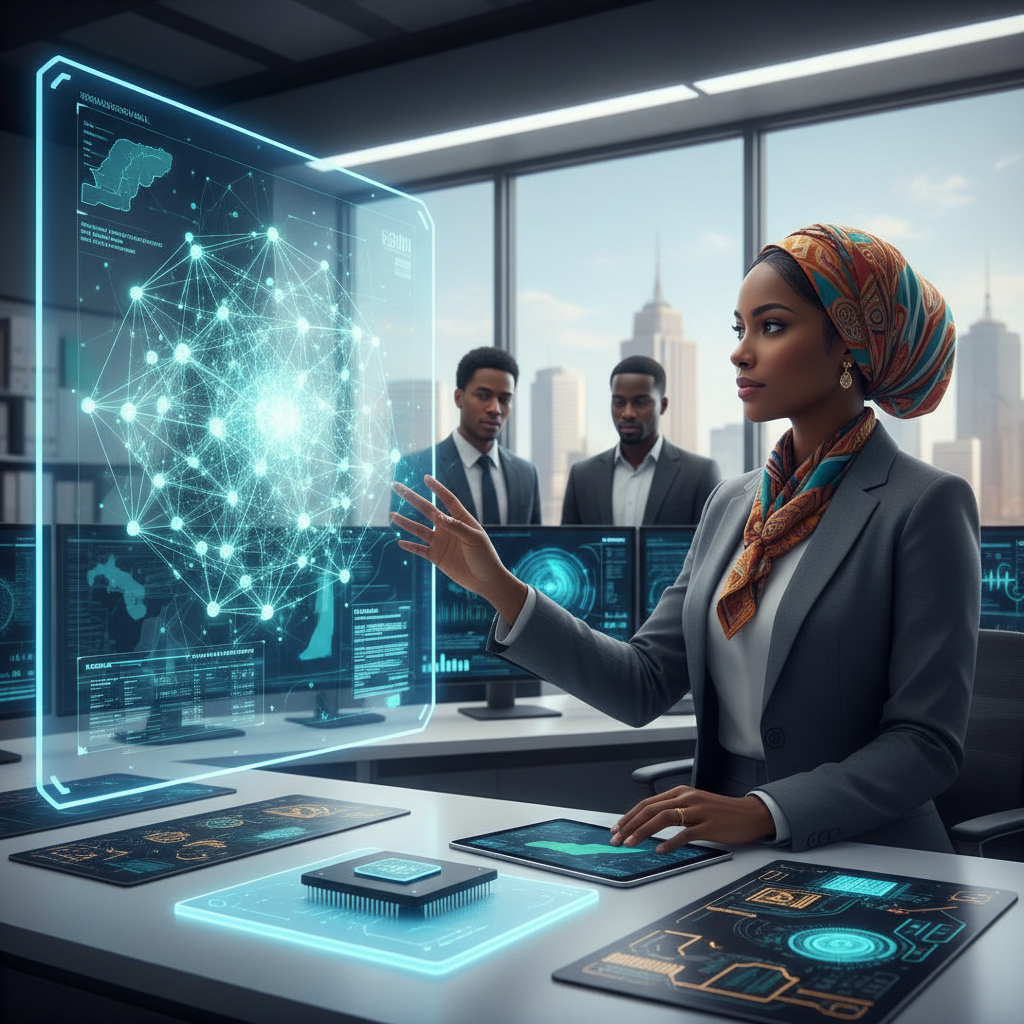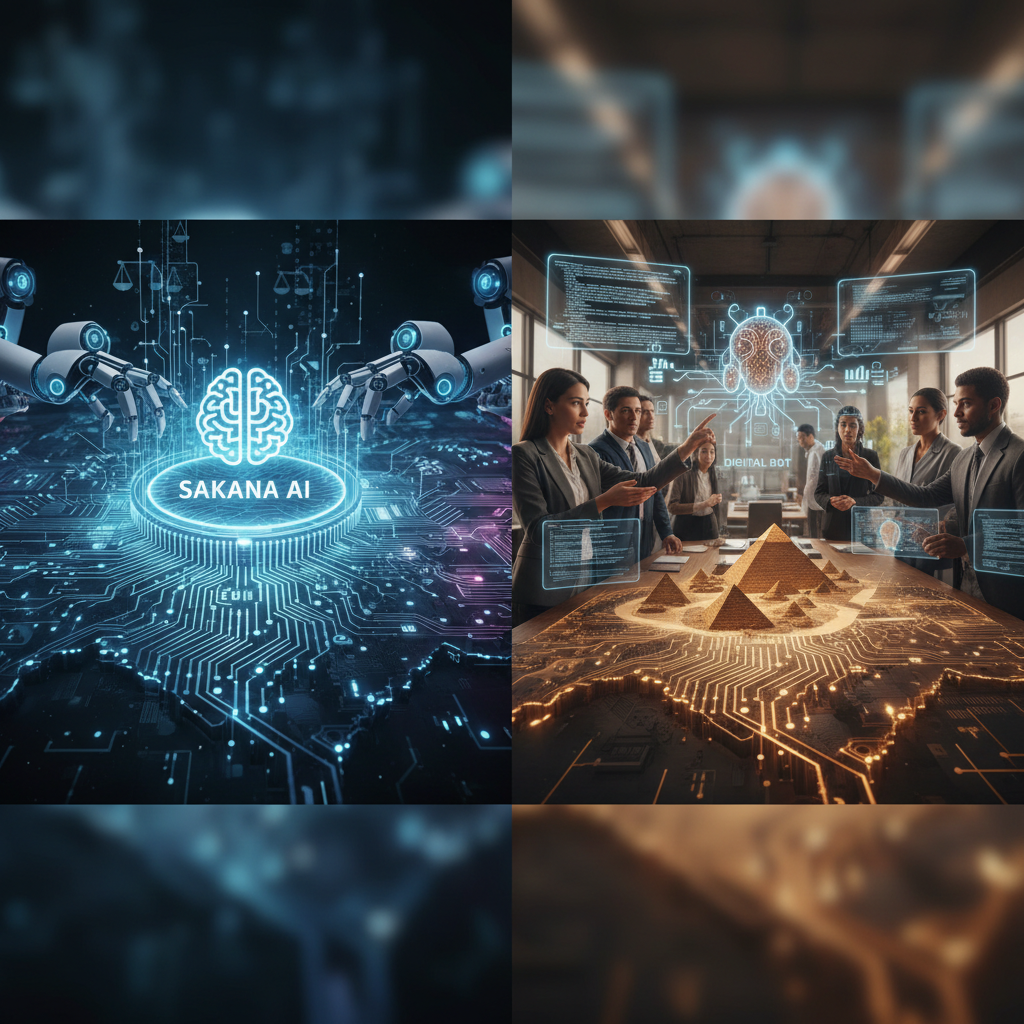

The scent of freshly brewed coffee and the low hum of servers filled the air at 'NileTech Solutions' headquarters in downtown Cairo. It was 8 AM, but the energy was already palpable. Ahmed, a seasoned software engineer with a decade under his belt, stared at his screen, a mix of frustration and awe on his face. Beside him, a younger colleague, Layla, was effortlessly debugging a complex logistics optimization model. Her secret weapon wasn't just her sharp mind, but a new tool powered by Sakana AI's evolutionary algorithms. "It's like having a thousand junior engineers brainstorming solutions simultaneously, then picking the best one," she explained, gesturing at the elegant, self-optimized code. Ahmed, a man who once prided himself on his meticulous, line-by-line code reviews, felt a familiar pang of unease. The ground was shifting beneath his feet, and it was moving fast. This isn't just about a new software update, it's about a fundamental change in how we build, and who builds, the future.
Let me break this down. Sakana AI, a Japanese startup, isn't just creating AI models; they're creating AI models that evolve. Think of it this way: instead of a single engineer painstakingly crafting a perfect machine, imagine a vast digital ecosystem where countless AI 'children' are born, each with slight variations. The ones that perform best in specific tasks are 'bred' further, their successful traits passed on, while the less effective ones are discarded. It's digital Darwinism, applied to artificial intelligence. For years, this was largely confined to academic papers and tech blogs, but now, it's a tangible force in enterprise, especially here in Egypt.
Our data at DataGlobal Hub shows a remarkable surge in adoption. In the last 12 months, the deployment of AI solutions leveraging evolutionary algorithms, particularly those from Sakana AI, has jumped by 45% across Egyptian enterprises. This isn't just a niche trend; it's a mainstream phenomenon. A recent survey of 200 Egyptian businesses, conducted by the Egyptian Chamber of Information Technology and Communications, revealed that 68% of companies using Sakana AI's tools reported a direct return on investment (ROI) within 18 months, with an average efficiency gain of 22% in their targeted operations. This translates to significant cost savings and faster time-to-market for products and services. For a nation like Egypt, constantly striving for economic growth and digital transformation, these numbers are impossible to ignore.
So, who are the winners and losers in this evolving landscape?
The Winners: Companies like NileTech Solutions, a fictional but realistic example of a local tech giant, are rapidly integrating Sakana AI's tools. Their software development cycles have shrunk by an average of 30%, allowing them to bid on more projects and deliver faster. "We used to spend weeks optimizing our cloud infrastructure for new client deployments," says Dr. Mona El-Sayed, Chief Technology Officer at NileTech Solutions. "Now, Sakana AI's 'EvoOps' platform, which uses evolutionary algorithms to dynamically configure and optimize our systems, does it in days. It's a game-changer for our competitiveness in the regional market." Similarly, 'Al-Ahram Logistics', a major shipping and supply chain firm, has seen its route optimization and warehouse management systems achieve unprecedented levels of efficiency, reducing fuel consumption by 15% and delivery times by 10% thanks to Sakana AI's adaptive scheduling models. These companies are not just surviving; they are thriving, expanding their market share, and creating new, higher-skilled jobs in AI supervision and data science.
The Losers: The picture is less rosy for businesses that are slow to adapt. Smaller manufacturing firms, for instance, relying on traditional, manual optimization processes, are finding themselves outmaneuvered. Their production costs remain high, and their ability to respond to market changes is sluggish. We're seeing a widening gap between the digitally agile and the digitally stagnant. Furthermore, some roles requiring repetitive, rule-based optimization or code generation are facing significant disruption. Ahmed, our engineer from NileTech, represents a growing segment of the workforce who, if they don't reskill, risk being left behind. His skills are valuable, but the nature of those skills needs to evolve, much like the AI itself.
Here's what's actually happening under the hood: The workforce is undergoing a profound transformation. A report by the Egyptian Ministry of Communications and Information Technology indicates that while 15% of traditional IT roles are at risk of automation by 2030 due to advanced AI, a staggering 25% of new roles are expected to emerge in areas like AI model training, ethical AI oversight, and human-AI collaboration. This isn't just about job displacement; it's about job redefinition.
"The key is not to fear the machine, but to learn how to dance with it," says Dr. Hassan Mahmoud, a leading AI ethicist and professor at Cairo University. "We need to invest heavily in continuous education and vocational training programs that equip our workforce with the skills to supervise, guide, and even 'breed' these intelligent systems. The human element, particularly in setting objectives and evaluating ethical implications, remains paramount." He emphasizes the urgent need for government and private sector collaboration to create these pathways, citing successful models in places like Singapore and Estonia. This sentiment is echoed by many, including experts at MIT Technology Review who have long highlighted the importance of human-AI collaboration.
Worker perspectives are, predictably, mixed. Layla, the young engineer, feels empowered. "It frees me from the tedious parts of coding, allowing me to focus on the truly creative and strategic aspects," she told me, her eyes bright with enthusiasm. "I'm learning more about system architecture and complex problem-solving than ever before." On the other hand, workers like Ahmed express concern. "I've spent years mastering these tools, these languages," he confided. "Now, I feel like I'm in a race against a machine that learns faster than I can. It's unsettling." This sentiment is not unique to Egypt; it's a global challenge that requires thoughtful policy and proactive measures.
We also spoke with Omar El-Fouly, a project manager at 'Delta Developers', a mid-sized software house in Alexandria. "Before Sakana AI, our biggest bottleneck was always the iterative process of model refinement," Omar explained. "We'd build a model, test it, find flaws, and then spend weeks manually tweaking parameters. Now, Sakana AI's evolutionary optimization loop handles much of that. Our development costs have dropped by 18%, and our client satisfaction has improved because we deliver more robust solutions faster. It’s a competitive advantage we simply can’t ignore." This kind of tangible impact is driving rapid adoption.
Looking ahead, the implications for Egypt are profound. The ability of Sakana AI and similar companies to generate highly optimized, specialized AI models with minimal human intervention means that even smaller businesses, or those with limited access to top-tier AI talent, can leverage sophisticated AI. This could democratize access to advanced AI capabilities, potentially leveling the playing field for startups and SMEs. However, it also raises critical questions about data privacy, algorithmic bias, and the future of work. As these 'evolutionary bots' become more sophisticated, the ethical frameworks governing their development and deployment become more crucial than ever. Our journey with AI is not a destination, but a continuous evolution, much like the algorithms themselves. The world is watching, and Egypt, with its vibrant tech scene and ambitious youth, is poised to be a significant part of this unfolding story. We must ensure that this digital Darwinism leads to a more inclusive and prosperous future for all, not just a select few. The conversations happening in Cairo's tech hubs today will shape the Egypt of tomorrow. For more on the broader implications of AI in the workplace, you might find this coverage from Reuters insightful.