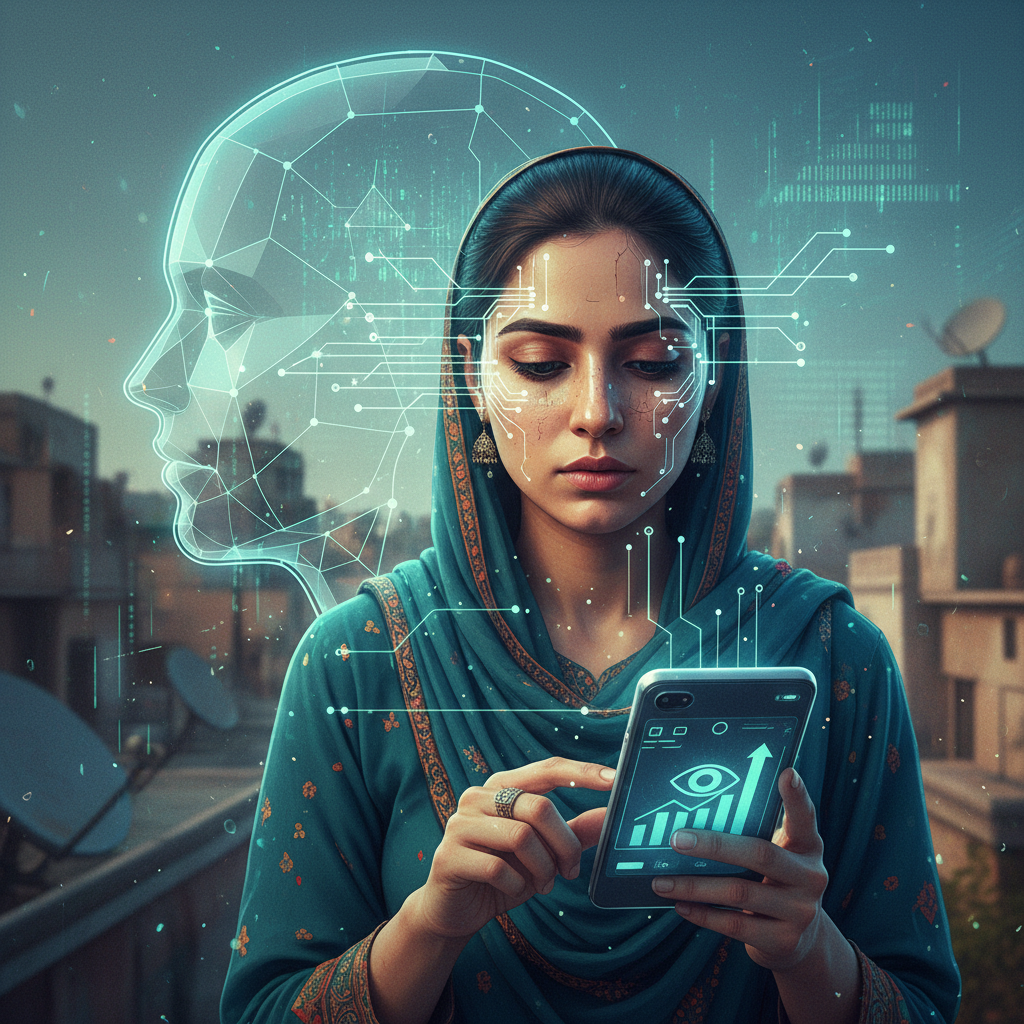

The scent of freshly baked non and the chatter of vendors filled the air in the Chorsu Bazaar, a symphony of daily life that has echoed through Tashkent for centuries. Yet, even amidst this timeless scene, the modern world intrudes. I watched a young woman, perhaps in her early twenties, haggle for spices while simultaneously scrolling through her phone, her thumb dancing across a social media feed. Later, she used a payment app, her face briefly illuminated by the screen as she confirmed the transaction. Each tap, each scroll, each purchase, leaves a digital trace, a tiny crumb of information about her life. What does she know of where these crumbs go, or how they are gathered and used by the invisible algorithms that increasingly shape our world?
This question of digital crumbs, of privacy in an age where AI thrives on data, is not just a European or American concern. It is a deeply human one, felt keenly even here in Uzbekistan, a nation embracing digital transformation with fervor. The global patchwork of regulations, from Europe's GDPR to California's Ccpa, might seem distant, yet their ripple effects are reaching our shores, influencing everything from how local startups design their apps to how individuals perceive their own online autonomy.
For many years, the internet felt like a boundless, free space. We shared without much thought, eager to connect, to consume, to create. But as AI models grew more sophisticated, capable of not just processing but predicting, personalizing, and even persuading, the value of our data skyrocketed. This shift has ignited a global conversation about who owns our digital identities and how they should be protected. "The future of AI is deeply intertwined with our ability to build trust," stated Sundar Pichai, CEO of Google, in a recent address. "And trust, fundamentally, relies on privacy and security." His words resonate particularly strongly in emerging markets, where the digital frontier is still being defined.
Here in Uzbekistan, where the digital economy is booming, the psychological impact of this evolving data landscape is fascinating to observe. Our society is built on strong communal ties and a deep sense of shared identity, but also a traditional understanding of personal space and reputation, or obro'. The idea that an algorithm, an unseen entity, could know intimate details about one's preferences, habits, or even vulnerabilities, can be unsettling. It introduces a new layer of cognitive load, a constant, subtle vigilance that was not part of our ancestors' daily lives.
Dr. Elmira Karimova, a leading psychologist at the National University of Uzbekistan, shared her insights with me. "We see a growing awareness, especially among younger generations, about their digital footprint," she explained. "There's a tension between the convenience offered by AI-powered services and a nascent fear of surveillance or manipulation. This can manifest as 'privacy fatigue,' where individuals feel overwhelmed and simply give up trying to manage their data, or conversely, as a heightened sense of paranoia about every online interaction." She highlighted that while formal education on digital privacy is increasing, the intuitive understanding of algorithmic data use lags behind.
Indeed, the concept of data privacy is complex, often abstract. It is not just about preventing hackers; it is about controlling the narrative of one's digital self. When an AI system, trained on vast datasets, can infer your health status from your search queries, or your financial stability from your online purchases, it shifts the power dynamic. This can lead to what psychologists call a 'chilling effect,' where individuals self-censor or alter their online behavior out of fear of how their data might be interpreted or used against them. Imagine a young entrepreneur in Samarkand, hesitant to research a niche business idea online because she worries that an AI might flag her as a risk to potential lenders, even if her intentions are entirely legitimate.
The global regulations, despite their varied approaches, share a common goal: to give individuals more control over their personal data. GDPR, with its emphasis on consent and the 'right to be forgotten,' has become a de facto global standard, influencing legislation far beyond Europe. California's Ccpa, and now Cpra, similarly empower consumers with rights over their personal information. While Uzbekistan does not yet have an equivalent comprehensive data protection law on the same scale, the influence of these international frameworks is undeniable. Companies operating here that serve international clients or use globally sourced AI tools must adhere to these standards, creating a patchwork of practices.
In a small office in Tashkent, I met with Dilshodbek Rakhimov, co-founder of 'SmartConnect,' a local tech startup developing an AI-powered educational platform. He showed me something remarkable. Their platform, designed to personalize learning for Uzbek students, incorporates privacy by design principles from the outset. "We know that trust is paramount, especially when dealing with children's data," Dilshodbek told me. "Even without a local GDPR, we've adopted many of its principles, like explicit consent and data minimization. It's not just about compliance; it's about building a sustainable business model based on user confidence." This proactive approach, while perhaps driven by the need to attract international investment or partnerships, is also fostering a culture of privacy awareness within the local tech ecosystem.
However, the challenge remains significant. The average person in Uzbekistan, like many around the world, often prioritizes convenience over privacy. The allure of free services, personalized recommendations, and seamless digital experiences can easily overshadow concerns about data collection. This cognitive bias, where immediate gratification trumps long-term risks, is something AI systems are expertly designed to exploit. "The human brain is wired for efficiency," Dr. Karimova noted. "Making complex privacy decisions constantly is cognitively taxing, so we often default to the easiest option, which is usually to accept the terms and conditions without reading them." This behavior, while understandable, leaves individuals vulnerable.
Broader societal implications are also emerging. As AI becomes more integrated into public services, from healthcare to urban planning, the ethical use of data becomes critical. If data collected for one purpose is repurposed by AI for another, it can erode public trust in institutions. For example, if health data shared with a local polyclinic is later used by an AI to assess insurance risks without explicit consent, it creates a breach of implicit trust that is hard to repair. This is why discussions around data governance and ethical AI are gaining traction within Uzbek government circles, albeit at a slower pace than the technological adoption itself.
The global regulatory landscape is a dynamic one, constantly evolving to catch up with the rapid advancements in AI. From the European Union's AI Act, which seeks to regulate high-risk AI systems, to ongoing debates in the United States about a federal privacy law, the world is grappling with these questions. Uzbekistan, as a burgeoning digital hub in Central Asia, watches these developments closely, understanding that its own digital future will be shaped by these global currents. The balance between fostering innovation and protecting individual rights is a delicate dance.
So, what can we, as individuals navigating this complex digital world, do? Practical advice is crucial. First, cultivate a healthy skepticism. Question what data is being collected and why. Second, leverage the tools available: many browsers and operating systems now offer enhanced privacy settings. Take the time to understand and configure them. Third, support companies and platforms that demonstrate a clear commitment to privacy. As consumers, our choices have power. Finally, and perhaps most importantly, engage in conversations about digital ethics within our communities. Share knowledge, discuss concerns, and advocate for policies that protect human dignity in the age of artificial intelligence.
The digital journey of Uzbekistan is just beginning, and while the path ahead is filled with promise, it is also paved with challenges. Ensuring that our embrace of AI does not come at the cost of our privacy, our obro', and our peace of mind, is a task for all of us. As the world's most advanced AI companies, like OpenAI and Meta, continue to push the boundaries of what is possible, the human element, our psychology, our trust, must remain at the very heart of the conversation. For more insights on the intersection of technology and society, you might find articles on Wired's AI section or MIT Technology Review particularly illuminating. The journey to a truly human-centric AI future is long, but it is one we must walk together, consciously and carefully. For more on how global tech trends impact local markets, consider reading about Brussels' AI Act [blocked], which offers another perspective on regulation and innovation.