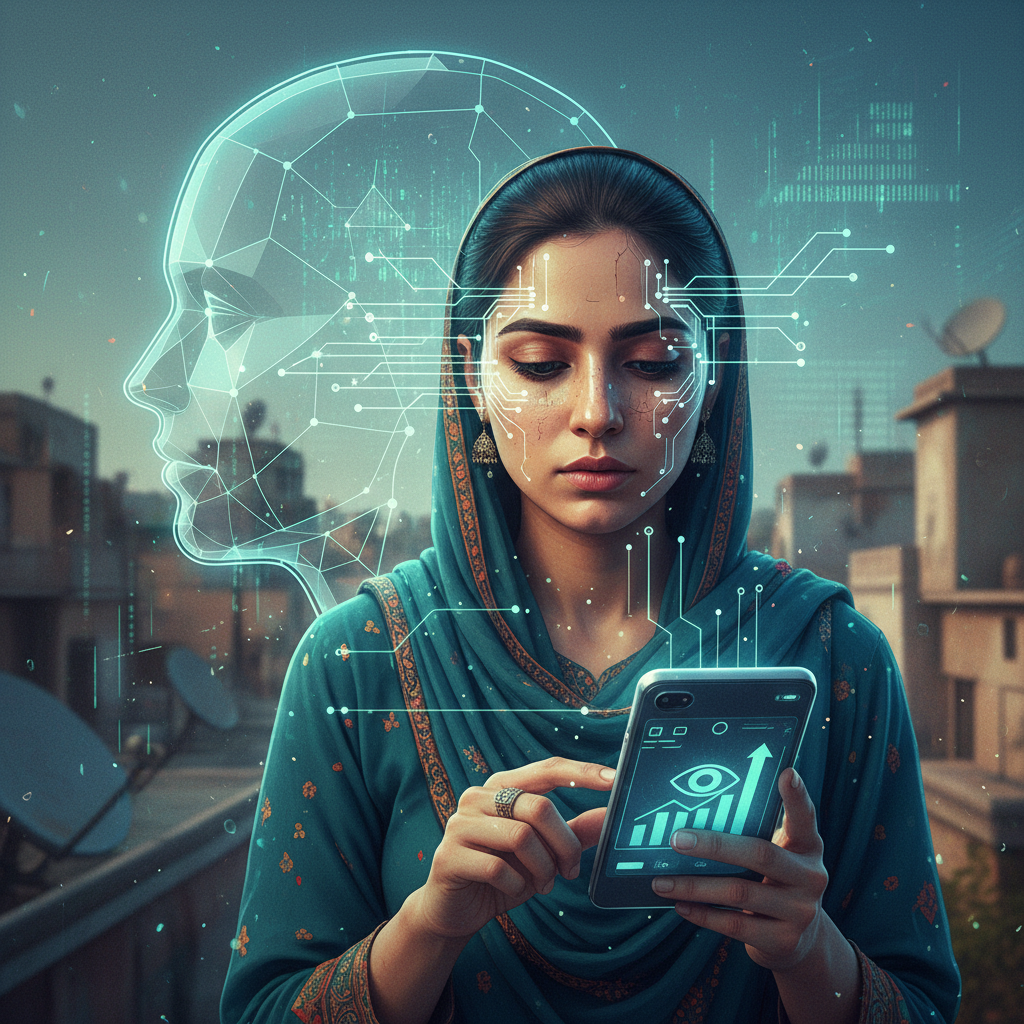
Namaste, fellow tech enthusiasts! Rajèsh Krishnàn here, and let me tell you, the air in Bengaluru is absolutely electric these days. Every chai stall conversation, every startup pitch, every late-night coding session seems to revolve around one thing: AI. We are living through a truly remarkable time, a digital renaissance, and honestly, India is having its moment. But amidst all this exhilarating progress, a crucial question keeps nudging at my mind, like a persistent auto-rickshaw driver in peak traffic: who is actually steering the conversation when AI becomes the ultimate editor of our digital lives?
I am talking about the colossal power of AI in content moderation, the silent, often invisible hand that shapes what billions of us see, read, and hear online. With models like OpenAI's GPT-5 and Google's Gemini becoming ever more sophisticated, capable of generating, filtering, and even judging content at speeds and scales unimaginable just a few years ago, we are hurtling towards a future where algorithms, not just humans, decide what constitutes acceptable speech. And frankly, this makes my journalistic antennae twitch with a mix of excitement and apprehension. While the promise of a cleaner, safer internet is alluring, the potential for algorithmic overreach, subtle censorship, and the concentration of immense power in the hands of a few tech giants is a democratic challenge of epic proportions.
Think about it. In a country as diverse and vocal as India, where a thousand flowers bloom in a thousand languages, and debates are as passionate as a cricket match between India and Pakistan, the idea of a monolithic AI deciding what is 'hate speech' or 'misinformation' is deeply unsettling. Our cultural nuances, our idioms, our very specific forms of humor and satire, could easily be lost in translation or misinterpreted by an algorithm trained predominantly on Western datasets. What one culture considers a harmless jest, another might flag as offensive. Who decides the training data? Who audits the biases embedded within these powerful models? These are not trivial questions, my friends, these are foundational to our digital freedom.
Just last month, I was chatting with Dr. Priya Sharma, a leading expert in AI ethics at IIT Bombay. She put it so eloquently: "The danger is not just outright censorship, but the subtle 'nudging' of public discourse. If an AI model consistently downranks certain viewpoints, even if not explicitly banning them, it effectively silences them. It's like a digital 'lathi charge' on diverse opinions, without the visible bruises." She emphasized that the lack of transparency in these black-box AI systems is a massive concern. "We need to understand why a piece of content was flagged, what criteria were used, and who is accountable for those criteria," Dr. Sharma insisted.
Indeed, the scale is mind-boggling. Platforms like Meta, X, and YouTube process billions of pieces of content daily. Human moderators simply cannot keep up. This is where AI steps in, a seemingly indispensable tool. It can detect egregious violations, like child exploitation or direct incitement to violence, with remarkable efficiency. Nobody disputes the need for such filters. But the line between harmful content and legitimate, albeit controversial, speech is often blurry, shifting with cultural context and political winds. And this is where the power of these platforms, amplified by AI, becomes truly immense. They are not just neutral conduits of information; they are increasingly the arbiters of truth and acceptability, a role they were never elected or designed for.
Some might argue, and quite validly, that these platforms are private entities and have every right to set their own rules. They bear the responsibility for the content hosted on their servers, and they face immense pressure from governments, advertisers, and users to maintain a 'safe' environment. "Without robust AI moderation, our platforms would descend into chaos, becoming cesspools of hate and misinformation," argued Mr. Rohan Gupta, Head of Policy for a major social media platform in India, during a recent panel discussion. "We are trying to strike a balance between user safety and freedom of expression, a task made exponentially harder by the sheer volume of content. AI is our only hope for maintaining any semblance of order." He makes a fair point. The internet can be a wild place, a true digital jungle.
However, this argument often sidesteps the reality that these platforms are no longer just private companies; they are the de facto public squares of the 21st century. In India, where digital penetration is soaring and platforms like WhatsApp and Facebook are integral to daily communication, these companies wield more influence over public discourse than many traditional media outlets combined. To treat them merely as private enterprises ignores their societal impact and the quasi-public utility they have become. We cannot simply surrender the curation of our public discourse to opaque algorithms and corporate policies, however well-intentioned. It is akin to handing over the keys to our democratic process to an unseen, unelected committee.
So, what is the way forward? I believe we need a multi-pronged approach, one that recognizes the utility of AI while safeguarding our fundamental freedoms. Firstly, we need far greater transparency from these tech giants. Open-sourcing moderation algorithms, or at least making their methodologies and training data publicly auditable, would be a massive step. Imagine if we could see the 'rulebook' the AI is following, not just the outcomes. Secondly, we need independent oversight bodies, perhaps even government-backed, but crucially, independent of political interference, to review moderation decisions and provide redressal mechanisms. This is not about government censorship, but about ensuring accountability from powerful private entities.
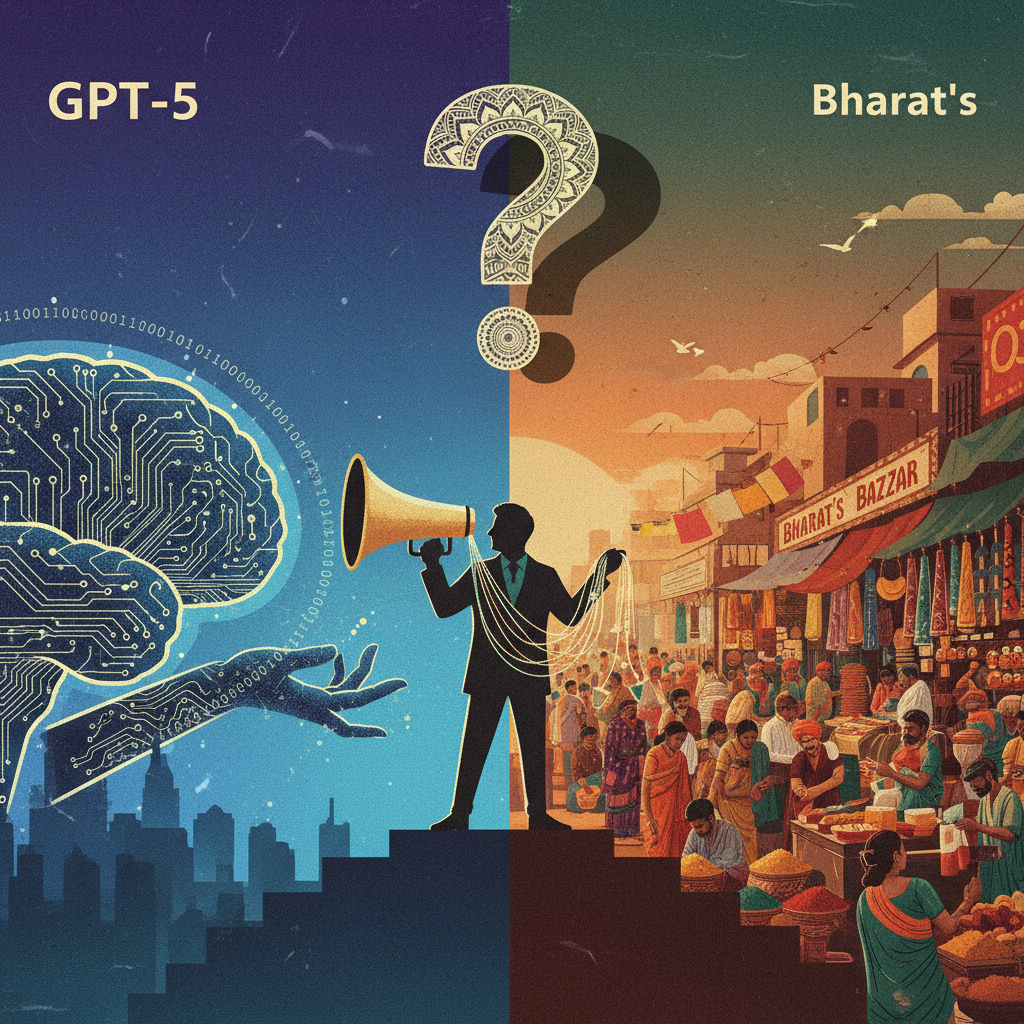
Thirdly, and perhaps most importantly for a nation like ours, we need localized AI models and moderation policies. Global models, however powerful, will always struggle with the nuances of India's linguistic and cultural tapestry. We need AI that understands the difference between a passionate political debate and genuine incitement, that recognizes regional slang and context. This is where India's incredible AI talent pool can shine, building models that are culturally intelligent and contextually aware. We have the data, we have the engineers, and we have the diverse perspectives to train AI that truly serves our unique societal needs. "We cannot afford a one-size-fits-all approach to content moderation," stated Dr. Anjali Singh, a computational linguist at the Indian Institute of Science. "Our languages, our humor, our political discourse, are too rich and varied for generic algorithms. We need 'Made in India' AI solutions for 'Made in India' problems, reflecting our constitutional values of free speech."
This is just the beginning of a complex journey, my friends. The intersection of AI and freedom of speech is not a problem to be solved once and for all, but a continuous negotiation, a dynamic balance we must constantly strive for. As AI continues to evolve, becoming more capable and more pervasive, our vigilance must also grow. We must demand accountability, push for transparency, and champion the development of AI that respects and reflects the glorious diversity of human expression, not homogenizes it. The future of our digital public square, and indeed, our democracy, depends on it. Let's ensure that as technology advances, our freedoms advance with it, not shrink under the algorithmic gaze. For more insights on the global AI landscape, you can always check out Reuters' AI coverage. The conversation has just begun, and we must all be part of shaping its direction.