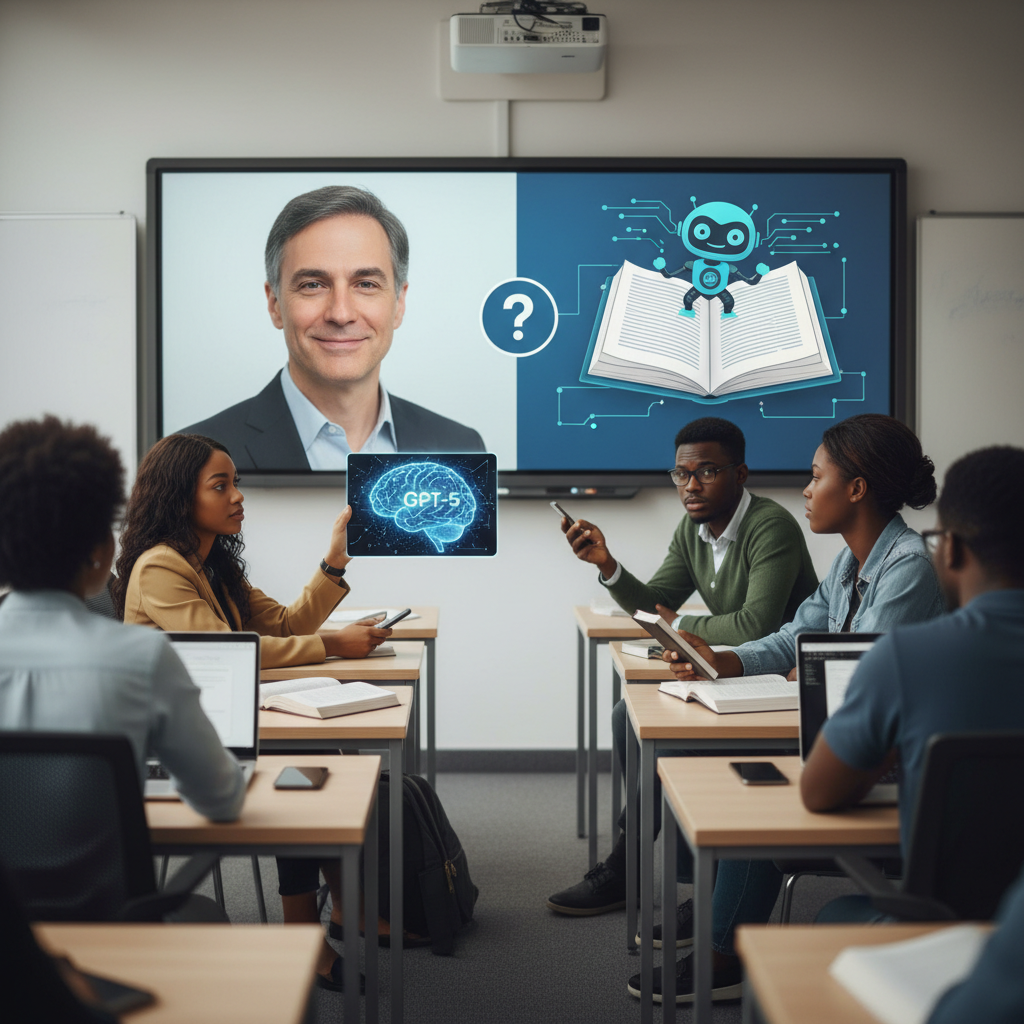
The school bells ring across Nigeria, from the bustling streets of Lagos to the quiet villages of Enugu, signaling the start of another academic day. But this year, something feels different. It is not just the usual hum of eager students or the stern voice of the headmaster. There is a new, silent presence in the classroom, one that whispers answers and writes essays with unnerving speed: the AI chatbot.
The Headline Development: AI Chatbots Are Here, Whether We Like It Or Not
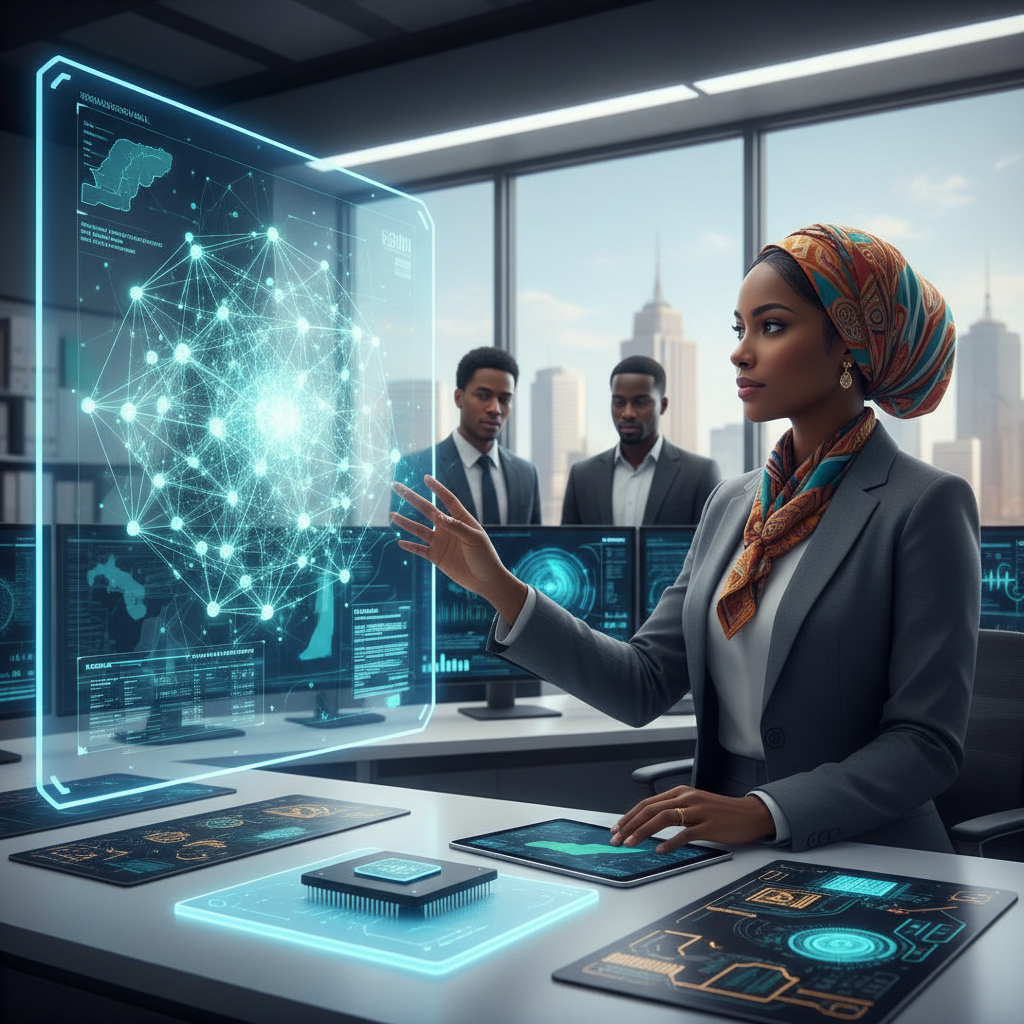
Barely a week goes by without a new announcement from Silicon Valley. OpenAI, Google, Microsoft, Anthropic; they are all in a race to put their advanced large language models, like OpenAI's GPT-5 and Google's Gemini, into the hands of everyone. Education, they say, is a prime target. We are seeing pilot programs spring up globally, from elite universities in the West to local secondary schools here in Nigeria, often sponsored by these very tech giants. The narrative is always the same: AI will personalize learning, free up teachers, and unlock unprecedented educational potential. It sounds like a dream, does it not?
Why Most People Are Ignoring It: The Attention Gap
While the tech world buzzes with venture capital rounds and product launches, many parents, educators, and policymakers, especially in our part of the world, are caught off guard. They are grappling with more immediate challenges: funding shortages, inadequate infrastructure, and teacher training. The idea of AI chatbots in schools often feels like a distant, Western problem, or a luxury we cannot afford to think about. We are busy trying to get textbooks into every child's hand, so the nuance of algorithmic bias or data privacy in an AI tutor seems, well, secondary. This attention gap is dangerous. It means decisions about our children's future are being made without our full participation or understanding.
How It Affects YOU: Personal Impact on Readers
Let's talk about what nobody wants to discuss. If you are a parent, your child is already using these tools, whether you know it or not. They are writing essays, solving maths problems, and even generating code. If you are an educator, you are facing a tsunami of AI-generated assignments, making it nearly impossible to discern original thought from machine output. This is not just about cheating; it is about the very foundation of learning. What happens to critical thinking, problem-solving, and creativity when a machine can do the heavy lifting? Will our children become mere prompt engineers, or will they truly understand the concepts they are supposedly learning? This is not some abstract future; this is happening now, in schools across Nigeria, often without clear guidelines or ethical frameworks. Your child's ability to think independently, to innovate, to truly learn, is on the line.
The Bigger Picture: Societal, Economic, or Political Implications
Unpopular opinion: the current rollout of AI in education, particularly in developing nations, risks exacerbating existing inequalities. The promise of personalized learning is often just that, a promise, when access to reliable internet and devices remains a luxury for many. While some schools in Abuja might integrate advanced AI tutors, countless others in rural areas will be left behind, widening the digital divide. Furthermore, the data generated by these educational AI tools, often developed by foreign companies, raises serious questions about data sovereignty and digital colonialism. Who owns the insights gleaned from our children's learning patterns? Who controls the curriculum embedded within these algorithms? This is not just about education; it is about national intellectual capital and future economic competitiveness. If our children are trained by algorithms designed elsewhere, whose values and priorities will they internalize?
“We are at a critical juncture,” states Dr. Ngozi Okoro, an educational technology expert at the University of Ibadan. “The allure of AI is strong, but we must not sacrifice pedagogical integrity or data privacy at the altar of technological advancement. We need to develop our own AI solutions, tailored to our context, or at least have a strong say in how foreign models are deployed.” She points out that many of the datasets used to train these global models lack African context, leading to potential biases and irrelevant outputs for our students.
What Experts Are Saying: A Spectrum of Views
The conversation among experts is as complex as the technology itself. Dr. Femi Adebayo, a senior lecturer in computer science at Covenant University, believes in the transformative potential. “AI can be a powerful equalizer,” he argues. “It can provide personalized attention that overstretched teachers simply cannot. Imagine an AI tutor available 24/7, providing feedback, adapting to each student’s pace. This is revolutionary for a country like Nigeria, where teacher-student ratios are often abysmal.”
However, Mrs. Aisha Bello, a veteran secondary school principal in Kano, offers a more cautious perspective. “My teachers are overwhelmed,” she confesses. “We spend more time trying to catch students using AI to cheat than actually teaching. The companies developing these tools need to offer robust detection mechanisms or, better yet, design them in a way that encourages genuine learning, not circumvention.” She highlights a core tension: the tools are often designed for efficiency, not necessarily for deep, human-centric learning.
Sam Altman, CEO of OpenAI, has often spoken about AI's potential in education, suggesting it could lead to a world where everyone has a personal tutor. While this vision is compelling, the practicalities of implementation and the ethical considerations, especially for diverse global contexts, remain largely unaddressed by the tech giants themselves. The focus remains on deployment, not necessarily on equitable or context-appropriate integration.
Mr. Chike Obi, a policy analyst at the Nigerian Institute of Advanced Legal Studies, warns about the regulatory vacuum. “We are seeing a rapid deployment of these tools without adequate legal or ethical frameworks,” he notes. “Who is liable when an AI chatbot provides incorrect information that affects a student’s academic performance? What are the implications for intellectual property when AI generates content based on existing works? These are not trivial questions, and our government needs to act swiftly.”
What You Can Do About It: Actionable Takeaways
First, parents must engage. Talk to your children about how they are using AI. Understand the tools. Advocate for clear AI policies in their schools. Second, educators need training, not just on how to use AI, but on how to teach with AI and how to design assessments that AI cannot easily circumvent. Focus on skills that AI struggles with: critical analysis, complex problem-solving, ethical reasoning, and creative synthesis. Third, policymakers must prioritize this. We need national dialogues, robust regulatory frameworks, and investments in local AI research and development to ensure these technologies serve our interests, not just those of Silicon Valley. Consider initiatives like the 'Akoma AI Act' being debated in Ghana, which aims to regulate AI use in critical sectors, including education. For more insights on the broader implications of AI, you might find this resource on AI ethics and society helpful.
The Bottom Line: Why This Will Matter in 5 Years
In five years, the impact of AI chatbots in schools will be undeniable. We will either have a generation of students who are more adept at critical thinking, collaboration, and innovation, leveraging AI as a powerful assistant, or we will have a generation whose intellectual muscles have atrophied, reliant on machines for basic cognitive tasks. The choice is ours, but it requires proactive, thoughtful engagement now. If we do not shape this future, it will be shaped for us, and the consequences for Nigeria’s intellectual sovereignty and economic future could be profound. This is not just about technology; it is about the very essence of what it means to learn, to think, to be human. For a deeper dive into the latest AI developments, check out TechCrunch's AI section. The future of learning, and indeed, the future of our nation, hinges on how we answer this challenge. We must ensure that our children are not just consumers of AI, but creators and critical thinkers who can harness its power responsibly. And for those interested in the academic side of things, MIT Technology Review often covers the research underpinning these advancements.