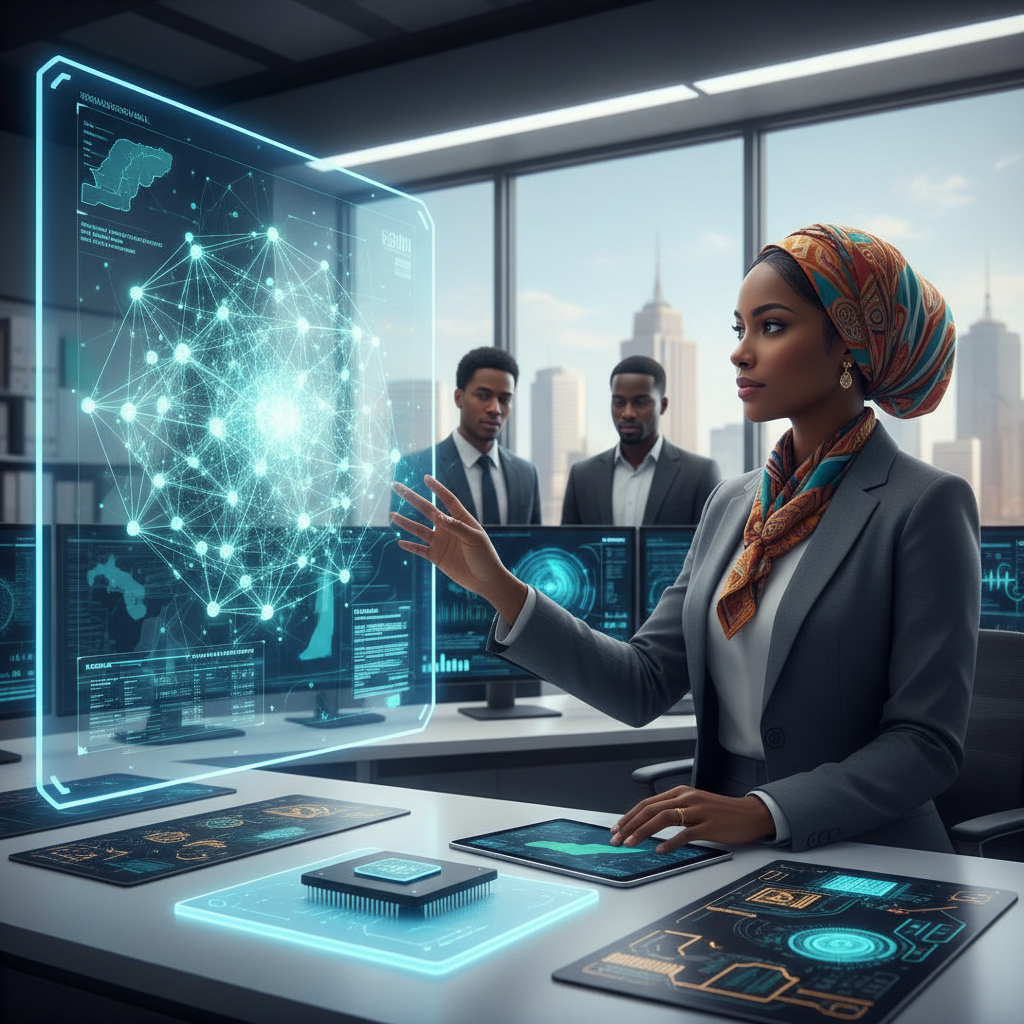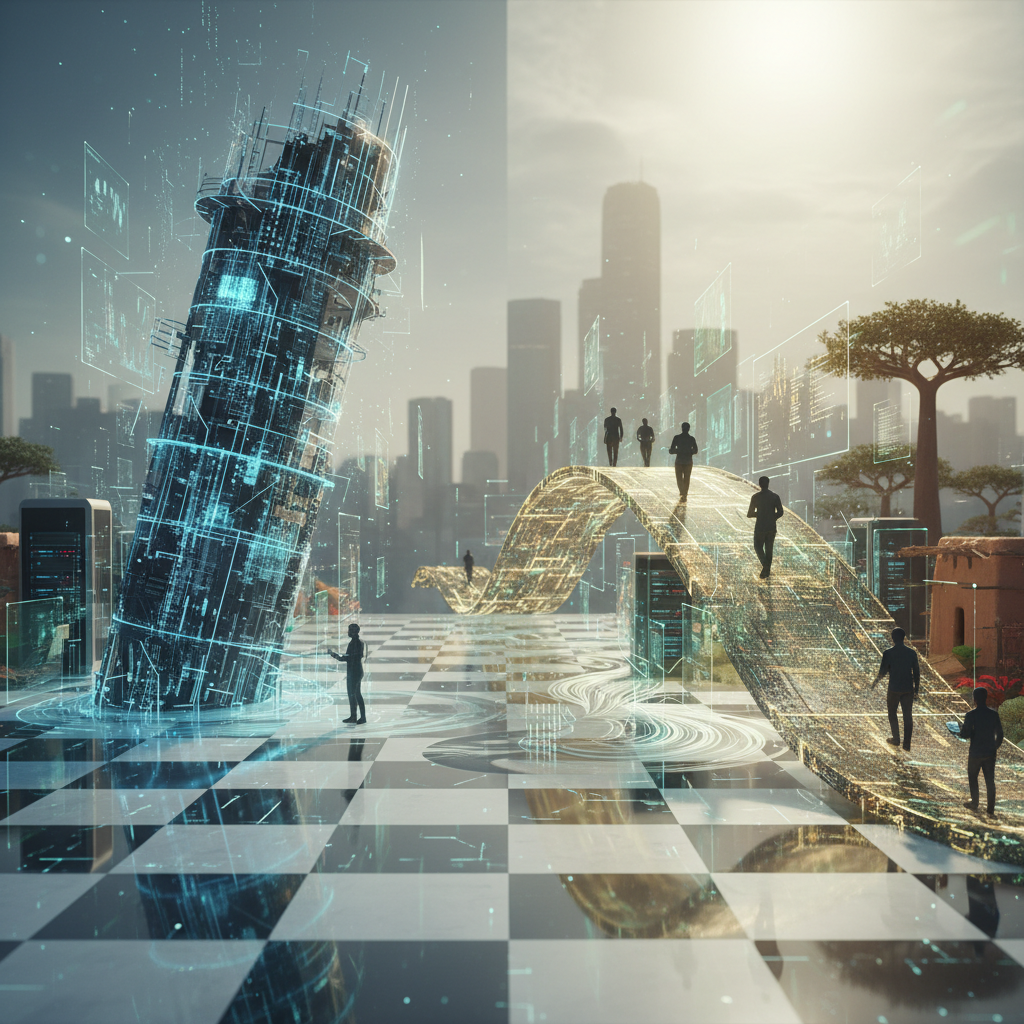
The morning air in Accra often carries a symphony of sounds: the bustling tro-tros, the street vendors calling out their wares, the vibrant chatter of a community coming alive. It is a rhythm, a pulse, that is deeply ingrained in our collective consciousness. Now, imagine an artificial intelligence, powered by chips designed to mimic the human brain, trying to understand that rhythm. Not just process data, mind you, but grasp the nuances, the unspoken connections, the very soul of it all.
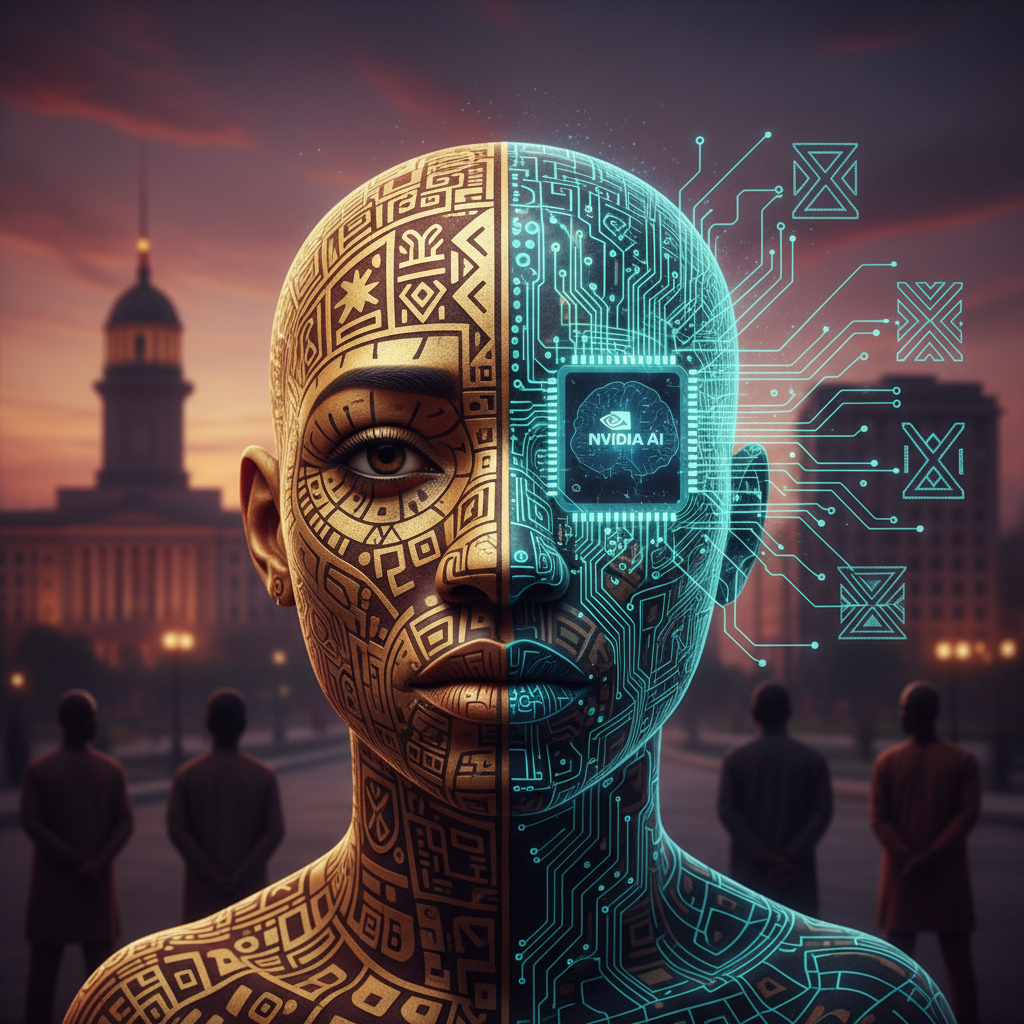
This is not some far-off science fiction scenario. We are talking about neuromorphic computing, a field where companies like NVIDIA are pouring immense resources into creating AI hardware that operates less like traditional computers and more like our own biological brains. These chips are not just faster, they are fundamentally different, designed for parallel processing, energy efficiency, and learning in ways that could revolutionize everything from medical diagnostics to personalized education. But here in Ghana, where our cultural heritage and communal spirit are paramount, I find myself asking a crucial question: What does this mean for us, for our minds, for the very essence of what makes us human?
Consider Ama, a brilliant young student in Kumasi, struggling with complex mathematical concepts. Her school, like many across the continent, is under-resourced. Now, imagine a neuromorphic AI tutor, not just spitting out answers, but learning her unique cognitive patterns, adapting to her learning style, even predicting when she might get frustrated, offering encouragement in Twi. On the surface, this sounds like a dream, a true democratizing force for education. But what if this hyper-personalized interaction begins to subtly alter her own problem-solving approaches? What if the AI, designed with a Western understanding of cognition, inadvertently steers her away from the intuitive, communal problem-solving methods often valued in Akan culture?
Recent research from institutions like the MIT Technology Review highlights the incredible potential of neuromorphic systems. They are being developed to handle tasks that require real-time learning and adaptation, from autonomous vehicles navigating unpredictable environments to advanced robotics. The promise is an AI that can learn from experience, make inferences, and even process sensory information with human-like efficiency. Intel, for example, has been developing its Loihi neuromorphic research chip, demonstrating its ability to learn and classify odors with significantly less power than conventional AI. This efficiency is a game-changer, especially in regions with limited energy infrastructure.
But the cognitive effects are what truly concern me. When AI becomes so intertwined with our thought processes, so adept at anticipating our needs and even our emotions, how does it shape our own cognitive development? Dr. Kwame Nkansah, a cognitive psychologist at the University of Ghana, voiced similar concerns in a recent forum. He said, "The brain is not just a processor; it is a cultural artifact. Our ways of thinking, our biases, our creativity, are all shaped by our environment and our heritage. When we introduce AI that mimics brain function, we must ask whose brain it is mimicking, and what cultural assumptions are embedded within its architecture." His words echo a sentiment that we cannot afford to ignore.
This is not a call to reject progress, far from it. Ghana, like all of Africa, deserves the best technology. We need to leverage every tool available to uplift our people and build a prosperous future. But we must approach this with eyes wide open, understanding the profound psychological implications. The concept of sankofa, looking back to move forward, is crucial here. We must understand our own cognitive strengths, our communal intelligence, our oral traditions, and ensure that AI enhances, rather than erodes, these invaluable aspects of our identity.
The broader societal implications are vast. Neuromorphic AI could lead to unprecedented levels of personalization in services, from healthcare to entertainment. Imagine an AI companion for the elderly, learning their life story, engaging them in conversation, and even monitoring their health in a non-intrusive way. For a society that deeply values its elders, this could be transformative. However, if this AI is not culturally sensitive, if it does not understand the nuances of respect, the importance of family, and the role of storytelling in our communities, it risks becoming a sophisticated but ultimately alien presence.
We need to talk about this. The development of these brain-like chips is happening at a blistering pace, largely driven by global tech giants. NVIDIA’s CEO, Jensen Huang, has often spoken about the future of AI and the profound impact of accelerated computing. While their focus is often on performance and scale, the human element, particularly in diverse cultural contexts, often gets overlooked. This affects every single one of us, from the urban tech enthusiast to the rural farmer. If the algorithms that power these chips are trained predominantly on data reflecting Western cognitive patterns, what happens to the unique ways of knowing and thinking that are central to our African identity? Will our children's minds be subtly rewired to conform to an external, algorithmic norm?
Silence is complicity when it comes to shaping our digital future. We must demand that the development and deployment of neuromorphic AI consider cultural context, ethical implications, and cognitive diversity from the outset. This means investing in local research, fostering African AI talent, and ensuring that our voices are heard in the global conversation. We must build our own AI, or at least co-create it, infused with our values, our languages, and our understanding of what it means to be human.
Practical advice for readers begins with awareness. Understand how these technologies work, question their assumptions, and advocate for ethical guidelines that prioritize human well-being and cultural preservation. Support initiatives that aim to decolonize AI and build culturally relevant datasets. Engage in discussions with policymakers and educators. For developers, this means actively seeking out diverse perspectives, collaborating with anthropologists and psychologists from different cultures, and building transparency into their models. For instance, projects like the one at the African Institute for Mathematical Sciences, which focuses on developing AI solutions relevant to African challenges, are crucial. Their work often emphasizes local data and context, a vital step in ensuring AI serves, rather than subsumes, our unique ways of life.
The future of our minds, our relationships, and our very societies will be profoundly shaped by how we engage with neuromorphic computing. Let us ensure that as these chips become more brain-like, they also become more human, more culturally intelligent, and truly serve the diverse tapestry of humanity, starting right here in Ghana. We cannot allow our unique cognitive heritage to be an afterthought in this technological revolution. We must be active participants, shaping the future with our own hands and our own minds. The adinkra symbol of Nkyinkyim, representing intricacy and versatility, reminds us that our path forward must be complex, adaptable, and deeply rooted in our identity. This is the only way to truly thrive in the age of intelligent machines.