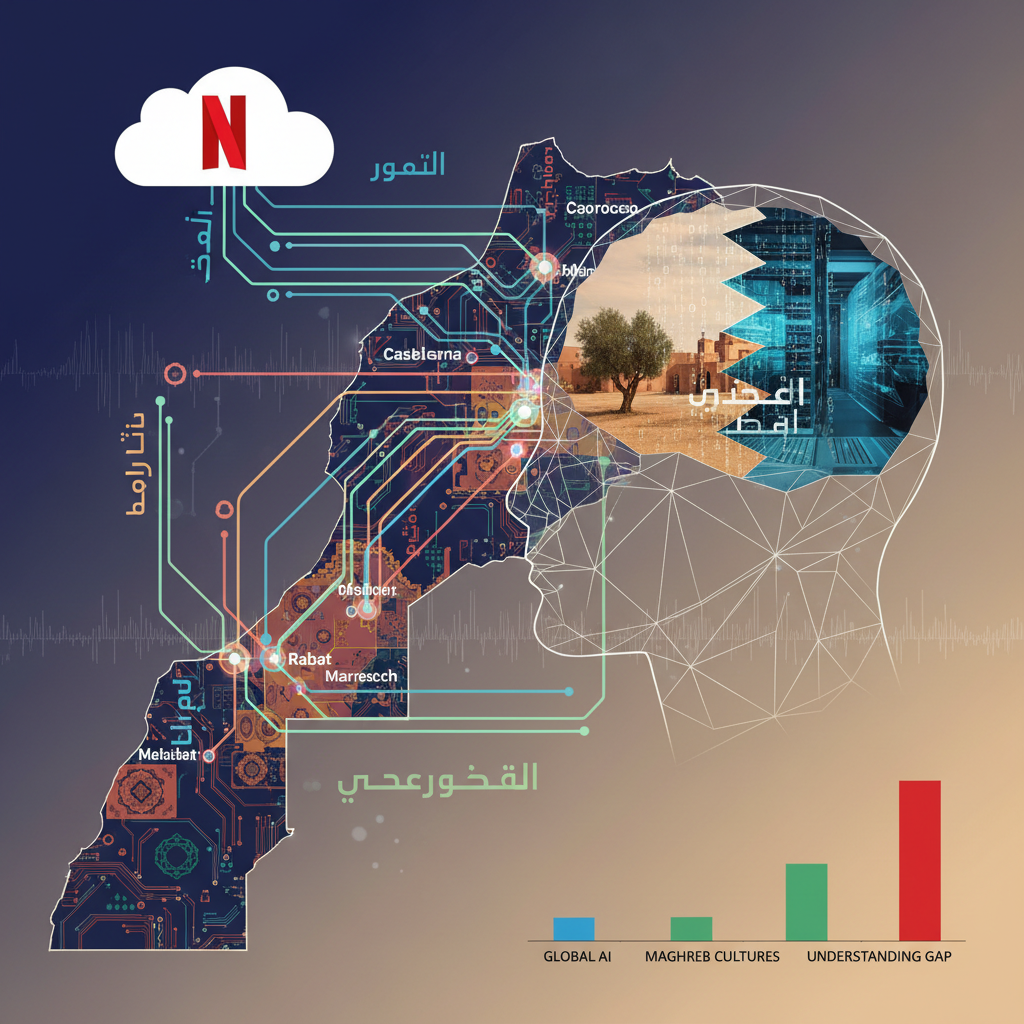
Is Netflix's AI-driven content strategy a universal language, or does it speak with a distinct Silicon Valley accent, even when trying to recommend content across the globe? This is a question that often occupies my thoughts as I observe the digital currents flowing through Casablanca, a city that is rapidly becoming an unexpected hub for AI innovation.
For years, Netflix has been lauded, and rightly so, for its pioneering use of artificial intelligence to personalize the viewing experience. From the moment you log in, every title card, every thumbnail image, every suggested series is a product of sophisticated algorithms working tirelessly in the background. This isn't just about showing you more of what you've watched before, it is about predicting your desires, often before you even realize them yourself. The company's success, in large part, hinges on this algorithmic prowess, transforming a simple streaming service into a deeply personalized entertainment universe.
But let us rewind a little. The concept of personalized recommendations isn't new. Retailers have been trying to understand customer preferences for decades, albeit with much cruder tools. Think of the local souk vendor in Marrakech, who remembers your last purchase and suggests something similar, perhaps a new spice blend or a different type of argan oil. That is a human algorithm at work, built on observation and relationship. Netflix, however, scales this intimate interaction to hundreds of millions of users worldwide. Their journey into AI began not with a grand vision of global domination, but with a pragmatic need to reduce churn and increase engagement. Early efforts, like the famous Netflix Prize in 2006, offered a million dollars to improve their recommendation system by 10 percent. This challenge kickstarted a revolution in collaborative filtering and matrix factorization techniques that laid the groundwork for today's hyper-personalized platforms. The data collected was immense, a digital Sahara of viewing habits, ratings, and search queries, all waiting to be mined.
Today, the scale of Netflix's operation is staggering. As of their last reported figures, the company boasts over 260 million paid memberships globally. Each of these members generates a constant stream of data points: what they watch, when they watch, how long they watch, what they skip, what they rewatch, even the device they use. This data feeds into a complex ecosystem of machine learning models. Collaborative filtering algorithms identify users with similar tastes, while content-based filtering analyzes the attributes of shows and movies you enjoy. More advanced techniques, including deep learning, now power everything from content production decisions to the optimal placement of subtitles. The goal is simple: keep eyes on screens. And by most metrics, it works. Netflix attributes a significant portion of its viewing hours to recommendations, reportedly saving the company billions of dollars annually in potential subscriber churn.
However, the story becomes more nuanced when we consider regions like North Africa. Morocco sits at the crossroads of Africa, Europe, and the Arab world and that's our AI superpower. Our cultural tapestry is woven with threads of Amazigh, Arab, African, and European influences. Our storytelling traditions are ancient, rich, and often deeply rooted in oral histories and local dialects. How does a global algorithm, trained predominantly on Western consumption patterns, truly navigate this complexity?
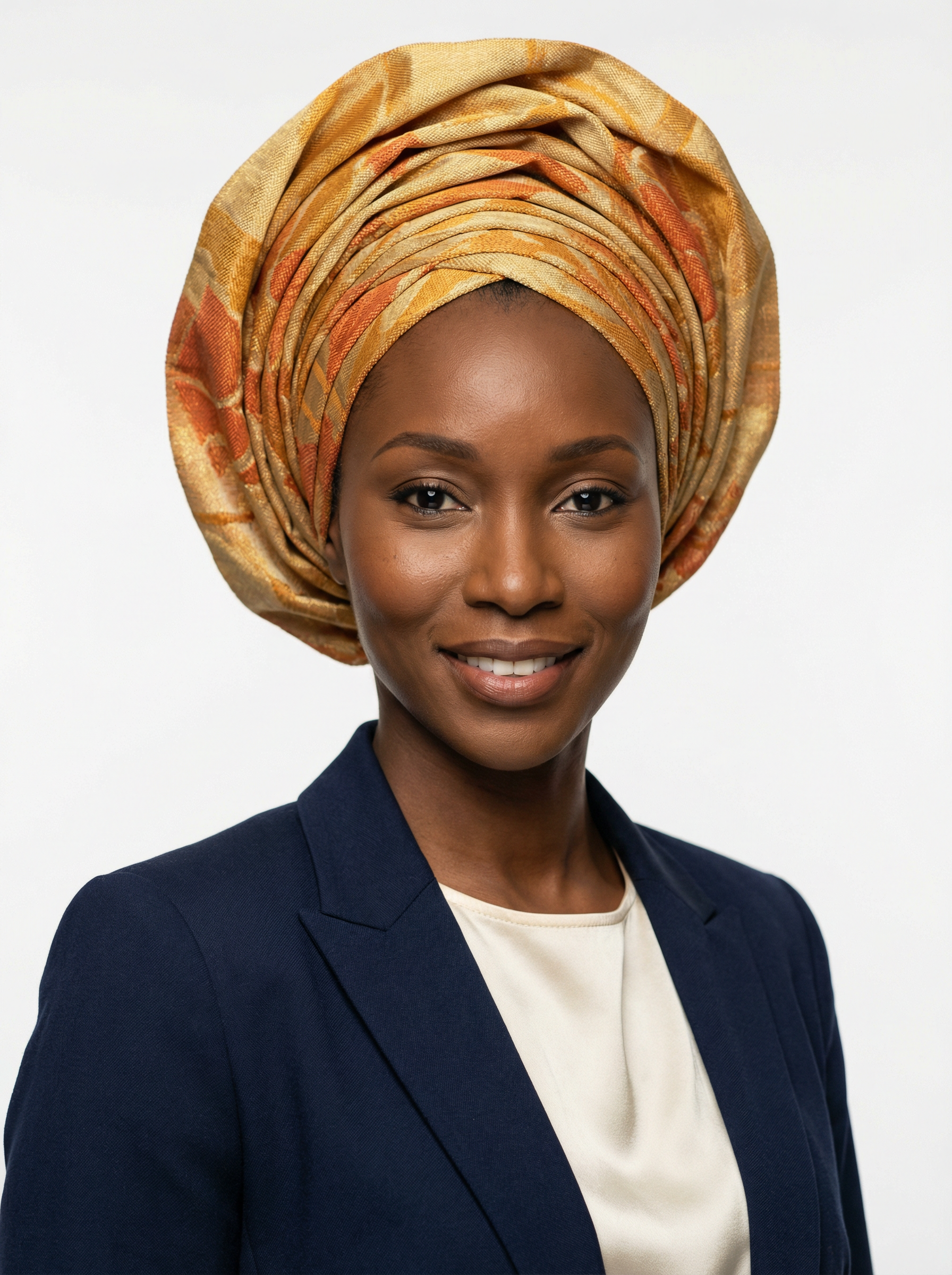
“The challenge for any global platform is not just translation, but cultural transposition,” explains Dr. Fatima Zahra Alami, a leading researcher in AI ethics at Mohammed V University in Rabat. “Netflix’s algorithms are incredibly powerful at identifying patterns, but patterns are not always universal. A recommendation engine that works perfectly for a viewer in Ohio might completely miss the mark for someone in Ouarzazate, not because of language, but because of subtle cultural cues, historical context, or even religious sensitivities that are not easily quantifiable by standard metrics.”
Indeed, the data flowing across the Sahara is vast, but the data representing cultural nuance can be surprisingly thin. While Netflix has made significant strides in commissioning local content, such as the Moroccan series Dubai Bling or the Egyptian drama Finding Ola, the core recommendation engine still faces hurdles. For instance, a viewer in Morocco might enjoy a historical drama from Turkey, a comedy from Egypt, and a documentary from France, alongside a Hollywood blockbuster. The algorithm needs to understand the intricate connections between these seemingly disparate choices, recognizing shared themes or narrative styles that transcend language barriers. It is not enough to simply categorize content by genre or language; it needs to understand the why behind a preference.
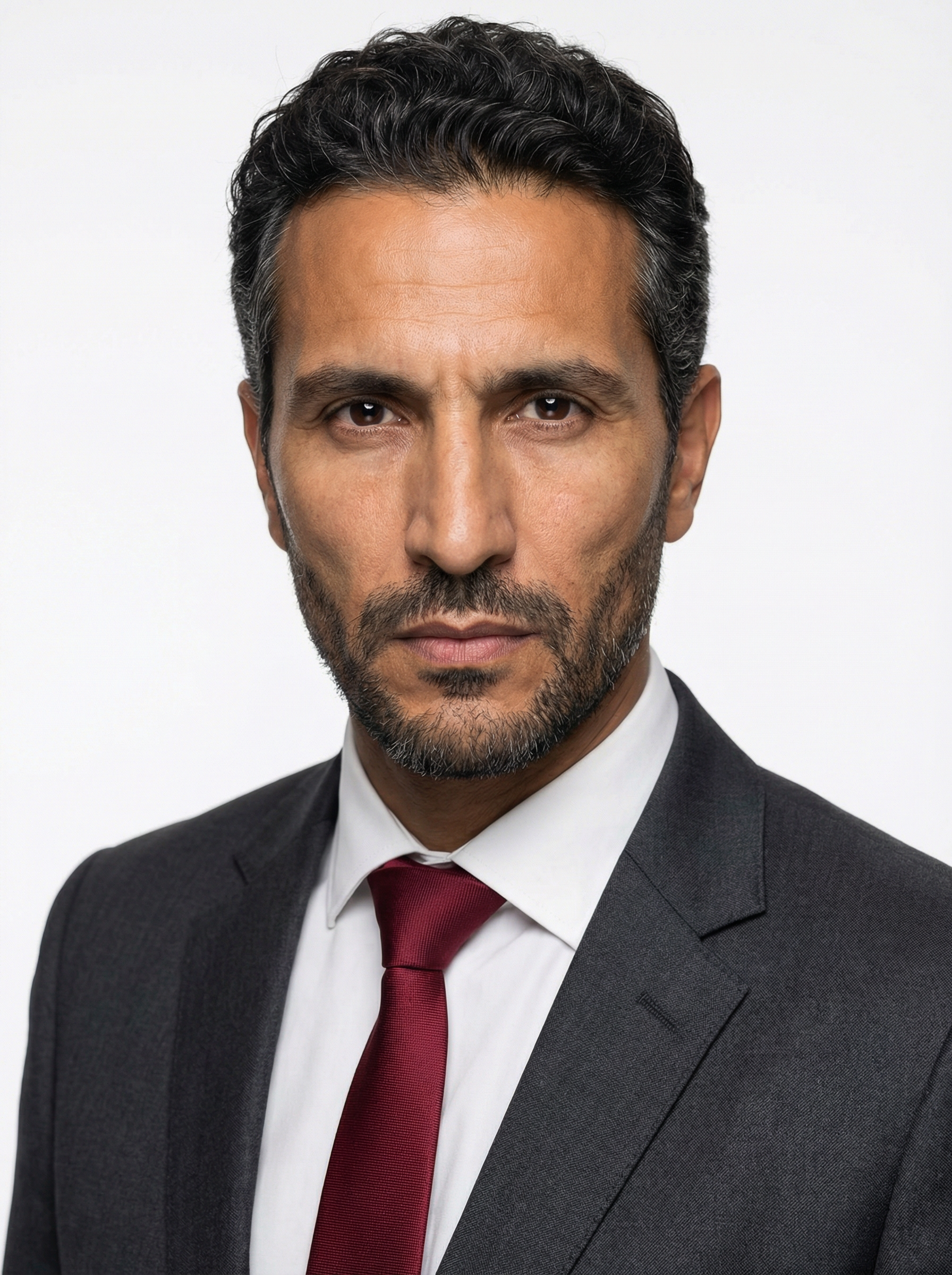
“The beauty of AI is its ability to learn and adapt, but its biases are often a reflection of the data it is fed,” notes Dr. Youssef El-Hajjam, CEO of a burgeoning AI startup in Casablanca focused on natural language processing for North African dialects. “If the training data is overwhelmingly Western-centric, the recommendations will naturally lean that way. It is a feedback loop. The more you are shown Western content, the more you consume it, and the more the algorithm believes that is what you want. Breaking that cycle requires deliberate effort and investment in diverse data sets and local AI talent.”
Netflix is aware of these challenges. They have invested in local production hubs and content acquisition teams in various regions, including the Middle East and North Africa. Their approach has evolved from a purely quantitative model to one that incorporates qualitative insights from local experts. They are also experimenting with more advanced multimodal AI models that can analyze not just viewing history, but also audio, visual cues, and even sentiment from reviews, to better understand cultural context. This is a crucial step, as Casablanca is becoming the AI capital nobody expected, attracting talent that can bridge these linguistic and cultural divides.
So, is Netflix’s AI-driven content strategy a fad or the new normal? It is unequivocally the new normal, and a constantly evolving one at that. The sophistication of these algorithms will only increase, becoming more adept at understanding individual preferences and cultural specificities. However, the true test of their universality will lie in their ability to transcend their origins. It is not enough for an algorithm to simply deliver content; it must also foster cultural understanding and celebrate diversity, rather than homogenizing tastes. The future of entertainment, especially in a globally connected yet culturally distinct region like Morocco, depends on it. We want to see our stories, our histories, and our humor reflected, not just a mirror image of Hollywood. The data is there, the talent is here, and the algorithms are learning. The next decade will show us if they can truly speak to the soul of every viewer, in every corner of the world. For more insights into how AI is shaping media consumption, you can explore articles on TechCrunch's AI section or dive into the research at MIT Technology Review. The conversation around AI ethics and bias, particularly in recommendation systems, is also a growing area of focus, often discussed on platforms like Wired's AI coverage.
While the core technology is robust, its application in diverse cultural landscapes requires continuous refinement. The journey from a purely data-driven model to a culturally intelligent one is ongoing. The algorithms are not just about efficiency anymore; they are about empathy, about understanding the human experience in all its varied forms. This is where the real innovation will happen, not just in bigger models, but in smarter, more sensitive ones. The Sahara is vast, but the data flowing across it is vaster, and it holds the key to unlocking truly global, culturally resonant AI experiences.