
You know that feeling, right? That little spark of excitement when a new technology lands and you just know it's going to change everything. Here in Azerbaijan, we've always been quick to embrace innovation, whether it's the latest smartphone or the newest digital government service. But lately, there's a different kind of buzz, a hum of AI, particularly from the behemoth that is Microsoft and its Azure AI services, permeating our enterprise landscape. It's not just about efficiency anymore, it's about how this tech is subtly, yet profoundly, reshaping our very minds.
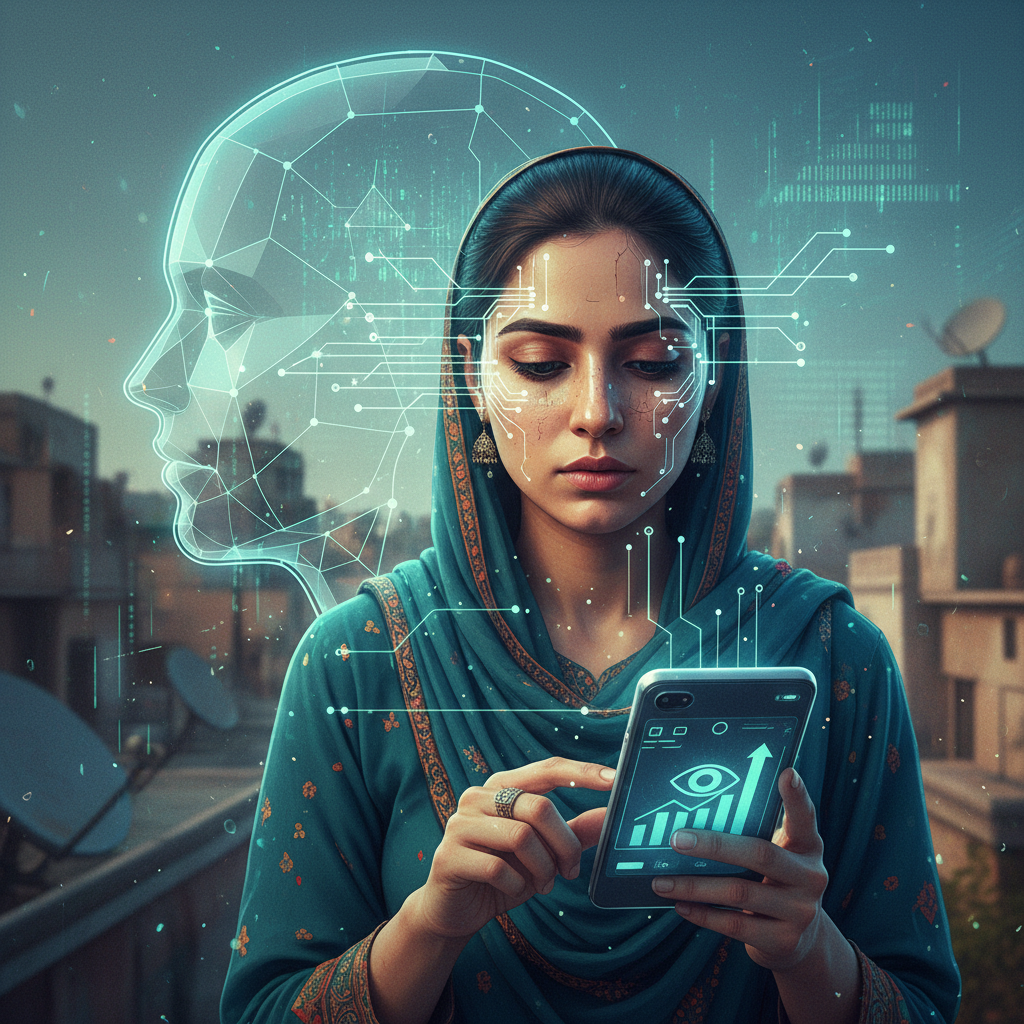
Let me tell you about Aygun, a brilliant project manager at one of Baku's leading energy firms. For years, her days were a whirlwind of emails, reports, and endless meetings. Then, about a year ago, her company fully integrated Microsoft 365 Copilot, powered by Azure AI, into their operations. Suddenly, those mountains of emails could be summarized in seconds, meeting notes drafted automatically, and complex data analyzed with unprecedented speed. Aygun, like many of us, initially felt a surge of liberation. More time for strategic thinking, more time for creativity, she thought. But a few months in, she confessed something intriguing to me. "Aynurè," she said, her brow furrowed slightly, "I feel like I'm forgetting how to summarize things myself. My brain just expects Copilot to do it. Am I getting smarter, or just lazier?"
Aygun's experience isn't unique, and it touches on a fascinating area of human-AI psychology. We're witnessing a grand experiment in real time, right here at the crossroads of Europe and Asia. Microsoft's strategic push with Azure AI, offering robust, scalable, and secure cloud solutions, has made it the go-to for many Azerbaijani enterprises, from finance to logistics. This dominance means that tools like Copilot, Azure Cognitive Services, and AI-powered analytics are becoming deeply embedded in our daily professional lives. The question is, what are the cognitive ripple effects?
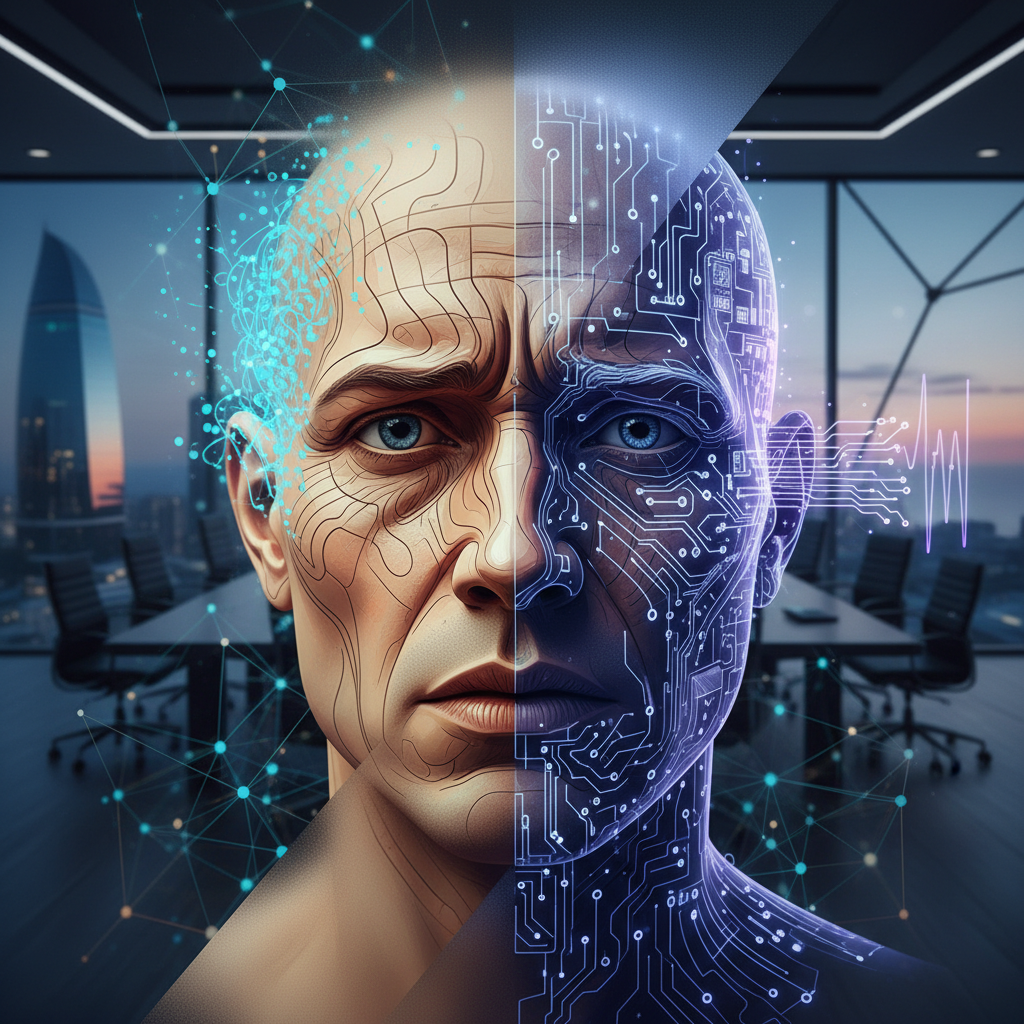
Research is just beginning to scratch the surface of this phenomenon. Dr. Elvin Mammadov, a cognitive psychologist at Baku State University, shared his insights with me. "We're observing what we call 'cognitive offloading' at an unprecedented scale," he explained. "When AI tools consistently handle tasks like summarization, information retrieval, or even basic writing, our brains adapt. The neural pathways associated with those specific cognitive functions might become less active, leading to a perceived decline in those skills when the AI isn't present. It's not necessarily a bad thing, but it demands awareness." He emphasized that this isn't about intelligence diminishing, but rather a reallocation of cognitive resources, much like how we stopped memorizing phone numbers once smartphones became ubiquitous.
The good news is that this offloading can free up mental bandwidth for higher-order thinking. Imagine a financial analyst who no longer spends hours manually sifting through market reports, because Azure AI's anomaly detection flags critical trends instantly. That analyst can now dedicate their energy to strategic forecasting, complex problem solving, and innovative financial product development. "This is where the true potential lies," says Leyla Aliyeva, CEO of TechBridge Azerbaijan, a local consultancy specializing in AI adoption. "By automating the mundane, Microsoft's AI tools are allowing our workforce to leapfrog into more creative and impactful roles. Azerbaijan is writing its own tech story, and AI is a key chapter." She believes this shift is crucial for our nation's economic diversification, moving beyond traditional industries.
However, there's a flip side to this cognitive coin. The constant interaction with AI, particularly large language models, can also subtly influence our decision-making and even our social interactions. When Copilot suggests the 'perfect' wording for an email, are we truly expressing our own thoughts, or are we being nudged towards an AI-preferred style? This raises concerns about authenticity and the potential for a homogenization of communication. "The 'AI voice' can become pervasive," noted Dr. Mammadov. "If we rely too heavily on AI for communication, we risk losing the nuances of human expression, the idiosyncratic charm that makes our interactions genuinely human. It's a delicate balance." He pointed out that critical thinking skills, such as evaluating sources and synthesizing information independently, could also be impacted if users become overly reliant on AI-generated content without proper scrutiny.
Another interesting aspect is the psychological impact of perceived infallibility. When an Azure AI-powered system consistently provides accurate answers or efficient solutions, users can develop an over-reliance, sometimes leading to a decreased willingness to question the AI's output. This is particularly relevant in fields like healthcare or engineering, where unchecked AI errors could have serious consequences. "We need to foster a culture of 'AI literacy'," suggested Samir Hasanov, Head of Digital Transformation at the Ministry of Transport, Communications and High Technologies. "It's not just about knowing how to use the tools, but understanding their limitations, biases, and when to apply human oversight. Our government initiatives are focusing on this dual approach, promoting adoption alongside critical evaluation." This proactive stance is vital as the Caucasus is having a moment, with digital transformation accelerating across the region.
So, what does this mean for us, the people navigating this exciting, AI-infused future? It's not about rejecting these powerful tools, but about engaging with them mindfully. For individuals, this means actively practicing those cognitive skills that AI can automate. Take Aygun's example: she now makes a conscious effort to summarize complex documents herself before asking Copilot to refine them. It's like exercising a muscle, keeping those cognitive pathways strong. For enterprises, it means implementing AI with robust human-in-the-loop processes and investing in training that emphasizes critical thinking and AI ethics, not just operational efficiency. According to MIT Technology Review, this human-centric approach to AI adoption is becoming increasingly critical globally.
Microsoft, with its deep integration into the enterprise world, has a significant responsibility here. Their continued innovation in responsible AI, as highlighted on their official blogs, will be crucial. We need AI that augments human capabilities, not replaces them entirely or dulls our inherent cognitive strengths. The goal should be a symphony of human and artificial intelligence, where each plays to its strengths. As we continue to build this incredible digital future, we must remember that the human element, our unique cognitive abilities, our creativity, and our critical judgment, remains our most valuable asset. This is just the beginning, and the conversation about how we evolve alongside AI is only getting started. To keep up with the latest in AI innovation and its societal impact, you can always check out resources like TechCrunch's AI section. We are not just users of technology, we are co-creators of our cognitive future, and that is a truly thrilling prospect.