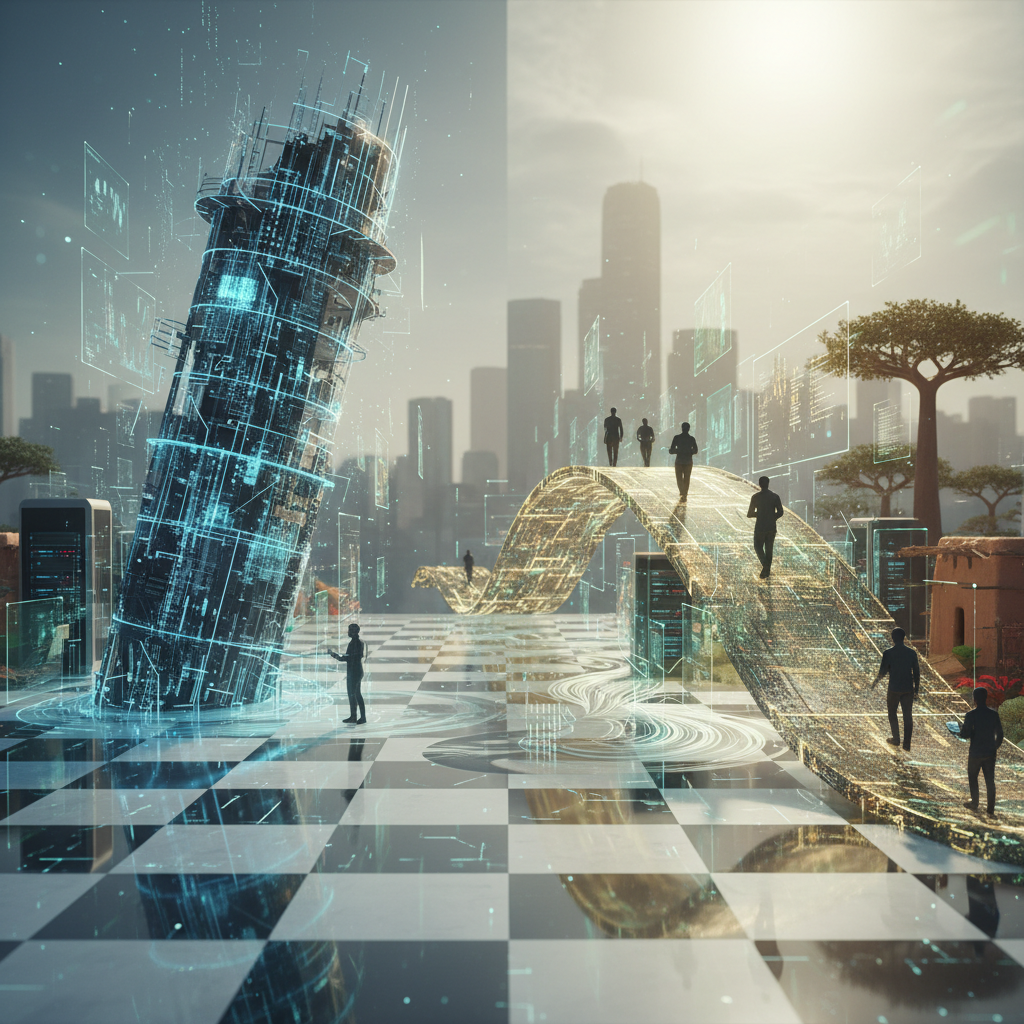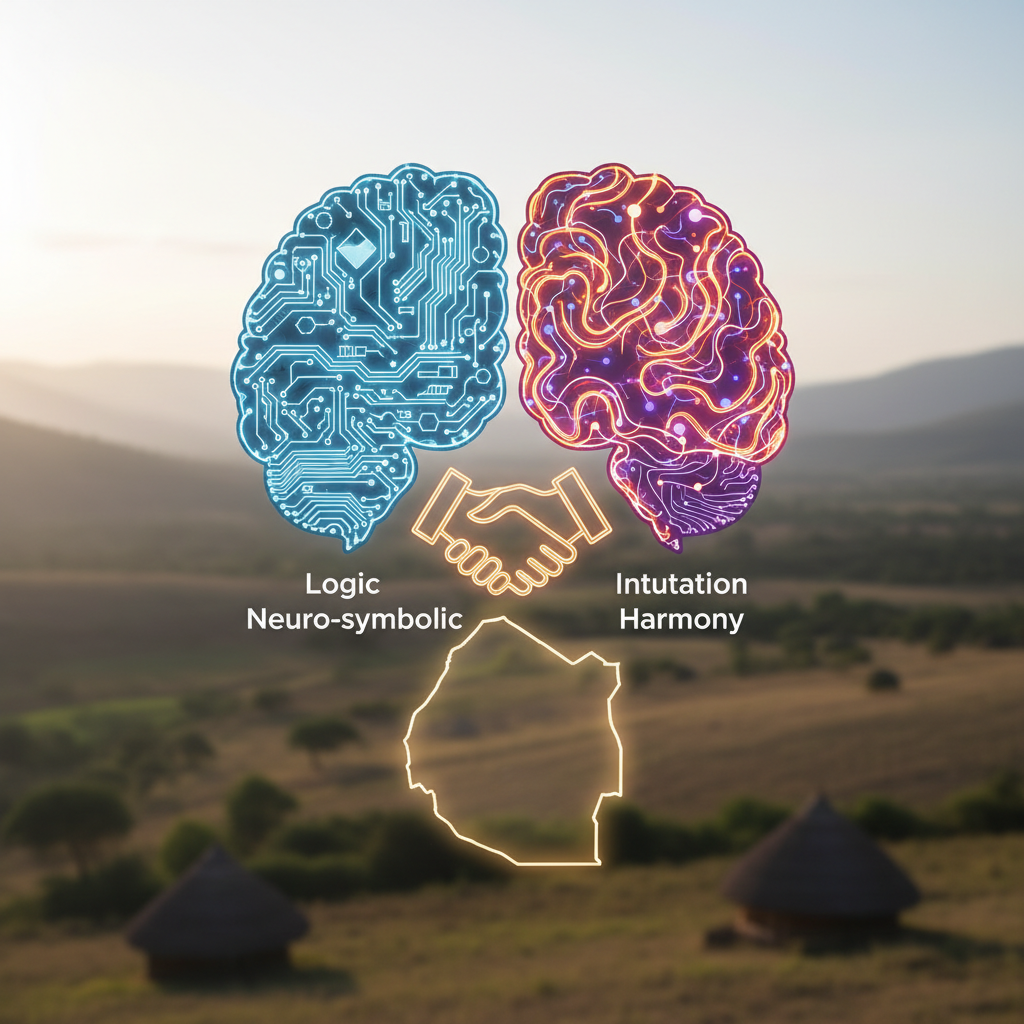

Here in Eswatini, where the mountains whisper ancient stories and the spirit of ubuntu guides our daily lives, we often speak of balance. It is about finding harmony between the old and the new, between individual ambition and collective well-being. This philosophy, I believe, holds a profound lesson for the world of artificial intelligence, especially when we talk about something as complex as neuro-symbolic AI. For too long, the AI world has been caught in a tug-of-war between two powerful but often isolated camps: the deep learning enthusiasts and the symbolic AI purists.
But what if the real magic happens when they learn to dance together, much like our traditional incwala ceremony where every step, every chant, has both structure and fluid emotion? This is the promise of neuro-symbolic AI, a hybrid approach that seeks to marry the pattern recognition prowess of neural networks with the logical reasoning capabilities of symbolic systems. It is not just a technical curiosity; it is a pathway to building AI that can truly understand, explain, and adapt, qualities we desperately need for our communities. In Eswatini, we say 'a person is a person through other people', AI should learn this lesson and understand context, not just correlation. This tiny kingdom has big ideas about technology, and this is one of them. ### The Technical Challenge: Bridging the Great DivideThe core problem we are trying to solve with neuro-symbolic AI is the limitations of purely data-driven, black-box deep learning models.
While neural networks excel at tasks like image recognition, natural language processing, and even game playing, they often struggle with common-sense reasoning, explainability, and handling situations outside their training data. They are brilliant at finding patterns but poor at explaining why a pattern exists or what it means in a logical sense. Conversely, traditional symbolic AI, with its roots in logic programming and knowledge representation, offers explainability and robust reasoning. It can deduce new facts from existing rules and represent complex relationships explicitly.
However, it falters when faced with noisy, ambiguous real-world data, and its knowledge bases are often painstakingly hand-crafted, making them brittle and difficult to scale. The challenge, then, is to build systems that can learn from data and reason with knowledge; systems that are both robust and interpretable. This is where neuro-symbolic AI steps in, aiming to combine the best of both worlds. ### Architecture Overview: A Symphony of SystemsImagine a system where a neural network acts as the eyes and ears, perceiving the world, and a symbolic reasoning engine acts as the brain, making sense of those perceptions through explicit knowledge. This is the essence of a neuro-symbolic architecture. There are several architectural paradigms, but they generally fall into three categories:1.
Symbolic-to-Neural: Here, symbolic knowledge is used to constrain, guide, or initialize neural network training. For example, logical rules might generate synthetic training data or provide regularization terms for a neural network's loss function. 2. Neural-to-Symbolic: In this approach, neural networks learn to extract symbolic representations or predicates from raw data. These extracted symbols then feed into a symbolic reasoning system. Think of a neural network classifying an image as 'cat' and 'sitting', and then a symbolic system using these predicates to infer 'cat is sitting'.
- Hybrid/Integrated: This is often the most powerful, where neural and symbolic components interact iteratively and bidirectionally. A neural network might propose hypotheses, which a symbolic reasoner then validates or refines. The feedback from the symbolic system can then further guide the neural network's learning or attention mechanisms. A common integrated architecture might involve: * Perception Layer (Neural): Convolutional Neural Networks (CNNs) for vision, Recurrent Neural Networks (RNNs) or Transformers for language, processing raw sensor data. * Symbolic Extraction Layer (Neural/Hybrid): Small neural modules or attention mechanisms that identify relevant entities, relations, and predicates from the neural perception output.
For example, extracting 'person', 'location', 'action' from a video stream. * Knowledge Base (Symbolic): A structured repository of facts, rules, and ontologies, often in formats like RDF, OWL, or Prolog clauses. This represents domain-specific knowledge. * Reasoning Engine (Symbolic): A logical inference engine that operates on the knowledge base and the extracted symbols, performing deduction, induction, or abduction. * Action/Decision Layer (Neural/Hybrid): Translates the symbolic reasoning outcomes back into actionable outputs or further refines neural network behavior. ### Key Algorithms and ApproachesTo make this dance work, researchers are exploring various algorithms.*
One prominent approach is Neural Logic Programming (NLP), which blends deep learning with logic programming. Imagine a Prolog-like system where the predicates are not just true or false, but have probabilities assigned by a neural network. For example, consider a simple rule: parent(X, Y) :- child(Y, X). A neural network could learn to predict the probability of child(Y, X) from images or text, and then this probability propagates through the logical rule. Another fascinating area is Program Synthesis via Neural Networks. Here, neural networks learn to generate symbolic programs or rules that solve a given task.
This is particularly useful for tasks requiring step-by-step reasoning or constraint satisfaction. The neural network essentially learns to 'write' code that a symbolic interpreter can then execute. Let us consider a conceptual example for a healthcare application in Eswatini, perhaps helping community health workers in remote areas. pseudocode# Neural-to-Symbolic ComponentInput: Patient symptoms (text, images of skin conditions)Neural_Encoder(symptoms) -> Latent_RepresentationGenerate_Predicates(Latent_Representation) -> [has_fever(Patient), has_rash(Patient), lives_in_rural_area(Patient)]# Symbolic Reasoning ComponentKnowledge_Base: Rule1: IF has_fever(P) AND has_rash(P) Then suspect_malaria(P) Rule2: IF suspect_malaria(P) AND lives_in_rural_area(P) Then recommend_blood_test(P) Rule3: IF recommend_blood_test(P) AND NOT has_access_to_clinic(P) Then dispatch_mobile_unit(P)Reasoning_Engine(Predicates, Knowledge_Base) -> Inferred_Actions[recommend_blood_test(Patient), dispatch_mobile_unit(Patient)]This pseudocode illustrates how neural networks identify symptoms, which are then formalized into symbolic predicates. These predicates are fed into a symbolic reasoning engine that applies predefined rules from a knowledge base to infer actions, like dispatching a mobile health unit. ### Implementation ConsiderationsBuilding neuro-symbolic systems is not for the faint of heart.
It demands a deep understanding of both machine learning and symbolic AI. Here are a few practical tips:1. Knowledge Representation: Choose your symbolic representation wisely. Ontologies (OWL, RDF) are excellent for complex domain knowledge, while logic programming (Prolog, Datalog) is great for rule-based reasoning. The choice impacts how easily you can integrate with neural components. 2.
Modularity: Design your system with clear interfaces between neural and symbolic modules. This makes debugging and maintenance much easier. For example, define a standard API for neural networks to output symbolic predicates. 3. Data Efficiency: Neuro-symbolic systems often require less data than purely neural approaches because they can leverage existing knowledge. This is a huge advantage in data-scarce environments, which are common in many parts of Eswatini.
- Explainability: One of the main benefits is improved explainability. Ensure your system can trace back its reasoning through the symbolic component to justify its decisions. This is crucial for trust and adoption, especially in sensitive areas like healthcare. ### Benchmarks and ComparisonsWhen compared to purely neural systems, neuro-symbolic AI often shines in tasks requiring reasoning beyond pattern matching.
For instance, in visual question answering (VQA) where an AI must answer questions about an image, a neuro-symbolic system might first identify objects and their relationships (neural part) and then use logical rules to answer questions like 'Is the red ball to the left of the blue box? ' (symbolic part). Purely neural VQA models might struggle with novel spatial relationships not seen in training. For robustness, consider adversarial attacks. A purely neural network might be fooled by tiny perturbations in an image, classifying a cat as a dog. A neuro-symbolic system, with its symbolic knowledge of 'cat-ness' (e.
g. , 'has whiskers', 'meows'), might be more resilient, flagging the classification as inconsistent with its symbolic understanding. Performance-wise, training can be more complex due to the interplay of different learning paradigms.
However, once trained, inference can sometimes be faster for reasoning tasks, as symbolic engines can be highly optimized for logical deduction. ### Code-Level InsightsFor developers diving in, Python remains the language of choice. Libraries like PyTorch or TensorFlow handle the neural components. For symbolic reasoning, Prolog interpreters (e. g. , SWI-Prolog) or Python libraries like pyDatalog or Logica (from Google) are excellent.
Frameworks like DeepMind's Differentiable Neural Computer (DNC) or Neural-Symbolic Concept Learner (ns-cl) offer integrated approaches. The key is often in the 'glue code' that translates between neural outputs (e. g. , probability distributions over predicates) and symbolic inputs (e. g. , facts asserted into a knowledge base).
Look into graph neural networks (GNNs) for representing and reasoning over structured knowledge graphs, as they naturally bridge the gap between neural and symbolic graph representations. ### Real-World Use CasesThe potential applications are vast and particularly relevant for a nation like ours:1. Healthcare Diagnostics: Imagine an AI assisting doctors at the Mbabane Government Hospital. It could process patient symptoms and lab results (neural input), integrate with medical knowledge bases (symbolic rules about diseases and treatments), and propose diagnoses with explanations. This could be transformative for early detection of diseases like tuberculosis or HIV, especially in rural clinics. 2.
Legal Reasoning: For our legal system, a neuro-symbolic AI could analyze legal documents and case precedents (neural processing), then apply statutory laws and judicial principles (symbolic reasoning) to assist lawyers in building arguments or predicting case outcomes. This could help streamline justice, making it more accessible. 3. Environmental Monitoring: In safeguarding our precious Mlilwane Wildlife Sanctuary, AI could analyze drone imagery to detect poaching activities or illegal logging (neural vision). This data, combined with ecological rules about animal behavior and protected areas (symbolic knowledge), could trigger alerts and guide rangers more effectively. 4.
Education: For students at the University of Eswatini, a neuro-symbolic tutor could not only assess their understanding based on their answers (neural analysis of language) but also identify misconceptions by comparing their responses against a symbolic model of correct knowledge, offering targeted, logical feedback. ### Gotchas and PitfallsWhile promising, neuro-symbolic AI is not without its challenges. 1. Knowledge Acquisition Bottleneck: Creating comprehensive and accurate symbolic knowledge bases is still a labor-intensive process. This is a significant hurdle, especially for complex domains. 2.
Scalability: Integrating and training large neural networks with complex symbolic reasoners can be computationally expensive and difficult to scale. 3. Representational Mismatch: Bridging the gap between continuous, distributed neural representations and discrete, explicit symbolic representations is a fundamental research problem. How do you translate 'fuzzy' neural probabilities into crisp logical facts without losing information? 4. Debugging: When things go wrong, debugging a hybrid system can be incredibly complex.
Pinpointing whether the error lies in the neural perception, symbolic reasoning, or the interface between them requires sophisticated tools and techniques. ### Resources for Going DeeperFor those eager to dive deeper, I recommend exploring papers from conferences like NeurIPS and Aaai, particularly workshops on neuro-symbolic AI. The MIT Technology Review often features excellent articles on this topic, and you can find many research papers on arXiv.
org by searching for 'neuro-symbolic AI' or 'hybrid AI'. Look into projects from Google DeepMind and IBM Research, as they are significant contributors to this field.
In the end, what we are striving for with neuro-symbolic AI is not just smarter machines, but machines that can think more like us, with both intuition and logic. It is about building AI that can truly serve our communities, understanding the nuances of human experience and the richness of our world. Sometimes the smallest countries have the biggest vision, and I believe Eswatini's journey into this hybrid AI future will be one to watch.