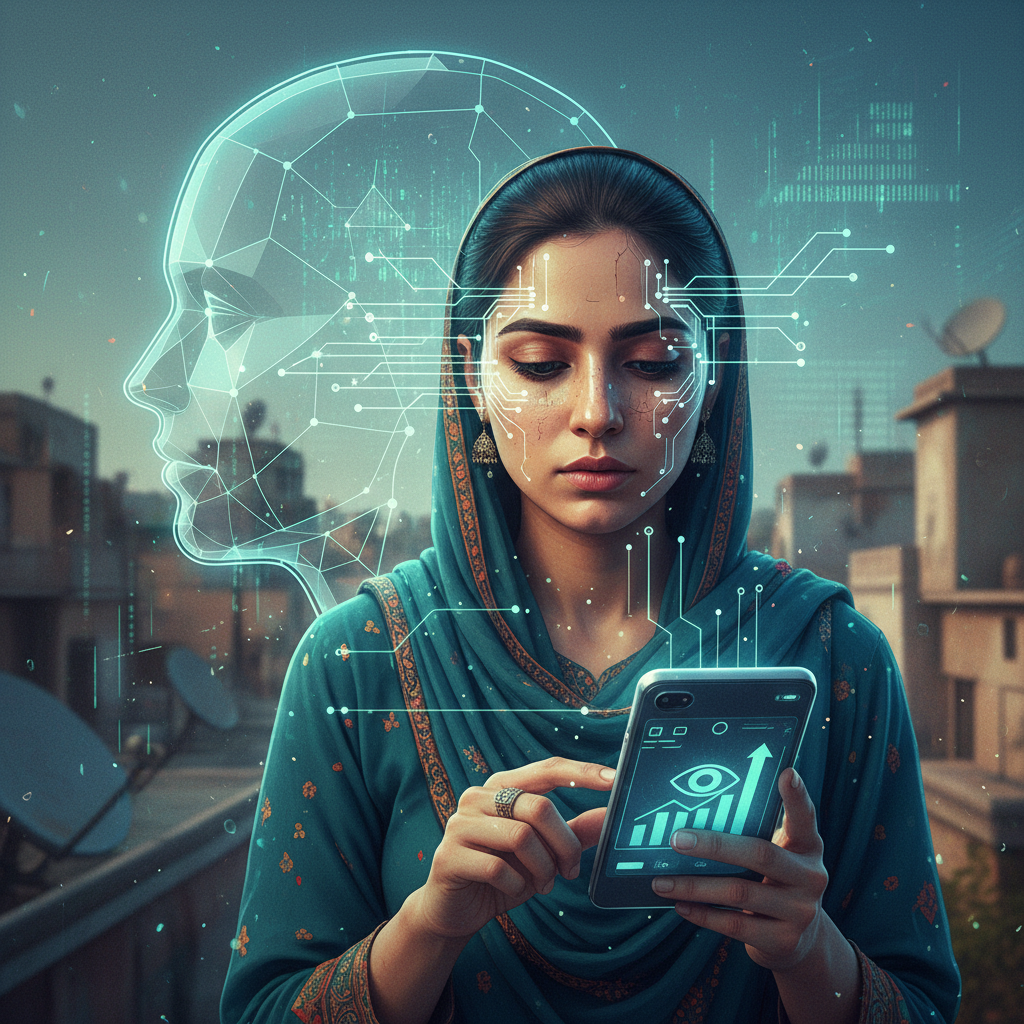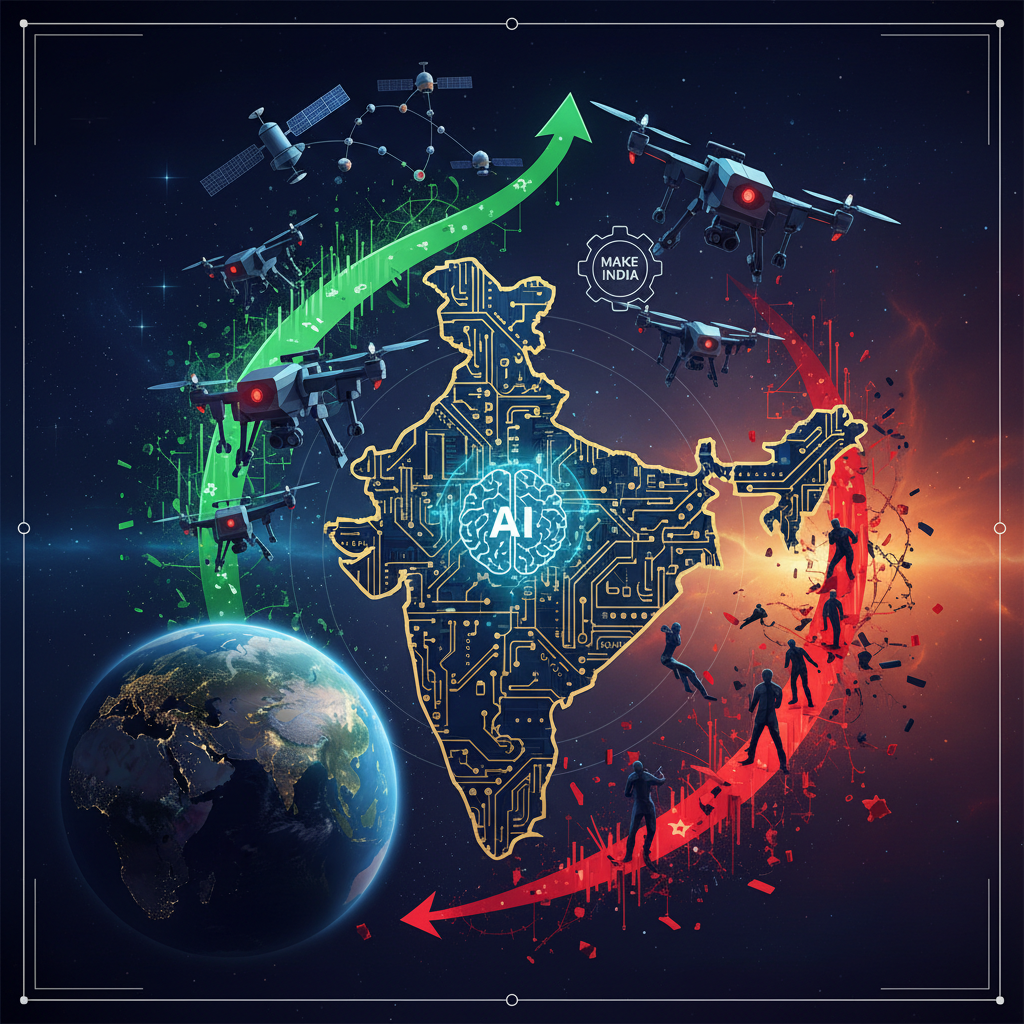

Is the future of warfare a sterile dance of algorithms and drones, or a chaotic, unpredictable nightmare unleashed by machines? That's the question echoing through defense ministries and AI labs globally, and believe me, it's a question that hits differently here in India. We're not just spectators in this global game of technological leapfrog, we're active players, and the implications of AI in military applications, from autonomous weapons to drone swarms, are profound.
For decades, the idea of machines making life and death decisions felt like science fiction, relegated to Bollywood thrillers with over-the-top special effects. But today, in April 2026, it's a stark reality. The advancements in AI, particularly in areas like computer vision, reinforcement learning, and predictive analytics, have pushed the boundaries of what's possible. We're talking about systems that can identify targets, make tactical decisions, and engage without direct human intervention. This isn't just about faster drones; it's about a fundamental shift in the nature of conflict.
Historically, military innovation has always been a double-edged sword. From the invention of gunpowder to nuclear weapons, each technological leap promised decisive advantage while simultaneously raising existential fears. AI in warfare is no different. Think back to the early days of drone technology, when they were primarily used for surveillance. Then came the 'predator drones' capable of targeted strikes, still with a human in the loop, albeit thousands of miles away. Now, the conversation has moved to fully autonomous lethal weapons systems, or Laws, where the human element is either supervisory or entirely removed from the kill chain. This progression, from human-operated to human-supervised to potentially human-out-of-the-loop, has been startlingly swift.
The global defense sector is pouring billions into this. Reports suggest the market for military AI is projected to reach tens of billions of dollars within the next few years, with a significant portion dedicated to autonomous systems. Major players like the US, China, and Russia are leading the charge, investing heavily in AI for everything from logistics and intelligence to combat operations. The US Department of Defense, for instance, has been vocal about its Project Maven and other AI initiatives aimed at enhancing battlefield awareness and decision-making speed. China's military-civil fusion strategy is pushing AI integration across its armed forces at an unprecedented pace. It's a race, plain and simple, and no one wants to be left behind.
Here in India, the conversation is equally urgent. We have complex geopolitical realities, and the need for robust defense capabilities is paramount. Our indigenous defense sector, bolstered by initiatives like 'Make in India' and 'Atmanirbhar Bharat,' is increasingly looking towards AI as a force multiplier. We've seen significant strides in developing our own drone technology, and the next logical step is to imbue these systems with greater autonomy. The Indian Army, Navy, and Air Force are all exploring AI applications, from predictive maintenance of equipment to intelligent surveillance systems along our borders. The Defense Research and Development Organisation, Drdo, is actively working on various AI projects, understanding that this technology is not just about offense, but also about defense, resilience, and strategic deterrence.
But the ethical quandary remains. The idea of machines deciding who lives and dies is deeply unsettling. Critics argue that such systems lack the moral judgment, empathy, and ability to understand complex contextual nuances that are inherent to human decision-making in war. "Delegating the power of life and death to machines crosses a fundamental moral boundary," states Dr. Anjali Sharma, a leading AI ethicist at the Indian Institute of Science, Bangalore. "While efficiency and speed are tempting, we must ask ourselves if we are willing to sacrifice human accountability and the very essence of justice for technological advantage. The 'fog of war' is already complex; imagine it compounded by algorithmic opacity." Her concerns are echoed by many in the global scientific community, who have called for a preemptive ban on Laws, fearing an uncontrollable arms race and the lowering of the threshold for conflict.
However, there's another perspective, particularly prevalent among military strategists and technologists. They argue that autonomous systems could reduce human casualties, both for combatants and civilians, by operating with greater precision and speed than humans in high-stress situations. "Autonomous systems, when properly designed and constrained, can potentially adhere to the laws of armed conflict more consistently than humans, who are susceptible to fear, fatigue, and emotion," argues General K.V. Singh (Retd.), a former Chief of Army Staff, in a recent defense symposium. "The question isn't whether AI will be used in warfare, but how we will responsibly integrate it to protect our nation and minimize harm. We cannot afford to unilaterally disarm ourselves of a critical technological edge while adversaries advance." This pragmatic view acknowledges the inevitability of the technology and seeks to shape its deployment rather than outright reject it.
My take? This is the inflection point. India will own the next decade of AI, and that includes its application in defense. We cannot bury our heads in the sand. The genie is out of the bottle. The question is not if autonomous weapons will become a significant part of modern warfare, but how nations, including India, will navigate the ethical, legal, and strategic complexities. We need a robust national AI strategy for defense that balances innovation with accountability. This means investing in research and development, fostering public-private partnerships, and critically, establishing clear ethical guidelines and regulatory frameworks. We need to ensure that 'human oversight' isn't just a buzzword, but a tangible, enforceable mechanism within these systems.
The global community is grappling with this, too. Discussions at the UN and other international forums are ongoing, attempting to establish norms and potentially treaties around Laws. But progress is slow, and technology moves fast. India has a unique opportunity to lead by example, to develop AI-driven defense capabilities that are not only cutting-edge but also morally sound. We have the intellectual capital, the engineering talent, and a democratic framework that values human life. We can build systems that enhance our security without compromising our values.
Forget Silicon Valley, look at Hyderabad. Our tech hubs are churning out world-class AI talent, and this expertise can be leveraged for defense applications. Companies like Tata Advanced Systems and Larsen & Toubro Defence are already integrating advanced technologies into their offerings. The challenge is to ensure that as we build these sophisticated systems, we embed ethical considerations from the ground up, not as an afterthought. We need interdisciplinary teams of AI engineers, ethicists, legal experts, and military strategists working hand in hand.
The future battlefield will be defined by AI. Whether it becomes a realm of precision and reduced collateral damage, or one of unpredictable algorithmic escalation, depends on the choices we make today. India has the potential to be a responsible AI power in defense, shaping the global discourse and demonstrating that technological prowess and ethical leadership can go hand in hand. It's a colossal task, but one that our nation, with its ancient wisdom and modern ambition, is uniquely positioned to undertake. The world is watching, and our decisions now will echo for generations. For more on the broader implications of AI in society, you can explore articles on Wired or MIT Technology Review. The debate is far from over, and it's one we must all engage with, actively and thoughtfully.