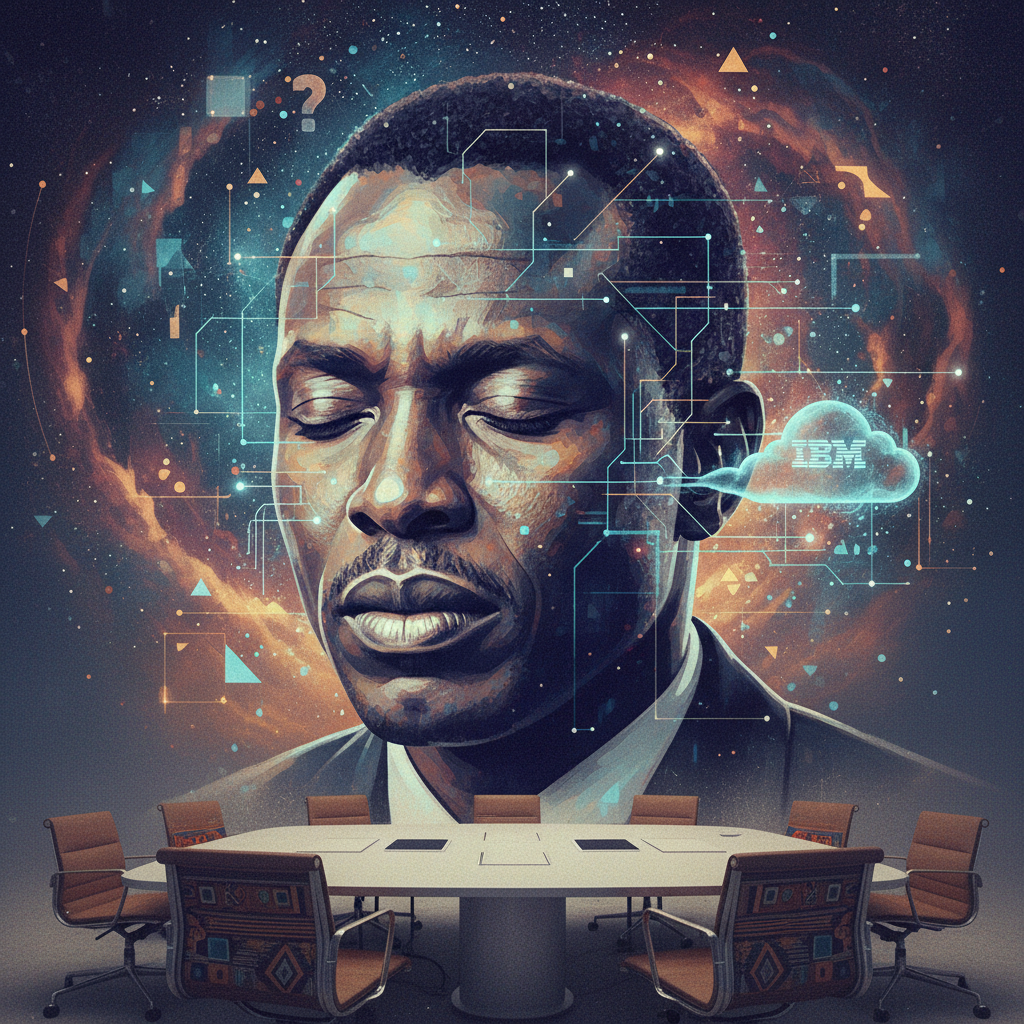
Ah, mon ami, let me tell you a story that’s bubbling right here in the heart of Burkina Faso, a story about minds, machines, and the future we are building, brick by digital brick. You know, we often talk about AI as this far-off, futuristic thing, but here, in Ouagadougou, it is already weaving itself into the very fabric of how we do business, how we think, and even how we relate to each other. And at the center of this fascinating shift, for many of our larger enterprises, is the reinvention of IBM Watson and the bustling enterprise AI consulting market that has sprung up around it.
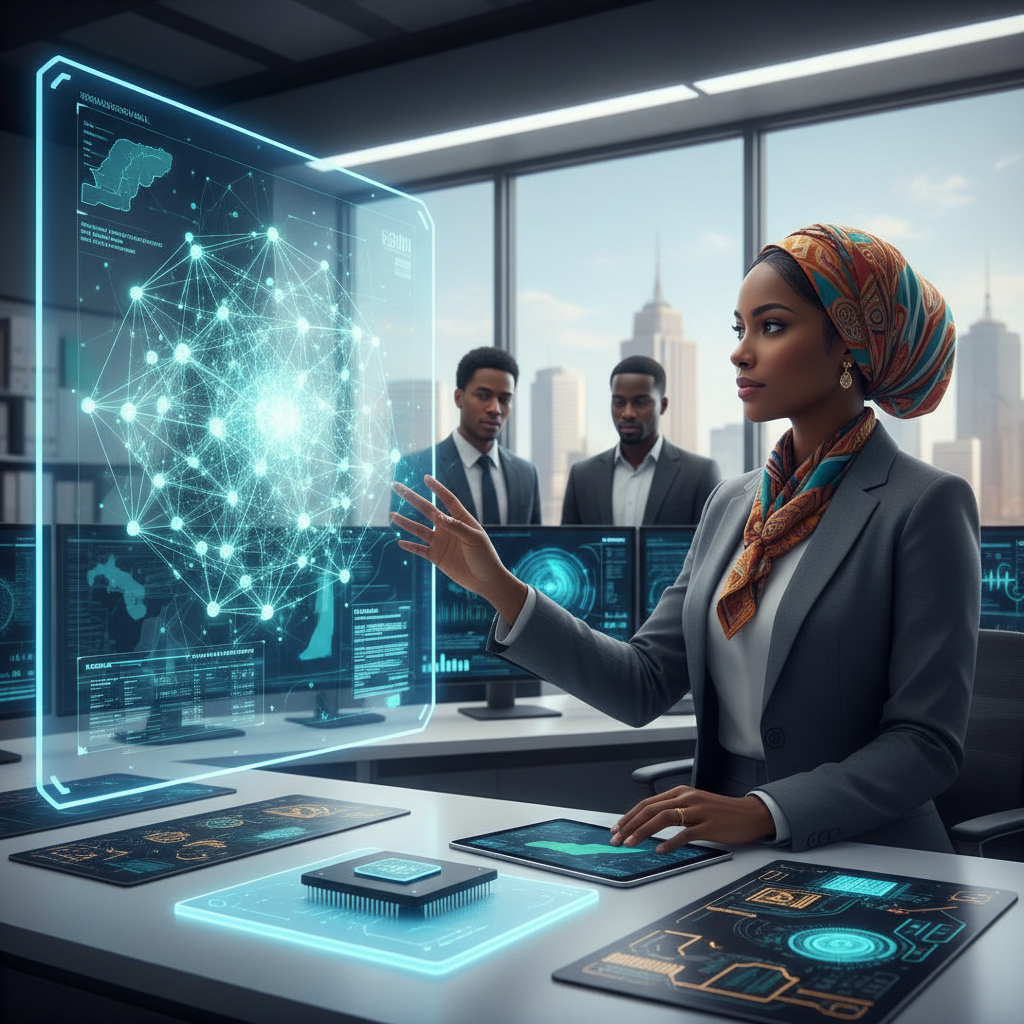
Imagine a typical morning at a major Burkinabé bank, let's call it Banque du Faso. For decades, loan officers, these wise men and women, have relied on a blend of financial data, community knowledge, and that intangible gut feeling, that savoir-faire passed down through generations. They knew the families, the rhythms of the market in the Grand Marché, the subtle cues that spoke volumes. Now, enter the new era. The bank has invested heavily in an IBM Watson-powered analytics platform, brought in by a team of sharp consultants from a regional firm, let's say 'Sahel AI Solutions'. This system crunches numbers, analyzes market trends, even sifts through news articles in French and local languages, all to give a 'recommended' risk assessment for loan applications. The officers still make the final call, but the machine's voice is undeniably loud.
This is where it gets interesting, psychologically speaking. We are witnessing a profound shift in cognitive processes. Researchers call it 'automation bias' or 'algorithmic aversion', depending on how you look at it. On one hand, there's the undeniable efficiency. "Before, it would take us days to compile all the data for a complex corporate loan," explains Madame Aminata Diallo, a senior credit analyst at Banque du Faso. "Now, Watson provides a comprehensive report in hours. It highlights risks we might have missed, and opportunities too. It has definitely sharpened our initial assessments." This is the good part, the promise of augmentation, where AI acts as a super-assistant, expanding our human capabilities. It is like having a thousand extra eyes and brains working tirelessly. This changes everything.
But what happens to that human intuition, that finely tuned sense developed over years of experience? Dr. Jacques Kaboré, a cognitive psychologist at the Université Joseph Ki-Zerbo here in Ouagadougou, has been studying this phenomenon. "We are seeing a subtle but significant erosion of independent critical thinking in some areas," he told me during a recent interview. "When the AI consistently provides a 'correct' answer, or at least one that leads to positive outcomes, human operators start to defer. They trust the machine more than their own judgment, even when their own judgment might be based on nuanced, context-specific information that the AI, despite its sophistication, might still miss." He points to studies showing that over-reliance on AI can lead to a decrease in human vigilance and a reduced ability to detect errors when the AI does make a mistake. It is a double-edged sword, this brilliant tool.
This isn't just about individual decision-making, it is about broader societal implications. The enterprise AI consulting market, with giants like IBM and smaller, agile African firms, is booming. They are selling not just software, but a new way of thinking, a new paradigm for problem-solving. According to a recent report, the global AI consulting market is projected to reach tens of billions of dollars by the end of the decade, with significant growth in emerging markets like ours. These consultants are the evangelists of this new gospel, bringing sophisticated models to sectors from agriculture to healthcare, from logistics to public administration. They promise optimized supply chains, personalized customer experiences, and predictive maintenance for everything from solar panels to textile machinery. And they are delivering on many of these promises.
However, the psychological impact extends beyond just decision-making. Consider the human-AI relationship itself. When a customer interacts with a bank's chatbot, powered by Watson's natural language processing, are they building trust with the institution, or just with a sophisticated algorithm? "There's a fascinating dynamic unfolding," says Dr. Kaboré. "People are becoming accustomed to the efficiency and impartiality of AI. They appreciate not being judged, not having to explain themselves repeatedly. But there's also a risk of dehumanization, of reducing complex human needs to data points. We must ensure that human empathy remains at the core of these interactions, even as AI handles the routine tasks." This is especially crucial in a society like ours, where personal relationships and community ties are paramount.
The broader societal implications are immense. As AI becomes more integrated into our economic backbone, the skills required in the workforce are shifting. There is a massive push for digital literacy, for data science, for prompt engineering. Our young people, the vibrant minds in the coding bootcamps across Ouagadougou, are embracing this with an energy that is truly inspiring. The revolution is being coded right now, in classrooms and maker spaces, as they learn to harness these powerful tools. But we also need to cultivate critical thinking, ethical reasoning, and the uniquely human qualities that AI cannot replicate. We must teach our children not just to use AI, but to understand its limitations, to question its outputs, and to guide its development ethically.
So, what is the practical advice for us, the people navigating this brave new world? First, embrace the power of AI, but always with a healthy dose of skepticism. Treat AI's recommendations as highly informed suggestions, not infallible truths. Second, invest in continuous learning. The ability to understand and interact with AI, to interpret its outputs, and to apply human judgment will be invaluable. Third, cultivate your uniquely human skills: empathy, creativity, critical thinking, and emotional intelligence. These are the superpowers that will differentiate us in an AI-driven world. Finally, let us champion local innovation. We need our own experts, our own consultants, who understand the unique cultural nuances and developmental contexts of Burkina Faso, to guide this transformation responsibly. We cannot simply import solutions; we must adapt and innovate. For more insights on the global AI landscape, I often turn to sources like MIT Technology Review and TechCrunch. We have to stay informed, because the future is not just coming, it is here, and it is asking us to think differently.
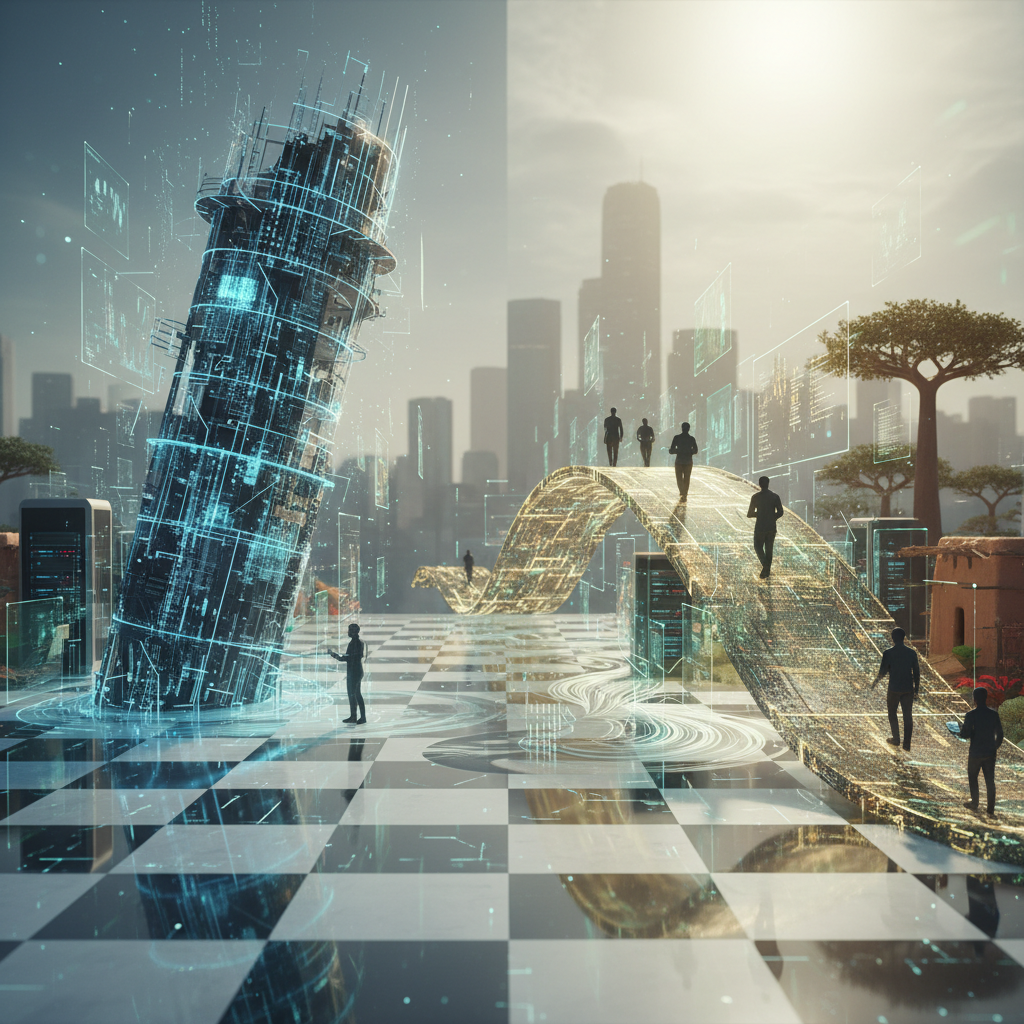
I've never seen anything quite like this blend of ancient wisdom and cutting-edge algorithms. It is a beautiful, complex dance, and we, the people of Burkina Faso, are stepping onto the floor with open minds and determined hearts. The journey of integrating IBM Watson and other enterprise AI solutions into our local context is not just about technology; it is about redefining what it means to be human in an increasingly intelligent world.