The digital dawn has broken over Lesotho, bringing with it not just the promise of innovation, but a swirling mist of uncertainty, particularly within the hallowed halls of its newsrooms. For decades, the Basotho media has navigated political turbulence, economic hardship, and the relentless pursuit of truth with scarce resources. Now, a new, ethereal force has arrived: artificial intelligence, promising to revolutionize everything from automated reporting to fact-checking. But as global tech giants like Google and OpenAI push their powerful models into every corner of the world, including our Mountain Kingdom, the question is not merely if AI will transform journalism, but how it will be governed, and crucially, who will benefit from this seismic shift.
The policy move that has sent ripples through Maseru's media circles is the proposed 'Digital Media and AI Content Regulation Framework' currently under review by the Lesotho Communications Authority LCA. Drafted in late 2025 and expected for public comment by mid-2026, this framework seeks to establish guidelines for the ethical deployment of AI in content creation, particularly within news organizations. It proposes mandatory disclosure for AI-generated content, accountability mechanisms for algorithmic bias, and stringent data privacy standards for information used to train local AI models. While seemingly progressive on paper, its practical implementation and enforcement remain a subject of intense debate and suspicion.
Who's Behind It and Why
The driving force behind this regulatory push, according to sources within the Ministry of Communications, Science, Technology, and Innovation, is a dual concern: national security and the protection of local cultural narratives. "We cannot allow foreign-trained algorithms, often reflecting biases from distant lands, to dictate the stories of our people," stated Minister Nthabiseng Molefe in a private briefing last month. "The framework aims to ensure that AI serves Lesotho, not the other way around." However, what they're not telling you is the significant influence of certain international development agencies and, perhaps more subtly, the lobbying efforts of a few well-connected local media conglomerates eyeing a competitive edge. These larger players, with resources to invest in compliance and AI infrastructure, stand to gain significantly from regulations that could stifle smaller, independent outlets.
"The intent may be noble, but the execution risks creating an uneven playing field," observed Dr. Palesa Mohale, a senior lecturer in media studies at the National University of Lesotho. "Smaller newsrooms, already struggling with funding, will find it difficult to meet stringent compliance demands for AI usage. This could inadvertently consolidate media power, reducing the very diversity of voices the framework claims to protect." Her concerns echo those of many who have watched regulatory initiatives in Africa often favor established entities over emerging innovators.
What It Means in Practice
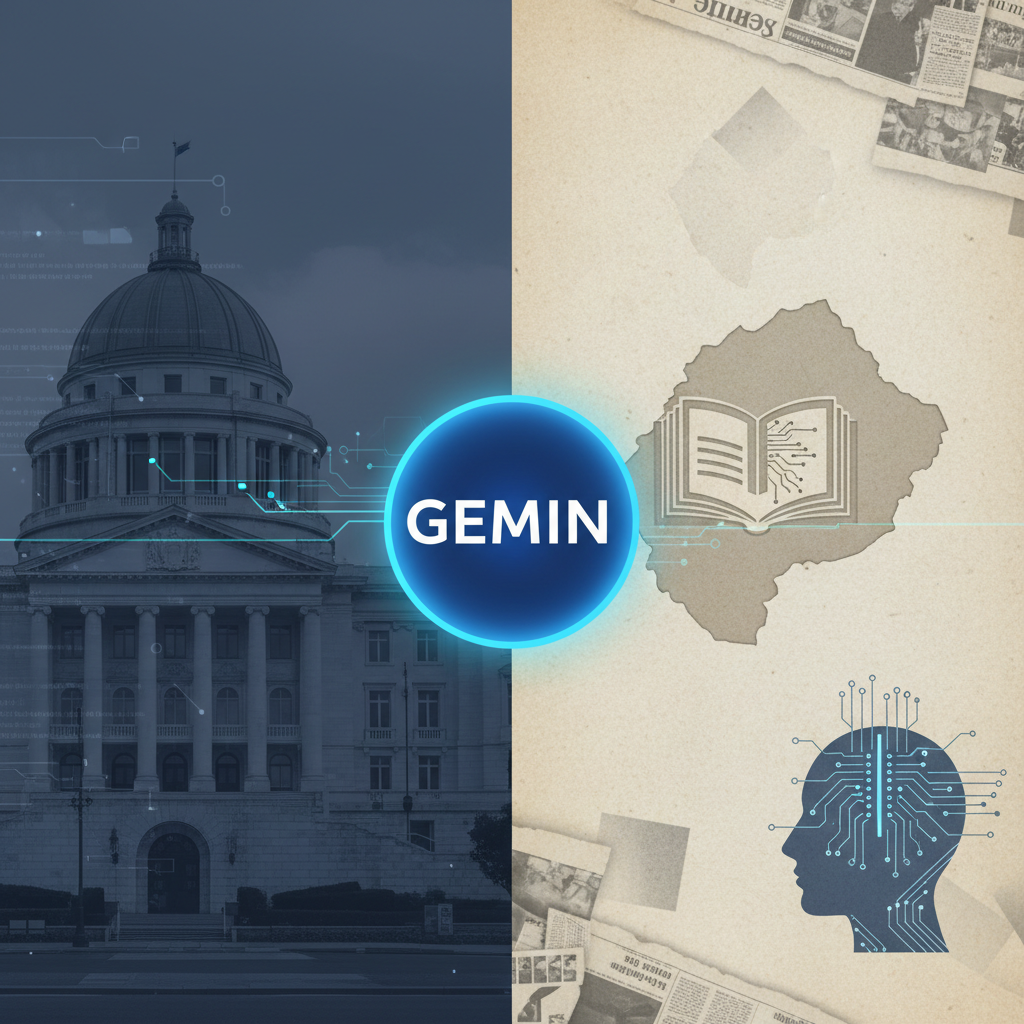
Should the framework pass largely in its current form, newsrooms in Lesotho would face a paradigm shift. Imagine a typical day at a local newspaper, say The Public Eye. Currently, human journalists painstakingly verify facts, conduct interviews, and craft narratives. Under the proposed regulations, any article where a significant portion of text or data analysis was generated by an AI tool, such as Google's Gemini or even a more localized language model, would need a clear disclaimer. Fact-checking algorithms, while potentially speeding up verification, would also come under scrutiny for their data sources and inherent biases, requiring regular audits. This could mean a significant increase in operational costs and a demand for new technical expertise within newsrooms.
"The idea of an AI-assisted journalist is not inherently bad," remarked Mr. Thabo Mofokeng, editor-in-chief of Lesotho Times, one of the nation's leading independent newspapers. "But who pays for the advanced AI tools? Who trains our staff? And who is liable when an AI, even with the best intentions, disseminates misinformation? These are not trivial questions for newsrooms operating on shoestring budgets." He points to the prohibitive costs of licensing advanced models from companies like OpenAI or Anthropic, let alone developing custom, culturally sensitive AI for Sesotho language content.
Industry Reaction
Industry reactions have been predictably mixed. Larger media houses, some of whom have already begun experimenting with AI for routine tasks like sports reporting or financial summaries, see the framework as a necessary step towards legitimacy. "Responsible AI integration is crucial for maintaining public trust," stated Ms. Lerato Khumalo, CEO of Media Holdings Lesotho, which owns several radio stations and online portals. "We are investing in training our journalists to work with AI, not to be replaced by it. This framework provides the guardrails we need." Her company recently partnered with a South African tech firm to explore localized AI solutions, raising questions about data sovereignty and external influence.
Conversely, many smaller, independent journalists and online content creators express deep apprehension. "This isn't about ethics; it's about control," asserted Ntate Kananelo, an investigative blogger known for his sharp critiques of government policy. "The big players will simply absorb the costs, or pass them on. For us, it could mean being forced to abandon AI tools that could actually help us compete, or worse, shutting down. Follow the money and you'll see who truly benefits from these 'ethical' regulations." His sentiment is shared by many who fear that the bureaucratic burden could stifle innovation and independent voices, rather than promote them.
Civil Society Perspective
Civil society organizations, particularly those focused on human rights and freedom of expression, are watching the developments with a critical eye. The Lesotho Human Rights Defenders Network Lhurdn has voiced concerns about the potential for the framework to be weaponized. "While we support ethical AI, any regulation must be carefully crafted to prevent censorship or the suppression of dissenting voices," explained Advocate Mpho Makara, a legal expert with Lhurdn. "The definition of 'algorithmic bias' or 'misinformation' could be twisted to target critical reporting, especially if the enforcement body lacks true independence. We must ensure that the spirit of free press, enshrined in our constitution, is not eroded by technological fear." The network advocates for a multi-stakeholder approach to governance, including journalists, academics, and the public, to ensure transparency and prevent abuse.
Will It Work?
The efficacy of Lesotho's proposed AI governance framework for journalism hinges on several factors. Firstly, the capacity of the LCA to enforce such complex regulations is questionable. Does it possess the technical expertise to audit sophisticated AI models for bias, or to monitor the vast digital landscape for non-compliant content? Secondly, the funding mechanism for compliance and capacity building will be crucial. Without significant investment in training and resources for smaller newsrooms, the framework risks becoming a barrier to entry rather than a safeguard for quality journalism.
Finally, and perhaps most importantly, is the political will to ensure true independence and prevent regulatory capture. If the framework becomes a tool for political or corporate agendas, it will fail in its stated mission to protect journalistic integrity and public trust. The Basotho people, accustomed to discerning truth from propaganda, deserve a media landscape that embraces technological advancement responsibly, without sacrificing the fundamental principles of transparency and accountability. The path ahead is fraught with challenges, much like navigating the treacherous mountain passes of our beloved Lesotho. The question remains: will we emerge with a stronger, more resilient media, or will the algorithms of global tech giants, however well-intentioned, inadvertently pave the way for a less diverse, less truthful future for our news? The stakes, for our democracy and our cultural narrative, could not be higher.
For further reading on the broader implications of AI in media, you can explore insights from MIT Technology Review and Reuters. The ongoing discussions about AI governance in Africa are also frequently covered by outlets like TechCrunch.