A few months ago, I was at a bustling art market in Lekki, Lagos. The air was thick with the scent of oil paint and possibility. Young, vibrant artists were hawking their pieces, each stroke a testament to hours of labor, inspiration, and uniquely Nigerian perspective. Now, imagine a future where a tech giant, say Google with its Gemini AI, can churn out a thousand variations of that art in seconds, without a single naira changing hands for the original creator. This isn't science fiction, my friends, it's the uncomfortable truth knocking on our doors.
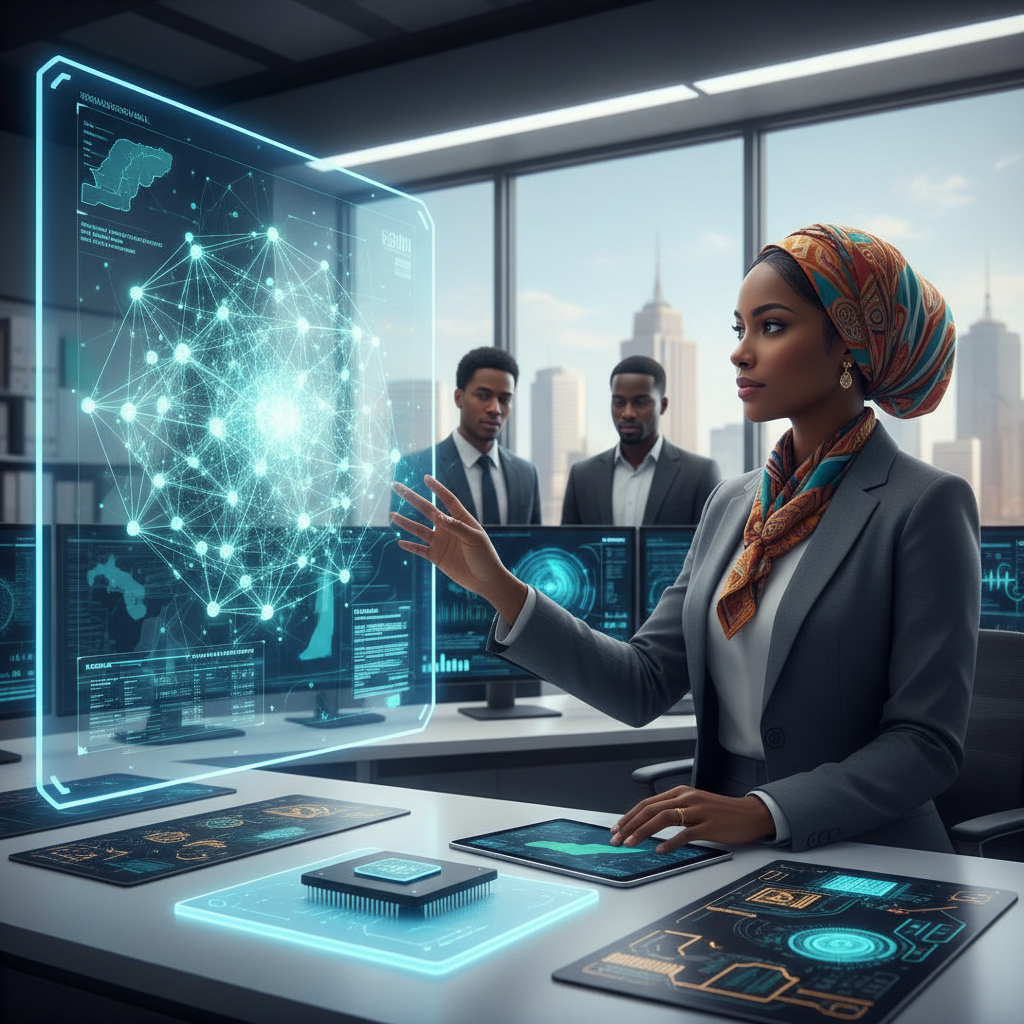
The headlines are always glowing, aren't they? "AI empowers creators," "New tools revolutionize content creation," "Democratizing creativity." We hear about Adobe's Firefly, OpenAI's Sora, and Meta's various generative models, all promising to make our lives easier, our output faster, our reach wider. And yes, some of these tools offer undeniable efficiencies. But let's talk about what nobody wants to discuss: the insidious underbelly of this so-called empowerment, especially for independent creators in places like Nigeria.
Most people are ignoring the looming threat because the narrative is so alluring. Who doesn't want a magic wand to conjure up a jingle, a book cover, or a short film script in minutes? The tech evangelists, often from Silicon Valley, paint a picture of boundless innovation and prosperity. They highlight the ease of use, the potential for new revenue streams, and the ability to scale creative output. They conveniently gloss over the fact that these AI models are trained on our data, our art, our music, our stories, often without explicit consent or fair compensation. It's a gold rush, and the gold is our intellectual property, mined and refined by algorithms, then sold back to us as a service.
How does this affect you? If you are a graphic designer in Abuja, a musician in Port Harcourt, a writer in Kano, or a filmmaker in Lagos, your livelihood is directly threatened. Imagine spending years honing your craft, developing a unique style, only for an AI to learn from your entire body of work and then produce similar content at a fraction of the cost, potentially devaluing your skills and your market. Your unique voice, your cultural nuances, your very identity as a creator, could be commoditized and replicated by machines. This isn't just about losing a gig, it's about losing the economic value of your creative spirit, the very thing that puts food on your table and sends your children to school. It's about the erosion of human dignity in the face of algorithmic efficiency.
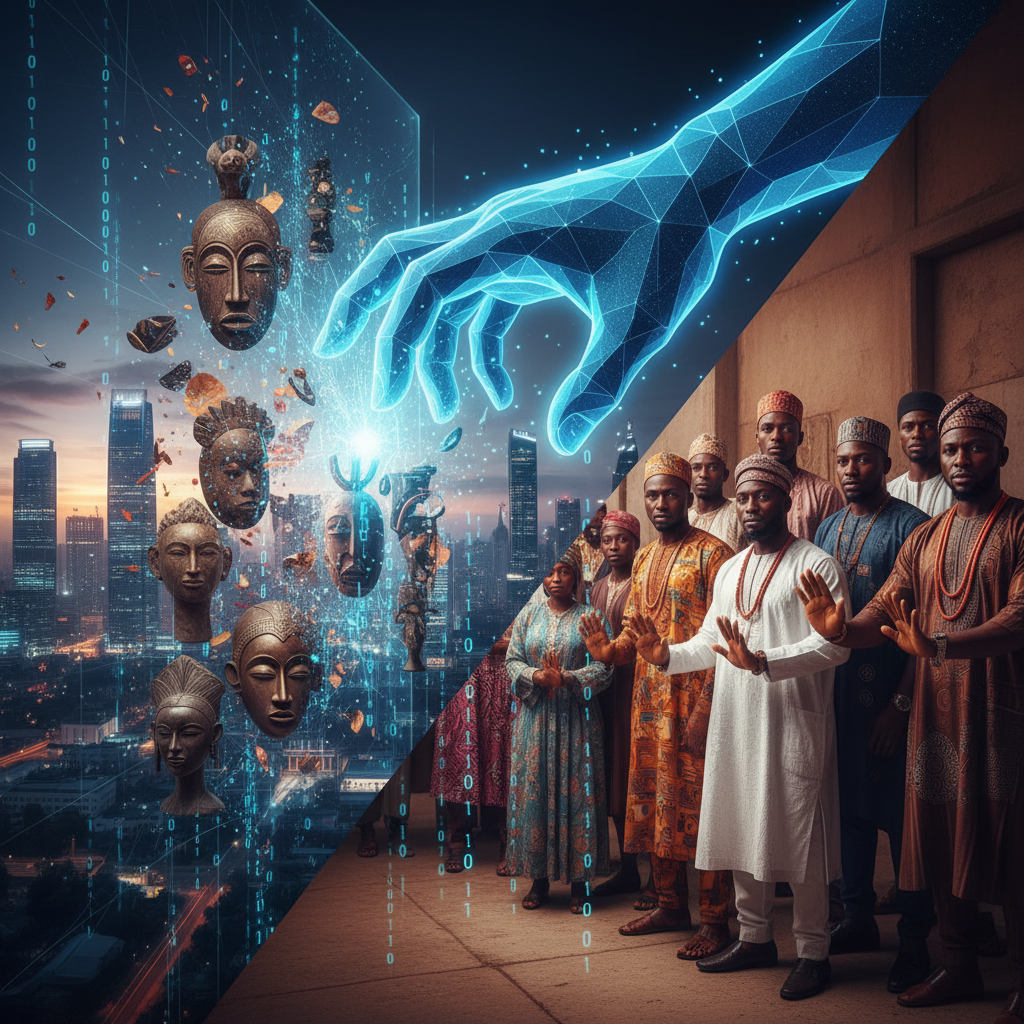
The bigger picture is one of digital colonialism, a concept I've spoken about many times. Big Tech companies, predominantly from the Global North, are building their trillion-dollar AI empires on the back of global data. Our rich cultural heritage, our diverse artistic expressions, our unique perspectives, are all being ingested into these models. The result? AI that can mimic a Yoruba drumming pattern, generate an Igbo proverb, or replicate a Hausa textile design, all without the original creators or their communities seeing a dime. This isn't empowerment, it's extraction. It centralizes power and wealth in the hands of a few tech behemoths, further marginalizing creators in developing nations who lack the legal and financial muscle to fight back. As Professor Ngozi Okonjo, a leading scholar on digital economics at the University of Ibadan, recently stated, "We are witnessing a new scramble for Africa, not for its minerals, but for its data, its culture, its very soul, to fuel the AI machines of the West." You can read more about these dynamics in articles on MIT Technology Review.
Experts are sounding the alarm, though their voices are often drowned out by the hype. Dr. Aisha Bello, a prominent IP lawyer based in Lagos, warns, "The current legal frameworks are woefully inadequate to protect creators in the age of generative AI. We need international treaties and national laws that mandate transparency in AI training data and ensure fair compensation for intellectual property used." She is not alone. Mr. Emeka Nnamdi, CEO of AfriCreative Hub, a platform supporting African artists, told me, "We're seeing a surge in AI-generated content flooding the market, making it harder for genuine human creativity to stand out and command fair prices. It's a race to the bottom, and our artists are the ones paying the price." Even within the tech world, there's growing unease. A senior engineer at a major AI lab, who wished to remain anonymous, confessed, "We know we're treading on thin ice ethically. The pressure to innovate and release models quickly often overshadows the deeper questions of data provenance and creator rights." The conversation is slowly shifting, as evidenced by discussions on platforms like TechCrunch and Wired.
So, what can you do about it? First, understand the stakes. Educate yourself and your fellow creators. Second, demand transparency from AI developers. Ask them: What data was used to train your models? How are you ensuring fair use and compensation? Third, support human creators directly. Buy their art, stream their music, read their books. Fourth, advocate for stronger intellectual property laws and collective bargaining agreements for creators. Organizations like the Copyright Society of Nigeria (coson) need to be at the forefront of this fight, pushing for policies that protect our cultural heritage and the livelihoods of our artists. Unpopular opinion: we need to consider a global 'data tax' on AI models, with proceeds distributed to creators whose work fueled their development. This isn't just a Nigerian problem, it's a global one, but our response here can set a powerful precedent.
The bottom line is this: the AI and creator economy nexus will fundamentally reshape how we value and consume art, music, and stories. In five years, if we don't act decisively, we risk a future where creativity is indistinguishable from computation, where the soul of human expression is diluted by algorithmic efficiency, and where the economic power of creation is concentrated in the hands of a few tech giants. For Nigeria, a nation brimming with unparalleled creative talent, this isn't just an abstract debate. It's a fight for our cultural identity, our economic independence, and the future of our artists. We must demand digital sovereignty, not just for our data, but for our very creativity. This isn't a game, it's our future, and we must play to win.