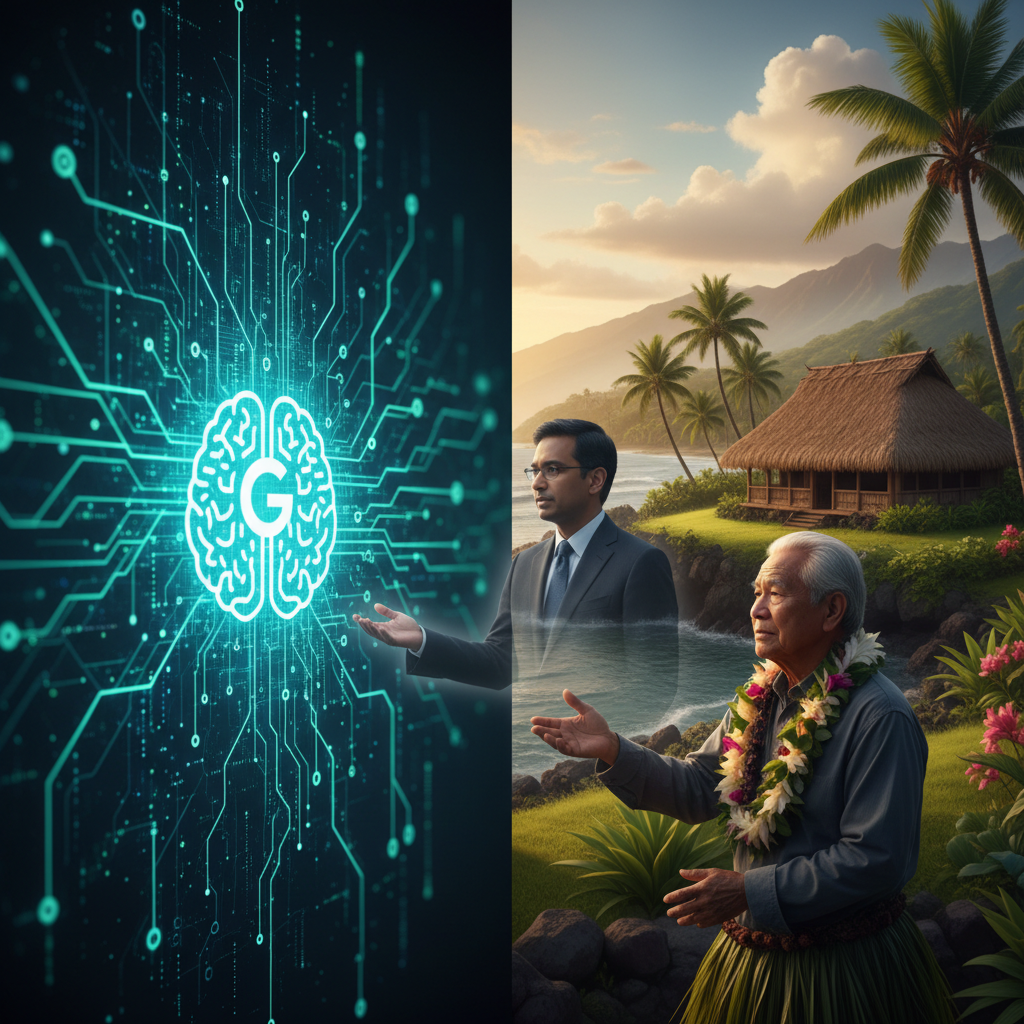
Let me tell you something, from my vantage point here in the middle of the Pacific, looking out at the vast ocean, I often think about the unseen forces that shape our world. We talk a lot about AI, about algorithms and data, but what if the most powerful AI isn't about predicting market trends or generating pretty pictures, but about unlocking the fundamental building blocks of life itself? That's what's happening right now with AI protein folding, and if you're not paying attention, you're missing the biggest story of our decade, not just this quarter.
The Headline Development: Life's Blueprint Unlocked by Algorithms
Just a few years ago, predicting how a protein would fold from its linear amino acid sequence was considered one of biology's grand challenges. It was a problem so complex, so computationally intensive, that it stumped even the brightest minds for half a century. Then came AlphaFold, a program developed by Google's DeepMind, and suddenly, the impossible became routine. This isn't just an incremental improvement, it's a seismic shift. AlphaFold, and now its successors like AlphaFold 3, can predict the 3D structures of proteins with astonishing accuracy, often rivaling experimental methods. Think about that for a moment. We're talking about the molecular machines that underpin every biological process, from digestion to disease. This breakthrough is accelerating drug discovery at a pace previously unimaginable, and it is opening up entirely new avenues in materials science, allowing us to design molecules with bespoke properties.
Why Most People Are Ignoring It: The Invisible Revolution
I get it, protein folding isn't as flashy as a new AI chatbot that can write poetry or an autonomous vehicle navigating city streets. It doesn't have the immediate, tangible wow factor that captures headlines and social media feeds. The average person doesn't wake up thinking about amino acid sequences. This is a quiet revolution, happening in labs and on supercomputers, far from the daily news cycle. The language is technical, the implications seem abstract, and the immediate impact isn't always obvious. It's easy to dismiss it as 'just science' or 'something for the experts.' But that's precisely why we need to talk about it, because while you're busy scrolling through the latest AI art, the very foundations of medicine and industry are being rewritten.
How It Affects YOU: A Healthier Future, or Unforeseen Risks?
So, how does a complex scientific breakthrough in protein folding affect you, sitting there reading this? Directly, profoundly, and in ways you might not even realize yet. Imagine a future where the drugs for currently incurable diseases are designed in months, not decades. AI protein folding is already slashing the time and cost for identifying potential drug candidates. This means faster development of treatments for cancers, Alzheimer's, infectious diseases, and even rare genetic disorders that affect only a handful of people globally. For us here in Hawaii, with our unique genetic diversity and susceptibility to certain diseases, this could be life changing. We could see personalized medicines tailored to our specific genetic makeup, moving beyond a one-size-fits-all approach.
But it's not just about medicine. Think about new materials: stronger, lighter alloys for aerospace, biodegradable plastics that don't choke our oceans, enzymes that can break down pollutants, or even more efficient solar cells. These are all within reach because we can now design proteins to do specific jobs. Your next car could be made with materials designed by AI, your clothes could be woven from bio-engineered fibers, and the air you breathe could be cleaner thanks to AI-designed enzymes. The future is being built on volcanic rock, and these molecular blueprints are the foundational elements.
The Bigger Picture: Sovereignty, Equity, and the Pacific Corridor
This technology isn't just a scientific marvel, it carries immense societal, economic, and even geopolitical implications. The nations and corporations that master AI protein folding will hold significant power over global health and industrial innovation. This raises critical questions about access and equity. Will these life-saving drugs and revolutionary materials be available to everyone, or will they exacerbate existing inequalities? For island nations and indigenous communities, the stakes are particularly high. We must ensure that the benefits of this technology reach all corners of the globe, not just the wealthy few. Aloha means more than hello because it's a framework for ethical AI, demanding that we consider the well-being of all, not just profit margins.
Economically, this creates a new frontier. Companies like Google DeepMind, NVIDIA with its powerful GPUs, and pharmaceutical giants are pouring billions into this space. We're seeing a new kind of 'gold rush,' but instead of physical resources, it's about intellectual property and molecular mastery. Hawaii sits at the crossroads of Pacific and Silicon Valley, and we have a unique opportunity to contribute to and benefit from this new bio-economy, perhaps by focusing on marine bioprospecting or sustainable materials tailored for our island environment.
What Experts Are Saying: A Glimpse into Tomorrow
"The speed at which AI is deciphering protein structures is nothing short of miraculous," says Dr. Leilani Kahele, Director of the Pacific Bio-Innovation Institute in Honolulu. "We're moving from discovery to design, creating novel proteins for specific therapeutic targets. This will fundamentally alter how we approach disease, from infectious agents to chronic conditions. The ethical considerations around access and intellectual property are paramount, and we must address them proactively."
Dr. Kenji Tanaka, a lead researcher at the University of Tokyo's AI for Materials Science Lab, emphasizes the industrial impact. "We are no longer limited by what nature provides. We can engineer enzymes for industrial processes, develop self-healing materials, and even create entirely new forms of sustainable energy capture. The implications for reducing our carbon footprint and developing a circular economy are enormous." You can read more about these advancements on MIT Technology Review.
Meanwhile, Dr. David Chen, a senior scientist at a major pharmaceutical company, who asked not to be named due to company policy, shared, "Our drug pipeline has accelerated by an estimated 30% in the last two years alone, directly attributable to AI protein prediction tools. The cost savings are substantial, allowing us to pursue targets that were previously deemed too expensive or complex. This is not just theoretical anymore, it's impacting our bottom line and, more importantly, the lives of patients." For more on the business side of AI, check out Reuters Technology.
What You Can Do About It: Engage and Innovate
So, what can you, a concerned citizen, do? First, educate yourself. Understand that this isn't just abstract science, it's shaping your future. Support research and development in your local communities, especially those focused on ethical AI and equitable access. Advocate for policies that ensure these breakthroughs benefit all of humanity, not just a privileged few. If you're in education, encourage young people to pursue careers in bioinformatics, AI, and biotechnology. We need diverse voices at the table, especially those from indigenous communities, to guide the responsible deployment of such powerful tools. Consider the importance of data sovereignty and indigenous data rights in this new era of biological understanding.
For those of us in the Pacific, this is an invitation to innovate. Our unique biodiversity, our deep understanding of sustainable living, and our position as a bridge between East and West, give us a distinct perspective. We can lead in developing bio-materials that are truly regenerative, or in discovering novel compounds from our rich marine ecosystems, accelerated by AI. This isn't just about consuming technology, it's about creating it responsibly.
The Bottom Line: A Decade of Transformation
In five years, the landscape of medicine, materials, and even agriculture will be unrecognizable because of AI protein folding. We will see drugs on the market that were conceived and developed in record time, materials that are stronger, lighter, and more sustainable, and perhaps even entirely new industries built on bio-engineered solutions. The companies that invested early, like Google's DeepMind and NVIDIA, will have cemented their positions as foundational players in this new era. But the real winners will be humanity, if we choose to wield this power with wisdom and aloha. The choice, as always, is ours. The molecular revolution is here, and it demands our attention, our foresight, and our collective conscience. If you want to keep up with the latest, I recommend following TechCrunch's AI section.