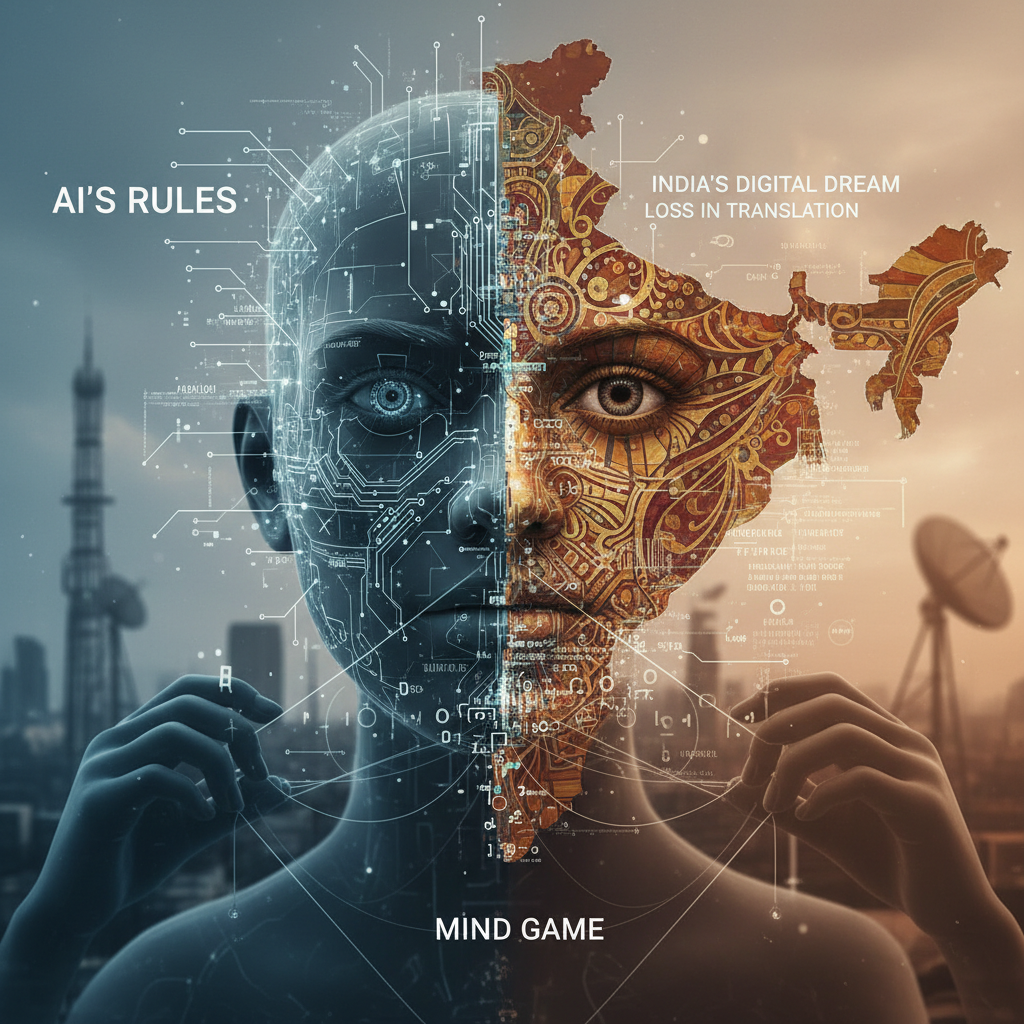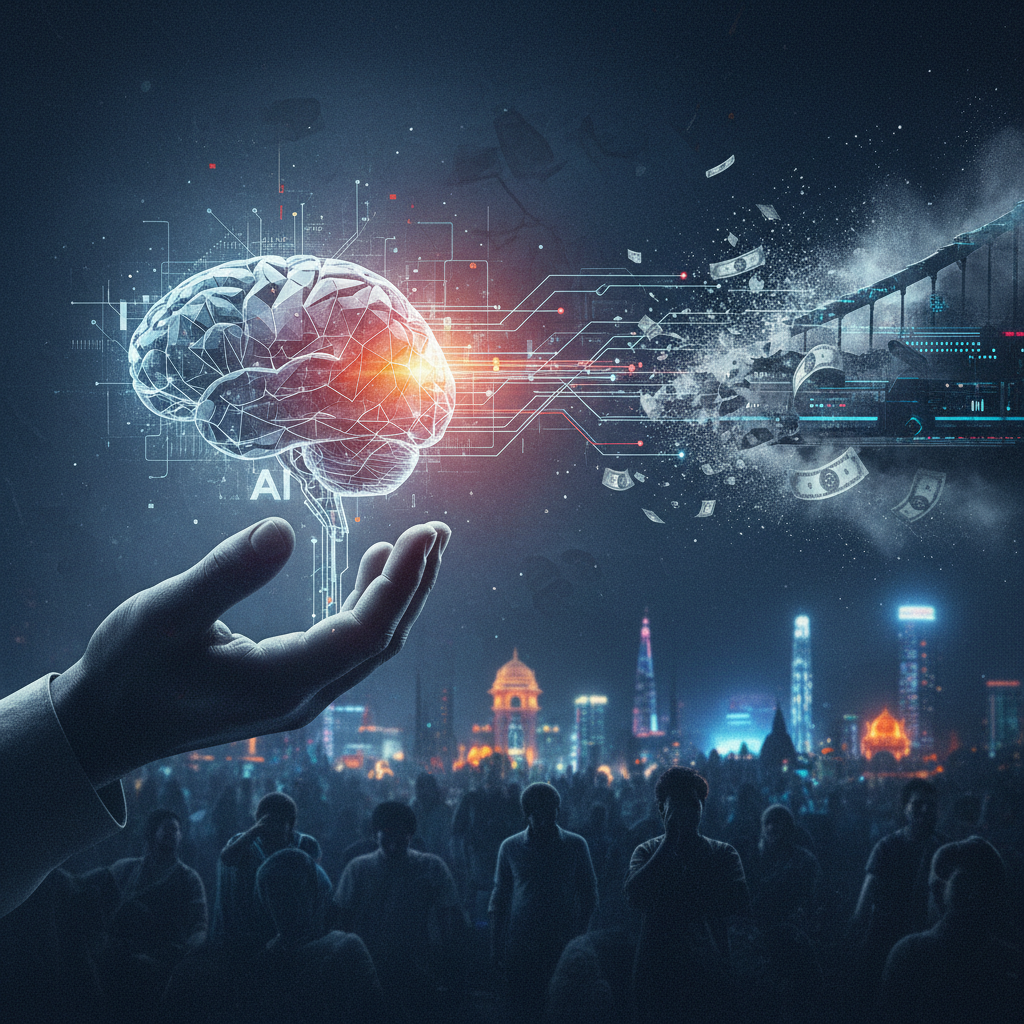

The aroma of freshly brewed chai still lingers in the air as the morning sun paints the bustling streets of Bengaluru, a city often called India's Silicon Valley. Here, amidst the hum of innovation and the dreams of a digital future, a quiet anxiety has begun to settle, a feeling many struggle to articulate. It is a feeling born from headlines that seem to contradict themselves, like a riddle without an answer: Google, a titan of technology, laying off thousands of employees globally, while simultaneously pouring billions, yes, billions, into new AI data centers and research.
This isn't just a corporate strategy; it is a human story, unfolding in homes from Hyderabad to Gurugram. I have spoken with many, and the sentiment is palpable. "How can they say we are not needed, when they are building so much for the future?" asked Priya Sharma, a software engineer who, until recently, worked for a major tech firm and now finds herself navigating an uncertain job market. Her voice carried a mix of bewilderment and a touch of betrayal. This story will change how you think about the human cost of technological advancement.
The cognitive dissonance created by these actions is profound. On one hand, we are told that AI will augment human capabilities, create new industries, and solve complex problems. On the other, we see the very companies championing this future making decisions that displace human workers. For many in India, where a stable job in a global tech company is often seen as a golden ticket, this paradox is deeply unsettling. It challenges our fundamental understanding of progress and security.
Psychologically, this phenomenon taps into primal fears about relevance and survival. Dr. Anjali Rao, a social psychologist based in Mumbai, explained it beautifully during our conversation. "Humans crave predictability and a sense of purpose," she told me. "When a company like Google, which represents the pinnacle of modern employment, announces mass layoffs while simultaneously investing heavily in AI, it sends a powerful, albeit unintended, message: 'You are replaceable, and the machines are coming.' This can lead to what we call 'future anxiety' or 'technological displacement stress.' People start questioning their skills, their value, and their long-term career prospects, even if their current job is secure." She further elaborated, "It is not just about the direct impact on those laid off; it is about the pervasive fear it instills in those who remain, and in the broader workforce looking towards the tech sector for employment."
Indeed, the numbers are stark. While precise figures for Google's AI investments are often guarded, public reports indicate expenditures in the tens of billions of dollars on AI research, infrastructure, and data centers in recent years. For instance, Alphabet, Google's parent company, has consistently highlighted its significant capital expenditures, much of which is directed towards AI and cloud computing infrastructure. Meanwhile, Google has undertaken multiple rounds of layoffs since late 2022, impacting thousands of employees across various departments globally. This juxtaposition is not lost on the public.
The societal implications in India are particularly acute. Our nation has long prided itself on its vast pool of skilled IT professionals, a demographic dividend that has powered the global tech industry for decades. The narrative of a booming tech sector providing upward mobility for millions is deeply ingrained. When that narrative is challenged by the actions of giants like Google, it creates a crisis of confidence. Young graduates, who once aspired to join these very companies, now face a landscape where the rules seem to be shifting beneath their feet. The traditional career paths, once clear and promising, now appear fraught with uncertainty.
This isn't to say AI is inherently bad, or that technological progress should halt. Far from it. But the manner in which these transitions are managed, and the transparency with which they are communicated, profoundly impacts human psychology. "We need to foster a culture of continuous learning and adaptability," said Nandan Nilekani, co-founder of Infosys and a prominent figure in India's tech landscape, in a recent interview. "The nature of work is changing, and we must equip our workforce with the skills to thrive in an AI-driven economy, not just fear it." His words resonate deeply, emphasizing the need for proactive measures rather than reactive panic.
What can we, as individuals and as a society, do to navigate this evolving landscape? Firstly, acknowledging these anxieties is crucial. It is okay to feel uncertain. Secondly, focusing on skills that are uniquely human, such as creativity, critical thinking, emotional intelligence, and complex problem-solving, becomes paramount. These are areas where AI still has significant limitations. Thirdly, lifelong learning is no longer a luxury but a necessity. Platforms offering upskilling in AI, data science, and other emerging technologies are seeing a surge in enrollment, a testament to people's desire to adapt. For instance, many Indian universities and private institutions are now offering specialized courses in AI and machine learning, recognizing the shift in demand. According to MIT Technology Review, the global push for AI literacy is accelerating, and India is very much a part of this movement.
Finally, and perhaps most importantly, we must demand greater ethical consideration from tech leaders. The pursuit of technological advancement should not come at the expense of human dignity and well-being. Companies have a responsibility not just to their shareholders, but to their employees and the communities they operate within. The decisions made in boardrooms in California have real, tangible impacts on families in Chennai and Pune. This is not just about profit margins; it is about people.
The paradox of Google's billions and its layoffs serves as a potent reminder that technology, while powerful, is ultimately a tool. Its impact is shaped by human choices. As we stand at the precipice of an AI-driven future, we must ensure that our pursuit of innovation is tempered with empathy, foresight, and a deep understanding of the human heart. Otherwise, the sparkle of AI might just dim the light in the eyes of those who once dreamed of a brighter future in tech. From Gujarat's diamond district, where AI sparkles differently in optimizing cuts and designs, to the bustling tech hubs, the lesson remains the same: technology must serve humanity, not the other way around. The conversation about AI's role in our lives is far from over, and it is one we must continue with open hearts and minds. For more insights into the broader impact of AI on labor, you might find this article on Google and Amazon facing a new labor front [blocked] relevant. For a global perspective on AI's business implications, Reuters Technology offers continuous updates.