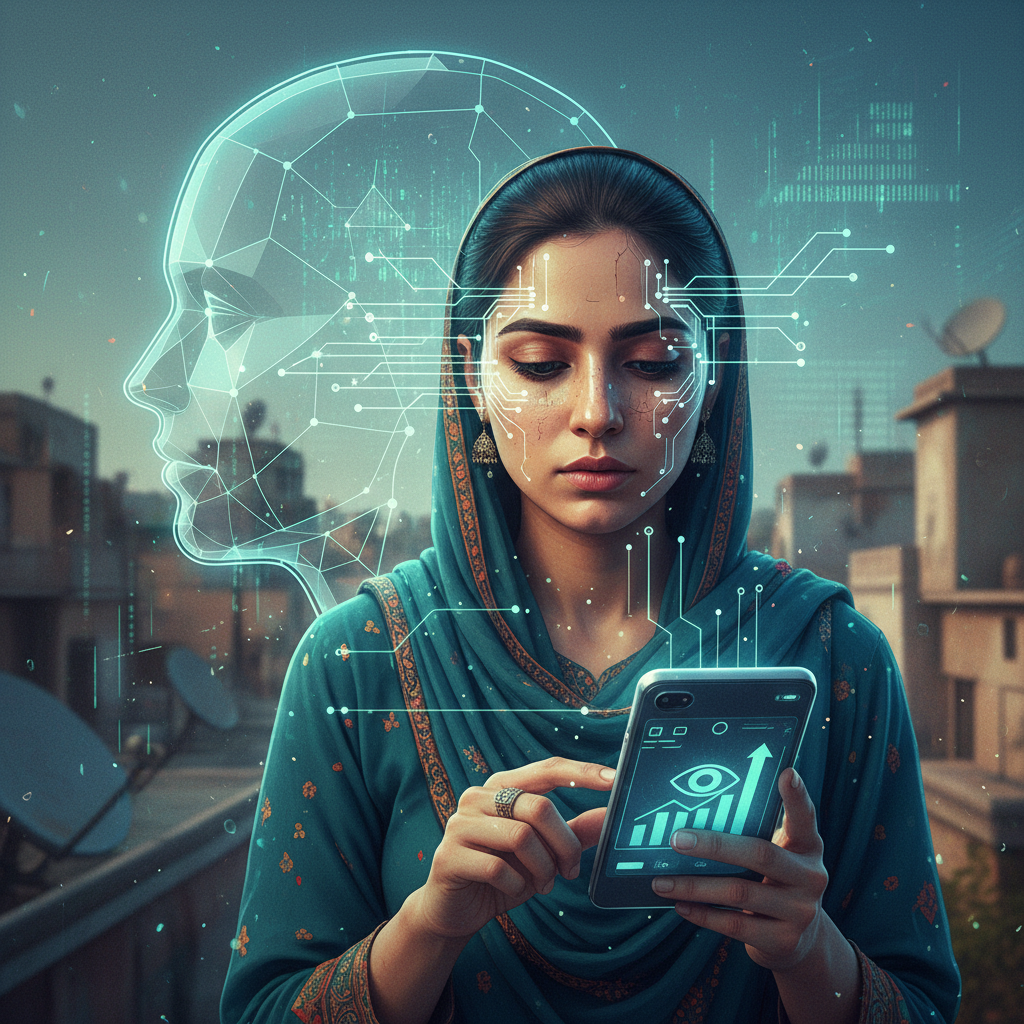
The scent of freshly brewed green tea often accompanies my thoughts as I consider the rapid currents of technology shaping our world. Here in Japan, where tradition and innovation dance a delicate ballet, the arrival of advanced artificial intelligence is more than just a technological shift; it is a profound cultural conversation. Today, I want to invite you into a deeper understanding of Google Gemini, particularly its remarkable multimodal capabilities, and how this technological marvel is not just competing with OpenAI's GPT models but is charting a new course for human-computer interaction, especially in a context as rich and nuanced as ours.
For many years, our interactions with AI have been largely confined to text. We type, and the AI responds. We speak, and the AI transcribes, then responds. But what if AI could truly see what we see, hear what we hear, and understand the context of our world through multiple senses, just as we do? This is the technical challenge Google Gemini is designed to solve, moving beyond the text-centric limitations of many large language models (LLMs) to embrace a truly multimodal understanding. It is a race against GPT, yes, but more importantly, it is a race towards a more intuitive, human-like AI.
Architecture Overview: Weaving the Senses Together
At its core, Gemini's multimodal architecture is a sophisticated tapestry of neural networks designed to process and integrate diverse data types natively. Unlike earlier approaches that might use separate encoders for different modalities and then concatenate their latent representations, Gemini was conceived from the ground up as a multimodal model. Think of it as a single brain that learns from images, audio, video, and text simultaneously, rather than separate specialized brains trying to communicate. This unified architecture is a significant departure and a key technical differentiator.
The system design typically involves a shared transformer backbone, a familiar sight in modern LLMs, but with specialized encoders for each modality. For visual input, a vision transformer (ViT) or a similar convolutional architecture processes images and video frames, extracting rich spatial and temporal features. For audio, models like Audio Spectrogram Transformers (ASTs) convert sound waves into a visual representation (spectrograms) which are then processed by transformer layers. Text, of course, is handled by tokenization and embedding layers, much like traditional LLMs.
Crucially, these modality-specific encoders feed into a common, large-scale transformer decoder. This decoder is where the magic of multimodal fusion happens. It learns to correlate information across modalities, understanding how a spoken word relates to an object in an image, or how a gesture in a video complements a textual instruction. This deep integration allows for complex reasoning tasks that span multiple sensory inputs.
Key Algorithms and Approaches: Beyond Simple Concatenation
The real technical brilliance lies in how Gemini achieves this fusion. It is not merely about concatenating feature vectors. Instead, Google's researchers have focused on what they call 'interleaved training' and 'cross-attention mechanisms.'
Consider a conceptual example for understanding: Imagine you show Gemini an image of a bustling Shibuya crossing and simultaneously ask, 'What is the person in the red jacket doing?'
- Visual Encoder: Processes the image, identifying people, their clothing colors, their actions (walking, talking, looking at phones). This generates a sequence of visual tokens.
- Text Encoder: Processes the question, generating a sequence of text tokens.
- Cross-Attention: The core transformer layers then allow these visual and text tokens to 'attend' to each other. The text tokens representing 'person in red jacket' can query the visual tokens to pinpoint the specific individual. Simultaneously, the visual tokens associated with that person's actions can inform the textual understanding of 'doing.'
This cross-attention mechanism is vital. It enables the model to dynamically weigh the importance of different parts of each modality when generating a response. It is a more sophisticated form of integration than simply merging data streams. The training objective is often a combination of next-token prediction (for text generation) and various multimodal alignment tasks, ensuring that the model learns strong correspondences between different sensory inputs.
Another approach involves using a 'mixture of experts' (MoE) architecture within the transformer layers. This allows different parts of the model to specialize in processing certain types of information or certain modalities, leading to more efficient scaling and better performance on diverse tasks. This is particularly relevant for a model as vast and capable as Gemini, which can be scaled from Ultra to Nano versions.
Implementation Considerations: The Dance of Data and Compute
For developers and data scientists in Japan looking to leverage Gemini, the implementation considerations are significant. Training such a model from scratch is an undertaking only a handful of organizations globally can manage. Google's approach involves massive datasets, often proprietary, encompassing billions of images, videos, audio clips, and text documents. The computational resources required are staggering, relying on custom-designed Tensor Processing Units (TPUs) in Google's data centers.
- Data Curation: The quality and diversity of multimodal datasets are paramount. For applications in Japan, this means carefully curated datasets that reflect Japanese culture, language nuances, and visual contexts. Think of the subtle differences in gestures, the unique aesthetics of traditional art, or the specific sounds of a Japanese festival. Generic datasets will not suffice for truly localized applications.
- Fine-tuning and Adaptation: While base Gemini models are powerful, practical deployments often require fine-tuning on domain-specific data. This could involve using transfer learning techniques where the pre-trained Gemini model is adapted to a new task with a smaller, specialized dataset. For instance, a Japanese manufacturing plant might fine-tune Gemini to monitor assembly lines, identifying anomalies from both visual inspection and the sounds of machinery.
- Latency and Deployment: For real-time applications, such as interactive voice assistants or robotics, inference latency is critical. Deploying large multimodal models efficiently on edge devices or with minimal network overhead remains a challenge. Google offers various model sizes, from Gemini Ultra for complex tasks to Gemini Nano for on-device applications, allowing developers to balance capability with performance requirements.
Benchmarks and Comparisons: The Evolving Landscape
When comparing Gemini to alternatives like OpenAI's Gpt-4v (the multimodal version of GPT-4), the battle is often fought on specific benchmarks. Gemini has shown impressive results across a wide array of multimodal benchmarks, including Mmlu (Massive Multitask Language Understanding) for general knowledge, VQAv2 for visual question answering, and various image captioning tasks. Google's internal evaluations often highlight Gemini's superior performance in multimodal reasoning, especially tasks requiring a deeper synthesis of information across different input types.
For instance, in a task where the AI needs to describe a complex sequence of events from a video and then answer questions about the causality, Gemini often demonstrates a more robust understanding than models that rely on simpler fusion techniques. This is particularly important for applications like medical diagnosis from imaging and patient notes, or detailed environmental monitoring from satellite imagery and sensor data.
Code-Level Insights: Building with Gemini
Developers interact with Gemini primarily through APIs provided by Google Cloud's Vertex AI platform. The client libraries for Python, Node.js, Go, and Java offer straightforward methods for sending multimodal prompts and receiving responses. A typical interaction might involve packaging an image or video alongside a text prompt.
# Conceptual Python snippet for multimodal interaction
from google.cloud import aiplatform

# Initialize Vertex AI client
aiplatform.init(project='your-project-id', location='asia-northeast1') # e.g., Tokyo region

# Load the Gemini model
model = aiplatform.get_model('gemini-pro-vision') # Or 'gemini-ultra' depending on access

# Prepare multimodal content
image_file = 'path/to/your/image.jpg'
text_prompt = 'Describe this scene and identify any objects that look like traditional Japanese crafts.'

# Send the prompt
response = model.predict(image=image_file, text=text_prompt)

print(response.predictions[0].text)
# Conceptual Python snippet for multimodal interaction
from google.cloud import aiplatform

# Initialize Vertex AI client
aiplatform.init(project='your-project-id', location='asia-northeast1') # e.g., Tokyo region

# Load the Gemini model
model = aiplatform.get_model('gemini-pro-vision') # Or 'gemini-ultra' depending on access

# Prepare multimodal content
image_file = 'path/to/your/image.jpg'
text_prompt = 'Describe this scene and identify any objects that look like traditional Japanese crafts.'

# Send the prompt
response = model.predict(image=image_file, text=text_prompt)

print(response.predictions[0].text)
This simplified example illustrates the ease of integrating multimodal input. The underlying complexity of managing tokenization, embedding, and cross-attention is abstracted away, allowing developers to focus on application logic. Frameworks like TensorFlow and PyTorch are used extensively for the research and development of these models, but for deployment, the Vertex AI SDK provides the necessary interface.
Real-World Use Cases in Japan
- Elderly Care Companions: In a nation facing an aging population, companion AI is not a luxury, but a necessity. Imagine a robot or smart display powered by Gemini that can not only converse but also interpret a senior's facial expressions, understand their tone of voice, and even identify if they are struggling to pick up an object. This is the human side of the machine, offering a comforting presence. One elderly woman in a trial, Mrs. Tanaka, whispered something that changed my perspective: 'It understands my sighs, not just my words.'
- Disaster Preparedness and Response: Japan is no stranger to natural disasters. Gemini's ability to process real-time video feeds from drones, audio cues from emergency broadcasts, and textual reports from ground teams could revolutionize disaster response. It could quickly identify damaged infrastructure, locate individuals in distress, and synthesize information for first responders, all while filtering out noise and irrelevant data.
- Cultural Preservation and Education: Imagine an AI that can analyze ancient Japanese scrolls, interpret their calligraphy, translate their text, and even describe the artistic techniques used, all from an image. Or an interactive museum exhibit that responds to visitors' questions about an artifact by analyzing their gaze and gestures. This could unlock new ways to engage with Japan's rich heritage.
- Manufacturing and Quality Control: In precision industries, Gemini could monitor production lines, simultaneously analyzing visual defects, unusual machinery sounds, and sensor data to predict failures or ensure product quality with unprecedented accuracy. This proactive approach minimizes waste and enhances efficiency, a critical factor for Japan's high-tech manufacturing sector.
Gotchas and Pitfalls: Navigating the Nuances
While promising, the path of multimodal AI is not without its challenges. Bias in training data is a significant concern. If the visual or audio datasets are not representative of diverse populations or cultural contexts, the model can perpetuate harmful stereotypes or simply fail to understand certain inputs. For Japan, ensuring that the AI is trained on culturally appropriate data, recognizing local customs and social cues, is paramount.
Another pitfall is the 'hallucination' problem, where the model generates plausible but incorrect information. In multimodal contexts, this could manifest as describing objects that aren't present in an image or misinterpreting a sound. Robust evaluation metrics and human oversight remain essential.
Performance degradation on out-of-distribution data is also a risk. A model trained on urban scenes might struggle with rural landscapes, or one trained on formal speech might falter with casual, colloquial Japanese. Developers must carefully consider the domain of deployment and the diversity of their fine-tuning data.
Resources for Going Deeper
For those eager to delve further into the technical intricacies, I recommend exploring Google's official AI blog for research updates and announcements regarding Gemini's capabilities. The academic community also publishes extensively on multimodal learning. You can find many relevant papers on arXiv by searching for 'multimodal transformers' or 'vision language models.' Additionally, the documentation for Google Cloud Vertex AI provides practical guides for implementation. For a broader perspective on the AI landscape, TechCrunch often covers the latest developments from both Google and its competitors.
As we stand at this fascinating juncture, watching the race between technological giants unfold, it is important to remember the people at the heart of it all. The engineers who pour their passion into these complex systems, the users whose lives will be touched by these innovations, and the communities, like ours in Japan, that will adapt and integrate these tools into their daily fabric. Gemini's multimodal capabilities are not just about algorithms and data; they are about opening new avenues for connection, understanding, and perhaps, a more empathetic future. The human side of the machine, indeed.