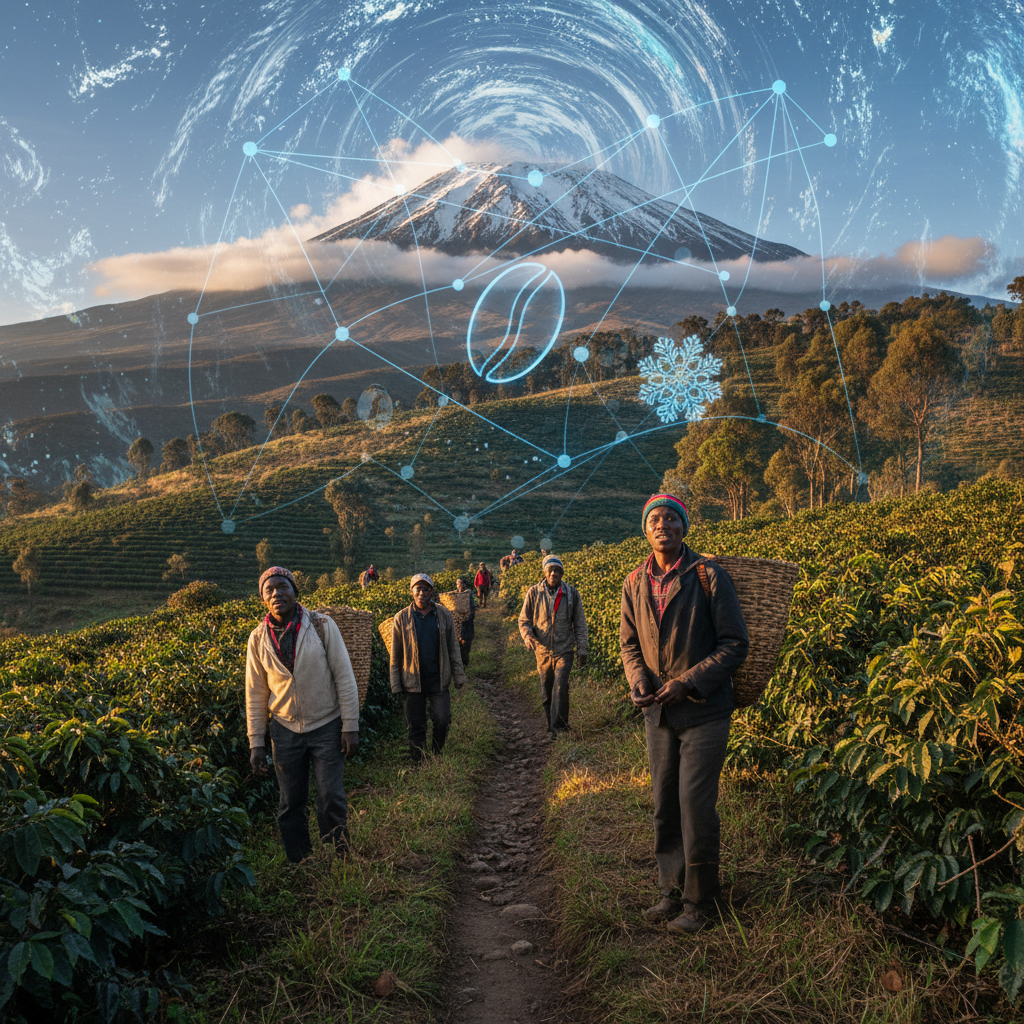

The air in Moshi, at the foot of Kilimanjaro, used to carry the scent of predictable seasons. Long rains, short rains, dry spells, all part of a rhythm our ancestors understood in their bones. But lately, that rhythm has been off-key, a discordant symphony of droughts where there should be deluge, and flash floods where we once expected a gentle drizzle. It's enough to make a farmer, or even a journalist, wonder if the world has gone mad.
Now, the tech giants are swooping in with their latest magic trick: AI-powered climate modeling. Specifically, Google DeepMind's GraphCast has been making waves, boasting forecast accuracy that reportedly blows traditional meteorological models out of the water. They say it can predict weather patterns up to ten days out with a precision that was unthinkable just a few years ago. For us in East Africa, where a late rain or an unexpected storm can mean the difference between a bountiful harvest and utter ruin, this isn't just news, it's a potential lifeline. Or, perhaps, another layer of complexity to an already complex existence.
I’ve seen enough tech hype to know that a healthy dose of skepticism is as essential as a good cup of Tanzanian coffee. Remember the blockchain craze that was supposed to revolutionize everything from land titles to my grandmother's goat trade? Exactly. So, when I hear about AI predicting the whims of the weather gods, my eyebrow does a little dance of its own.
Yet, the data coming out of these models is compelling. GraphCast, for example, uses neural networks trained on decades of reanalysis data, essentially learning the complex physics of the atmosphere without being explicitly programmed with those equations. It's like teaching a child to ride a bicycle by showing them thousands of videos of people cycling, rather than explaining the laws of motion. And apparently, this child is a prodigy. The European Centre for Medium-Range Weather Forecasts (ecmwf), a venerable institution, has even acknowledged GraphCast's superior performance in some key metrics. You can't make this stuff up, folks, the old guard is admitting the new kid on the block is better.
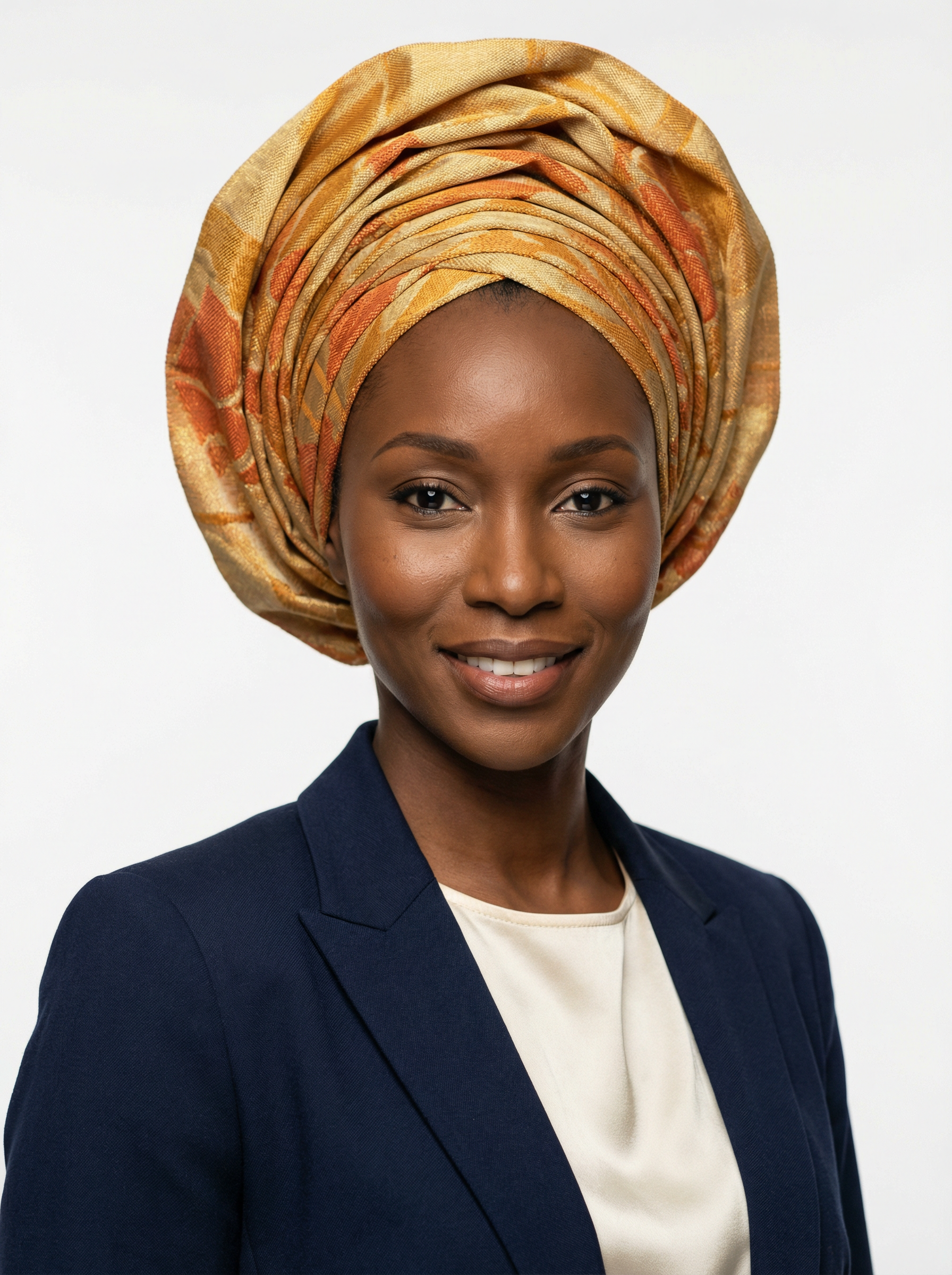
“The potential for these AI models to provide earlier, more accurate warnings for extreme weather events is transformative for regions like ours,” explains Dr. Imani Kijani, Director of the Tanzania Meteorological Authority (TMA). We met over a lukewarm Fanta in her bustling Dar es Salaam office. “Imagine knowing with high confidence that a cyclone is heading towards our coast five days out, not just two. That extra time allows for evacuations, securing infrastructure, protecting lives. It’s a game changer for disaster preparedness.” Dr. Kijani, a woman who has seen more weather models than most people have seen clouds, spoke with a cautious optimism that I found refreshing. She added, “Our traditional models are good, but they are computationally intensive and often struggle with the nuances of tropical weather systems. AI learns these patterns differently.”
Indeed, the traditional numerical weather prediction (NWP) models rely on supercomputers crunching billions of equations derived from atmospheric physics. They are powerful, but also incredibly slow and resource-hungry. AI models, once trained, can generate forecasts in minutes on far less powerful hardware. This speed is critical when a storm is brewing and every hour counts. According to a recent report by the World Meteorological Organization, improved early warning systems, even by just 24 hours, could reduce damages by up to 30% in developing nations. That's a lot of shillings saved, a lot of lives protected.
But here’s where my Tanzanian skepticism kicks in. Our weather isn't just about global patterns; it's about local topography, microclimates, and the subtle interactions of land and sea. Kilimanjaro creates its own weather, as does the Great Rift Valley. Can a global AI model truly capture the specific nuances of a sudden downpour in the Usambara Mountains, or the precise timing of the vuli rains in the Southern Highlands? It’s one thing to predict a hurricane in the Atlantic, quite another to pinpoint a localized drought affecting a specific maize crop near Lake Eyasi.
“We are still in the early stages of integrating these advanced AI models with our local expertise,” says Professor Juma Mchunga, a climate scientist at the University of Dar es Salaam. “The global models provide an excellent baseline, but ground-truthing and local calibration are absolutely essential. An AI trained on European or American data might miss subtle indicators that our local meteorologists, who have lived and breathed this climate for decades, would instantly recognize.” He paused, stirring his tea. “The biggest challenge isn't the AI itself, but ensuring equitable access to its capabilities and integrating it into actionable local strategies.” Professor Mchunga hit on a crucial point: technology is only as good as its application. What good is a perfect forecast if the people who need it most can't access it, or don't trust it?
This isn't just about predicting the weather; it's about predicting the future of our food security, our infrastructure, and our very way of life. The coffee farmers on the slopes of Kilimanjaro, the fishermen on Lake Victoria, the Maasai pastoralists in the plains, their livelihoods are inextricably linked to the climate. If AI can genuinely give them a better heads-up, then it's worth every bit of the hype. But it has to be more than just a fancy algorithm; it has to be a tool that empowers, not just informs.
Consider the economic impact. A 2023 study by the African Development Bank estimated that climate change could cost East Africa up to 5% of its GDP annually by 2030 if mitigation and adaptation efforts are not significantly scaled up. Better climate modeling, leading to better preparedness, could shave a significant chunk off that figure. This isn't just about saving lives, it's about preserving economies and preventing mass displacement.
Of course, there’s always the human element. Even with perfect forecasts, will people listen? Will governments act? In a region where traditional wisdom often clashes with scientific predictions, building trust is paramount. “It’s not enough to just deliver a forecast,” states Ms. Asha Njau, a community organizer in Morogoro, whose village was devastated by floods last year. “We need clear, actionable advice, delivered in a way that people understand and trust. And we need the resources to act on that advice. A warning without support is just another worry.” Her words echoed the sentiment of many I spoke with; the technology is only one piece of a much larger puzzle.
So, as Google DeepMind continues to refine GraphCast and other AI models, and as other players like NVIDIA push their own climate simulation capabilities, the world watches. For us in Tanzania, we are watching with particular interest, a blend of hope and healthy skepticism. Will these AI models truly be the guardians of our seasons, helping us navigate the increasingly turbulent waters of climate change? Or will they be another impressive technological marvel that struggles to translate into tangible benefits on the ground, another Silicon Valley solution looking for a problem it can actually solve in our context? Welcome to the future, because it's weird, and it's coming whether our rains are predictable or not. The stakes, my friends, couldn't be higher.
For more on how AI is shaping our world, check out DataGlobal Hub's AI section [blocked]. You can also find broader discussions on technology's impact on society at Wired and the latest research at MIT Technology Review.