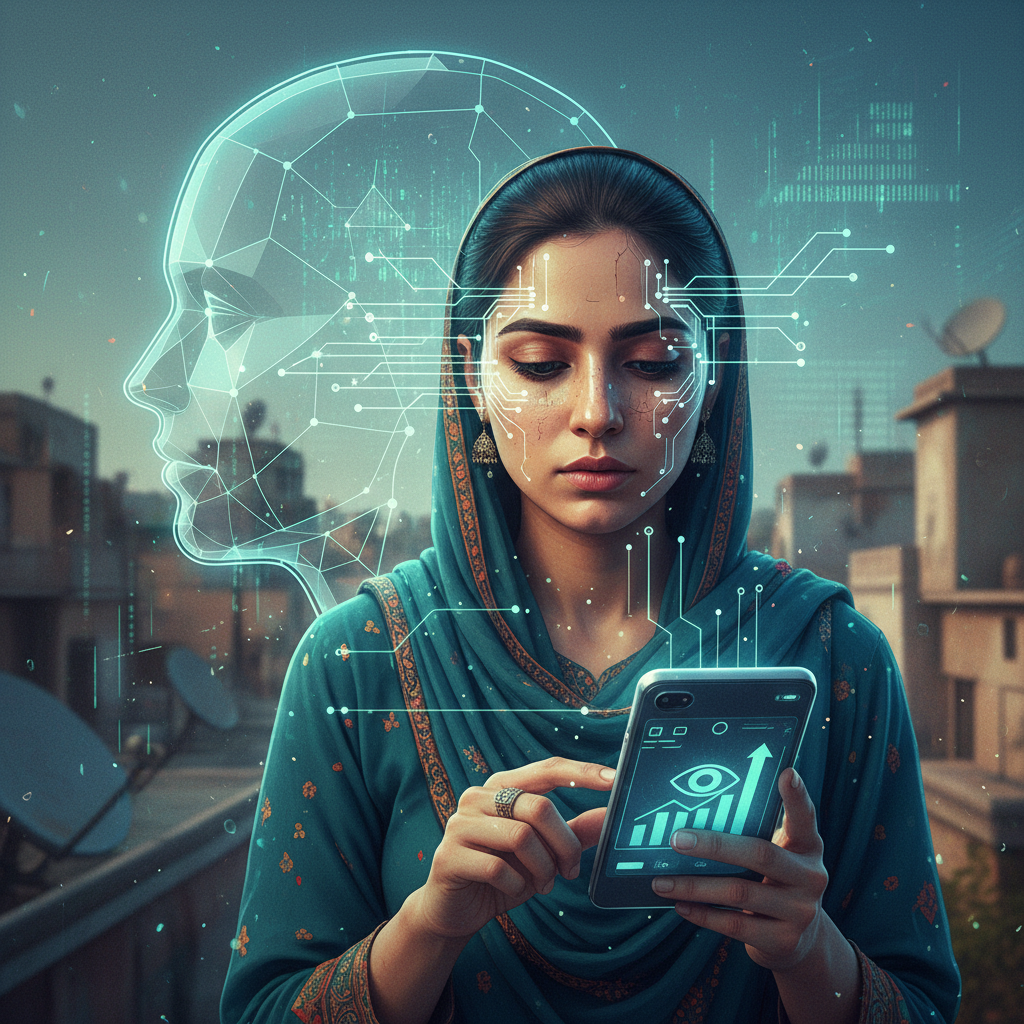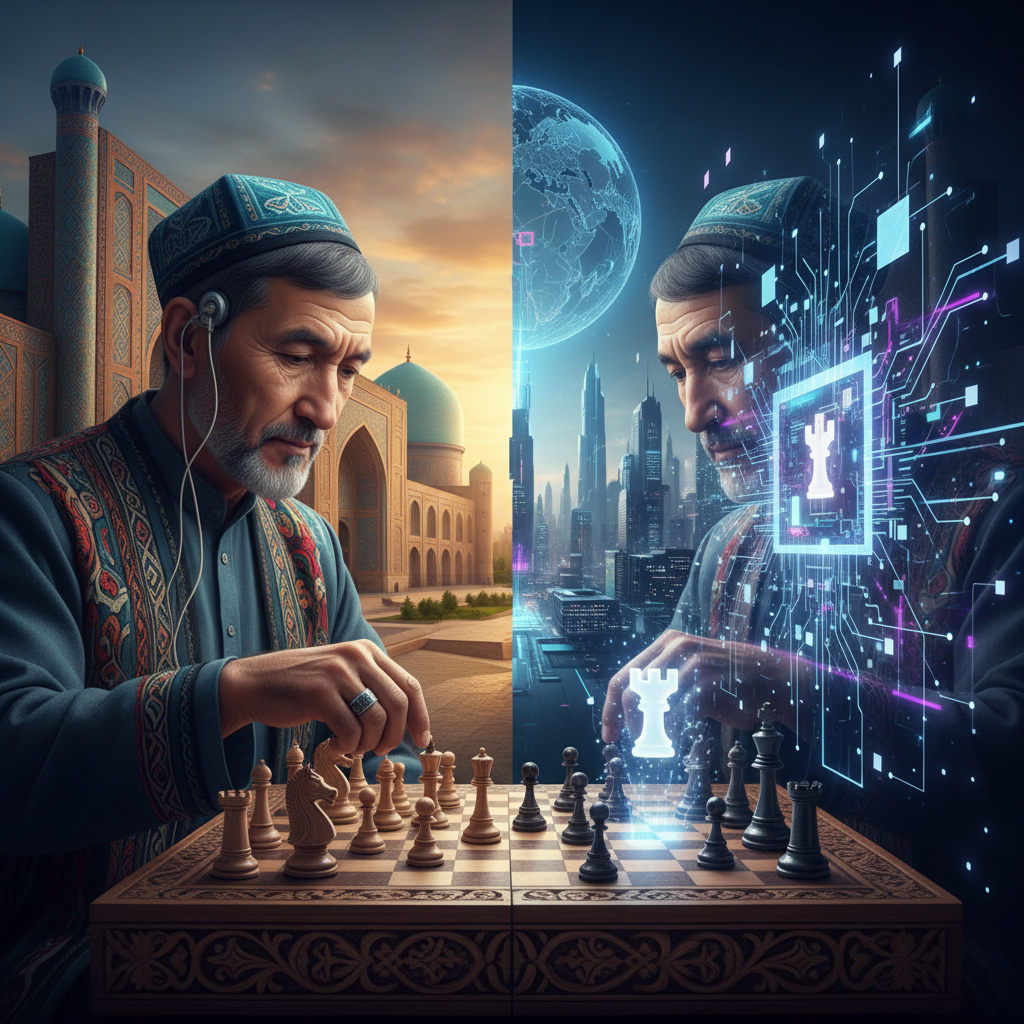

The air in the old chess club, tucked away near Chorsu Bazaar in Tashkent, always smells of strong tea, old wood, and intense concentration. Here, grandfathers teach their grandchildren the ancient game, their fingers tracing the worn paths of pawns and knights. It is a scene that has played out for centuries, a timeless ritual of human intellect. But today, something new is stirring in this familiar space, a quiet hum from the digital world that is subtly, yet profoundly, altering the very fabric of our thinking.
I recently watched a young boy, Timur, no older than ten, play a game against an AI chess application on his tablet. He was not playing a friend, nor his grandfather. He was challenging an algorithm, one that boasted a rating far beyond any human master. Timur, a bright-eyed child with a quick smile, told me he spends hours every day playing against this AI. “It teaches me new strategies, Bintà opa,” he explained, his eyes glued to the screen, “It never gets tired, and it always finds the best move.” This scene, repeated in countless homes and schools across Uzbekistan, is a microcosm of a much larger global phenomenon: the AI arms race.
We hear much about the competition between the US, China, and the EU for AI supremacy, about the billions poured into research by giants like Google DeepMind, OpenAI, and NVIDIA. We read about advanced large language models like GPT-5 and Claude 3, or sophisticated AI agents being developed by Meta. These are not just distant technological battles; their ripples reach our shores, influencing our daily lives in ways we are only beginning to understand. For us in Uzbekistan, a nation with a rich history of intellectual pursuits, especially in logic and strategy, the cognitive impact of interacting with advanced AI is particularly poignant.
Research from institutions like the Massachusetts Institute of Technology suggests that prolonged interaction with highly optimized AI systems, particularly in problem-solving domains, can lead to shifts in human cognitive patterns. One study, published recently, indicated that individuals who regularly trained against advanced AI in strategic games showed improved pattern recognition and computational speed, but also a potential decrease in intuitive decision-making and creative problem generation. It is as if the AI, in its pursuit of optimal solutions, subtly nudges our brains to mimic its own logical, rather than lateral, pathways.
“The human brain is incredibly adaptive, but also susceptible to its environment,” explains Dr. Gulnara Karimova, a cognitive psychologist at the National University of Uzbekistan. “When we consistently engage with an AI that operates on pure logic and data, our own cognitive processes can begin to internalize those patterns. For a child like Timur, who is still developing his cognitive framework, this exposure is a double-edged sword. He gains unparalleled analytical skills, but might lose some of the nuanced, 'human' elements of strategy that come from playing against another person, such as understanding bluffing, emotional resilience, or even the joy of an unexpected, imperfect move.” She showed me something remarkable in her research lab, a series of brain scans illustrating how different neural pathways activate when a subject plays against a human versus an AI. The differences were subtle yet significant, pointing to distinct cognitive engagements.
This phenomenon extends beyond chess. Consider the rise of AI-powered educational platforms, many developed by companies like Google or Microsoft, now being adopted in Uzbek schools. While these tools offer personalized learning paths and instant feedback, revolutionizing access to knowledge, they also present a psychological dilemma. Are students becoming overly reliant on AI for answers, potentially hindering their ability to grapple with ambiguity or to formulate questions independently? A recent report by Unesco highlighted that while AI in education can boost rote learning efficiency by up to 20 percent, it might also correlate with a 15 percent decrease in divergent thinking skills among young learners in certain contexts. This is Central Asia's best-kept secret, a quiet revolution in learning methods.
The broader societal implications are vast. As nations vie for AI supremacy, the focus is often on economic growth, military advantage, or scientific breakthroughs. But what about the human element, the psychological cost or benefit? If entire generations are being raised with AI as a constant companion, a tutor, a competitor, how will this shape our collective intelligence, our creativity, and our social bonds? Will we become more efficient problem-solvers, but less empathetic collaborators? Will the pursuit of AI perfection lead us to undervalue human imperfection, the very source of much art and innovation?
“The AI arms race is not just about who builds the fastest chip or the smartest algorithm, it is about who shapes the human mind of the future,” states Professor Alisher Saidov, a futurist and technology ethicist at the Tashkent University of Information Technologies. “When OpenAI or Anthropic release a new model, it is not just a piece of software; it is a new cognitive tool that will interact with billions of people. We need to critically examine how these interactions influence our decision-making, our sense of self, and our relationships. The stakes are incredibly high, far beyond just market share or geopolitical power.”
The competitive nature of AI development also fosters a culture of optimization, where efficiency and measurable outcomes are paramount. This mindset, pervasive in the tech hubs of Silicon Valley and Shenzhen, inevitably trickles down. We see it in the gamification of everyday tasks, the constant pursuit of 'likes' and 'shares' driven by social media algorithms from Meta and ByteDance, and the pressure to perform optimally in every aspect of life. This can lead to increased anxiety and a feeling of inadequacy when human performance inevitably falls short of AI's relentless perfection. According to a study by the Uzbek Institute of Mental Health, there has been a 12 percent increase in reported cases of 'digital burnout' among young professionals in Tashkent over the last two years, often linked to the relentless pace of digital interaction and the perceived need to keep up with AI-driven efficiency standards.
So, what can we do, as individuals and as a society, to navigate this complex landscape? We cannot, and should not, retreat from technological progress. But we can be mindful, intentional, and critical consumers of AI. Here are a few practical thoughts:
First, cultivate 'digital literacy' that goes beyond simply knowing how to use technology. It means understanding how AI works, its limitations, and its potential psychological effects. For parents, this means engaging with your children about their AI interactions, asking them not just what the AI taught them, but how it made them feel.
Second, prioritize human-to-human interaction. In a small office in Tashkent, a startup is developing AI to help preserve ancient Uzbek oral traditions, but their core philosophy emphasizes that AI is a tool to enhance human connection, not replace it. Make time for face-to-face conversations, for games played with real boards and real people, for the messy, unpredictable beauty of human interaction. Wired often explores the cultural impacts of technology, and this balance is key.
Third, demand transparency and ethical development from AI companies. Whether it is Google, Apple, or any emerging AI firm, we have a right to understand how these powerful tools are designed, what data they use, and what their intended and unintended consequences might be. This is especially crucial for emerging nations like Uzbekistan, which often become testing grounds for technologies developed elsewhere. We must ensure that our unique cultural values and cognitive well-being are considered, not just global market trends. Organizations like MIT Technology Review are at the forefront of these discussions, highlighting the need for ethical AI frameworks.
Finally, embrace the 'human advantage.' While AI excels at logic and computation, it still lacks true intuition, empathy, and the capacity for genuine creativity and abstract thought. These are our strengths, our unique contributions. Let us nurture them, celebrate them, and use AI as a tool to amplify our human potential, not diminish it. The global AI race is accelerating, but the finish line should not be just technological supremacy; it must also be human flourishing. We must ensure that as algorithms grow smarter, we, as humans, grow wiser, more connected, and more profoundly ourselves. Perhaps Timur, with his tablet and his grandfather's wisdom, can show us the way forward, blending the best of both worlds. His journey reflects the delicate balance we all seek in this new digital age.```json