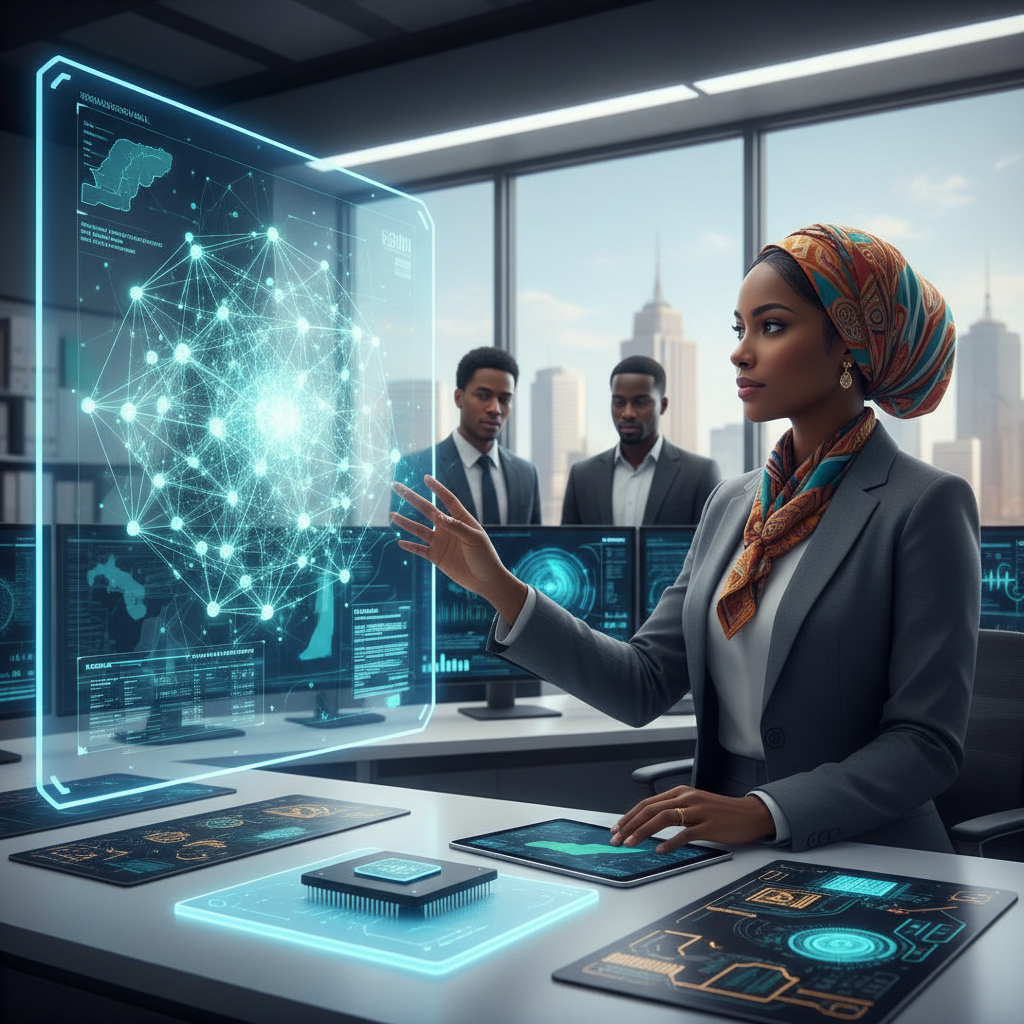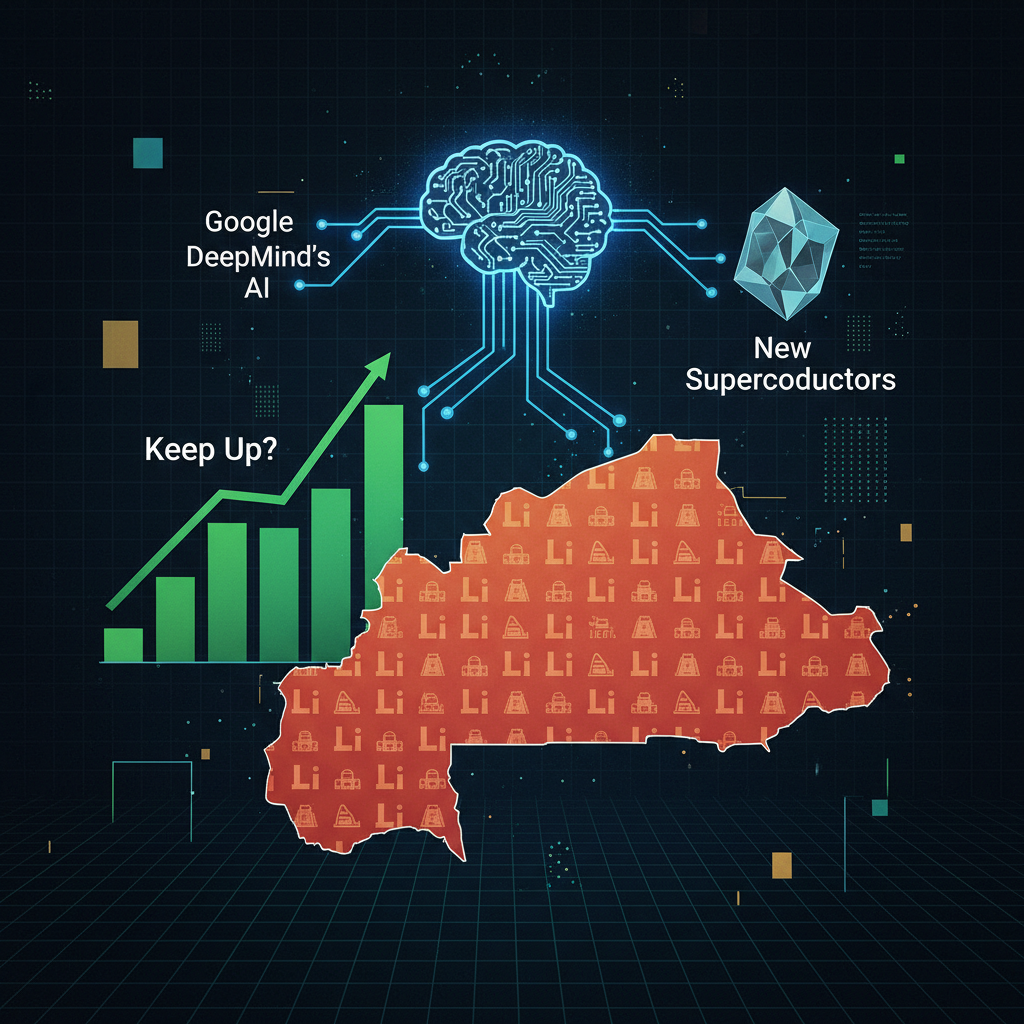

The dusty roads of Burkina Faso, particularly around our mining regions, often feel a world away from the gleaming laboratories where artificial intelligence is charting the future of materials science. Yet, the two are inextricably linked. There is a quiet revolution happening, far from the headlines about generative AI and chatbots, where algorithms are sifting through possibilities for new superconductors and battery materials at speeds unimaginable just a decade ago. The question I keep asking myself, as I see the trucks laden with our minerals, is this: Is this AI trend a genuine game changer for humanity, or just another cycle where the benefits flow outward, leaving us with the dust?
For generations, discovering new materials was a painstaking, trial-and-error process. Chemists and physicists would spend years, sometimes decades, synthesizing compounds, testing their properties, and refining their hypotheses. It was a slow, deliberate dance with nature, often yielding incremental progress. Think of the early days of battery development, for example, where each improvement in energy density or cycle life was hard-won. The scientific method, while robust, was limited by human intuition and the sheer volume of experiments required.
Then came the promise of computational materials science, which used simulations to predict properties before synthesis. This was a step forward, but still constrained by the complexity of quantum mechanics and the computational power available. Fast forward to today, April 2026, and we are witnessing a new paradigm. Companies like Google DeepMind, IBM, and even specialized startups are deploying sophisticated AI models, particularly machine learning algorithms, to accelerate this discovery process. These models can learn from vast datasets of existing materials, predict the properties of hypothetical compounds, and even suggest novel structures that human scientists might overlook.
Consider the numbers: Traditional materials discovery can take 10 to 20 years from concept to commercialization. With AI, researchers are claiming to cut this down significantly. For instance, a recent report from the MIT Technology Review highlighted how AI models can screen millions of potential compounds in days, identifying promising candidates for specific applications, such as high-temperature superconductors or solid-state electrolytes for batteries. This isn't just about speed; it's about exploring a chemical space so vast that human exploration alone would be impossible. The potential for breakthroughs in energy storage, quantum computing, and efficient power transmission is immense.
One of the most compelling areas is the search for room-temperature superconductors. Imagine electricity flowing with zero resistance, no energy lost as heat. This would revolutionize everything from power grids to medical imaging. While the dream of a practical room-temperature superconductor remains elusive, AI is making significant inroads. Researchers at Google DeepMind, for example, have used their Graph Networks for Materials Exploration (GNoME) project to predict the stability of over 2.2 million new crystal structures, identifying 380,000 stable materials, including 52,000 that are potentially useful for various applications. This is a monumental leap from the thousands discovered through traditional methods. Dr. Kristin Persson, a materials science professor at UC Berkeley and a leading figure in the Materials Project, noted in a recent interview, “AI is not just speeding up discovery, it’s fundamentally changing how we think about materials design. It’s allowing us to explore chemical spaces we never even knew existed.”
Battery technology is another critical frontier. The demand for electric vehicles and grid-scale energy storage is skyrocketing, creating an urgent need for safer, cheaper, and more energy-dense batteries. Lithium-ion batteries, while ubiquitous, have limitations in terms of cost, safety, and reliance on specific raw materials. AI is being deployed to design new battery chemistries, optimize electrode materials, and even predict degradation pathways. Companies like IBM, through their Materials Project, are using AI to identify new electrolyte formulations that could enable solid-state batteries, promising greater safety and energy density than current liquid electrolyte designs. The goal is to move beyond lithium, or at least to optimize its use, by finding alternatives or more efficient ways to utilize existing resources.
Here's what actually happened when I visited the offices of a small Burkinabè startup, OuagaTech Innovations, last month. They were not discovering new superconductors, no. They were using open-source AI tools, trained on geological data, to optimize the extraction process of our existing mineral resources, aiming for less waste and better yield. This is the reality on the ground for many of us. While the global giants chase exotic new materials, we are still grappling with making the most of what we already have. It is a stark reminder that the promises of AI often land differently depending on where you stand.
Experts are divided on whether this trend is a fad or the new normal. Dr. Cédric Villani, a renowned mathematician and Fields Medal laureate, has often spoken about the transformative power of AI in scientific discovery, stating, “Artificial intelligence is not just a tool; it is a new way of doing science, allowing us to perceive patterns and connections that are invisible to the human eye.” His optimism is shared by many who see AI as an indispensable partner in accelerating scientific progress. However, others, like Dr. Ifeoma Ajunwa, a professor of law at Emory University and an expert on AI and society, caution against unbridled enthusiasm. She points out that while AI can accelerate discovery, the ethical implications, the equitable distribution of benefits, and the potential for exacerbating existing resource inequalities must be carefully considered. “The algorithms are only as good as the data they are fed, and if that data reflects historical biases or neglects certain material properties, we risk missing crucial discoveries or reinforcing existing technological divides,” she recently commented.
For Burkina Faso, a country rich in resources like manganese, zinc, and crucially, lithium, this trend presents both opportunities and challenges. The global demand for lithium, driven by the battery revolution, has put our nation on the map for international investors. However, without the advanced infrastructure and scientific expertise to engage in AI-powered materials discovery ourselves, we risk remaining mere suppliers of raw materials. The value addition, the intellectual property, and the high-tech manufacturing will happen elsewhere. This is where local initiatives, like OuagaTech Innovations, become vital. We need to invest in our own capacity, not just in extraction, but in understanding and leveraging these AI tools to process and refine our resources more efficiently, perhaps even to contribute to the discovery process in ways tailored to our unique geological endowments.
Forget the hype, this is what matters: The true impact of AI in materials science will not just be measured by the number of new compounds discovered, but by how these discoveries translate into tangible benefits for all of humanity, including those of us who provide the very raw materials that fuel this technological advancement. Will the next generation of superconductors and battery materials be developed with an eye towards sustainable sourcing and equitable distribution, or will it simply perpetuate the existing patterns of resource exploitation? The answer, I believe, lies not just in the algorithms themselves, but in the policies and partnerships we forge today. It is a complex dance between global innovation and local empowerment, and the rhythm of that dance will determine if this AI-powered materials revolution truly serves everyone, from the sophisticated labs of Google DeepMind to the dusty mines of our homeland. The time for us to build our own scientific capacity, to understand these tools and apply them to our context, is now. Otherwise, we risk being left behind, once again, as the world races forward on the back of our resources. We must ensure that our lithium, and other precious minerals, are not just components in someone else's future, but catalysts for our own. For more on the broader implications of AI, particularly in resource-rich nations, one might look to analyses on AI and global economics. The conversation is far from over.