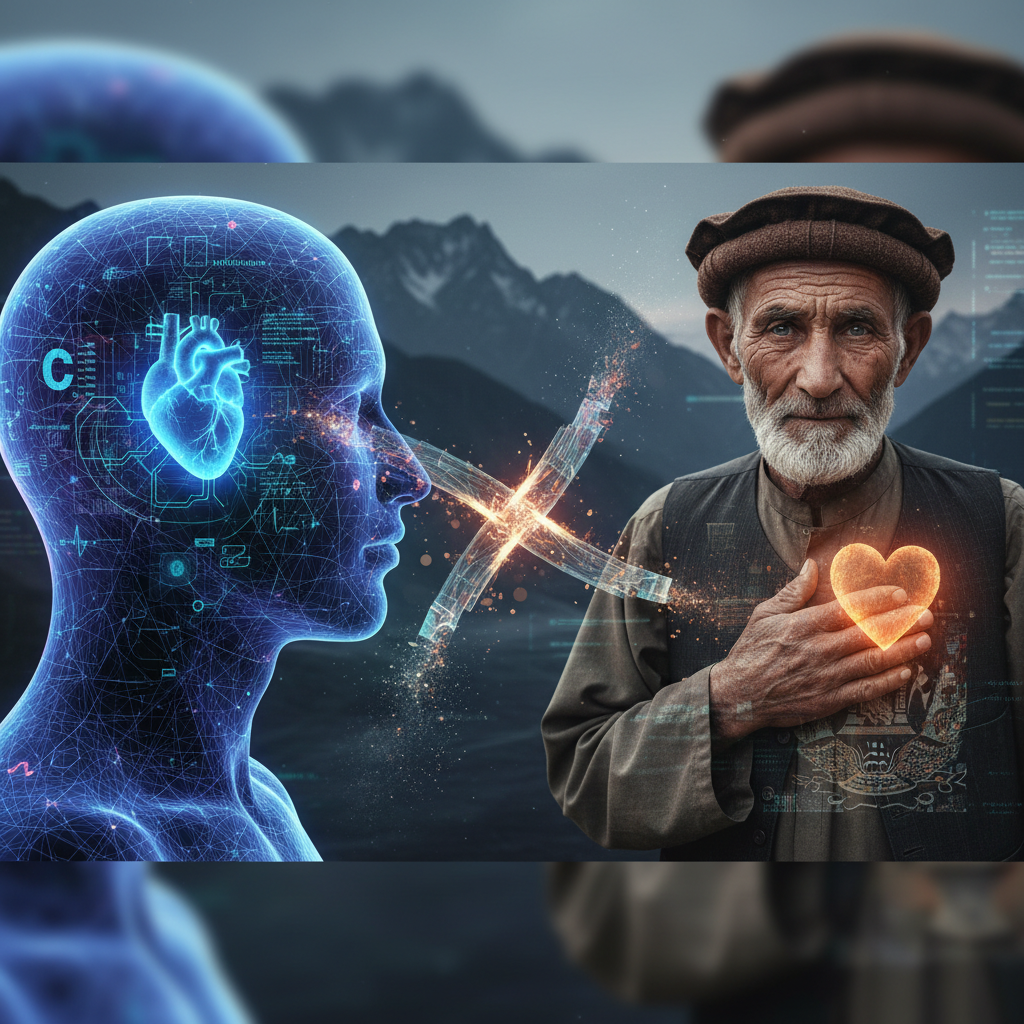
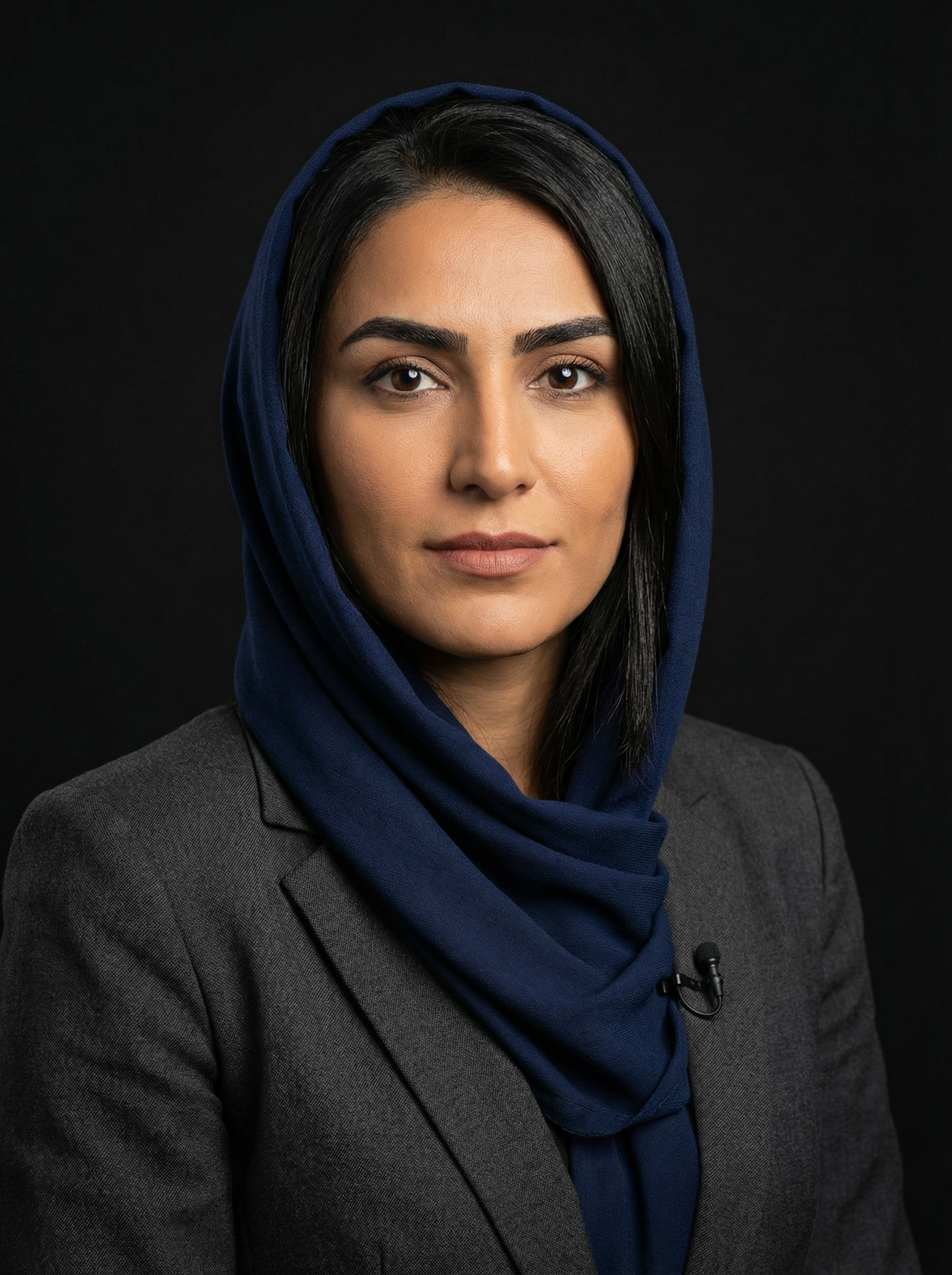
The dust motes dance in the afternoon light filtering through the small window of the community center in Kabul, illuminating the faces of women gathered there. Their stories, etched in lines of worry and resilience, are often unheard beyond these walls. They speak of daily struggles, of hopes for their children, and of the profound need for tools that empower, not diminish. This is the ground where technology, particularly artificial intelligence, must prove its worth. This is about dignity, a concept far more complex than any algorithm can easily grasp.
In recent months, the discourse around AI safety has intensified globally, with companies like Anthropic championing novel approaches. Their 'Constitutional AI' model, underpinning the Claude large language model, aims to imbue AI with a set of guiding principles, a kind of ethical framework, to ensure its outputs are helpful, harmless, and honest. The idea is to train the AI not just on data, but on a 'constitution' of rules, allowing it to self-correct and align with human values. For a society like Afghanistan, grappling with decades of conflict and societal upheaval, the notion of an AI designed for safety and ethical conduct holds a particular allure, yet also raises profound questions.
We have seen how quickly technology can be co-opted, how easily it can become a tool for surveillance or manipulation. The promise of Constitutional AI is that it builds safeguards directly into the system, making it inherently more resistant to such perversions. Dario Amodei, CEO of Anthropic, has often spoken about the necessity of making AI systems robustly safe, stating, “We believe that building safe and steerable AI systems is not just a technical challenge, but a societal imperative.” This sentiment resonates deeply in a land where trust in institutions, both human and technological, has been severely tested.
However, the introduction of such sophisticated AI into a complex cultural landscape like Afghanistan is not without its cognitive and behavioral implications. Consider the interaction of a young Afghan woman, perhaps seeking information or guidance, with an AI like Claude. If the AI is trained on a constitution derived primarily from Western ethical frameworks, how does it navigate the nuances of Afghan culture, Islamic jurisprudence, and local customs? Will its 'helpful' responses genuinely align with her lived reality, or will they subtly nudge her towards a different, perhaps alien, understanding of 'good' or 'appropriate'?
Research into human-AI interaction suggests that users often project human-like qualities onto AI, attributing intention and understanding where none truly exist. Dr. Sarah Miller, a cognitive psychologist specializing in human-computer interaction at the University of Cambridge, highlights this phenomenon. “When an AI presents itself as 'constitutional' or 'ethical,' users are more likely to trust its outputs implicitly. This can be problematic if the underlying 'constitution' does not fully encompass the user's cultural context, leading to subtle cognitive dissonance or even the gradual erosion of culturally specific thought patterns,” she explained in a recent seminar on AI ethics. The risk is not outright harm, but a more insidious form of cognitive shaping, where the AI's 'neutral' advice inadvertently steers human thought away from traditional wisdom or community-specific solutions.
In Afghanistan, where oral traditions, community elders, and religious scholars have long been pillars of guidance, the emergence of an AI that offers 'constitutional' advice could subtly shift reliance away from these established sources. While access to information is invaluable, the manner in which that information is framed, and the ethical lens through which it is filtered, carries immense weight. Behind every algorithm is a human story, and in our context, these stories are often deeply interwoven with faith, family, and communal bonds.
Moreover, the very concept of a 'constitution' for AI implies a universal set of values. While many ethical principles are indeed universal, their interpretation and application vary dramatically across cultures. What one society deems 'harmless' or 'fair' might be viewed differently in another. For instance, an AI trained to promote individual autonomy above all else might inadvertently undermine communal decision-making processes that are central to Afghan society. The subtle psychological effect could be a gradual alienation from one's own cultural roots, a feeling of being 'out of sync' with the AI's prescribed 'best' path.
Organizations like the Afghanistan National Standards Authority (ansa) and local universities are beginning to engage with these questions, exploring how AI frameworks can be adapted to local contexts. There is a growing understanding that simply importing global AI solutions without critical adaptation can lead to unintended consequences. As one senior lecturer at Kabul University, Dr. Ahmad Jawid, noted, “We welcome technological advancement, but it must be a servant to our people, not a silent master. The 'constitution' of an AI must be debated and shaped by diverse voices, including those from our own communities, to truly serve us.”
The broader societal implications are significant. If AI, even with the best intentions, subtly alters cognitive patterns or behavioral norms, it could contribute to a homogenization of thought, eroding the rich tapestry of human diversity. This is particularly concerning in regions striving to preserve their unique identities amidst globalizing forces. The question becomes: whose values are enshrined in this 'constitution'? Is it truly universal, or is it a reflection of the dominant technological culture?
For readers, particularly those in developing regions, the practical advice is clear: engage with AI critically. Understand that even 'safe' or 'ethical' AI models are products of human design, embedded with specific viewpoints. When interacting with tools like Claude, consider the source of its 'constitution.' Ask yourself: does this advice align with my cultural values, my community's wisdom, and my personal understanding of what is right? Do not outsource your critical thinking or your moral compass to an algorithm, however sophisticated. Technology should serve the most vulnerable, and that service must be rendered with profound respect for their inherent dignity and cultural heritage.
The promise of Constitutional AI is immense, offering a pathway to more responsible and trustworthy AI systems. Yet, for it to truly be a force for good in places like Afghanistan, its 'constitution' must be a living document, open to amendment and informed by the diverse voices of humanity. Only then can we ensure that these powerful tools genuinely empower, rather than subtly reshape, the human spirit. The path to truly equitable AI is not just about building safer algorithms, it is about building bridges of understanding between diverse human experiences and the digital world. For more insights into AI's global impact, consider reading reports on AI culture and society from Wired or tech news from Reuters. For those interested in the technical aspects of Anthropic's approach, their official website provides detailed documentation.