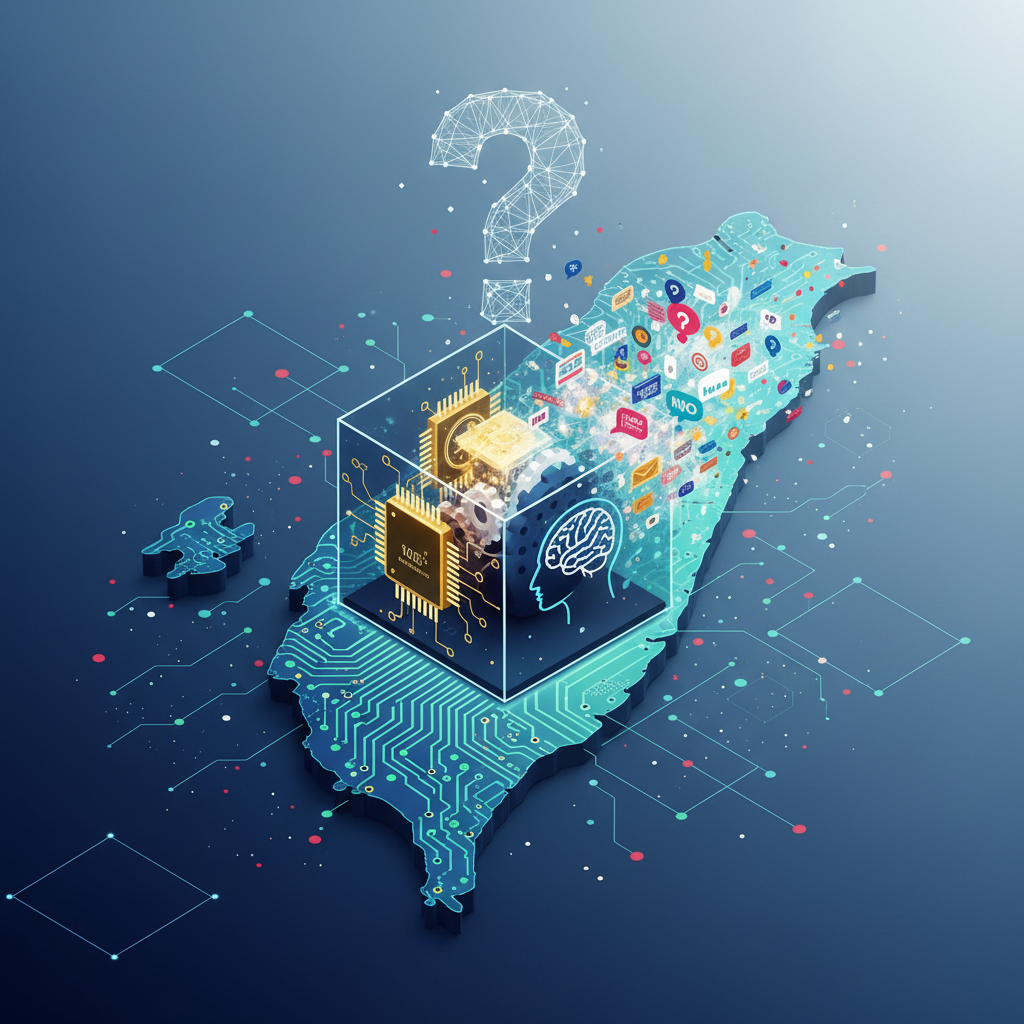

Is artificial intelligence finally shedding its skin of sophisticated pattern recognition to emerge as a true reasoner? This question, once confined to academic philosophy and science fiction, now reverberates through the boardrooms of Silicon Valley and the fabrication plants of Hsinchu. Recent pronouncements from research labs, particularly those associated with Google DeepMind and Anthropic, suggest a paradigm shift is underway, promising AI architectures capable of more abstract thought, planning, and even a nascent form of common sense. Yet, from my vantage point in Taiwan, a nation whose very economic pulse is tied to the silicon that powers this AI revolution, I find myself asking: Is this a genuine breakthrough, or simply a more elaborate dance of algorithms, meticulously choreographed on ever-more powerful hardware?
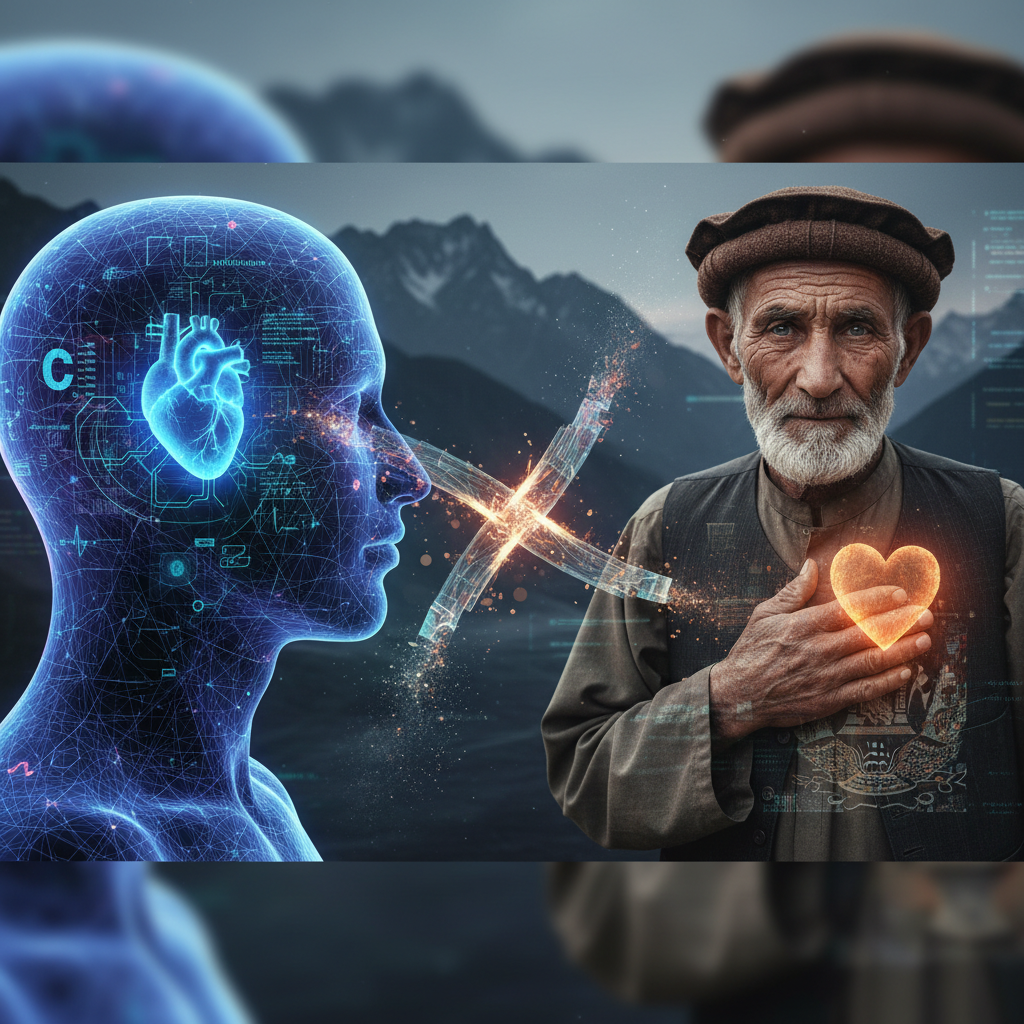
For years, the dominant narrative surrounding large language models and deep learning has centered on their extraordinary ability to identify and reproduce patterns within vast datasets. Whether generating human-like text, recognizing faces, or predicting stock market fluctuations, their prowess has been undeniable. This pattern matching, however, has inherent limitations. It struggles with novel situations, often fails at multi-step logical deduction, and can produce confidently incorrect outputs, a phenomenon sometimes termed 'hallucination.' The current excitement stems from claims that new architectures, often incorporating elements of symbolic AI, knowledge graphs, or advanced memory mechanisms, are beginning to address these fundamental shortcomings. Researchers speak of 'system 2' thinking, a nod to Daniel Kahneman's distinction between fast, intuitive thought and slower, deliberate reasoning.
Historically, the quest for AI reasoning has followed a circuitous path. Early AI, often called 'Good Old-Fashioned AI' or Gofai, relied heavily on symbolic logic, expert systems, and explicit rules. It was brittle, struggled with ambiguity, and famously failed to scale. The deep learning revolution, fueled by massive datasets and computational power, largely sidelined these approaches. Now, we observe a fascinating convergence: elements reminiscent of Gofai are being re-integrated into neural network designs. For instance, Google DeepMind's 'AlphaGeometry' demonstrated the ability to solve complex geometry problems, a task requiring multi-step logical deduction, by combining a large language model with a symbolic deduction engine. This hybrid approach, they argue, moves beyond mere statistical correlation to a deeper understanding of underlying principles. Similarly, Anthropic's 'Constitutional AI' aims to imbue models with explicit ethical guidelines, acting as a form of symbolic reasoning layer to steer behavior. DeepMind's official blog often details these hybrid breakthroughs.
However, let's separate fact from narrative. While these advancements are compelling, the definition of 'reasoning' itself remains a contentious point. Is an AI truly reasoning if it is merely executing a highly optimized search through a symbolic space, albeit one informed by neural patterns? Or does genuine reasoning imply consciousness, understanding, or even intent? Dr. Fei-Fei Li, co-director of Stanford's Institute for Human-Centered AI, has consistently emphasized the need for AI to understand the physical world and human values, stating in a recent interview, 'True intelligence requires not just statistical correlation, but grounded understanding and common sense. We are still far from achieving that comprehensively.' Her perspective underscores the gap between current capabilities and the loftier ambitions of human-level reasoning.
The data tells a more nuanced story. While benchmarks like BIG-bench Hard and Mmlu show impressive gains in areas traditionally associated with reasoning, these are still carefully curated datasets. The real-world application, particularly in unstructured environments, remains a significant challenge. Consider the complexity of a simple conversation in a Taiwanese night market, where context, tone, and cultural nuances are paramount. An AI that can 'reason' about abstract mathematical theorems might still stumble over the implicit social contracts governing a street food vendor's interaction with a customer. This is not a trivial distinction; it highlights the difference between narrow, domain-specific reasoning and the broad, flexible intelligence humans exhibit.
From Taiwan's perspective, this trend is dual-edged. On one hand, the demand for ever more sophisticated AI chips, particularly those optimized for complex, multi-modal workloads, continues to grow. This plays directly into the strengths of companies like Tsmc, the world's largest contract chip manufacturer. Their advanced process technologies, such as N3E and N2, are critical enablers for these new AI architectures. The intricate dance between hardware innovation and algorithmic advancement is symbiotic. As Dr. C. C. Wei, CEO of Tsmc, remarked during a recent earnings call, 'The increasing complexity of AI models, including those focused on advanced reasoning, directly translates into a greater need for our most advanced nodes. We are seeing strong demand across the board.' This continuous push for performance ensures Taiwan's central role in the global technology supply chain. Reuters' technology section frequently covers these market dynamics.
On the other hand, Taiwan's position is more complex than headlines suggest. While we excel at manufacturing the physical components, the development of these advanced reasoning architectures largely originates elsewhere, primarily in the United States and, increasingly, China. This creates a potential dependency. If the true value shifts from raw computational power to the intellectual property embedded in these reasoning frameworks, Taiwan must adapt. Local research institutions, such as Academia Sinica and National Taiwan University, are actively engaged in foundational AI research, but scaling these efforts to compete with global tech giants requires sustained investment and talent development. The Ministry of Science and Technology has been pushing initiatives to foster AI talent, recognizing this strategic imperative.
Moreover, the ethical implications of more powerful AI reasoning are profound. If AI can genuinely reason, what are its moral obligations? How do we ensure alignment with human values? These are not abstract questions in a society that values harmony and collective well-being. The potential for misuse, from sophisticated propaganda generation to autonomous decision-making in critical infrastructure, becomes significantly amplified. Dr. Kai-Fu Lee, a prominent AI investor and author, has often cautioned against overestimating current AI capabilities while simultaneously urging proactive ethical governance. He stated, 'We must be vigilant. As AI gains more 'reasoning' capabilities, the responsibility of its creators and deployers grows exponentially. We cannot afford to be complacent.'
My verdict remains cautiously optimistic, tempered by a healthy dose of skepticism. While the term 'reasoning' might be stretched to fit current AI advancements, there is no denying that these new architectures represent a significant leap beyond simple pattern matching. They are more robust, more capable of handling abstraction, and show glimpses of what might eventually evolve into genuine understanding. However, the journey from sophisticated algorithmic execution to true, human-like reasoning is still long and fraught with conceptual and engineering challenges. For Taiwan, the immediate future is bright, driven by the insatiable demand for high-performance computing. The longer-term challenge, however, lies in cultivating our own intellectual leadership in AI architecture and ethical governance, ensuring we are not merely the world's foundry, but also a significant contributor to the very intelligence that reshapes our future. The conversation has only just begun. For more in-depth analysis of AI trends, visit MIT Technology Review.