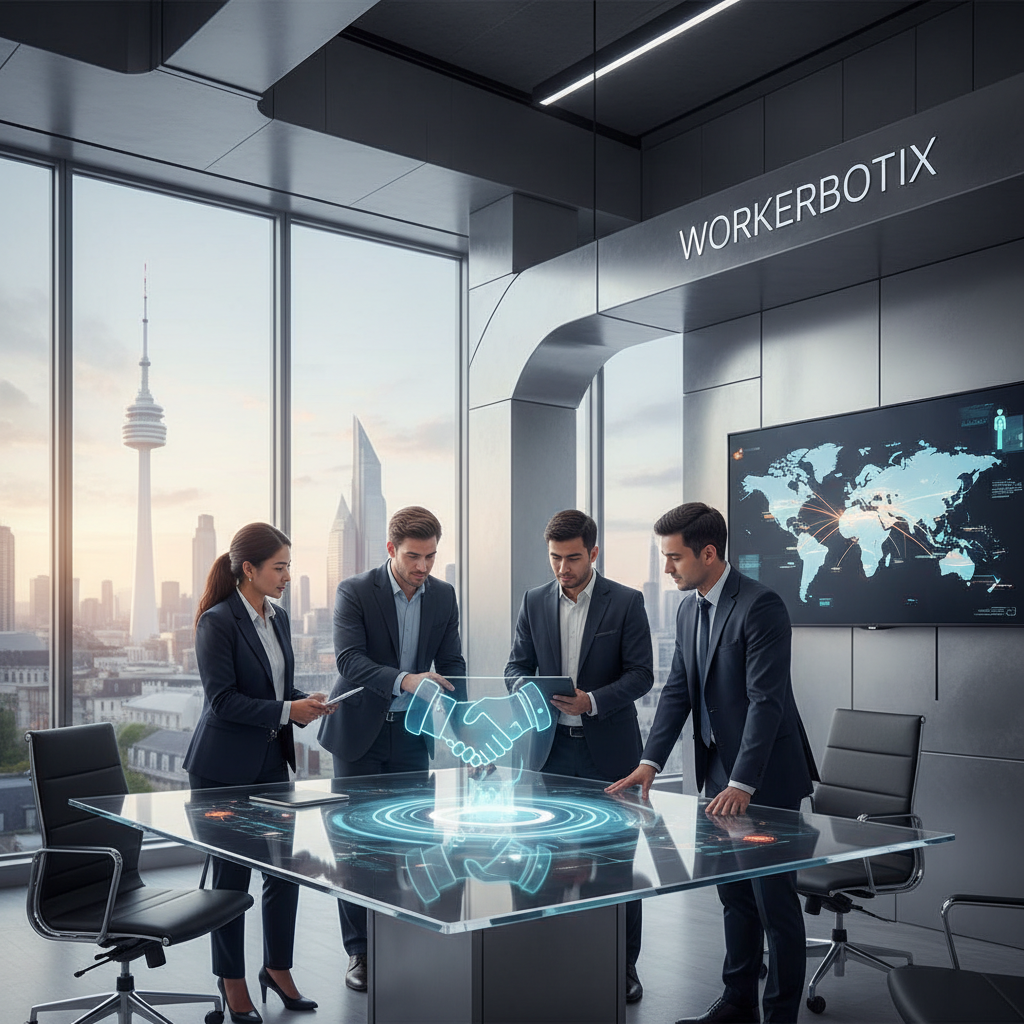

The scent of freshly brewed black tea, strong and sweet, usually fills the air in our Tashkent office, a familiar comfort. But this morning, there was a different kind of energy, a palpable hum of anticipation. We were preparing for a video call with the leadership of Workerbotix, a UK-based company that has been quietly making waves in the world of industrial automation, particularly in how they approach the human element of AI integration. It is a topic close to my heart, as the narrative of technology often overlooks the people whose lives it reshapes.
Workerbotix is not just another AI firm pushing robots onto factory floors. They are a company that understands the delicate dance between innovation and human dignity, a conversation that is becoming increasingly urgent globally, and especially here in Central Asia where economic shifts can have profound societal impacts. Their approach, which I find quite refreshing, is to involve workers and unions from the very beginning of an automation project, not as an afterthought.
The Company Today: Bridging the Divide
Imagine a factory floor, perhaps in a textile plant in Fergana or an automotive assembly line in Samarkand. For decades, the rhythm of human hands and voices defined these spaces. Now, the quiet whir of automated machinery is joining the chorus. This transition, while promising efficiency and growth, often brings with it a shadow of fear: the fear of job displacement. This is where Workerbotix steps in. Their core philosophy is that automation should augment human capabilities, not replace them entirely. They design and implement AI-driven systems that take over repetitive, dangerous, or physically demanding tasks, freeing human workers for more complex, creative, or supervisory roles.
I recall a conversation with a factory manager in Navoiy who had implemented some of Workerbotix’s solutions. He told me, “Initially, there was resistance, of course. People worried. But Workerbotix didn’t just install machines and leave. They brought training programs, they facilitated dialogues with our union representatives. It felt like a partnership, not just a transaction.” This sentiment, echoed in their publicly available case studies, speaks volumes about their unique market position.
Origin Story: A Vision for Responsible Automation
Workerbotix was founded in 2018 by Dr. Eleanor Vance, a former industrial engineer with a deep background in human-computer interaction, and Marcus Thorne, a software architect with a passion for ethical AI. Their initial seed funding, reportedly around £2 million, came from a mix of angel investors and a grant from a UK innovation fund. Dr. Vance, in a 2020 interview with TechCrunch, articulated her vision: “We saw a future where AI could either be a tool for widespread disruption and anxiety, or a catalyst for a more humane and productive workplace. We chose the latter. Our goal was never to build robots that replace people, but to build systems that empower them.”
Their early projects focused on manufacturing and logistics in the UK, where they quickly gained a reputation for their collaborative approach. They partnered with local trade unions, holding workshops and training sessions, ensuring that workers understood the new technologies and felt secure in their evolving roles. This early commitment to worker engagement became a cornerstone of their business model.
The Business Model: Human-Centric AI as a Service
Workerbotix operates on a B2B model, offering AI-powered automation solutions as a service, often with a subscription component for software and ongoing maintenance. Their revenue streams are multifaceted:
- Custom AI Solution Development: Designing and implementing bespoke automation systems for factories, warehouses, and other industrial settings. This includes robotic process automation, intelligent quality control systems, and predictive maintenance algorithms.
- Integration and Deployment Services: Ensuring seamless integration of their AI systems with existing operational infrastructure.
- Training and Upskilling Programs: Crucially, they offer comprehensive training for the existing workforce, enabling them to operate, monitor, and maintain the new automated systems. This is often a significant part of their contract value.
- Ongoing Support and Optimization: Post-deployment support, performance monitoring, and iterative improvements to their AI models.
Their pricing structure often includes an upfront implementation fee, followed by recurring monthly or annual subscriptions based on the scale of deployment and the level of support required. This model ensures a steady revenue stream and builds long-term client relationships.
Key Metrics: Growth Through Trust
While Workerbotix is a private company and does not disclose detailed financial figures, industry analysts estimate their annual recurring revenue (ARR) to be in the tens of millions of pounds, showing consistent year-over-year growth of over 30% in the last two years. They have successfully completed over 50 large-scale projects across Europe and, more recently, in Central Asia. Their client retention rate is reportedly high, a testament to their unique value proposition.
Their team has grown from a handful of founders to over 150 employees, including AI engineers, robotics specialists, industrial designers, and crucially, human resources and training experts. This blend of technical and human-centric talent is unusual in the AI landscape.
The Competitive Landscape: A Niche of Empathy
Workerbotix operates in a crowded market. Giants like Siemens, ABB, and Rockwell Automation offer comprehensive industrial automation solutions. Newer AI startups, such as Covariant and Locus Robotics, focus on warehouse automation. However, Workerbotix differentiates itself not purely on technological prowess, though their systems are robust, but on their unwavering commitment to responsible AI deployment and worker integration. Their competitive edge lies in their ability to mitigate the social friction often associated with automation.
“Many companies sell you a robot, Workerbotix sells you a solution that includes your people,” said Dr. Vance in a recent panel discussion on the future of work, a quote widely reported by Reuters. This focus on the human element, on proactive union engagement and reskilling, is Central Asia's best-kept secret for navigating the AI transition. It is a differentiator that resonates strongly in regions where social stability is highly valued.
The Team and Culture: A Human Touch in a Machine World
Dr. Eleanor Vance is known for her collaborative and empathetic leadership style. She often emphasizes the importance of listening to all stakeholders, from the CEO to the shop floor worker. Marcus Thorne, the CTO, is celebrated for his ability to translate complex AI concepts into understandable terms, fostering trust and transparency. The company culture is reportedly one of open dialogue, continuous learning, and a strong ethical compass. They actively recruit individuals with diverse backgrounds, including those with experience in labor relations and adult education.
Challenges and Controversies: The Pace of Change
Even with their human-centric approach, Workerbotix faces challenges. The pace of technological change can still outstrip the ability of some workforces to adapt, requiring significant investment in training. Convincing some legacy industrial companies to invest in comprehensive worker programs, rather than just the machines themselves, can be an uphill battle. Furthermore, scaling their bespoke, high-touch approach to a global market without losing its essence is a constant balancing act. The sheer diversity of labor laws and union structures across different countries, including Uzbekistan, means their engagement model must be highly adaptable.
The Bull Case and the Bear Case
The bull case for Workerbotix is compelling. As AI automation becomes ubiquitous, the social and ethical implications will only grow. Companies that can navigate these complexities responsibly, ensuring a just transition for workers, will gain a significant competitive advantage in terms of public perception, employee morale, and long-term sustainability. Workerbotix is perfectly positioned to be a leader in this space, offering not just technology, but also a blueprint for ethical AI adoption. Their early entry into emerging markets like Central Asia also gives them a first-mover advantage in regions eager for responsible development.
The bear case centers on the inherent tension between efficiency and employment. While Workerbotix advocates for augmentation, the economic pressures on businesses might eventually push them towards more aggressive automation that does lead to job losses. If their human-centric approach is perceived as too costly or too slow, they might lose ground to competitors offering faster, albeit less socially conscious, solutions. Moreover, the complexity of managing diverse labor relations globally could become a significant operational overhead.
What’s Next: A Future Forged Together
Workerbotix recently announced a partnership with the Uzbekistan Ministry of Employment and Labor Relations to develop a pilot program for AI-driven vocational training centers. This initiative, to be rolled out in Tashkent and Samarkand, aims to proactively equip the local workforce with the skills needed for an automated future. In a small office in Tashkent, our team is excited to see the fruits of this collaboration.
As I reflect on Workerbotix’s journey, I am reminded that technology is merely a tool. Its impact is shaped by the hands that wield it and the values that guide its creation. Workerbotix is demonstrating that the future of work does not have to be a zero-sum game between humans and machines. It can, and perhaps should, be a collaborative endeavor, where progress is measured not just in productivity gains, but in the well-being and empowerment of every individual. This is a story of hope, a narrative that reminds us that even in the face of rapid technological change, the human spirit, with its capacity for empathy and foresight, remains our most valuable asset.