The global conversation around artificial intelligence often feels like a distant hum from Silicon Valley, a chorus of giants like Google, OpenAI, and Meta vying for dominance in the cloud. But here in Aotearoa, New Zealand, we understand that true innovation isn't always about scale; it is about relevance, about connection, and ultimately, about people. This is especially true when we consider Apple's recent pivot towards 'Apple Intelligence,' a strategy emphasizing on-device processing to enhance privacy and personalization. While the tech world debates the merits of local versus cloud AI, a small but mighty startup from our shores, Toha, is showing the world what happens when that on-device philosophy is woven into the very fabric of indigenous data sovereignty.
I first heard about Toha through whispers in the Māori tech community, a collective buzzing with the potential of technology to serve our unique needs, not just to extract from them. The founder, a visionary named Te Rūnanga o Ngāti Porou's Dr. Mike Williams, is not your typical tech bro. He is a man deeply rooted in his whakapapa, his genealogy, and his community. Dr. Williams, a former director of the Māori Technology and Innovation Institute, had his 'aha moment' years ago, long before 'data sovereignty' became a mainstream buzzword. He saw how indigenous communities, rich in knowledge and cultural heritage, were often left out of the digital revolution, or worse, exploited by it. Their data, their stories, their environmental observations, were either uncollected, unprotected, or aggregated by external forces with little benefit flowing back to the source communities. He envisioned a future where technology could empower, not just enable, these communities.
The problem Toha is solving is multifaceted, yet elegantly simple in its core principle: how do we ensure that data generated by and about indigenous communities remains under their control, and how can AI be leveraged responsibly to benefit these communities directly? The traditional cloud-centric AI model, where data is hoovered up, centralized, and processed by distant servers, presents inherent risks to cultural integrity, privacy, and sovereignty. It is a model that often replicates colonial power structures, where the value flows away from the source. Dr. Williams and his team recognized that Apple's move to on-device processing, while primarily driven by consumer privacy and performance, offered a powerful parallel for indigenous data governance. If AI can run locally on your iPhone, processing your personal data without sending it to a remote server, why could a similar principle not apply to community data, kept securely and processed locally within the community's digital domain?
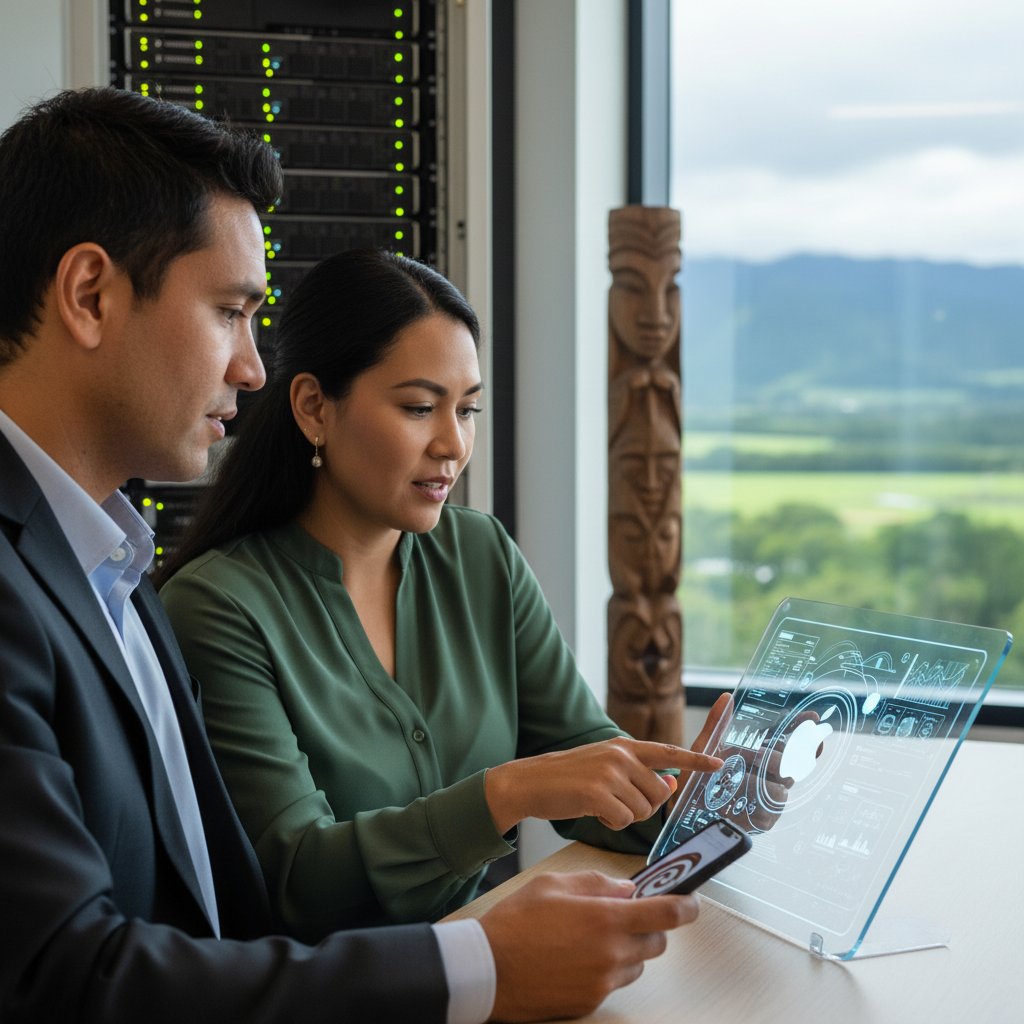
Toha's technology is built on a decentralized, privacy-preserving architecture. They are not just building an app; they are building an ecosystem. At its heart is a platform that allows communities to collect, manage, and analyze their own data, whether it is ecological data from their ancestral lands, cultural knowledge, or health information. The AI models Toha develops are designed to run on localized infrastructure, or even on edge devices within the community, minimizing the need to transmit sensitive information to external cloud providers. This approach aligns perfectly with the spirit of Apple Intelligence, emphasizing local processing and user control. In Te Reo Māori, we have a word for this: tino rangatiratanga, which means self-determination or absolute sovereignty. Toha is building the digital infrastructure for tino rangatiratanga over data.
Their work includes projects like using AI to monitor biodiversity in protected areas, tracking the health of waterways, and even helping to revitalize endangered languages by creating localized language models that respect dialectal nuances and cultural contexts. The data, and the insights derived from it, remain the property of the iwi or hapū that generated it. This is a radical departure from the norm, where data is often seen as a commodity to be extracted. Toha flips that script, positioning data as a taonga, a treasure, to be protected and nurtured.
The market opportunity for Toha, while niche, is incredibly significant. Globally, indigenous populations number over 476 million people, spanning 90 countries. These communities are often stewards of 80% of the world's biodiversity and possess invaluable traditional ecological knowledge. The demand for culturally appropriate, privacy-preserving technology solutions is immense, not just for data management but for climate resilience, cultural preservation, and economic development. Toha is tapping into a growing global movement for indigenous data sovereignty, a movement that recognizes the unique rights and interests of these communities over their data. Their initial funding, reportedly a mix of government grants and impact investment from entities like the New Zealand Green Investment Finance and the Provincial Growth Fund, reflects a growing understanding of this critical need. Analysts estimate the broader market for ethical AI and data sovereignty solutions to be in the billions, driven by increasing regulatory scrutiny and a global push for equitable technology development.
The competitive landscape for Toha is less about direct competitors and more about prevailing paradigms. Their biggest challenge is not another startup offering a similar product, but rather the entrenched cloud-first mentality of the tech industry. Giants like Amazon Web Services and Google Cloud offer powerful, scalable solutions, but their centralized nature often clashes with the principles of indigenous data sovereignty. Toha differentiates itself by prioritizing community ownership, cultural relevance, and localized control above all else. While Apple's on-device strategy validates the technical feasibility of local processing, Toha extends this philosophy to a profound socio-cultural context. They are not just building technology; they are building trust, a currency far more valuable in these communities than mere processing power.
What is next for Toha? Dr. Williams speaks of expanding their partnerships with more iwi across Aotearoa and looking towards similar indigenous communities globally, from the First Nations of Canada to the Aboriginal peoples of Australia. Their vision is to create a federated network of indigenous data hubs, each sovereign, yet capable of sharing insights and collaborating on global challenges like climate change, all while maintaining complete control over their own information. This is where the true power of their approach lies: a global network built on local autonomy. As New Zealand continues to carve out its unique path in the tech world, Aotearoa's approach to AI is rooted in indigenous wisdom. Toha is a shining example of how technology must serve the people, not the other way around. Their journey reminds us that the most impactful innovations often emerge not from the loudest voices, but from those who listen most closely to the needs of the land and its people. This is a story of resilience, innovation, and the quiet power of self-determination in the digital age, a story that deserves to be heard far beyond our shores. For more on the broader implications of ethical AI, you can explore discussions on AI ethics and society. The future of AI, as Toha shows us, is not just about intelligence; it is about wisdom, about mātauranga.