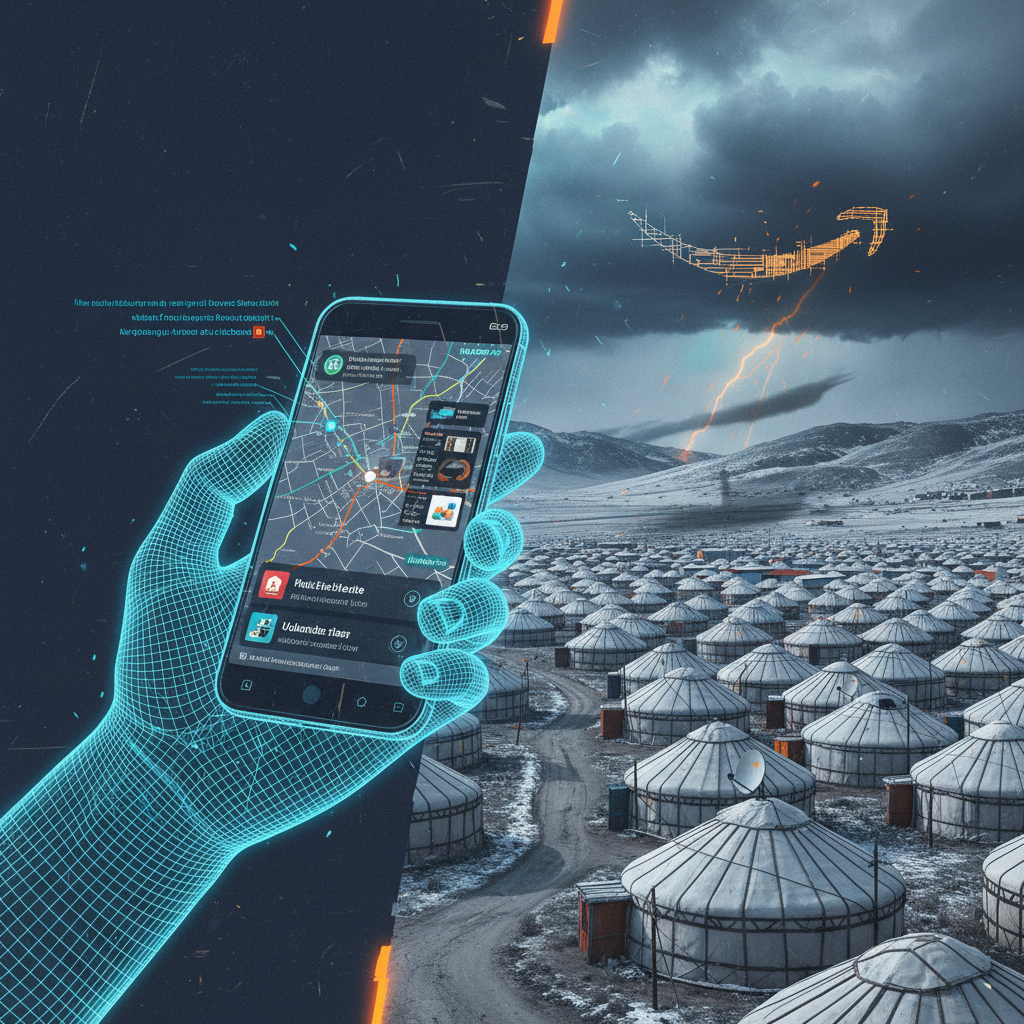

The latest buzz from Silicon Valley, amplified by the usual suspects like OpenAI and Google DeepMind, is all about AI transforming retail. We hear grand pronouncements about demand forecasting, inventory optimization, and personalized shopping experiences. They paint a picture of a seamless, hyper-efficient future where algorithms predict your every desire before you even know it yourself. It sounds impressive, doesn't it? But here in Mongolia, where the steppe meets the server farm, I have learned to look past the shiny presentations and ask a more fundamental question: what happens when these sophisticated systems encounter a reality far removed from their training data?
Let's consider the risk scenario. Imagine a major international retailer, perhaps one leveraging Amazon's advanced AI services or a similar platform from Salesforce, decides to expand its footprint in Mongolia, not just in Ulaanbaatar but across the aimags. They deploy AI models designed to predict what people will buy, how much stock to keep, and what promotions to offer. These models are trained on vast datasets from highly urbanized, digitally integrated societies. They understand seasonal sales cycles in New York or London, but do they understand the nuances of a Mongolian winter, where roads can be impassable for weeks, or the sudden demand for specific goods during Naadam?
The Technical Explanation: Models Versus Reality
At its core, AI in retail relies on machine learning algorithms, often deep neural networks, to identify patterns in historical sales data, customer behavior, and external factors like weather or economic indicators. For demand forecasting, models might use time series analysis, regression, or more complex recurrent neural networks to predict future sales volumes for individual products. Inventory optimization then takes these forecasts and calculates optimal stock levels, aiming to minimize holding costs while preventing stockouts. Personalized shopping, meanwhile, uses collaborative filtering or content-based recommendation systems to suggest products based on past purchases, browsing history, and demographic data.
In a highly predictable market, these systems can be remarkably effective. A major supermarket chain in Europe, using Google Cloud's AI solutions, might achieve a 15% reduction in waste and a 10% increase in sales accuracy, as reported in various industry analyses. But Mongolia's retail landscape is anything but predictable. Our population density is one of the lowest in the world, our supply chains are often long and vulnerable to extreme weather, and a significant portion of our population, particularly nomadic herders, operates outside conventional urban consumption patterns. Their purchasing habits are influenced by livestock cycles, pasture conditions, and traditional festivals, not just the latest trend on TikTok.
“The algorithms are only as good as the data they are fed,” explains Dr. Enkhjargal Batbold, a data scientist at the National University of Mongolia. “If your training data is overwhelmingly from densely populated, stable environments, those models will struggle to generalize to a place like ours. They might predict a surge in demand for ice cream in July, which is reasonable, but completely miss the sudden need for durable winter clothing and high-calorie foods when an unexpected dzud, a harsh winter, hits a remote province. The economic and social impact of such a miscalculation could be severe, leading to shortages in critical supplies.”
The Expert Debate: Efficiency Versus Equity
The debate around AI in retail often centers on its efficiency gains. Proponents, often from companies like NVIDIA which supply the processing power, or Amazon, which offers end-to-end retail AI solutions, highlight reduced waste, lower costs, and improved customer satisfaction. They argue that these benefits will eventually trickle down, making goods more affordable and accessible everywhere.
However, critics, including many economists and social scientists, raise serious concerns about equity and data privacy. “When personalized shopping algorithms from Meta or Apple start dictating what products are even shown to certain demographics, we risk creating digital divides and reinforcing existing inequalities,” states Bolor-Erdene Purevjav, a policy analyst at the Mongolian Ministry of Digital Development. “If an algorithm decides a herder in Bayan-Ölgii is unlikely to buy a smartphone based on their past purchases of basic necessities, that herder might never be shown promotions for devices that could genuinely improve their lives, like satellite internet terminals. This isn't just about selling more; it's about access and opportunity.”
There is also the issue of data sovereignty and privacy. These AI systems require vast amounts of personal data to function effectively. Who owns this data? How is it secured? And what recourse do Mongolian citizens have if their data is misused or if the algorithms make biased decisions that negatively impact their livelihoods? The European Union's AI Act is a step towards regulation, but its reach is limited. Here, we are still developing our own frameworks. Reuters reports frequently on these global regulatory challenges, and our situation is no different.
Real-World Implications for Mongolia
The implications for Mongolia are profound. Our retail sector, while growing, is still characterized by a mix of traditional markets, small family-owned shops, and a few larger chains. The introduction of highly sophisticated AI, particularly from foreign entities, could create several problems.
First, it could disadvantage local businesses that lack the resources or technical expertise to compete. If a large foreign retailer can predict demand with 90% accuracy and optimize inventory to near perfection, smaller Mongolian shops, relying on intuition and local knowledge, will struggle to keep up. This could lead to market consolidation and a loss of local economic diversity.
Second, the algorithms might simply fail to understand our unique market dynamics. As I mentioned, a dzud is not just a cold snap, it is a catastrophic natural disaster that can wipe out entire herds and drastically alter purchasing priorities. Traditional forecasting models, even those from Google's advanced systems, are unlikely to have sufficient historical data for such extreme, localized events. We saw this during the recent severe winter of 2023-2024; no algorithm could have fully predicted the scale of need for fodder and emergency supplies in remote areas.
Third, there is the cultural aspect. Personalized shopping, while convenient for some, can also feel intrusive. Mongolians value community and often rely on word-of-mouth recommendations, not just algorithmic suggestions. An overreliance on AI could erode these social connections and lead to a more isolated, algorithm-driven consumer experience that doesn't resonate with our cultural values. Wired often explores these societal impacts, and they are very real here.
“We are already seeing how some e-commerce platforms, even without full AI integration, struggle with last-mile delivery in our rural areas,” notes Ganbold Tseren, CEO of Nomadic Logistics, a Mongolian startup. “Adding complex AI to the front end without solving the fundamental infrastructure challenges is like putting a rocket engine on a horse cart. It might look powerful, but it won't get you far across the Gobi.” Practical innovation, he stresses, must address the actual constraints on the ground.
What Should Be Done?
To mitigate these risks, several actions are necessary.
Firstly, there must be a strong emphasis on data localization and ethical AI development. Mongolia needs to develop its own robust datasets that reflect its unique demographics, climate, and economic patterns. This means investing in data collection infrastructure, ensuring data privacy, and training local AI specialists who understand the context. We need to build our own models, perhaps using open source frameworks like those championed by Hugging Face, tailored to our specific needs, rather than blindly importing foreign solutions.
Secondly, regulatory frameworks need to be established. This includes clear guidelines on data ownership, algorithmic transparency, and accountability for AI-driven decisions. The government, in collaboration with industry and academia, should develop an AI strategy that prioritizes ethical use and protects consumers and local businesses.
Thirdly, hybrid approaches are crucial. Instead of replacing human expertise entirely, AI should augment it. Local shop owners and distributors possess invaluable tacit knowledge about their communities and supply chains. Integrating this human intelligence with AI predictions, perhaps through human-in-the-loop systems, can create more resilient and responsive retail operations. This is where Mongolia's challenges are unique and so are its solutions.
Finally, education and digital literacy are paramount. Citizens need to understand how these AI systems work, what data they collect, and how to protect their privacy. This empowers them to make informed choices and demand greater transparency from retailers and technology providers.
AI in retail holds promise, certainly. But for us, the real test is not just whether it can make a corporation more profitable, but whether it can serve the diverse needs of all Mongolians, from the bustling markets of Ulaanbaatar to the remote ger camps, without compromising our values or exacerbating existing inequalities. The algorithms must learn to understand our steppe, not just the server farm. Otherwise, the hype will remain just that, hype, and the benefits will bypass those who need them most.