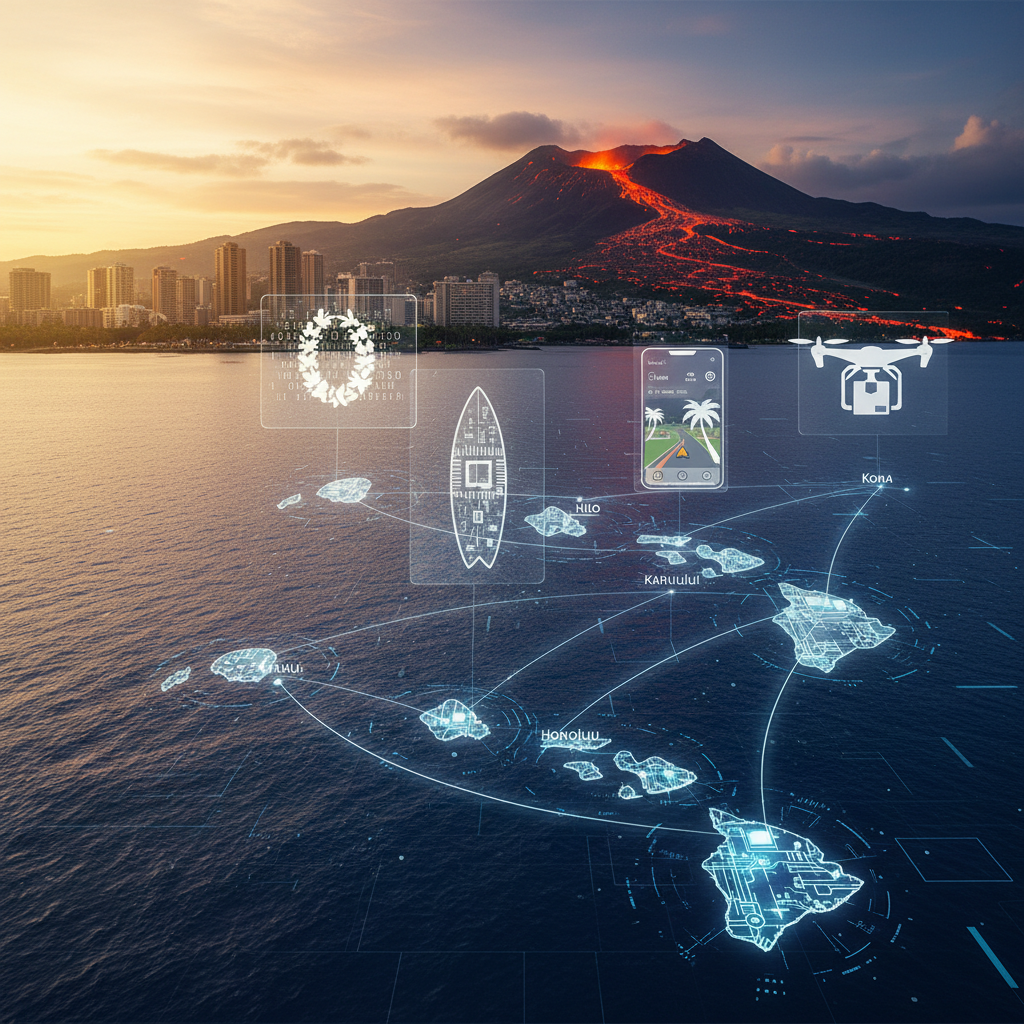
The sun rises over Mauna Kea, painting the sky with hues of pink and gold, a constant reminder of the ancient rhythms that govern our lives here in Hawaiʻi. Yet, beneath this timeless beauty, a different kind of rhythm is accelerating, one driven by lines of code and the relentless hum of artificial intelligence. We often talk about AI in grand terms, about self-driving cars or medical breakthroughs, but its most immediate and profound impact is often found in the mundane, in the everyday transactions of the gig economy. From the Uber driver navigating Honolulu's morning traffic to the DoorDash delivery person dropping off poke bowls in Kailua, algorithms are not just facilitating work, they are actively managing, incentivizing, and, yes, controlling it.
This isn't a new phenomenon, but it's one that most people are still ignoring, distracted by the convenience these platforms offer. We tap an app, a car arrives, food appears, and we rarely pause to consider the intricate digital puppet strings pulling the levers behind the scenes. The attention gap is vast. While Silicon Valley celebrates the efficiency gains and user experience, the human cost, particularly for those on the front lines of this algorithmic management, often goes unexamined. Here in Hawaiʻi, where the cost of living is astronomical and multiple jobs are a necessity for many families, the gig economy offers a lifeline, but it's a lifeline with an invisible hand at the helm.
So, how does this affect you? Even if you're not a gig worker, you are part of this ecosystem. As a consumer, your choices, your ratings, and even your tips feed the algorithms that determine a worker's livelihood. As a citizen, the erosion of traditional employment benefits, the precarity of income, and the lack of transparency in algorithmic decision-making will eventually ripple through our social safety nets and local economies. Imagine an AI deciding if you get enough rides to pay your rent, or if your delivery requests are prioritized. This isn't science fiction; it's the daily reality for millions. The future is being built on volcanic rock, yes, but also on the digital bedrock of these platforms, and we must understand its foundations.
The bigger picture reveals a profound shift in the nature of labor itself. Historically, employers managed workers through direct supervision, contracts, and established policies. In the gig economy, this management function is increasingly outsourced to algorithms. These systems optimize for efficiency, often prioritizing speed and cost-effectiveness above all else. They can dynamically adjust pay rates based on demand, penalize workers for declining too many requests, and even deactivate accounts based on opaque performance metrics. This creates a workforce that is atomized, often without collective bargaining power, and constantly striving to appease an invisible digital boss. The power imbalance is stark, and it's exacerbated by the lack of human oversight or appeal processes when things go wrong.
Consider the implications for our communities. As more people rely on gig work, the traditional avenues for economic stability, like employer-provided healthcare or retirement plans, diminish. This puts a strain on public services and creates a more vulnerable population. For us in the Pacific, where community ties and collective well-being are paramount, this individualistic, algorithm-driven model can feel deeply antithetical to our values. Aloha means more than hello because it's a framework for ethical AI, demanding that we consider the well-being of all, not just the efficiency of the system.
Experts across the globe are sounding the alarm. "We are seeing a new form of managerial control emerge, one that is often invisible and difficult to challenge," says Dr. Mary L. Gray, a senior principal researcher at Microsoft Research and author of Ghost Work. "Workers are constantly trying to decode the algorithm's preferences, leading to increased stress and a feeling of being constantly surveilled." Her work, often highlighted in MIT Technology Review, underscores the psychological toll this takes. Similarly, Professor Veena Dubal of UC Hastings College of the Law, a leading scholar on the gig economy, has repeatedly articulated the legal and ethical challenges. "These platforms have successfully reclassified workers as independent contractors, effectively offloading all business risks onto individuals while retaining full control over their labor," Dubal stated in a recent interview, emphasizing the need for regulatory frameworks to catch up with technological innovation. Even figures within the tech industry acknowledge the complexities. Sundar Pichai, CEO of Google, has often spoken about the need for AI to be developed responsibly, though the practical application of this principle within the gig economy remains a contentious area. "The societal implications of AI are vast, and we must ensure that these technologies serve humanity, not the other way around," Pichai noted in a past address, a sentiment that resonates deeply when examining the gig economy's impact. Dr. Ifeoma Ajunwa, a professor at Emory Law School and an expert on AI and employment, highlights the data implications: "Every interaction, every route, every pause is data that feeds the algorithm, making it more powerful and the worker more predictable. This data can then be used to further optimize, often at the worker's expense." You can find more discussions on these topics on TechCrunch.
So, what can you do about it? First, be informed. Understand that when you use a gig economy app, you are engaging with a system that has profound implications for human labor. Second, advocate for transparency and accountability. Support policies that demand platforms disclose how their algorithms make decisions, particularly those affecting worker pay and status. Third, consider your choices as a consumer. Are you willing to pay a little more to ensure workers are treated fairly? Are you tipping adequately, knowing that a significant portion of a worker's income might come from tips, and that the algorithm might be reducing their base pay? Finally, for those in Hawaiʻi, engage with local discussions. Our unique cultural values, like malama ʻaina (care for the land) and lokahi (unity), provide a powerful lens through which to evaluate these global tech trends. We are not just passive recipients of technology; we can shape its integration into our society in a way that reflects our collective well-being. This isn't just about the drivers and delivery people; it's about the kind of economy we want to build for our children and grandchildren.
The bottom line is this: the algorithmic management of the gig economy isn't going away. In fact, it's likely to become even more sophisticated and pervasive. In five years, we will look back at this moment as a critical juncture. Will we have allowed these powerful AI systems to further erode worker rights and create a deeply precarious labor force? Or will we have, through conscious effort and informed advocacy, steered this technology towards a future where human dignity and well-being are prioritized alongside efficiency? Hawaiʻi sits at the crossroads of Pacific and Silicon Valley, and our choices today will echo through the decades to come. The stakes are personal, economic, and deeply cultural. It's time we started paying attention to the invisible hands that are shaping our work, our lives, and our future.