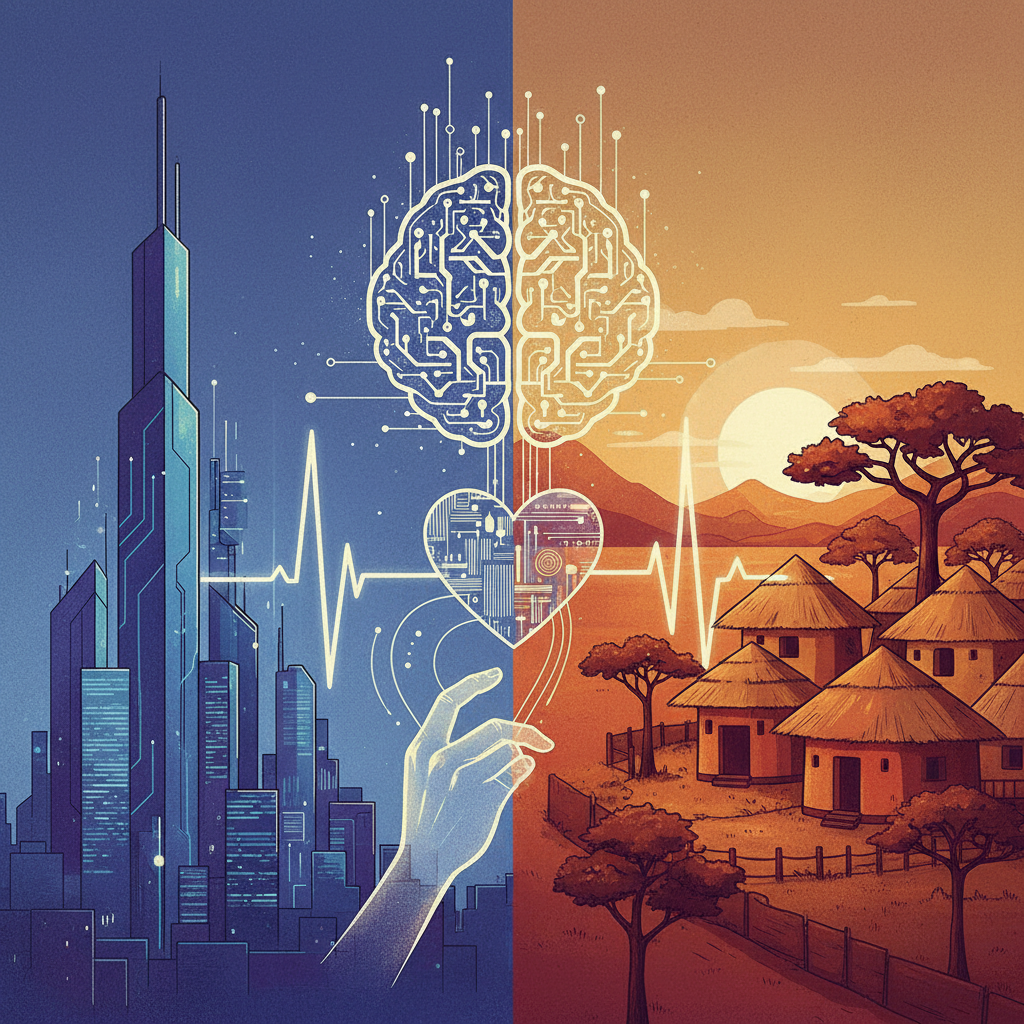

Let me tell you, the chatter around AI and the housing market, with all its talk of algorithmic pricing and smart homes, sounds a lot like the whispers of a coming storm. Everyone in the West is buzzing about efficiency, about predictive analytics, about how OpenAI's next big model will somehow optimize property values and make buying a house as simple as ordering groceries. But from my little corner of Harare, looking out at the jacaranda trees, I see something different, something far more complex and, frankly, a bit unsettling if we are not careful.
I'm calling it now: the current trajectory of AI in real estate, driven largely by Silicon Valley's detached logic, is set to create more problems than it solves, especially for places like Zimbabwe. We are talking about algorithms that could decide who gets a home, how much they pay, and even what kind of community flourishes, all without a single human understanding the nuances of local life, the spirit of ubuntu, or the economic realities of a struggling nation. This isn't just about smart thermostats, my friends, this is about the very fabric of our societies.
Take algorithmic pricing, for instance. Companies like Zillow in the US or various property tech startups globally use sophisticated models, often powered by Google's deep learning frameworks or NVIDIA's immense computational power, to predict property values and rental rates. They crunch data points: location, square footage, recent sales, even satellite imagery. On the surface, it sounds brilliant, a way to remove human bias, perhaps. But what if the data itself is biased, reflecting historical inequalities? What if it doesn't account for the informal economy that sustains so many families here, or the community ties that make a house a home, rather than just an asset? "These algorithms are trained on historical data, and if that data reflects systemic discrimination or economic disparities, the AI will simply perpetuate and even amplify those patterns," warns Dr. Nompumelelo Ndlovu, a data ethicist at the University of Zimbabwe. "It's not just about what the algorithm sees, but what it's taught to value."
Then there are smart homes, the darlings of tech conferences. Imagine a home that anticipates your needs, manages energy, and provides security, all thanks to interconnected devices and AI platforms like Amazon's Alexa or Apple's HomeKit. For many, this is the epitome of modern living. But here in Zimbabwe, where reliable electricity can be a luxury and internet access isn't always stable or affordable, these 'smart' features can quickly become 'dumb' liabilities. Who maintains these complex systems? What about data privacy when every aspect of your home life is being monitored and potentially sold? "The promise of smart homes is alluring, but the infrastructure required to support them is often overlooked in emerging markets," says Mr. Tinashe Moyo, CEO of ZimTech Innovations, a local smart energy startup. "We need solutions that are resilient, repairable, and respect the privacy of our people, not just imported gadgets that drain resources and expose us to new vulnerabilities."
Now, I know what some of you are thinking. Zinhlée, you're being too pessimistic. AI brings efficiency, it brings transparency, it can help allocate resources better. It can reduce corruption, a problem we know all too well. And yes, I agree, the potential is there. I'm not a luddite. I believe in technology, especially when it's wielded for good. But the current narrative is too often one-sided, focused on the 'disruption' without truly considering the 'disrupted.'
My argument is not against AI itself, but against its uncritical, one-size-fits-all application. The real estate market, like any market, is deeply human. It's about shelter, security, community, and aspiration. When algorithms, designed in distant labs by people who have never navigated the complexities of a Zimbabwean property deed or understood the social capital of a neighborhood ghetto, start dictating these fundamental aspects of life, we risk losing something vital. We risk creating a digital divide that mirrors and exacerbates our economic one. "We've seen how global platforms can sometimes overlook local customs and legal frameworks," notes Ms. Chiedza Murehwa, a property lawyer based in Borrowdale. "The digital contracts and automated processes that work in London might not hold up in a Zimbabwean court, or even make sense to our local communities."
We need to flip the script. Instead of passively receiving AI solutions from global tech giants, Africa needs to be at the forefront of designing them. We need our own data scientists, urban planners, and cultural experts collaborating with companies like Anthropic or Meta to build AI models that understand our unique contexts. Imagine an AI that not only prices a property but also assesses its communal value, its resilience to climate change in our specific regions, or its potential for fostering local businesses. This isn't just a pipe dream; it's a necessity.
Consider the potential for creative AI in housing. What if we used generative AI, like the models behind Midjourney or Dall-e, to design affordable, culturally appropriate housing solutions tailored to specific Zimbabwean communities, leveraging local materials and architectural styles? What if AI helped us predict urban sprawl patterns in a way that preserves our green spaces and promotes sustainable development, rather than just maximizing profit? The MIT Technology Review often highlights innovative uses of AI, and I believe our continent can lead in this space.
The future is African, and that means our future homes, our future cities, must be shaped by our hands, our minds, and our values. We cannot afford to let algorithms, however sophisticated, dictate our destiny without our input. We need to demand that the AI powering the global housing market is not just efficient, but also equitable, ethical, and culturally intelligent. This requires investment in local talent, fostering collaborations, and ensuring that our voices are heard in the development of these powerful tools. TechCrunch reports daily on new AI startups, and I want to see more of those emerging from Harare, from Lagos, from Nairobi, tackling our specific challenges with our unique perspectives.
So, as the world rushes headlong into an AI-driven housing future, let's not just be passive recipients. Let's be active participants, shaping these technologies to serve our people, to build stronger communities, and to ensure that a home remains a sanctuary, not just a data point. Watch this space, because the conversation around AI and housing needs a serious dose of African reality, and we are ready to provide it.